How to Become a Nurse Educator
Many experienced nurses reach a point where they feel a powerful urge to contribute to the profession in a different, yet equally vital, way. The grind of bedside care, while rewarding, can lead to burnout, and a yearning emerges to shape the next generation of caregivers. If you've been pondering how to blend your passion for nursing with a desire to teach and mentor, becoming a nurse educator might be your perfect next step. This comprehensive guide will walk you through the journey, from educational pathways to career opportunities, helping you understand if this fulfilling role is right for you.
Understanding the Role of a Nurse Educator
Being a nurse educator is so much more than just standing in front of a classroom lecturing. It's about inspiring, guiding, and molding future nurses, equipping them with the knowledge, critical thinking skills, and empathy they'll need to excel in an ever-evolving healthcare landscape. It's a challenging, yet incredibly rewarding, specialization that allows you to leverage your years of clinical experience in a whole new capacity.
What Nurse Educators Do Day-to-Day
The daily life of a nurse educator can vary significantly depending on their primary role and the type of institution they work for. Some might spend their days in academic settings, while others are embedded directly in healthcare facilities.
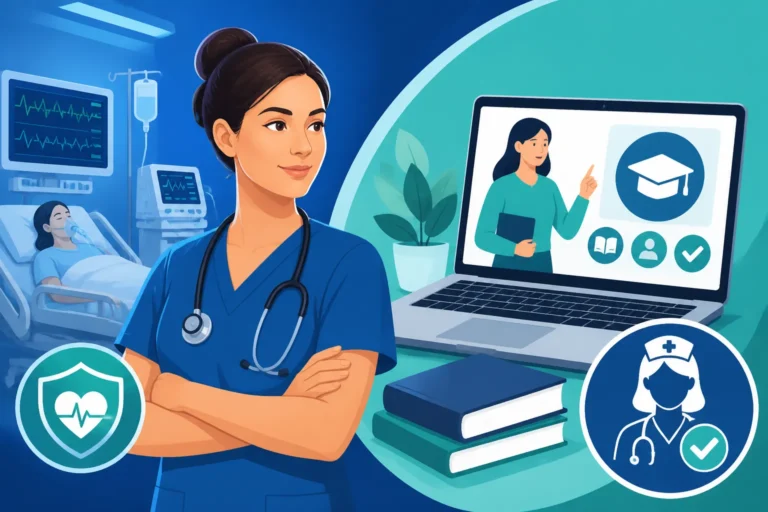
In an academic setting, like a university or community college, nurse educators are often responsible for developing curriculum, teaching theoretical courses, and overseeing students in clinical environments. This could mean delivering engaging lectures on pathophysiology or pharmacology, facilitating simulation labs where students practice critical skills, or supervising groups of students during their rotations at local hospitals like Massachusetts General Hospital or Cleveland Clinic. They also spend considerable time grading assignments, providing one-on-one mentorship, and even conducting research to advance nursing science. For those thinking about balancing a demanding academic role with personal life, understanding options like Online MSN Programs: Complete Guide can be really helpful.
Within healthcare facilities, nurse educators typically focus on staff development, continuing education, and orientation for new hires. They might design and implement training programs for new equipment, update staff on new protocols or evidence-based practices, or create simulations to help nurses refine their emergency response skills. Their goal is to ensure that the current nursing staff remains competent, up-to-date, and able to provide the highest quality of patient care. It’s a dynamic role that requires constant learning and adaptation, as healthcare is always changing.
Where Nurse Educators Work
Nurse educators are found in diverse environments, each offering a unique set of challenges and rewards. The most common workplaces include:
- Colleges and Universities: This is where many picture a nurse educator working. They teach undergraduate (ADN, BSN) and graduate (MSN, DNP) students, develop curriculum, conduct research, and serve on committees. They often have academic freedom to explore specific areas of interest.
- Community Colleges and Vocational Schools: These institutions often focus on Associate Degree in Nursing (ADN) or Licensed Practical Nurse (LPN) programs. Educators here tend to have a strong emphasis on foundational clinical skills and direct patient care concepts.
- Hospitals and Healthcare Systems: As mentioned, these educators focus on staff development, onboarding, and in-service training. They're crucial for maintaining high standards of care within a specific institution. For a deeper dive into how hospitals value advanced degrees, you might want to read about Why Hospitals Prefer BSN Nurses.
- Continuing Education Providers: Some nurse educators work for organizations that offer professional development courses and certifications for practicing nurses, helping them meet licensure requirements or specialize in new areas.
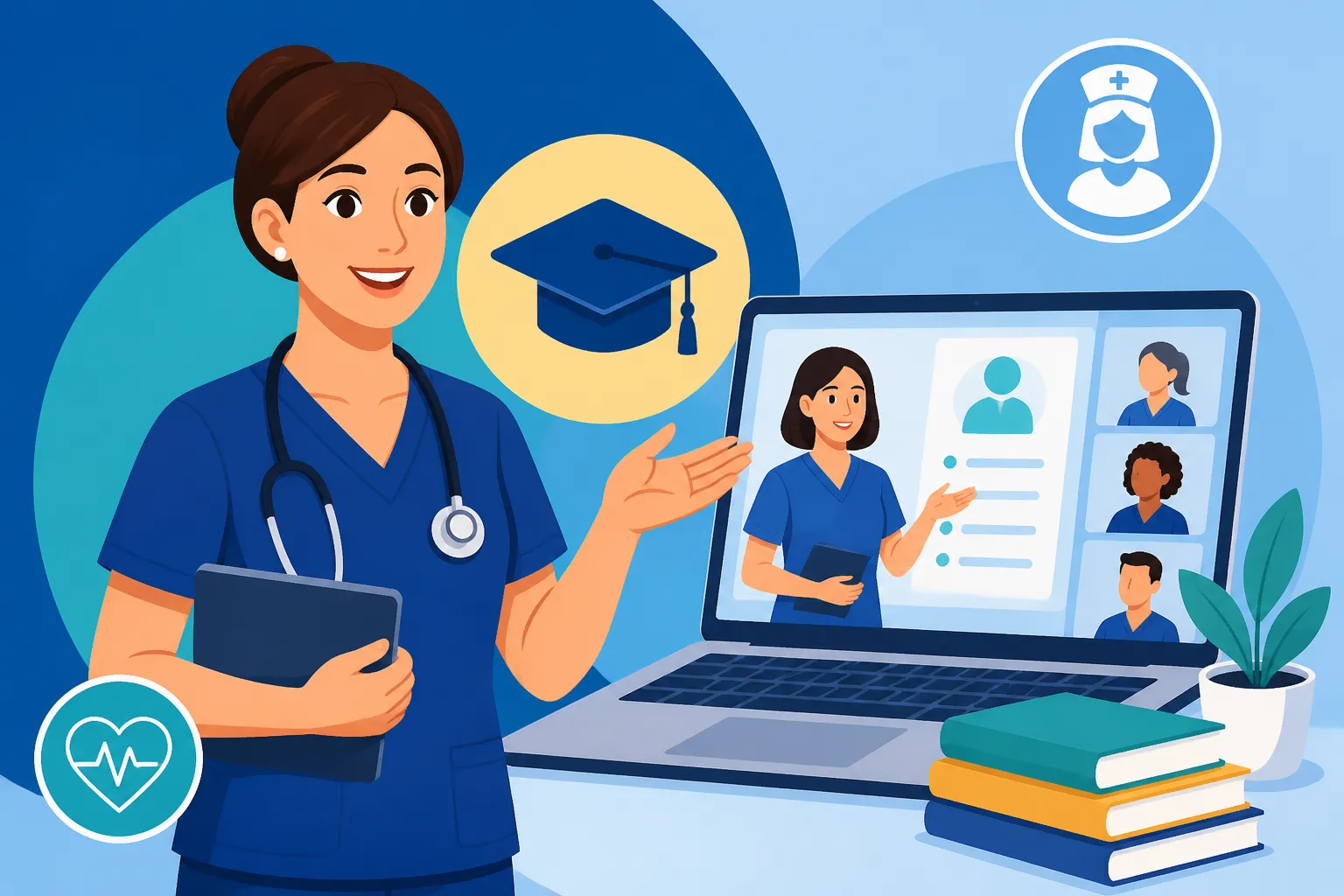
- Online Learning Platforms: With the rise of distance learning, many nurse educators now work remotely, developing and teaching online nursing courses, which offers incredible flexibility. This can be a great option for those looking into Online MSN Programs: Complete Guide.
The Educational Journey to Becoming a Nurse Educator
The path to becoming a nurse educator generally requires advanced education beyond an initial RN license. While some entry-level roles in staff development might be accessible with a BSN and significant experience, the vast majority of academic and leadership positions demand a master's or doctoral degree.
Starting with Your Bachelor of Science in Nursing
Your journey, almost without exception, begins with a solid foundation as a Registered Nurse (RN). If you started with an Associate Degree in Nursing (ADN) or a diploma, your first step is often to earn your Bachelor of Science in Nursing (BSN). This degree broadens your understanding of nursing theory, research, community health, and leadership – all crucial components for a future educator. Many experienced ADN-prepared nurses pursue an Online RN to BSN Programs: Complete Guide while working, making it a manageable transition. Understanding the RN to BSN Requirements Explained can help you prepare for this step.
A BSN typically takes two to four years to complete, depending on your starting point. It provides the essential critical thinking and theoretical knowledge that underpins advanced nursing practice and teaching. Without a BSN, progressing to a master's or doctoral program in nursing education becomes significantly more challenging, if not impossible, for most programs.
Advancing with a Master of Science in Nursing with an Educator Track
The most common and recommended educational path to becoming a nurse educator is earning a Master of Science in Nursing (MSN) with a specialization in nursing education. This degree builds upon your BSN and clinical experience, specifically preparing you for teaching roles. Many nurses find the flexibility of Online MSN Programs: Complete Guide to be a game-changer when juggling work and family life.
An MSN program typically takes anywhere from 1.5 to 3 years to complete, depending on whether you study full-time or part-time. The curriculum for an MSN with an educator track will delve deep into:
- Curriculum Development: Learning how to design, implement, and evaluate educational programs.
- Teaching Strategies: Exploring various pedagogical approaches suitable for diverse learners in nursing.
- Educational Technology: Mastering tools and platforms for effective instruction, both in-person and online.
- Assessment and Evaluation: Understanding how to create fair and accurate assessments for student learning.
- Role of the Nurse Educator: Examining the ethical, legal, and professional responsibilities of the role.
When considering an MSN program, pay close attention to the MSN Admission Requirements as they can vary between institutions. Some programs may require a specific GPA, letters of recommendation, or an essay outlining your career goals.
The Doctor of Nursing Practice for Educators
While an MSN is sufficient for many nurse educator roles, some positions, particularly those at the university level or in leadership within healthcare education, may prefer or even require a Doctor of Nursing Practice (DNP) or a PhD in Nursing. The DNP is a practice-focused doctorate that prepares advanced practice nurses and nurse leaders, including educators, with the highest level of clinical and leadership expertise. If you're weighing your options, exploring the differences between MSN vs DNP: Which to Choose can provide valuable insights.
A DNP program for nurse educators will typically focus on:
- Translating Research into Practice: Utilizing evidence-based practice to inform educational strategies and curriculum.
- Leadership and Systems Thinking: Preparing you to lead educational departments or initiatives within large healthcare systems.
- Health Policy and Advocacy: Understanding how policies impact nursing education and practice.
- Advanced Clinical Concepts (for some tracks): Though educator-focused, a DNP often reinforces advanced knowledge.
DNP programs are generally longer than MSN programs, often taking 2 to 4 years beyond a BSN, or 1 to 2 years beyond an MSN. While an MSN is a strong credential, a DNP can open doors to higher-level administrative and policy-making roles in nursing education, and often correlates with a higher Nurse Educator Salary Explained.
Essential Skills and Qualities for Nurse Educators
It takes more than just clinical knowledge to be a truly effective nurse educator. While your expertise as an RN is foundational, the skills required to teach, mentor, and inspire are distinct and equally crucial.
Communication and Interpersonal Skills
You might be the most brilliant nurse in the world, but if you can't clearly articulate complex concepts or connect with your students, your impact will be limited. Strong communication skills are paramount. This involves not only clear verbal and written communication but also active listening and the ability to provide constructive feedback. Imagine a student struggling with a difficult clinical scenario; your ability to empathize, break down the problem, and guide them through it without judgment is invaluable.
Furthermore, interpersonal skills allow you to build rapport, foster a supportive learning environment, and navigate diverse personalities. Nursing students come from all walks of life, with varied learning styles and previous educational experiences. An effective educator understands how to adapt their teaching methods to meet these individual needs, creating an inclusive and engaging classroom or clinical setting.
Critical Thinking and Problem-Solving Abilities
Nurse educators are constantly faced with challenges, from designing effective learning activities to addressing student performance issues. You'll need to critically evaluate existing curricula, identify gaps in student understanding, and devise innovative solutions. For instance, if you notice a consistent trend of students struggling with dosage calculations, you'll need to analyze why, develop new teaching strategies or resources, and then assess their effectiveness.
This also extends to modeling critical thinking for your students. You'll guide them through clinical reasoning, helping them move beyond rote memorization to truly understand why certain interventions are performed and how to prioritize care in complex situations. This is where your own extensive clinical experience truly shines, as you can draw on real-life examples to illustrate theoretical concepts.
Patience and Empathy
Teaching, especially in a field as high-stakes as nursing, requires immense patience. Students will make mistakes, ask the same questions multiple times, and struggle with concepts you find simple. An empathetic educator understands the pressures students face—the rigorous academic demands, the emotional weight of patient care, and often, the balancing act of work and family.
Your role isn't just to transmit information but to support students through their learning process, celebrate their successes, and help them learn from their failures. Showing patience and empathy creates a safe space for students to ask questions, admit when they don't understand, and grow into confident, competent nurses. This nurturing environment is critical for their development and resilience in a demanding profession.
Certification and Professional Development for Nurse Educators
Once you've earned your advanced degree, the journey isn't over! Becoming certified and engaging in ongoing professional development are key steps to solidifying your expertise and enhancing your career as a nurse educator.
The Certified Nurse Educator CNE Credential
The primary certification for nurse educators is the Certified Nurse Educator (CNE) credential, offered by the National League for Nursing (NLN). Achieving CNE status demonstrates your specialized knowledge, skills, and abilities in nursing education, and it's highly valued by academic institutions and healthcare organizations alike. It's a way to formally recognize that you've mastered the competencies required for the role.
To be eligible for the CNE exam, you typically need:
- A master's or doctoral degree in nursing with a specialization in nursing education, or
- A master's or doctoral degree in nursing plus at least two years of experience as a nurse educator.
The CNE exam covers a broad range of topics pertinent to nursing education, including facilitating learning, assessing and evaluating student learning, curriculum design, and the roles of the nurse educator. Preparing for this exam is crucial, and resources like Uworld, known for its comprehensive test prep materials for various nursing exams, can be incredibly beneficial in sharpening your knowledge and test-taking skills. This certification not only boosts your resume but also assures employers and students of your dedication to excellence in education.
Continuing Education and Lifelong Learning
The healthcare landscape and educational best practices are constantly evolving. As a nurse educator, you have a professional responsibility to engage in lifelong learning to remain current and effective. This means regularly participating in continuing education units (CEUs), attending conferences, reading professional journals, and staying abreast of new technologies and pedagogical approaches.
Many state boards of nursing and certification bodies, including the NLN for CNE renewal, require ongoing CEUs. Look for opportunities to enhance your skills in areas like:
- Simulation-based learning: How to design and facilitate realistic simulations.
- Interprofessional education: Collaborating with other healthcare disciplines.
- Diversity, equity, and inclusion in education: Creating equitable learning environments.
- Technological advancements in nursing education: Utilizing new software or virtual reality tools.
Organizations like the National League for Nursing (NLN), the American Association of Colleges of Nursing (AACN), and regional nursing associations offer numerous professional development opportunities tailored for nurse educators. By staying engaged, you not only enrich your own practice but also ensure that your students receive the most relevant and up-to-date education possible.
Career Outlook and Salary for Nurse Educators
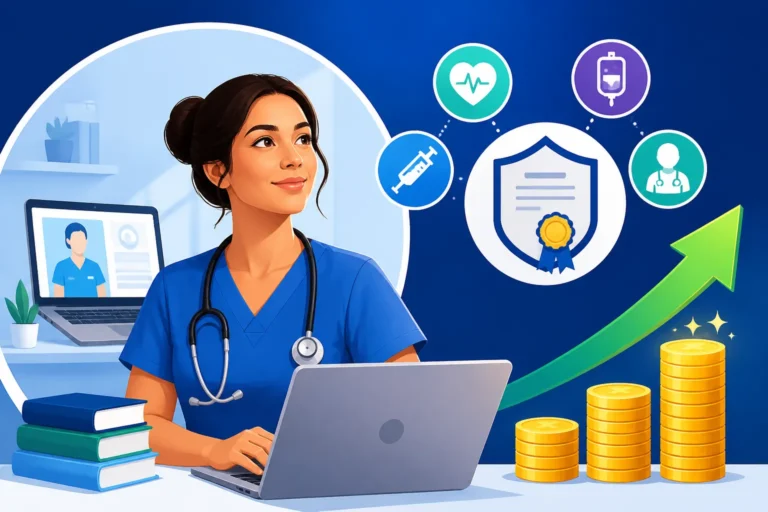
Choosing to become a nurse educator is a strategic career move, offering not only professional fulfillment but also a robust job market and competitive compensation. The demand for qualified nursing faculty is consistently high, driven by the ongoing nursing shortage and the need to educate future generations of nurses.
Job Market Demand and Growth
The demand for nurse educators is projected to remain strong. The U.S. Bureau of Labor Statistics (BLS) projects employment for postsecondary teachers (a category that includes nurse educators) to grow significantly. More specifically, the American Association of Colleges of Nursing (AACN) frequently highlights faculty shortages as a critical bottleneck in addressing the national nursing shortage. Nursing schools often turn away qualified applicants because they lack sufficient faculty to teach them.
This creates a fantastic opportunity for experienced nurses with advanced degrees and a passion for teaching. Whether you're looking to work in a bustling university setting, a community college, or a hospital's staff development department, your skills as a nurse educator will be highly valued. This sustained demand offers excellent job security and a variety of roles to choose from. When you're considering the long-term prospects, understanding the broader Nursing Job Outlook and Demand can give you even more confidence in this career path.
Salary Expectations for Nurse Educators
The salary for nurse educators can vary significantly based on several factors, including:
- Degree Level: DNP-prepared educators generally earn more than MSN-prepared educators.
- Type of Institution: University professors typically earn more than those at community colleges or vocational schools. Hospital-based educators' salaries can vary widely depending on the size and type of facility.
- Experience: As with any profession, years of experience in both clinical nursing and teaching will lead to higher earning potential.
- Location: Salaries are often higher in areas with a higher cost of living or greater demand for educators, such as major metropolitan areas like New York City or Los Angeles.
- Rank (in academia): Professors with tenure or higher ranks (e.g., Associate Professor, Full Professor) command higher salaries.
According to various sources, the median annual salary for nurse educators can range from approximately $75,000 to over $100,000. For instance, the BLS reported a median annual salary for postsecondary nursing instructors in May 2022 was around $81,000. However, those with a DNP, significant experience, or working in competitive university settings or large healthcare systems could easily see salaries well into the six figures.
Here's a simplified overview:
| Factor | Typical Salary Impact |
|---|---|
| Education | MSN: Mid-range; DNP: Higher range |
| Experience | Entry-level: Lower end; Experienced: Higher end |
| Institution | Community College: Mid-range; University: Higher range |
| Location | High cost-of-living areas: Higher; Rural areas: Varies |
| Role | Instructor: Mid-range; Program Director/Dean: Significantly higher |
It’s clear that investing in an advanced degree pays off. For more details on earning potential, you can refer to our article on Nurse Educator Salary Explained.
Is Becoming a Nurse Educator Right for You?
Making the switch to nursing education is a significant career decision, and it’s important to reflect on whether this path truly aligns with your strengths, passions, and long-term goals. While incredibly rewarding, it comes with its own unique set of demands.
Balancing Passion for Nursing with a Desire to Teach
Many nurses feel a deep-seated passion for patient care but also a strong pull to share their knowledge and mentor others. Becoming a nurse educator allows you to combine these passions. You'll continue to influence patient outcomes, not directly at the bedside, but by shaping the nurses who will be there. If you find yourself consistently teaching new hires, precepting students, or enjoying explaining complex medical concepts to colleagues, these are strong indicators that you might thrive in an educational role.
However, it's crucial to understand that the focus shifts. Your primary "patient" becomes the student, and your success is measured by their learning and development. If you deeply miss direct patient interaction and the immediate gratification of hands-on care, an educator role might feel different than expected. But for many, the long-term impact of developing competent, compassionate nurses far outweighs the change in direct patient contact. Considering Nursing Specializations Explained can help you weigh various options.
The Rewards and Challenges of the Educator Role
Like any career, nurse education comes with its own blend of rewards and challenges.
Rewards:
- Making a Lasting Impact: You are directly shaping the future of nursing, influencing patient care on a systemic level through your students.
- Intellectual Stimulation: The role demands continuous learning, research, and critical thinking, keeping your mind sharp and engaged.
- Flexible Schedule (often): Many academic roles offer more predictable schedules than traditional bedside nursing, with breaks built into the academic calendar (though the work doesn't stop).
- Professional Growth: Opportunities for leadership, curriculum development, and scholarly work are abundant.
- Witnessing Growth: There's immense satisfaction in watching a struggling student grasp a difficult concept or transform into a confident new nurse.
Challenges:
- Rigorous Academic Demands: Pursuing an MSN or DNP while working can be incredibly challenging, requiring significant time management and dedication. This is why resources like those in How to Balance Work and RN to BSN are so valuable.
- Heavy Workload: While the schedule might be more flexible, the workload—grading, lecture prep, clinical supervision, committee meetings, research—can be intense.
- Student Challenges: Dealing with struggling students, academic integrity issues, and managing diverse learning needs requires patience and effective strategies.
- Staying Current: The need for continuous learning means always being on top of the latest evidence-based practices, technology, and educational methodologies.
- Less Direct Patient Care: For those who love the immediate impact of bedside nursing, this shift can be an adjustment.
Ultimately, the decision to become a nurse educator is a deeply personal one. It's a career that demands dedication, a love for learning, and a profound commitment to the future of nursing. If you're ready to embrace the challenge and the immense satisfaction of shaping the next generation, this path could be incredibly fulfilling for you.
Disclaimer
Please note that the information provided in this guide is intended for general informational purposes only and does not constitute professional advice. Educational requirements, certification processes, and salary expectations can vary by institution, location, and specific job roles. Always consult with academic advisors, professional organizations, and official credentialing bodies for the most accurate and up-to-date information regarding your personal career path.