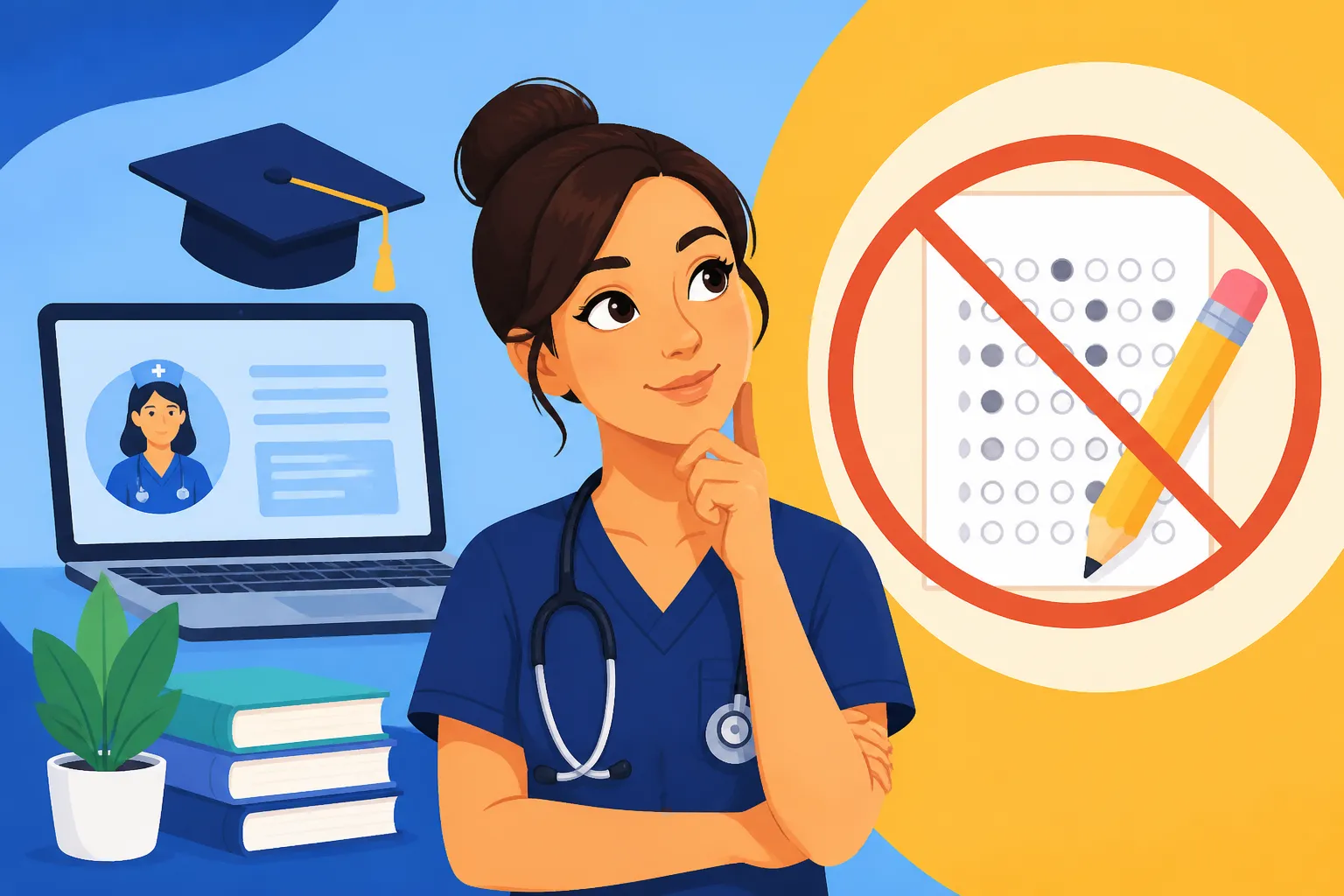
Do MSN Programs Require the GRE
The thought of applying to graduate school can be exciting, but for many aspiring Master of Science in Nursing (MSN) students, one particular hurdle often looms large: the Graduate Record Examinations, or GRE. It's a common source of anxiety, and trying to figure out if your dream MSN program even requires it can feel like a detective mission. This guide is here to shed some light on the current landscape of GRE requirements for MSN programs, helping you understand what to expect and how to navigate the application process with confidence.
Understanding the GRE in Graduate Admissions
For a long time, the GRE was seen as a standard gateway to most graduate programs, a sort of universal benchmark to measure a candidate's readiness. But like many things in academia, its role has been evolving, especially within the specialized world of nursing.
What is the GRE and Why Was It Traditionally Required
The Graduate Record Examinations (GRE) is a standardized test that assesses a prospective graduate student's verbal reasoning, quantitative reasoning, and analytical writing skills. Think of it as a comprehensive academic fitness test. The verbal section measures your ability to analyze and evaluate written material, understand complex texts, and recognize relationships between words and concepts. The quantitative section focuses on problem-solving, data analysis, and basic mathematical concepts. And the analytical writing portion asks you to articulate and support complex ideas, examine claims and evidence, and maintain a focused, coherent discussion.
Historically, universities and colleges, including many nursing schools, required the GRE for a few key reasons. First, it provided a standardized way to compare applicants from diverse undergraduate backgrounds, different universities, and varied grading systems. Admissions committees believed it offered an objective measure of a candidate's potential to succeed in the rigorous academic environment of graduate studies. It was thought to predict how well you'd handle complex coursework, research, and critical thinking demands inherent in an MSN program. In essence, it was a safety net for schools, designed to ensure students had the fundamental academic skills to thrive.
The Evolving Landscape of Graduate Admissions
However, in recent years, there's been a significant shift in how graduate programs view the GRE. Many institutions, particularly within healthcare fields like nursing, have begun to question its true predictive validity for success in their specific programs. Is a high score on a standardized test really the best indicator of a compassionate, skilled, and critical-thinking nurse practitioner or leader? Many argue no.
This reevaluation has been driven by several factors. There's a growing recognition of the potential for the GRE to create barriers to access for certain populations, particularly those from lower socioeconomic backgrounds who may not have access to expensive test prep resources, or individuals for whom English is not their first language. Concerns about equity and diversity in admissions have prompted many universities to move towards a more holistic review process. This means that instead of relying heavily on a single test score, admissions committees now look at a much broader picture of an applicant: their undergraduate GPA, professional experience, personal statement, letters of recommendation, and even volunteer work. They want to see the whole person, not just a score. This trend is particularly evident in nursing, where practical experience and empathetic qualities are just as, if not more, crucial than test-taking prowess.
MSN Programs and the GRE: Current Trends
So, what does this evolving landscape mean for you, an aspiring MSN student? The good news is that many programs have adapted to this shift, and the mandatory GRE requirement is becoming less common.
Programs That Have Waived the GRE Requirement
It's becoming increasingly common to find MSN programs, especially online ones, that have completely done away with the GRE requirement. This is a huge relief for many nurses who may be years out of their undergraduate studies and dread the idea of dusting off old textbooks for a standardized exam. Schools like Western Governors University (WGU), Capella University, and Purdue Global, for instance, often emphasize practical experience and academic performance over a GRE score. They understand that licensed Registered Nurses (RNs) bring a wealth of real-world knowledge and clinical expertise that can't be captured by a test.
These programs often focus their assessment on other aspects of your application that are arguably more relevant to nursing success. They'll look for a strong undergraduate GPA, particularly in science and nursing courses. Your professional resume, detailing your years of experience as an RN, your roles, responsibilities, and any specialized training, becomes incredibly important. A well-crafted personal statement that articulates your motivations, career goals, and understanding of advanced nursing roles is also key. Strong letters of recommendation from supervisors or professors who can speak to your clinical skills, leadership potential, and commitment to patient care are invaluable. If you're wondering how to choose an online MSN program, looking at their specific admission criteria, including GRE policies, should be high on your list.
Many universities have realized that the financial burden and time commitment associated with GRE preparation and testing can deter otherwise excellent candidates from pursuing an advanced degree. By removing this barrier, they aim to make quality nursing education more accessible to working nurses who are ready to take the next step in their careers.
When an MSN Program Might Still Require the GRE
While the trend is definitely leaning towards waiving the GRE, it's crucial to understand that it's not a universal rule. There are still many MSN programs, especially at highly competitive, research-intensive universities, or those with very specific academic profiles, that may still ask for GRE scores.
You might encounter a GRE requirement if:
- You have a lower undergraduate GPA: Some programs might use a satisfactory GRE score to offset a GPA that falls below their minimum threshold. For example, if a program typically requires a 3.0 GPA, but you have a 2.8, a strong GRE score could demonstrate your academic capability. Always check the MSN program admission GPA requirements for each school you are interested in.
- Your undergraduate degree is not in nursing or a related science: If you're coming from a non-nursing background and applying to a direct-entry MSN program, or if your prior degree didn't include extensive science coursework, the GRE might be requested to ensure you have the foundational academic skills needed for the program's rigor.
- University-wide graduate school policies: Sometimes, the GRE requirement isn't specific to the nursing department but rather a blanket policy for all graduate admissions across the entire university. In these cases, the nursing school might have less flexibility to waive it.
- Specific tracks or specializations: Occasionally, certain highly specialized MSN tracks, particularly those with a strong research component or leading to advanced practice roles that involve complex data analysis, might retain the GRE requirement.
It is absolutely essential to check the specific admission requirements for each MSN program you are considering. Don't assume anything! Visit the program's official website, look for their "Admissions" or "Application Requirements" section, and if you're still unsure, don't hesitate to reach out directly to the admissions office. They are there to help clarify any questions you might have about MSN admission requirements.
Navigating MSN Admissions Without a GRE Score
For those fortunate enough to find programs that don't require the GRE, the focus shifts entirely to presenting a compelling application based on your overall profile. This is where your unique story and professional journey truly shine.
Highlighting Other Application Strengths
When the GRE is out of the picture, every other component of your application takes on magnified importance. This is your chance to really showcase why you're an ideal candidate for an advanced nursing degree.
- Academic Performance (GPA): Your undergraduate GPA, especially in relevant science and nursing courses, becomes a primary indicator of your academic readiness. If your GPA is strong, emphasize it. If you had a rough patch in your early college years but excelled later, consider addressing this in your personal statement, explaining how you grew and improved. Many programs look at your last 60 credits more closely.
- Clinical Experience: As a licensed RN, your clinical experience is gold. Detail your roles, responsibilities, patient populations, and any specialized skills or certifications you've obtained. Highlight instances where you demonstrated leadership, critical thinking, problem-solving, or a commitment to patient advocacy. If you've worked in a variety of settings (ER, ICU, Med-Surg, etc.), discuss how each experience has prepared you for advanced practice or leadership. This is especially true for MSN programs with a strong clinical component, like those focused on becoming a Nurse Practitioner.
- Personal Statement/Essay: This is your voice in the application. Use it to tell your story, explain your passion for nursing, articulate your specific career goals (e.g., becoming a Family Nurse Practitioner, pursuing a role in Nursing Informatics), and clearly explain why this particular program is the right fit for you. Connect your past experiences to your future aspirations, demonstrating maturity, self-awareness, and a clear vision.
- Letters of Recommendation: Choose recommenders wisely. Seek out supervisors, nurse managers, or former professors who know you well and can speak genuinely to your clinical competence, work ethic, leadership potential, and professional character. Strong, specific letters that provide anecdotes are far more impactful than generic ones.
- Professional Certifications and Leadership Roles: Any additional certifications (e.g., CCRN, CEN, PALS, ACLS), participation in hospital committees, precepting new nurses, or leadership roles (even informal ones) should be prominently featured. These demonstrate initiative, expertise, and a commitment to continuous professional development. If you've been working as an RN, you probably have more relevant experience than you realize!
Remember, an MSN program is preparing you for a higher level of practice and responsibility. The admissions committee wants to see that you possess the intellectual capacity, professional maturity, and dedication to succeed. Highlighting these strengths effectively will make your application stand out.
Alternative Admission Pathways
Even if a program traditionally requires the GRE, there might be alternative pathways or considerations that could allow you to gain admission without it. It’s always worth inquiring about these options.
- Conditional Admission: Some universities offer conditional admission to applicants who may not meet all standard requirements, including the GRE. This might involve enrolling in a foundational course, achieving a certain GPA in your first semester, or completing specific prerequisites within a set timeframe. Once these conditions are met, your admission becomes full.
- Bridge Programs: For ADN-prepared nurses who don't have a BSN but aspire to an MSN, bridge programs like RN to MSN Programs Explained often have different admission criteria, sometimes focusing more on your RN license, clinical experience, and a strong professional portfolio. These programs streamline the educational path and may bypass the GRE entirely.
- Programs with Multiple Start Dates or Rolling Admissions: Universities with rolling admissions processes (where applications are reviewed as they come in, rather than only once a year) or those with multiple start dates throughout the year might offer more flexibility. These programs often have a more continuous review process, which can sometimes lead to more individualized consideration for applicants who have strong overall profiles but might lack a GRE score.
- Post-Master's Certificate Programs: If you already have an MSN but want to specialize further (e.g., add an NP specialty), you might consider a Post-Master's NP Certificate Explained. These programs typically focus on your existing master's degree and clinical experience, not requiring another GRE.
Exploring these alternative pathways and carefully researching programs like those featured in "Online MSN Programs: Complete Guide" can open doors you might not have considered. Every school has its nuances, so direct communication with an admissions counselor is your best friend.
What to Do if a GRE is Required
Despite the trend away from it, you might still encounter an MSN program that firmly requires the GRE. Don't panic! It's a solvable hurdle, and with proper preparation, you can tackle it successfully.
Preparing for the GRE
If you find yourself needing to take the GRE, the key is structured and consistent preparation. This isn't a test you can cram for overnight; it requires a strategic approach.
- Understand the Test Format: Familiarize yourself with the structure of the Verbal Reasoning, Quantitative Reasoning, and Analytical Writing sections. Knowing what to expect reduces test-day anxiety.
- Identify Your Weaknesses: Take a diagnostic test to pinpoint areas where you need the most improvement. Are you rusty on algebra, or do vocabulary words trip you up? Tailor your study plan accordingly.
- Utilize Study Resources: There's a wealth of GRE prep materials available. Official GRE guides from ETS (the test maker) are excellent, as are commercial prep books from companies like Kaplan, Princeton Review, and Manhattan Prep. Many online platforms offer practice questions, video lessons, and full-length practice tests. While often associated with NCLEX preparation, resources that build critical thinking and analytical skills, similar to how many nurses prepare with
Uworldfor their licensure exams, can indirectly strengthen your approach to standardized tests like the GRE. The discipline and strategy you use for complex nursing exams can definitely be adapted. - Create a Study Schedule: Be realistic about how much time you can dedicate each day or week. Working nurses have busy schedules, so breaking down your study into manageable chunks over several weeks or months is crucial. Consistency is more important than intense, infrequent study sessions.
- Practice, Practice, Practice: The GRE is as much about strategy and time management as it is about knowledge. Take multiple full-length practice tests under timed conditions to get used to the pace and build stamina. Analyze your mistakes to learn from them.
- Focus on Analytical Writing: This section requires clear, concise argumentation. Practice writing essays under timed conditions and review sample essays to understand what constitutes a strong response.
Many students find it beneficial to enroll in a prep course, either in-person or online, if their budget allows. These courses often provide structured learning, expert instruction, and peer support.
Understanding Score Submission and Retakes
Once you've taken the GRE, understanding how scores are submitted and the rules around retakes is important.
- Score Reporting: When you take the GRE, you'll immediately see your unofficial scores for the Verbal Reasoning and Quantitative Reasoning sections. You can then choose which scores, if any, to send to your target institutions using the ScoreSelect® option. This means you have control over which scores the schools see. If you take the test multiple times, you can choose to send your best score, your most recent score, or all scores from the last five years.
- Score Validity: GRE scores are valid for five years after your test date. So, if you took the test a few years ago for another graduate program and the scores are still within that window, you might not need to retake it. Always confirm this with your program.
- Retaking the Exam: You can retake the GRE General Test once every 21 days, up to five times within any continuous 12-month period. If your first score isn't what you hoped for, this flexibility allows you to study further and try again. Many students improve their scores on a second or third attempt. Remember, submitting your best score can significantly boost your application, especially if you have a lower GPA or are applying to a highly competitive program.
Ultimately, whether an MSN program requires the GRE is a detail you'll uncover through thorough research. But no matter the requirement, a clear understanding of the process and diligent preparation will pave your way to success in your advanced nursing education. If you're serious about pursuing an MSN, remember to also consider factors like how long is an online MSN, the MSN program prerequisites, and MSN financial aid and scholarships available.
Disclaimer
Please note that admission requirements for MSN programs can change frequently. Always verify the most current and specific requirements directly with the admissions office of each university or college you are considering. This guide provides general information and should not be considered definitive for all institutions.