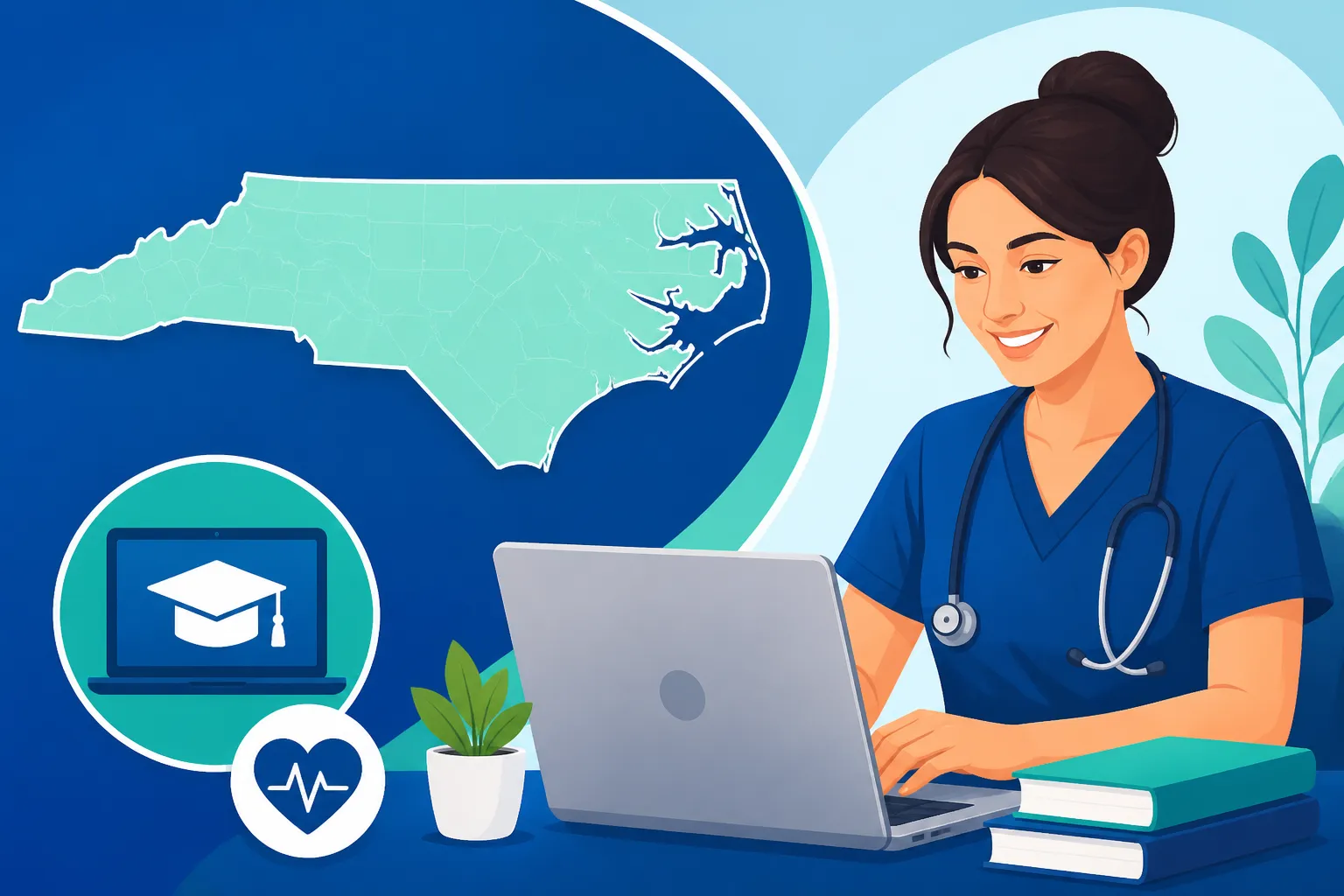
Best Online MSN Programs in North Carolina
For nurses in North Carolina who are feeling the push and pull of wanting to advance their careers but also needing to maintain their current work-life balance, the idea of pursuing a Master of Science in Nursing (MSN) can feel daunting. You're dedicated to your patients, your family, and your community, and finding the time to attend a traditional campus program might seem impossible. This guide is here to cut through the confusion, offering a comprehensive look at the best online MSN programs available, specifically tailored for North Carolina nurses like you, so you can achieve your professional goals without completely overhauling your life.
Why Choose an Online MSN Program in North Carolina?
Deciding to pursue an MSN is a significant step, and doing it online offers unique advantages, especially when you're rooted in a state like North Carolina. It's not just about convenience; it's about strategic career advancement within a dynamic healthcare landscape.
The Demand for Advanced Practice Nurses in NC
North Carolina's healthcare system is growing, and with that growth comes an increasing demand for highly skilled nurses who can fill advanced practice roles. Hospitals, clinics, and community health centers across the state, from the bustling cities of Charlotte and Raleigh to the more rural mountain and coastal regions, are actively seeking Nurse Practitioners, Clinical Nurse Specialists, Nurse Educators, and Nurse Administrators. These roles require the specialized knowledge and leadership skills that an MSN degree provides.
The push for more BSN-prepared nurses has naturally led to a greater need for MSN-level practitioners, particularly as healthcare shifts towards more primary care and preventative models. This creates a fertile ground for MSN graduates to find rewarding positions. Whether you're interested in becoming a Family Nurse Practitioner (FNP) serving diverse patient populations or a Psychiatric Mental Health Nurse Practitioner (PMHNP) addressing the critical need for mental health services, the opportunities are abundant. You'll find that an MSN degree opens doors to higher salaries and greater autonomy, making it a truly worthwhile investment in your future.
Flexibility for North Carolina's Working Nurses
Let's be real: nursing is not a 9-to-5 job. You're working shifts, dealing with emergencies, and juggling family responsibilities. The thought of adding rigid class schedules to that already packed life can be enough to make anyone put off their dreams. This is precisely where online MSN programs shine for North Carolina's working nurses. They are designed with your demanding schedule in mind, offering asynchronous coursework that allows you to study when it best suits you – whether that's late at night after your shift, early in the morning before the kids wake up, or on your days off.
Many programs offer multiple start dates throughout the year, so you don't have to wait until a traditional fall semester to begin. This flexibility doesn't mean a compromise on quality. Many reputable institutions have invested heavily in robust online learning platforms, providing interactive course materials, virtual simulations, and dedicated faculty support. This means you can continue contributing to your community as a nurse while simultaneously building the skills and earning the credentials for your next career chapter. For nurses wondering how to manage these demands, exploring articles on topics like How to Balance Work and RN to BSN can offer transferable strategies, even if your path is to an MSN.
Leveraging Local Healthcare Networks
While online MSN programs offer national reach, choosing one that understands the nuances of North Carolina's healthcare landscape can be incredibly beneficial. Many state-affiliated universities offer online MSN programs that specifically cater to North Carolina residents, often with in-state tuition advantages. More importantly, these programs frequently have established relationships with local hospitals, clinics, and healthcare systems across the state for clinical placements.
This local connection is crucial, especially when it comes to fulfilling your required clinical hours. Finding preceptors and clinical sites can be one of the most challenging aspects of an online MSN program, but programs with strong ties to North Carolina's healthcare network, such as those associated with UNC Health, Duke Health, or Atrium Health facilities, can often provide more seamless support in this area. This means you’re not just getting an education; you're gaining practical experience within the very communities and facilities where you might eventually seek employment, building valuable connections along the way.
Key Factors for Choosing the Best Online MSN Program
With so many online MSN programs available, it can feel like trying to find a needle in a haystack. Knowing what to prioritize is essential to make sure you select a program that truly aligns with your career aspirations and personal circumstances.
Accreditation Matters More Than You Think
When it comes to nursing education, accreditation isn't just a fancy seal of approval; it's the bedrock of your future career. Without proper accreditation, your degree might not be recognized for licensure, advanced practice certification, or even future doctoral studies. In the nursing world, the two main accrediting bodies are the Accreditation Commission for Education in Nursing (ACEN) and the Commission on Collegiate Nursing Education (CCNE).
Both are highly respected, but it’s crucial that any online MSN program you consider holds current accreditation from one of these agencies. This ensures that the program meets rigorous national standards for educational quality, curriculum, faculty qualifications, and student outcomes. An accredited program means your hard-earned degree will be respected by state boards of nursing, employers, and professional organizations. If you're looking into becoming a Nurse Practitioner, passing your national certification exam (whether it's through ANCC or AANP) often hinges on graduating from an accredited program. Make sure to verify the accreditation status directly on the accrediting body's website, not just rely on the school's claims. If you want to delve deeper into why accreditation is so critical, reading about CCNE vs ACEN Accreditation Explained can provide valuable insights.
Program Specializations and Career Goals
The beauty of an MSN is the vast array of specializations it offers, allowing you to truly carve out your niche in nursing. Before you even start looking at specific programs, take some time to really think about what you want to achieve with your advanced degree. Do you see yourself working with families across the lifespan as a Family Nurse Practitioner? Are you passionate about mental health and envision a career as a Psychiatric Mental Health Nurse Practitioner (PMHNP)? Or perhaps you’re more drawn to leadership, education, or informatics?
Each specialization has its own unique curriculum, clinical requirements, and career trajectory. For example, becoming a Family Nurse Practitioner will involve a broad curriculum covering primary care for all ages, whereas an Adult-Gerontology Acute Care NP program will focus specifically on critically ill adult and elderly populations. Some online programs offer a wide range of specialties, while others might focus on just one or two. Be sure the program you choose offers the specialization that aligns with your long-term career aspirations. This decision is one of the most critical you'll make, so thoroughly research different paths, such as those detailed in Nurse Practitioner Specializations Explained.
Clinical Placement Support in North Carolina
Online MSN programs, particularly those leading to advanced practice roles like Nurse Practitioner, require a significant number of supervised clinical hours. While the coursework is online, these clinical experiences are very much in-person and hands-on. One of the biggest hurdles for online students can be securing these clinical placements and finding qualified preceptors. Many students underestimate this challenge until they are deep into their program.
This is where a program's clinical placement support becomes absolutely invaluable, especially for nurses in North Carolina. Some programs have dedicated clinical placement coordinators who work with you to identify suitable sites and preceptors within your geographic area. Others might leave it largely up to the student, which can add immense stress and delay graduation. When researching programs, ask very specific questions about their clinical placement process, their success rates in North Carolina, and what resources they provide. A strong support system here can make or break your online MSN experience.
Cost and Financial Aid Considerations
Let's face it, investing in an advanced degree is a significant financial commitment. The cost of an MSN program can vary widely depending on the institution (public vs. private), the number of credits required, and whether you qualify for in-state tuition. It's crucial to get a comprehensive understanding of all costs involved, including tuition per credit hour, technology fees, clinical fees, and any required materials or certifications.
Don't let the sticker price deter you immediately, though. Many avenues exist to help make an MSN more affordable. Federal financial aid, scholarships specifically for nursing students, employer tuition reimbursement programs, and even grants can significantly offset costs. For North Carolina residents, state universities often offer lower tuition rates for their online programs, even if you’re studying remotely. Be proactive in researching all your options for financial assistance, which can be explored in more detail through resources like MSN Financial Aid and Scholarships. Understanding the total financial picture is key to making an informed decision about your future.
| Factor to Consider | Description | Why It Matters for NC Nurses |
|---|---|---|
| Accreditation | Verification by CCNE or ACEN that the program meets quality standards. | Essential for licensure in NC, eligibility for federal financial aid, and recognition for certification exams (e.g., FNP, PMHNP). |
| Specializations Offered | The specific advanced practice areas (e.g., FNP, PMHNP, Nurse Educator) the program prepares you for. | Ensures alignment with your career goals and the specific healthcare needs and demands within North Carolina's diverse communities. |
| Clinical Placement Support | The degree to which the program assists students in finding and securing clinical sites and preceptors. | North Carolina has a mix of urban and rural areas; strong support helps overcome the challenge of finding appropriate clinical sites and preceptors across the state, ensuring timely program completion. |
| Cost & Financial Aid | Tuition rates, fees, and available scholarships, grants, and federal aid. | Helps manage the financial burden, especially for working nurses who might have ongoing expenses. In-state tuition at NC public universities can be a significant advantage. |
| Program Flexibility | Asynchronous learning, multiple start dates, part-time/full-time options. | Crucial for working nurses balancing shifts, family life, and study. Allows for continued employment in NC hospitals and clinics while advancing education. |
| Faculty Expertise | Experience and credentials of instructors, especially in the chosen specialization. | Learning from experienced NPs and educators ensures you receive practical, relevant knowledge tailored to current practice standards, potentially including specific insights into NC's healthcare regulations. |
Top Online MSN Programs Available to North Carolina Nurses
When it comes to finding the "best" online MSN program, it's really about finding the best fit for you. North Carolina nurses have excellent options, both from within the state and from reputable national online providers.
Standout Programs in the Tar Heel State
North Carolina is home to several highly-regarded universities that offer robust online MSN programs, specifically designed to serve the state's nursing population. These institutions often have the advantage of understanding the local healthcare landscape and frequently boast strong connections with clinical sites across North Carolina.
For instance, the University of North Carolina system includes several campuses with online MSN offerings. You might find programs from the University of North Carolina at Chapel Hill or the University of North Carolina at Charlotte. These programs typically offer competitive in-state tuition for North Carolina residents, which is a huge benefit. They leverage their well-established nursing departments, experienced faculty, and strong relationships with the state's major healthcare systems (like UNC Health and Atrium Health) to provide comprehensive education and facilitate clinical placements. Often, their alumni networks are deeply embedded within North Carolina, offering valuable networking opportunities post-graduation. Always check their specific program requirements and available specializations, as these can vary.
National Online Options with NC Clinical Opportunities
Beyond North Carolina's state universities, there are many excellent online MSN programs offered by national universities that are completely set up to accommodate students from across the country, including those in the Tar Heel State. These programs often have dedicated clinical placement teams that work with students to find preceptors and sites in their local areas, even if you’re far from the university’s main campus.
When evaluating national online programs, ensure they explicitly state their ability to support clinical placements in North Carolina and verify that their curriculum meets North Carolina’s Board of Nursing requirements for advanced practice licensure. Institutions like Western Governors University (WGU) or Capella University are examples of universities known for their online nursing programs and flexible structures. While they might not offer in-state tuition benefits, their flexibility and focus on competency-based education can be very attractive for busy working nurses. Remember to verify accreditation and read reviews to understand how well they support students in states like North Carolina, especially regarding those crucial clinical experiences.
What to Look for in Admissions and Support
Once you’ve narrowed down your list of potential programs, it’s time to dive into the nitty-gritty of admissions and the ongoing support you can expect. Most online MSN programs will require a BSN from an accredited institution, a current unencumbered RN license (valid in North Carolina, of course), and a minimum GPA, often around 3.0. Some might ask for letters of recommendation, a personal statement, or an interview. For a detailed breakdown, check out MSN Admission Requirements.
Beyond the initial application, consider what kind of student support the program offers. Does it have dedicated academic advisors for online students? What resources are available for technical support, library access, or career services? A good online program will provide robust support systems to help you succeed, from navigating the learning management system to preparing for your certification exams. Many programs even offer test prep resources, and you might find useful study tools like those from Uworld to help you prepare for critical certification exams after graduation. The quality of student support can significantly impact your success and overall experience in an online MSN program.
Preparing for Success in an Online MSN Program
Embarking on an online MSN program is a marathon, not a sprint. It requires dedication, self-discipline, and a proactive approach to learning. Being prepared can make all the difference between feeling overwhelmed and confidently moving toward your goals.
Time Management and Study Strategies
One of the biggest misconceptions about online learning is that it's "easier" or less demanding than traditional classroom instruction. In reality, online MSN programs are incredibly rigorous and require exceptional time management skills. You'll need to be self-motivated and disciplined to keep up with readings, assignments, and discussions without a professor physically reminding you. A helpful tip is to create a detailed study schedule and stick to it, treating your study time like non-negotiable appointments.
Break down large assignments into smaller, manageable tasks. Utilize tools like calendars, planners, and reminder apps. Identify your peak productivity times and schedule your most challenging coursework for those periods. Don't underestimate the importance of regular breaks to prevent burnout. For many working nurses, an online MSN is a significant juggle, so consider exploring articles like How Many Hours a Week for RN to BSN for insights into time commitment, even though the specific degree differs, the principles of balancing study with life remain the same. Remember, consistency is key, and finding a rhythm that works for your unique schedule is paramount to success.
Building Your Professional Network
Even though you’re learning online, you are not alone. Building a strong professional network is just as crucial in an online MSN program as it is in a traditional one, if not more so. Connect with your classmates through discussion boards, virtual study groups, and social media platforms. These peers can become an invaluable support system, offering different perspectives, study tips, and encouragement. They are also future colleagues and collaborators in the advanced practice nursing field.
Beyond your classmates, make an effort to connect with your faculty. They are experts in their fields and can offer mentorship, guidance, and even help with identifying clinical opportunities. Attend any virtual meet-and-greets or Q&A sessions the program offers. If your program facilitates clinical placements, cultivate relationships with your preceptors; they are invaluable sources of real-world knowledge and potential professional references. These connections can open doors to job opportunities after graduation, provide ongoing mentorship, and enrich your overall learning experience in North Carolina's healthcare community.
Navigating Clinical Requirements
As we touched on earlier, clinical requirements are a fundamental part of most MSN programs, especially for those pursuing advanced practice licensure. For North Carolina nurses, this means fulfilling a set number of supervised hours in approved clinical settings within the state. The specifics of these hours, including the type of setting (e.g., primary care clinic, hospital, mental health facility) and patient populations, will depend entirely on your chosen specialization. For example, a future FNP will have different clinical needs than a future PMHNP. You can learn more about these requirements in resources like MSN Clinical Hours Requirements.
Understanding how your program supports you in finding preceptors and clinical sites is vital. Some programs offer extensive support, while others expect students to take the lead. Regardless, be proactive. Start early in identifying potential sites and preceptors in your area. Leverage your existing professional network in North Carolina; sometimes, a trusted colleague or supervisor can connect you with an opportunity. Be prepared to submit detailed documentation, including background checks, immunization records, and professional liability insurance, all of which are standard for clinical placements. Uworld also offers resources beyond exam prep, sometimes including guidance on career readiness that touches on practical elements like clinical preparation. This aspect of your MSN journey requires diligent planning and communication to ensure a smooth progression toward graduation.
Disclaimer
The information provided in this article is intended for general informational purposes only and does not constitute professional advice. While we strive to provide accurate and up-to-date information, program details, admission requirements, costs, and accreditation status can change frequently. Always verify all information directly with the respective universities or accrediting bodies. The mention of specific institutions or brands is for illustrative purposes and does not imply endorsement or recommendation over others. Prospective students should conduct their own thorough research to find the program that best fits their individual needs and career goals.