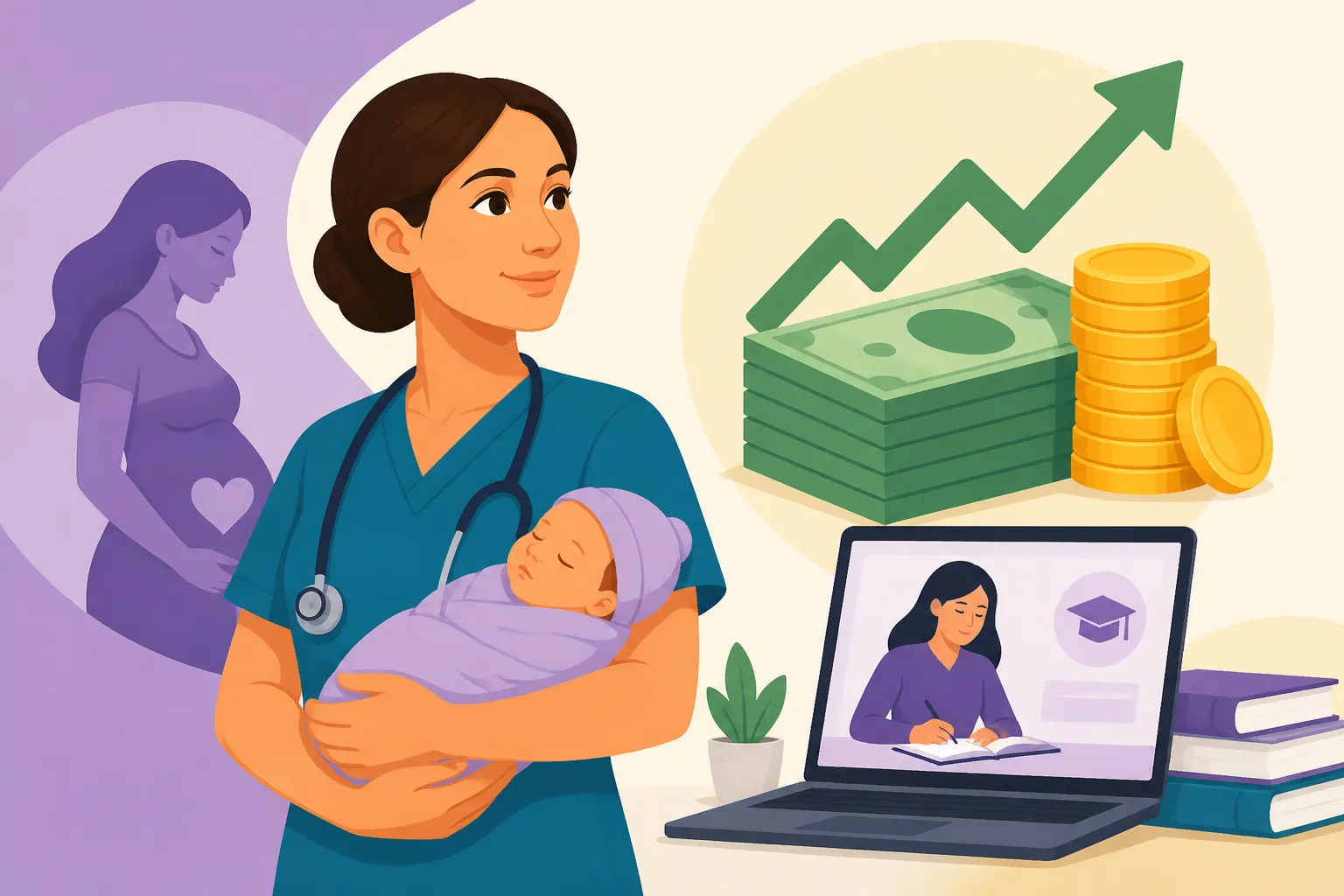
How Much Do Nurse Midwives Make
If you're an RN considering your next career move, or even if you're just starting your nursing journey and looking ahead, the idea of becoming a Certified Nurse Midwife (CNM) probably sparks a lot of questions. One of the biggest, and let's be honest, most practical questions on everyone's mind is usually about the paycheck. After all the hard work, the extensive education, and the demanding clinical hours, you want to know that your dedication will be financially rewarded and that you're investing in a stable and fulfilling future. This guide is here to break down exactly what you can expect to earn as a nurse midwife, exploring all the different factors that can influence those numbers and how you can maximize your earning potential.
Understanding the Certified Nurse Midwife (CNM) Role
Before we dive deep into the salary figures, it's really important to understand what a Certified Nurse Midwife actually does. Many people have a somewhat narrow view, picturing CNMs solely focused on delivering babies. While birth is certainly a huge and incredibly rewarding part of the job, the scope of practice for a CNM is far, far broader, encompassing comprehensive healthcare for women across their lifespan. This often surprises people, but it truly highlights the depth and importance of the role.
Beyond Labor and Delivery: A Full Scope of Practice
A Certified Nurse Midwife provides primary healthcare services to women from adolescence through post-menopause. This isn't just about pregnancy; it's about holistic care that supports women's health choices and needs at every stage of life. Imagine a patient who needs annual well-woman exams, contraception counseling, screenings for sexually transmitted infections, or even basic primary care. A CNM can often be her go-to provider for these services. They're trained to offer preventative care, health education, and counseling on nutrition, exercise, and mental well-being, fostering a true partnership with their patients.
For those considering this path, it's vital to recognize that you're not just entering a specialty; you're becoming a primary care provider for women. This comprehensive approach means you'll develop deep, long-lasting relationships with your patients, guiding them through some of the most intimate and significant moments of their lives. It's a role that demands not only clinical expertise but also incredible empathy and communication skills.
The Educational Journey to Becoming a CNM
The path to becoming a Certified Nurse Midwife is rigorous but incredibly rewarding. It begins with becoming a Registered Nurse (RN), which typically means earning an Associate Degree in Nursing (ADN) or a Bachelor of Science in Nursing (BSN). After that, you'll need to pursue advanced education, usually a Master of Science in Nursing (MSN) with a specialization in nurse-midwifery, or a Doctor of Nursing Practice (DNP). Many nurses find the structured curriculum of an Online MSN Programs: Complete Guide particularly appealing, as it offers the flexibility needed to continue working while studying.
During your graduate program, you'll delve into advanced pathophysiology, pharmacology, physical assessment, and, of course, the specific principles of midwifery and women's health. Clinical hours are a significant component, requiring you to gain hands-on experience under the supervision of experienced CNMs or physicians. This is where you truly hone your skills in gynecological care, prenatal care, labor and delivery, postpartum care, and newborn assessment. If you're wondering about the overall timeline for advanced practice, our guide on How Long to Become a Nurse Practitioner can give you a broader perspective, as CNMs are a type of Advanced Practice Registered Nurse (APRN). After completing your graduate degree, you'll need to pass a national certification exam administered by the American Midwifery Certification Board (AMCB) to earn your CNM credential. Many students find resources like Uworld's comprehensive study materials invaluable for preparing for this challenging exam, ensuring they're ready to tackle the rigorous questions and pass with confidence.
Nurse Midwife Salary Overview: What the Numbers Say
Now, for the numbers you've been waiting for! The salary potential for Certified Nurse Midwives is generally quite strong, reflecting the advanced education, specialized skills, and critical responsibilities inherent in the role. It's definitely a career path that offers a solid return on investment for all your hard work.
Average National Earnings and General Ranges
Nationally, the average annual salary for Certified Nurse Midwives typically falls within a healthy range, often exceeding that of many other nursing roles. While figures can fluctuate based on the most recent data, you can generally expect the median salary for CNMs in the United States to be around $115,000 to $120,000 per year. This median means that half of all CNMs earn more than this amount, and half earn less. However, it's also worth noting that entry-level positions might start closer to $90,000, while highly experienced CNMs in desirable locations or specialized roles can command salaries well over $150,000, and sometimes even higher.
The Bureau of Labor Statistics (BLS) consistently projects a strong job outlook for all Advanced Practice Registered Nurses (APRNs), including CNMs, with growth much faster than the average for all occupations. This high demand, coupled with the specialized nature of the role, helps maintain competitive salaries. If you're trying to compare this to other advanced roles, our Nurse Practitioner Salary Guide provides a detailed breakdown across different NP specialties, giving you a wider context for where CNMs fit in the overall advanced practice nursing landscape.
Comparing CNM Salaries to Other Nursing Roles
It's common for nurses considering advanced practice to weigh the financial benefits against their current RN salary. Generally, pursuing an advanced degree like an MSN to become a CNM offers a significant bump in earning potential compared to a Registered Nurse with only a BSN or ADN. While a BSN-prepared RN might earn an average of around $80,000-$90,000 annually, the jump to a CNM role typically represents a 30-50% increase in income, sometimes even more, especially when you factor in years of experience and location.
For example, think about an RN working in labor and delivery. While their experience is invaluable, the CNM role requires additional education and assumes independent practice responsibilities, which naturally translates to higher compensation. Our article on Nursing Career Paths and Salaries delves into how different degrees and roles impact earning potential, providing a great resource for understanding these transitions. The investment in an MSN vs DNP: Which to Choose for your advanced degree can also play a subtle role, with DNP-prepared nurses sometimes commanding slightly higher salaries, particularly in academic or leadership positions.
Factors Influencing CNM Salaries
Just like with any profession, a Certified Nurse Midwife's salary isn't a fixed number. Many variables come into play, creating a wide spectrum of earning potential. Understanding these factors can help you strategize your career path and make informed decisions about where and how you practice.
Geographic Location: Where You Practice Matters
This is often one of the biggest determinants of salary. Just think about the cost of living differences between, say, San Francisco and a rural town in Alabama – those differences are reflected in wages. States with higher demand for healthcare professionals, higher costs of living, or strong union representation often offer better compensation for CNMs. For instance, states like California, New York, Massachusetts, and Washington frequently report some of the highest average salaries for Certified Nurse Midwives. These areas often have a greater population density, more robust healthcare systems, and sometimes a higher acceptance of advanced practice nurses working to their full scope of practice.
Conversely, states with lower costs of living or a saturated job market might see lower average salaries. It's crucial to research the specific market conditions in any region you're considering. Sometimes, even within a state, a major metropolitan area will offer significantly more than a rural region, though some underserved rural areas might offer incentive programs or bonuses to attract skilled providers. This regional variation highlights why looking at national averages is just a starting point; diving into local data is key.
Experience Level: The Value of Seasoned Expertise
It goes without saying that experience plays a massive role in a CNM's earning potential. A newly graduated CNM, fresh out of their MSN program and having just passed their boards, will likely start at the lower end of the salary spectrum. This initial period is invaluable for gaining independent practice experience, building confidence, and honing clinical judgment. After a few years in practice, however, a CNM's salary can see substantial increases.
For example, a CNM with 5-9 years of experience might see their salary jump by 15-25% compared to a new graduate. Those with 10+ years of experience, particularly if they've taken on leadership roles, mentorship, or specialized in complex cases, can command the highest salaries in the field. This progression reflects not just their clinical skill but also their efficiency, ability to manage complex patient loads, and their contribution to the practice or institution. Don't be discouraged by starting salaries; the growth potential in this field is impressive.
Work Setting: Hospitals, Birth Centers, Private Practices, and Academia
The environment in which you practice can also significantly impact your income.
- Hospitals: Large hospital systems, especially those in urban areas or those affiliated with university medical centers, often offer competitive salaries and comprehensive benefits packages. They tend to have higher patient volumes and may handle more high-risk pregnancies, requiring a broader range of skills and responsibilities. Hospitals also often have a more structured pay scale based on experience and performance.
- Birth Centers: Working in an independent birth center often provides a different work-life balance and a more intimate care model, but salaries might be slightly lower than in large hospitals. However, the satisfaction and autonomy can be incredibly high. Some birth centers operate as part of larger groups that may offer competitive compensation.
- Private Practice/Group Practices: Many CNMs work in private obstetrics and gynecology practices, either independently or alongside physicians. Salaries here can vary widely depending on the practice's business model, patient volume, and the CNM's negotiation skills. Some practices offer profit-sharing or bonuses based on performance.
- Academic Roles: For CNMs interested in teaching or research, working for a university or nursing school can be an option. These roles might offer a blend of clinical practice and educational responsibilities. Salaries in academia can be competitive, especially for DNP-prepared CNMs, but may also include benefits like tuition remission for further education.
- Federal Government/Military: Working for organizations like the Department of Veterans Affairs or in military healthcare systems can offer attractive benefits, stable employment, and competitive salaries, often standardized across locations.
Additional Certifications and Leadership Roles
While the CNM credential itself is a specialization, further certifications or taking on leadership roles can slightly boost your earning potential. For example, becoming certified in specific areas like fetal monitoring instruction, lactation consultation, or advanced cardiac life support, while often required, can subtly enhance your professional profile and marketability. Moving into a charge nurse role, a clinical coordinator position, or becoming a program director for a midwifery service will almost certainly come with a higher salary, reflecting the increased responsibility and administrative duties. Our article on Nursing Specializations Explained provides a broad overview of how these focused areas can shape a nursing career and its compensation.
| Factor | Impact on Salary | Example Scenario |
|---|---|---|
| Experience | Significant increase with years in practice | New grad CNM ($95k) vs. 10-year experienced CNM ($135k+) |
| Location | Varies greatly by state & metro area due to demand/COL | CNM in California ($150k+) vs. CNM in Alabama ($90k-$100k) |
| Work Setting | Hospitals typically offer competitive packages | Large hospital system ($120k) vs. small rural birth center ($105k) |
| Education | DNP may lead to slight edge, especially in leadership | MSN-prepared CNM ($115k) vs. DNP-prepared CNM in leadership ($130k+) |
| Specialization | Additional certs or sub-specialties can add value | CNM with advanced lactation certification, or high-risk obstetrics |
Boosting Your Earning Potential as a CNM
You've put in the hard work to become a Certified Nurse Midwife, and you deserve to be compensated fairly for your specialized skills and vital contributions to women's health. While some factors like location are harder to change overnight, there are definitely proactive steps you can take to enhance your earning potential throughout your career.
Sharpening Your Negotiation Skills
This is often overlooked, but your ability to negotiate your salary and benefits can have a substantial impact on your overall compensation. When you receive a job offer, don't just accept the first number presented. Do your research on average salaries for CNMs with similar experience and in similar geographic areas. Websites like the Bureau of Labor Statistics, Salary.com, and Glassdoor can be great resources. Understand the full compensation package, including health insurance, retirement plans, paid time off, and continuing education allowances.
Be prepared to articulate your value, highlighting your unique skills, experience, and the positive impact you can bring to the practice or institution. If you have advanced certifications beyond your CNM, or if you're fluent in a second language highly valued by the patient population, these can be powerful negotiation points. A simple, polite counter-offer can often lead to a better starting salary or improved benefits. Remember, you're advocating for yourself, and employers often expect some negotiation. Our guide on How to Increase Your Nursing Salary offers more general advice that is highly applicable here.
Pursuing Further Education and Advanced Degrees
While an MSN is the standard entry point for CNMs, pursuing a Doctor of Nursing Practice (DNP) can open doors to higher-paying roles, particularly in leadership, administration, or academia. A DNP equips you with advanced knowledge in areas like healthcare policy, evidence-based practice, and quality improvement, making you a highly valuable asset to healthcare organizations. While the direct salary bump for a DNP-prepared CNM performing the exact same clinical duties might not be massive compared to an MSN-prepared CNM, the DNP often leads to opportunities for roles with increased responsibility and, consequently, higher pay.
For instance, a DNP could position you to lead a midwifery service, develop new clinical programs, or become faculty in a university midwifery program, all of which typically offer higher compensation than direct patient care roles alone. The decision to pursue further education is a significant one, and articles like Is an MSN Worth It can help you weigh the long-term benefits of such an investment.
Embracing Leadership and Mentorship Opportunities
As you gain experience, actively seek out leadership roles within your practice, department, or professional organizations. This could mean becoming a lead CNM, supervising newer midwives, taking charge of a specific clinical program, or serving on hospital committees. These roles demonstrate your commitment, expand your skill set beyond direct patient care, and are often compensated with higher salaries or stipends.
Mentorship is another powerful way to boost your career. Sharing your expertise with students or new graduates not only enriches your profession but also solidifies your reputation as a knowledgeable and experienced practitioner. Sometimes, these mentorship roles come with an additional pay differential. Participating in quality improvement projects or initiating new patient education programs can also demonstrate leadership and value, potentially leading to advancement and increased compensation.
Considering Different Practice Models or Travel Midwifery
Don't be afraid to explore alternative practice models if your current setting isn't meeting your financial or professional goals. For example, some CNMs find opportunities in travel nurse midwifery, where they take temporary contracts in various locations across the country that have a high demand for their skills. These contracts often come with significantly higher pay rates, housing stipends, and travel allowances, making it a lucrative option for those with flexibility and a sense of adventure. Travel assignments, particularly in high-need areas like parts of Texas or California, can be an excellent way to boost your income for a period. Organizations like AMN Healthcare or Aya Healthcare often recruit for such roles.
Another avenue could be exploring roles in underserved rural communities. While often overlooked, some rural health initiatives and hospitals offer competitive salaries, sign-on bonuses, and even student loan repayment programs to attract skilled healthcare providers like CNMs. The demand in these areas can be quite high, translating into better compensation and a chance to make a profound impact on a community.
Disclaimer
Please remember that the information provided in this article regarding salaries and career outlook is intended for general informational purposes only. While we strive to use up-to-date and reliable sources, actual salaries and job market conditions can vary significantly based on factors such as geographic location, employer, individual experience, economic conditions, and specific contract details. This content should not be considered as professional financial or career advice. We highly recommend conducting your own thorough research and consulting with academic advisors, career counselors, and financial professionals when making important career and educational decisions.