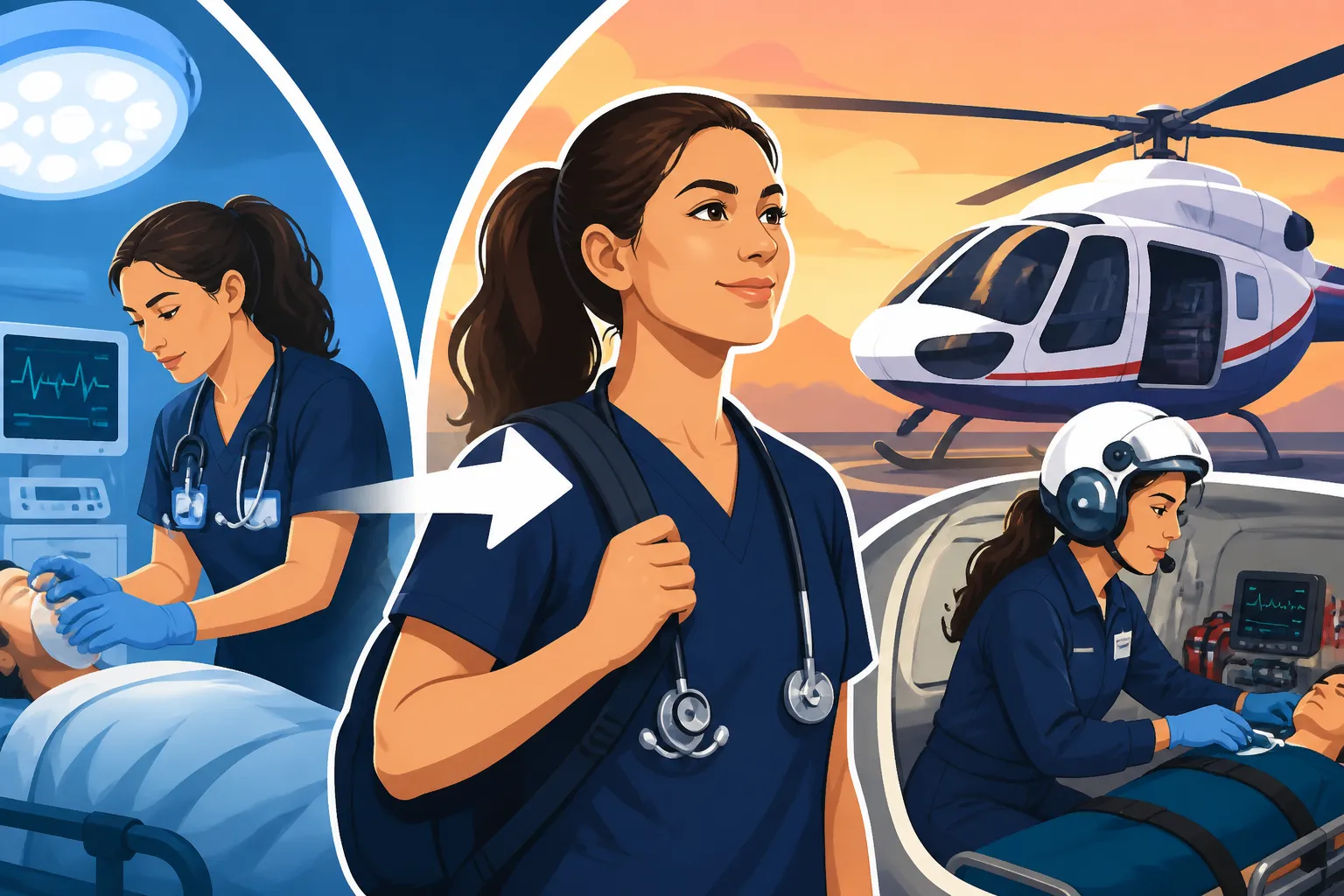
How to Move from ER to Flight Nursing
For many emergency room nurses, there comes a point where the hustle and grind of the ER, while deeply rewarding, can start to feel a little routine, or perhaps you're simply craving a new, exhilarating challenge. You've honed your skills, seen it all, and now you're wondering what's next in your nursing journey. Transitioning from the fast-paced, often chaotic environment of an ER to the high-stakes, autonomous world of flight nursing is a dream for many, but the path isn't always clear. This comprehensive guide will walk you through everything you need to know about making that exciting leap.
Understanding the Unique World of Flight Nursing
Let's be honest, the image of a flight nurse often conjures up dramatic scenes from movies – flying through storms, performing heroics mid-air. While the reality is perhaps a bit less Hollywood, it’s undeniably a specialized and incredibly demanding field that requires an extraordinary blend of clinical expertise, critical thinking, and sheer resilience. It's not just about moving a patient from point A to point B; it's about providing intensive care in an incredibly confined, dynamic, and often noisy environment.
What is Flight Nursing Really Like?
Flight nursing, also known as air medical transport nursing, involves transporting critically ill or injured patients by helicopter or fixed-wing aircraft. These missions can range from inter-facility transfers, moving a patient from a smaller hospital to a larger trauma center, to scene calls, where you're dispatched directly to the site of an accident or emergency. Imagine arriving at a remote car crash site or picking up a patient from a rural hospital without a specialist, and you're the only advanced care provider in the air. That's the daily reality.
The autonomy in this role is significantly higher than in a typical hospital setting. Often, you're working with a paramedic or another nurse, sometimes with a physician, but you are expected to make critical, independent decisions quickly and effectively. There's no calling a rapid response team; you are the rapid response team, often in an environment with limited resources and equipment. The patients are, by definition, critical – unstable traumas, cardiac emergencies, severe respiratory distress, neurological crises, and more. It's a role where every single skill you've ever learned is put to the ultimate test.
The Critical Differences from ER Nursing
While your experience as an emergency room nurse provides an incredible foundation, flight nursing introduces several unique challenges. In the ER, you have a team, a fully stocked trauma bay, and often immediate access to labs, imaging, and a multitude of specialists. In the air, you have a compact medical bag, portable equipment, and the vast expanse of the sky.
One major difference is the environment itself. The aircraft is small, loud, and prone to vibrations. You're dealing with altitude changes, which can affect patient physiology and equipment. Medications might need to be adjusted, and patient conditions can deteriorate rapidly due to atmospheric pressure changes. Communication is also different; you're often speaking over headsets, coordinating with pilots, dispatch, and ground crews. Decision-making processes are streamlined and must be precise, as there’s less room for error or second-guessing in such an isolated, resource-limited setting. While ER nurses are experts at stabilization, flight nurses must excel at sustained critical care and advanced interventions during transport, often without immediate backup. For a deeper dive into the broader field, check out this guide on Nursing Specializations Explained.
Leveraging Your ER Experience for Flight Nursing Success
You might feel a bit daunted by the differences, but here's the good news: your ER experience is not just valuable, it's often a critical prerequisite for flight nursing. The skills you've honed in the emergency department are precisely what makes you a strong candidate for air medical transport.
Core Skills That Translate Directly
Think about it: who better to handle unpredictable, critical situations than someone who thrives in the chaos of an ER? Your ability to triage rapidly, manage multiple high-acuity patients simultaneously, and perform quick assessments are cornerstones of flight nursing.
- Rapid Assessment and Triage: You walk into an ER and instantly prioritize. This is paramount in flight nursing, where every second counts, especially when arriving on scene or taking over a complex inter-facility transfer.
- Critical Thinking and Problem-Solving: ER nurses are masters of thinking on their feet. When a patient crashes or takes an unexpected turn, you're already anticipating the next move. This ability to adapt and innovate with limited resources is indispensable in the air.
- Procedural Skills: Intubation, starting IVs in difficult patients, chest tube insertions (even if you've only assisted, the familiarity is key), central line management, and advanced wound care are all skills that are either performed or managed by flight nurses. Your exposure to these in the ER makes you incredibly valuable.
- Pharmacology Knowledge: You're comfortable with drips, emergency medications, and understanding their effects and side effects. In flight, you're the medication expert for your patient.
- Teamwork and Communication: In the ER, you work seamlessly with doctors, paramedics, and other nurses. In flight, you're part of a small, tight-knit crew where clear, concise communication is literally a matter of life and death.
Your ER background means you've witnessed an incredible breadth of patient conditions, from cardiac arrests and strokes to severe traumas and pediatric emergencies. This diverse exposure prepares you for the unpredictable nature of flight calls. If you're looking to bolster your ER skills further, consider pursuing specific certifications like the Emergency Nurse Certification (CEN).
Bridging the Knowledge Gaps: Where to Focus
While your ER foundation is robust, flight nursing demands an even broader and deeper scope of knowledge. You'll need to expand your expertise beyond the typical emergency department protocols, especially in areas like transport physiology, advanced cardiac care, and independent critical care management.
One significant area is transport physiology. This involves understanding how altitude, vibration, and acceleration affect the human body and medical equipment. For instance, air trapped in a patient's body (like a pneumothorax or bowel obstruction) can expand with altitude, worsening their condition. You'll learn about Boyle's Law and Henry's Law in a practical, life-saving context. Another crucial area is advanced ventilator management and a deeper understanding of hemodynamic monitoring, often including arterial lines and central venous pressure monitoring, as these patients are typically on sophisticated life support.
Many flight nurses pursue specialized training in paramedicine or critical care to complement their nursing background. While you won't become a paramedic, understanding their scope of practice and advanced pre-hospital interventions is incredibly helpful for seamless collaboration. Many flight programs also look for nurses who have a strong foundation in Critical Care Nurse Certification (CCRN) material, even if they haven't worked extensively in an ICU. You can find comprehensive review materials, like those offered by Uworld, that help consolidate this high-level knowledge for various critical care certifications.
Essential Certifications and Advanced Training
To even be considered for flight nursing, you'll need more than just your RN license and ER experience. The bar is set high, and for good reason.
- RN License: This is your foundation, of course.
- Bachelor of Science in Nursing (BSN): While some programs might accept ADN nurses, a BSN is increasingly preferred and often required. This demonstrates a broader understanding of nursing theory, research, and leadership. Learn more about How Much More BSN Nurses Earn and the career benefits.
- Experience: Most programs require a minimum of 3-5 years of recent, high-acuity ER or ICU experience. Some prefer a combination of both.
- Certifications: This is where you really need to shine.
- Basic Life Support (BLS): A given, but always current.
- Advanced Cardiovascular Life Support (ACLS): Absolutely essential.
- Pediatric Advanced Life Support (PALS): Many flight programs transport pediatric patients, making this a must-have.
- Trauma Nurse Core Course (TNCC) or Trauma Care After Resuscitation (TCAR): Your trauma expertise from the ER will be highlighted here.
- Critical Care Registered Nurse (CCRN) or Certified Emergency Nurse (CEN): These certifications are often mandatory or highly preferred. The CCRN, in particular, demonstrates a mastery of critical care principles, which are central to flight nursing. Review resources from companies like Uworld are excellent for preparing for these rigorous exams.
- Certified Flight Registered Nurse (CFRN) or Certified Transport Registered Nurse (CTRN): These are specialty certifications for flight and transport nurses. While you won't typically need them to get the job, you'll often be expected to obtain one within a certain timeframe (e.g., 1-2 years) of hire. This demonstrates your commitment to the specialty.
Acquiring these certifications shows not just competence, but also your dedication to continuous learning and excellence in critical care. Consider this list of Nursing Certifications That Boost Pay as well.
Navigating the Path to Becoming a Flight Nurse
Once you've got your skills sharpened and your certifications in order, it's time to actually pursue the dream. The journey involves careful planning, strategic applications, and a commitment to continuous self-improvement.
Meeting Minimum Experience and Educational Requirements
As mentioned, experience is key. Most flight programs look for nurses with a solid background in high-acuity environments. This usually means 3-5 years of recent experience in a Level I or Level II trauma center emergency department, or a critical care unit like an ICU. The rationale is simple: these units expose you to the sickest patients and the most complex interventions, preparing you for the intense demands of air medical transport. If your current ER experience is in a smaller facility, you might consider cross-training in an ICU or seeking a position in a larger trauma center for a year or two to gain that invaluable exposure.
Additionally, a Bachelor of Science in Nursing (BSN) is becoming the industry standard. While some flight services might occasionally hire an ADN-prepared nurse with extensive critical care experience, having your BSN shows a commitment to higher education and a broader understanding of nursing leadership and evidence-based practice. If you're an ADN nurse, exploring options like Online RN to BSN Programs: Complete Guide could be a smart next step to bolster your resume. Remember that advanced roles often build upon a strong educational foundation.
The Application and Interview Process: What to Expect
Applying for a flight nursing position is usually more involved than a typical hospital job application. It often includes multiple stages designed to rigorously assess your clinical skills, decision-making abilities, and resilience under pressure.
- Initial Application and Resume Review: Ensure your resume clearly highlights your ER experience, certifications, and any leadership or precepting roles. Quantify your experience – e.g., "Managed an average of 10-15 high-acuity trauma and medical patients per shift in a Level I trauma center."
- Skills Assessment: Many programs will include a hands-on skills assessment, requiring you to demonstrate proficiency in intubation, chest tube insertion, advanced airway management, IV insertion, and even splinting techniques. They want to see that you can perform these under pressure.
- Written Exam: This often covers critical care pharmacology, advanced cardiac life support scenarios, trauma management, and transport physiology. Preparation with resources like Uworld's comprehensive practice questions can be incredibly beneficial here, as they're designed to test in-depth knowledge and application.
- Panel Interview: Be prepared for behavioral questions that gauge your ability to handle stress, work autonomously, and make sound judgments in critical situations. They'll ask about your experience with difficult patients, ethical dilemmas, and how you handle conflict.
- Clinical Scenario Simulations: This is often the most challenging part. You might be placed in a mock patient scenario (e.g., a multi-system trauma patient in a simulated aircraft environment) and expected to assess, intervene, and communicate your plan of care under observation. They'll evaluate your critical thinking, clinical competence, and ability to stay calm and organized.
Being prepared for this multi-faceted assessment is crucial. Think about your most challenging ER cases and how you handled them. Practice your critical care algorithms.
Real-World Preparation and Mentorship
Beyond formal education and certifications, active engagement in critical care practices and seeking mentorship can significantly boost your chances. Don't just tick boxes; immerse yourself in the world of high-acuity patient care.
- Seek Out High-Acuity Experience: If your current ER primarily sees low-acuity patients, actively seek opportunities to float to the ICU, work in a trauma bay, or take on shifts during peak trauma times. The more exposure you have to critically ill patients requiring complex interventions, the better.
- Volunteer or Shadow: Some flight programs offer shadow opportunities, which can give you invaluable insight and help you network. You might also consider volunteering with a local EMS service to get more pre-hospital exposure, even if it's just basic life support calls.
- Find a Mentor: Connect with current flight nurses. They can offer insights into the role, help you understand the culture of different services, and provide guidance on preparing for the application process. Their advice can be invaluable in understanding the nuances that aren't covered in textbooks.
- Attend Conferences and Workshops: Specialized conferences on critical care transport or emergency medicine can keep you current with the latest practices and networking opportunities. Look for workshops that offer hands-on practice with advanced procedures. This continuous learning attitude shows initiative and commitment to becoming an expert in your field, which is exactly what flight programs seek.
Career Outlook and Sustaining a Flight Nursing Career
Making the transition to flight nursing is a significant career move. It's a role that offers immense personal and professional satisfaction, along with a robust career trajectory.
Salary Expectations and Job Demand
Flight nursing is one of the Highest-Paying Nursing Specialties, reflecting the high level of skill, responsibility, and risk involved. While salaries vary significantly by region, employer (hospital-based vs. private company), and experience, flight nurses generally earn a higher annual salary than most bedside ER nurses. Factors like flight hours, certifications (like CFRN), and leadership roles within the flight team can further increase earning potential. As an example, an experienced flight nurse in a busy metropolitan area might earn anywhere from $80,000 to well over $120,000 annually, with opportunities for overtime and specialty pay.
The job outlook for flight nurses remains strong. As healthcare systems continue to consolidate and rural hospitals become more specialized, the need for efficient, rapid critical care transport is growing. This is especially true in geographically large states or areas with significant rural populations where ground transport might be too slow or impractical. However, it's also a highly competitive field. While the demand is there, the number of available positions is often fewer than, say, general medical-surgical nursing, and the selection process is rigorous. This makes excelling in your qualifications and preparation even more critical.
Maintaining Competency and Continuing Education
The learning doesn't stop once you become a flight nurse; in fact, it intensifies. The dynamic nature of the role and the constant advancements in critical care require unwavering commitment to continuing education and skill maintenance.
- Regular Training and Simulations: Flight programs typically have robust internal training programs, including regular simulations, skills refreshers, and scenario-based training to ensure you're always sharp. You might do simulated intubations on mannequins or practice managing complex trauma cases in a mock aircraft.
- Recertification: Your BLS, ACLS, PALS, TNCC, CCRN/CEN, and eventually CFRN/CTRN certifications will need to be maintained through continuing education hours and periodic re-examinations. This ensures your knowledge and skills are always up-to-date with current best practices.
- Staying Current with Literature: The best flight nurses are avid learners. They read current critical care journals, stay informed about new medications, equipment, and treatment guidelines, and actively participate in professional organizations.
- Specialty Skills Practice: You'll need to regularly practice low-frequency, high-acuity skills like needle decompression, cricothyrotomy, or advanced airway interventions to ensure you're proficient when the rare but critical moment arises.
The path from the ER to flight nursing is challenging but incredibly rewarding. It demands dedication, continuous learning, and a passion for providing the highest level of critical care, often in the most challenging circumstances. But for those ready to answer the call, it's a career that will redefine your understanding of nursing.
Disclaimer
The information provided in this article is for general informational purposes only and does not constitute professional medical or educational advice. Requirements for nursing programs and certifications can change, and it is always recommended to verify all information with official sources and accredited institutions.