RN to BSN Community Health Course
If you're an experienced registered nurse (RN), you're likely a pro in the fast-paced world of hospitals and acute care. But as you consider or embark on your RN to BSN journey, you might encounter a course that feels a little different: Community Health. This guide aims to demystify the RN to BSN Community Health course, explaining its vital role, what you'll learn, and why it's far more crucial to modern nursing practice than you might initially imagine.
What Exactly is a Community Health Course in an RN to BSN Program?
Many RNs come from backgrounds heavily focused on individual patient care within clinical settings. We're excellent at managing emergencies, administering medications, and providing direct, hands-on care for one patient at a time. The Community Health course, however, asks you to broaden that lens considerably, shifting your focus from the individual to entire groups of people, or "populations." It's less about treating illness and more about preventing it and promoting well-being on a larger scale.
Shifting Focus from Individual to Population Health
Think about your typical shift: you're caring for Mrs. Smith, making sure her post-op recovery is going smoothly. In community health, you're learning to think about all the "Mrs. Smiths" in a particular neighborhood, or even an entire city, and what factors might be impacting their health before they even get to the hospital. It's a proactive, big-picture approach. This foundational shift is key to understanding the full scope of a Bachelor of Science in Nursing (BSN) education. While your Associate's Degree in Nursing (ADN) prepared you to excel at the bedside, the BSN expands your capacity to impact health outcomes beyond the hospital walls. Many nurses find this shift intellectually stimulating, as it allows them to consider the broader determinants of health, such as socio-economic status, access to healthy food, and environmental factors.
Key Concepts and Core Principles
The Community Health course introduces you to a whole new vocabulary and set of principles that underpin public health nursing. You'll delve into concepts like epidemiology, which is the study of how diseases spread through populations, and how to identify health trends. You'll explore health promotion strategies, looking at how to educate and empower communities to make healthier choices, rather than simply treating the consequences of poor health. You’ll also examine health disparities—the avoidable differences in health outcomes between different groups of people—and consider the social justice aspects of nursing. Understanding these core principles helps you see how your individual patient care decisions fit into a much larger public health framework, giving you a comprehensive understanding of healthcare delivery.
Why is Community Health Nursing Essential for Your BSN?
It's common for RNs to wonder why they need to spend time studying community health when their passion lies in direct patient care. The truth is, the healthcare landscape is constantly evolving, and a BSN-prepared nurse is expected to have a broader skill set that extends beyond acute care. This course directly addresses those expanding expectations, preparing you for leadership and advocacy roles.
Meeting Evolving Healthcare Demands
Modern healthcare is placing an increasing emphasis on preventive care and managing chronic conditions in community settings to reduce hospitalizations. Hospitals and healthcare systems are realizing that true health improvement happens where people live, work, and play. This means BSN-prepared nurses, like you, are expected to contribute to these efforts. Your community health knowledge will enable you to identify at-risk populations, design health education programs, and collaborate with community organizations. For instance, a hospital might partner with a local food bank to address food insecurity among diabetic patients, and a BSN-prepared nurse would be instrumental in leading such an initiative. This expanded role is a significant reason why many employers are increasingly preferring nurses with a BSN degree, making this course invaluable to your long-term career.
Enhancing Critical Thinking and Advocacy Skills
Thinking about health on a population level forces you to engage a different kind of critical thinking. You’ll move beyond "what is wrong with this patient?" to "what factors in this community are contributing to these health issues?" This involves analyzing data, identifying patterns, and thinking systemically about solutions. Furthermore, community health nursing inherently involves advocacy. You'll learn to speak up for vulnerable populations, lobby for policy changes that improve health, and empower individuals within communities to advocate for themselves. These advanced critical thinking and advocacy skills are central to the BSN curriculum and are highly valued in all areas of nursing practice, from staff nurse to management roles.
Career Advancement and Broadening Your Scope
Earning your BSN opens doors to a wider array of nursing roles, and many of these advanced positions heavily rely on community health principles. You might consider roles in public health departments, school nursing, occupational health, home health, or even developing health programs for large corporations. Even if you plan to stay in acute care, understanding community health makes you a more well-rounded nurse, capable of recognizing how a patient's home environment or community resources impact their recovery and long-term health. The knowledge gained from a community health course truly broadens your scope of practice and makes you a more competitive candidate for positions that require a deeper understanding of population health. Thinking about the long game, understanding how different courses like this contribute to your overall expertise can help answer the question, Is an RN to BSN Worth It?.
Diving Deep into the Curriculum: What You'll Actually Learn
The curriculum for an RN to BSN Community Health course is designed to equip you with the theoretical knowledge and practical skills necessary to address health challenges on a larger scale. While specific topics might vary slightly between programs, there are common threads you can expect to encounter.
Epidemiology and Disease Prevention
A significant portion of the course will likely focus on epidemiology. This isn't just dry statistics; it's about understanding the patterns of disease, identifying risk factors, and learning how to prevent outbreaks. You'll study how to interpret epidemiological data to assess the health needs of a community, such as tracking vaccination rates, prevalence of chronic diseases, or rates of communicable illnesses like influenza or tuberculosis. For instance, you might analyze data to understand why a certain neighborhood has higher rates of childhood asthma compared to others, and then think about the environmental factors at play. This knowledge is paramount for developing effective disease prevention strategies, from public health campaigns to targeted interventions for specific populations. For many, this is a vastly different approach from the day-to-day acute care you're used to, offering a new perspective on patient well-being and community safety.
Health Promotion and Education Strategies
This section is all about empowering individuals and communities to take control of their health. You'll learn various models and theories of health behavior change, exploring how to effectively communicate health information and motivate people to adopt healthier lifestyles. This could involve developing culturally sensitive educational materials on nutrition for a specific immigrant group, creating a smoking cessation program for a local factory, or organizing a health fair to screen for hypertension in an underserved area. The emphasis is on proactive interventions rather than reactive treatment. You'll likely develop and present a health education plan, demonstrating your ability to translate complex health information into actionable advice for diverse audiences. When reviewing your RN to BSN Curriculum Overview, you'll see how this course stands out in its direct application to community wellness.
Policy, Ethics, and Cultural Competence in Community Settings
Community health nursing isn't just about direct interventions; it also involves understanding the broader systems that influence health. You'll delve into healthcare policy, learning how local, state, and national policies impact community health initiatives and how nurses can advocate for change. Ethical considerations are also paramount, particularly when dealing with vulnerable populations or navigating resource allocation. Furthermore, cultural competence is crucial. You'll explore how different cultural beliefs, values, and practices influence health behaviors and healthcare access, and how to provide care that is respectful and effective for diverse populations. For example, understanding the traditional healing practices of a specific Indigenous community in Arizona could be vital to gaining trust and promoting participation in a new health screening program. This holistic approach ensures you are prepared for the complexities of modern healthcare.
| Feature | Acute Care Nursing Focus | Community Health Nursing Focus |
|---|---|---|
| Primary Patient | Individual (e.g., a patient in a hospital bed) | Population groups (e.g., elderly in a neighborhood, school children) |
| Primary Goal | Treat existing illness, stabilize, facilitate recovery | Prevent illness, promote health, maintain wellness |
| Key Interventions | Medication administration, wound care, monitoring, procedures | Health education, screening, vaccination clinics, policy advocacy |
| Typical Setting | Hospitals, clinics, emergency departments | Homes, schools, workplaces, community centers, public health departments |
| Time Horizon | Short-term, episode-of-care driven | Long-term, focuses on continuous health improvement |
| Decision-Making | Patient-centered, often immediate | Population-centered, systemic, often collaborative |
Understanding the "Clinical" Component: What to Expect
The word "clinical" often conjures images of hospital beds, IV pumps, and direct patient contact. However, the "clinical" component in an RN to BSN Community Health course is usually quite different, reflecting the unique nature of this specialty. It’s designed to get you out of the traditional acute care environment and into the heart of communities. For many RNs, this is one of the most surprising aspects of the course. If you're wondering about RN to BSN Clinical Hours Explained, this section will shed light on how they differ here.
Beyond the Hospital Walls: Real-World Experiences
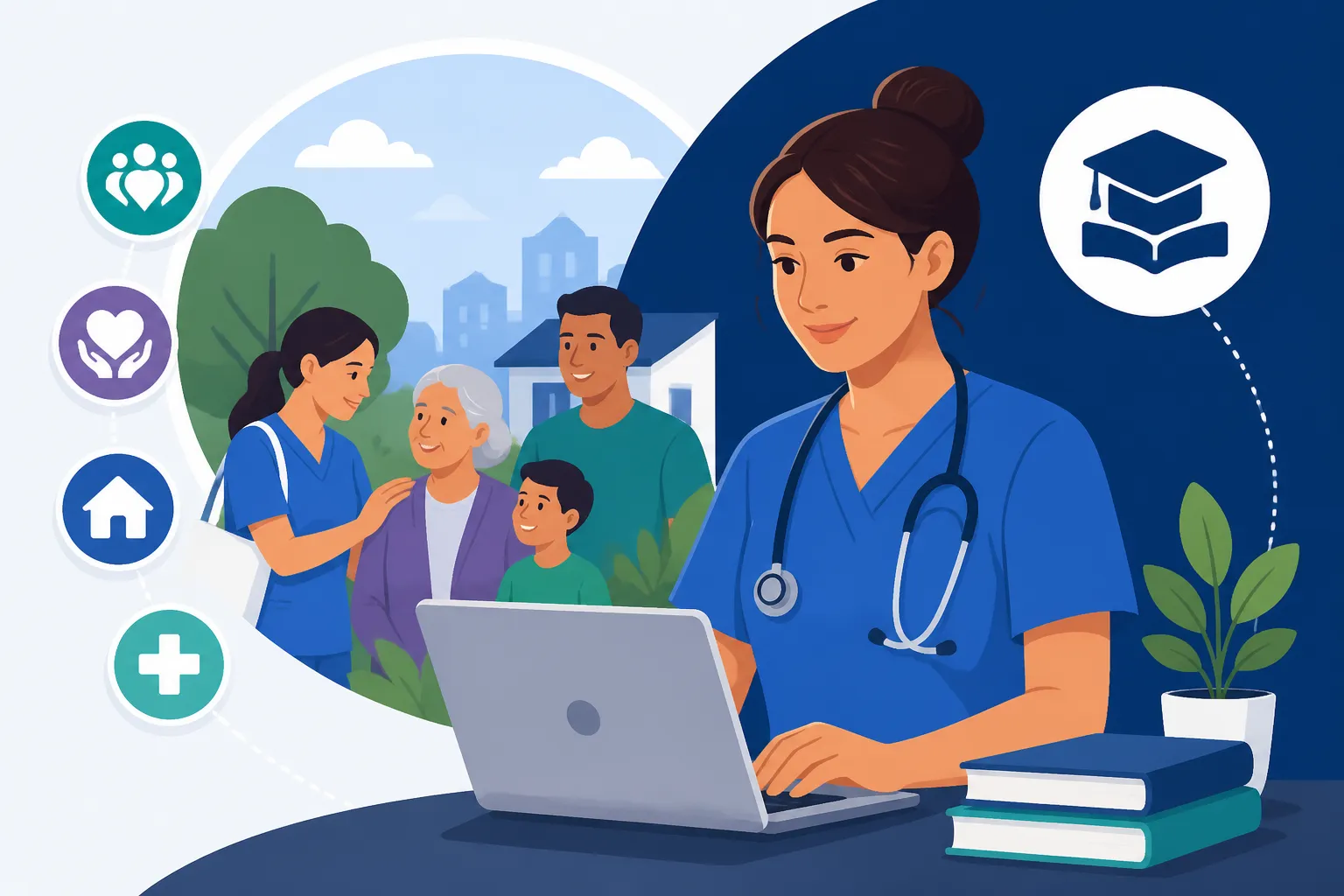
Instead of working one-on-one with patients in a hospital, your community health "clinical" might involve working with a local health department, a school nurse, a hospice agency, a homeless shelter, or a community clinic. You might spend time observing public health programs, participating in health screenings at a community event in San Diego, or assisting with vaccination clinics. The goal is to give you firsthand experience with population-focused interventions and to see how health is promoted and protected outside the hospital. These experiences are invaluable for understanding the practical application of the theories you're learning in class. It's truly a chance to apply concepts like health promotion and disease prevention in tangible, impactful ways within diverse community settings.
Project-Based Learning and Community Engagement
Many online RN to BSN programs structure their community health "clinical" as a project-based experience rather than traditional direct patient care. This often involves identifying a health need in a specific community, designing an intervention, and then implementing or proposing it. For example, you might collaborate with a local senior center in your hometown of Boise, Idaho, to develop a falls prevention program, or work with a school district to create a nutrition education series for parents. These projects often require significant community engagement, interviewing stakeholders, and presenting your findings. This allows you to apply your critical thinking and advocacy skills directly, and often involves a strong reflective component where you analyze the outcomes and impact of your work. This approach aligns perfectly with the BSN's emphasis on leadership and evidence-based practice, giving you practical experience that you can immediately apply in your career. When planning your academic journey, understanding the practical elements like this is crucial, and articles like RN to BSN Direct Care Component Explained can provide further clarity.
Tips for Success in Your Community Health Course
Even as an experienced RN, tackling a new subject area can feel daunting. The Community Health course, with its broader focus, might require you to adjust your study habits. But with the right approach, you can absolutely excel and find immense value in what you learn. Remember, a BSN is a comprehensive degree, and mastering courses like this contributes significantly to your overall What You Learn in an RN to BSN Program.
Leveraging Resources and Study Strategies
This course often involves a lot of reading and understanding new theoretical frameworks. Don't be afraid to delve into supplementary materials, journal articles, and public health reports to deepen your understanding. Participate actively in online discussions, as your peers' diverse experiences can offer valuable insights into community health challenges in different regions. For complex topics like epidemiology, consider using visual aids or creating concept maps to connect the dots. You might also find resources like Uworld helpful for reinforcing key concepts and testing your knowledge with practice questions, especially as you prepare for the broader scope of nursing knowledge that the NCLEX demands, which includes public health concepts. Regularly reviewing course materials and engaging with the content beyond just memorization will make a huge difference.
Connecting Classroom Theory to Practice
One of the best ways to grasp community health concepts is to constantly look for real-world examples. Think about the health issues in your own community or current events in healthcare news. How do the principles of epidemiology explain a recent infectious disease outbreak? How could health promotion strategies be used to address the opioid crisis in your state? If your program involves a project-based clinical, immerse yourself fully in that experience, connecting the theoretical models you've learned to the practical challenges and opportunities you encounter. Even in your acute care role, start observing the broader context of your patients' health: What resources do they have when they leave the hospital? What community factors might have contributed to their illness? By making these connections, the abstract concepts of community health will become concrete and deeply relevant to your nursing practice. Successfully balancing these new academic challenges with your existing responsibilities is key, and resources like How to Balance Work and RN to BSN can offer valuable strategies.
Disclaimer
Please remember that the information provided in this guide is for general informational purposes only and does not constitute professional advice. Course content, clinical requirements, and program structures can vary significantly between educational institutions. Always consult with your academic advisor, program director, or the official course catalog of your chosen RN to BSN program for the most accurate and up-to-date information regarding specific course requirements and expectations.