RN to BSN for Diploma Nurses
You've been on the front lines for years, honing your nursing skills and delivering compassionate care, all thanks to your diploma. But lately, you might be feeling the pinch – perhaps your employer is pushing for a BSN, or you're seeing career doors close before you can even knock. This guide is here to walk you through the specifics of transitioning from a diploma-prepared RN to earning your Bachelor of Science in Nursing (BSN) through convenient online programs, validating your experience while preparing you for future opportunities.
The Enduring Legacy of Diploma Nursing Programs
For decades, diploma nursing programs were the backbone of the nursing profession, graduating countless skilled nurses who formed the very foundation of patient care. If you're a diploma-prepared RN, you're part of a proud and incredibly capable lineage, and your practical experience is often second to none.
A Rich History Rooted in Practical Experience
Think about it: many diploma programs were hospital-based, meaning you were immersed in real-world patient care from day one. You learned by doing, often spending more hands-on hours in clinical settings than your ADN or even some BSN counterparts in their initial years. This practical, direct patient care experience is invaluable and something that can't easily be taught in a textbook alone. You've likely seen it all, from routine medical-surgical cases to high-stress emergency situations, building a robust skill set that makes you an indispensable part of any healthcare team. Many veteran diploma nurses can recount stories of learning directly from seasoned nurses, often in a mentorship style that is hard to replicate in larger academic settings today.
The Shifting Landscape: Why BSNs are Becoming Essential
Despite the undeniable strengths of diploma-prepared nurses, the healthcare landscape has undeniably shifted. The push for BSN-prepared nurses, often highlighted by initiatives like the "80% BSN by 2020" goal set by the Institute of Medicine (now the National Academy of Medicine), has profoundly impacted the profession. This isn't a slight against your foundational education, but rather a reflection of the increasing complexity of patient care, the emphasis on evidence-based practice, and the desire for nurses to play a larger role in healthcare leadership and policy. Many hospitals, particularly those seeking or maintaining Magnet Status and the BSN Requirement, now either require new hires to have a BSN or mandate that current diploma or ADN-prepared nurses complete their BSN within a certain timeframe. This can feel frustrating, like your years of dedicated service are suddenly being questioned, but it's really about adapting to evolving industry standards and opening doors for your future growth.
Why Pursue an RN to BSN as a Diploma Nurse Today
For many diploma nurses, the decision to pursue an RN to BSN isn't just about meeting a mandate; it's about investing in their own professional longevity and opening up a world of new possibilities. It's a strategic move in an increasingly competitive field.
Meeting Employer Expectations and Advancing Your Career
Let's be real: one of the biggest drivers for many diploma nurses to go back to school is employer pressure. Hospitals and healthcare systems are increasingly prioritizing BSN-prepared nurses for a variety of reasons, including improved patient outcomes, better communication skills, and a broader understanding of public health and healthcare policy. What this means for you is that without a BSN, you might find yourself limited in your ability to move into leadership roles, specialized units, or even secure new positions in competitive markets. Earning your BSN often becomes a gateway to roles like charge nurse, nurse manager, or clinical educator – positions that offer not only increased pay but also a chance to shape patient care on a wider scale. It’s about ensuring you remain a vital and valued asset in any healthcare setting, and it opens up the conversation for a Does a BSN Increase Your Salary discussion at review time.
Enhancing Your Clinical Practice and Professional Growth
Beyond the practical necessity, an RN to BSN program also enriches your clinical practice. While your diploma provided an incredible foundation in hands-on care, a BSN curriculum delves deeper into areas like nursing theory, research, community health, and leadership. You'll learn to critically appraise research, implement evidence-based interventions, and understand the socio-economic factors influencing health in your community. For example, a course in public health nursing might show you how to identify health disparities in a local population, equipping you to advocate for systemic changes that benefit your patients even before they reach the hospital. This expanded knowledge base doesn't just make you a more well-rounded nurse; it empowers you to contribute to healthcare in more profound ways, offering Career Benefits of Earning a BSN that go far beyond the bedside.
Navigating the Online RN to BSN Admissions Process
Deciding to go back to school is a big step, and for diploma nurses, understanding how your years of experience and previous education translate into a BSN program can feel like navigating a maze. The good news is that many online RN to BSN programs are specifically designed with experienced nurses like you in mind.
Understanding Credit Transfer from Your Diploma Program
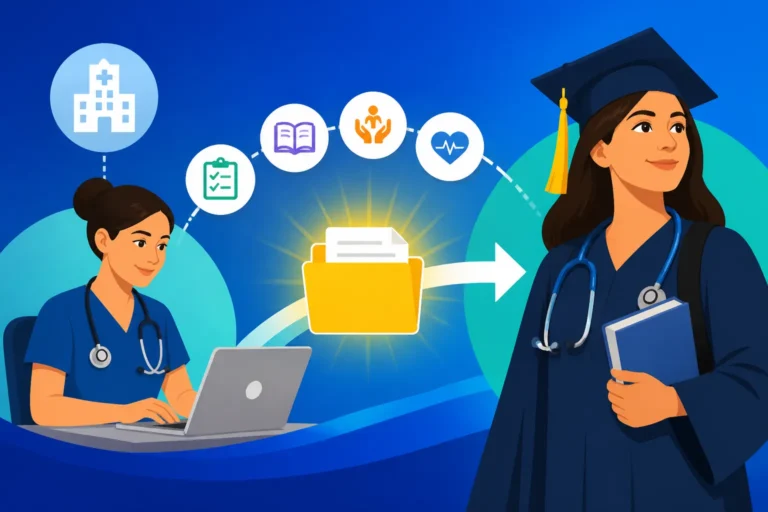
This is often the trickiest part for diploma nurses. Unlike ADN programs, which typically articulate more smoothly into BSN pathways, diploma programs can sometimes be a bit more complex when it comes to credit transfer. However, most reputable Online RN to BSN Programs: Complete Guide understand the value of your clinical preparation. Many institutions will grant a block of credit for your active RN license, acknowledging your fundamental nursing knowledge and skills. This means your initial nursing education is definitely recognized!
For instance, a program might award 30-45 credits simply for holding an unencumbered RN license. Beyond that, schools will evaluate your specific diploma program transcripts. General education courses (like English, psychology, sociology, and basic sciences) taken during your diploma program, or even prior to it, are usually transferable if they meet the university's criteria and were taken at an accredited institution. It's crucial to have your official transcripts from your diploma program and any other colleges sent directly to the admissions office for a thorough evaluation. Don't be shy about asking admissions counselors how much of your prior learning they can accept; some programs are much more generous than others, especially with how RN license credits count toward the degree.
Essential Prerequisites and Application Strategies
While your diploma and RN license are huge assets, most RN to BSN programs will still have specific RN to BSN Requirements Explained beyond those. Common prerequisites often include general education courses in:
- English Composition: Usually two semesters or equivalent.
- College-Level Math: Often statistics or college algebra.
- Human Anatomy & Physiology: Typically two courses with labs.
- Microbiology: Often with a lab.
- Chemistry: Sometimes a general chemistry or introductory chemistry course.
- Psychology or Sociology: Introductory courses are common.
- Developmental Psychology or Lifespan Development: To understand human growth across ages.
Many diploma nurses might find they've completed some, if not most, of these during their initial nursing education or through prior college coursework. If you're missing any, don't despair! Online programs often allow you to take these prerequisite courses concurrently or through their own general education offerings. When applying, highlight your extensive clinical experience, any certifications you hold (like ACLS, PALS), and your dedication to patient care. A strong personal statement detailing your motivation for earning a BSN, and how your diploma background has prepared you, can also be very impactful.
The Role of Accreditation in Your Program Choice
Choosing an accredited program isn't just a suggestion; it's a non-negotiable step for any diploma nurse considering an online RN to BSN. Accreditation ensures that a program meets rigorous quality standards, and it's absolutely critical for several reasons:
- Future Licensure: Most state boards of nursing require graduates to come from accredited programs.
- Financial Aid Eligibility: You won't be able to access federal financial aid if your program isn't accredited.
- Transferability of Credits: If you ever decide to pursue a Master's (MSN) or Doctoral (DNP) degree, credits from a non-accredited BSN program likely won't transfer.
- Employer Acceptance: Many employers will only recognize BSNs from accredited programs.
For nursing programs, you'll want to look for programmatic accreditation from either the Accreditation Commission for Education in Nursing (ACEN) or the Commission on Collegiate Nursing Education (CCNE). Both are highly respected and recognized. You can delve into the nuances of CCNE vs ACEN Accreditation Explained to understand their slight differences, but either one signifies a quality program. Always verify a program's accreditation status directly on the accrediting body's website, not just on the school's marketing materials. Choosing an Accredited Online RN to BSN Programs is perhaps the most important decision you'll make in this process.
What to Expect from Your Online RN to BSN Curriculum
Making the leap to online learning might feel a bit daunting, especially if it’s been a while since you’ve been in a formal academic setting. Rest assured, online RN to BSN programs are structured to build upon your existing knowledge and experience, not replace it.
Core Courses That Build on Your Existing Knowledge
The beauty of an RN to BSN program for diploma nurses is that it truly leverages your RN license and practical experience. You won't be re-learning fundamental nursing skills like medication administration or wound care. Instead, the curriculum focuses on expanding your critical thinking, leadership abilities, and understanding of broader healthcare concepts. You'll encounter courses like:
- Nursing Leadership and Management: Applying leadership theories to clinical practice, understanding team dynamics, and conflict resolution.
- Nursing Research and Evidence-Based Practice: Learning how to read, interpret, and apply research findings to improve patient care, which is vital for staying current in nursing.
- Community Health Nursing: Exploring healthcare needs beyond the hospital walls, focusing on population health, epidemiology, and health promotion in diverse communities.
- Health Assessment for the Registered Nurse: Building on your initial assessment skills with a deeper dive into advanced techniques and diagnostic reasoning.
- Nursing Informatics: Understanding how technology, data, and information systems are used to enhance patient care and clinical decision-making.
- Professional Nursing Practice: Examining ethical dilemmas, legal responsibilities, and the historical and theoretical underpinnings of nursing.
These courses are designed to broaden your perspective, equipping you with the analytical and decision-making skills required for complex patient situations and leadership roles. Your existing knowledge provides a fantastic framework for these new concepts, making the learning experience richer and more immediately applicable. Many nurses also find resources like Uworld valuable for brushing up on specific content areas or for preparing for any standardized assessments within their BSN coursework, leveraging its comprehensive question banks and explanations.
The "Clinical" Component: What It Looks Like Online
One of the most common questions diploma nurses have about online RN to BSN programs is, "Do I have to do more clinicals?" The answer, in most cases, is no, not in the traditional sense of direct patient care. Your diploma program and active RN license are accepted as fulfilling the foundational clinical competencies.
However, many programs do incorporate what they call a "community health practicum" or "leadership practicum" as part of their curriculum. This isn't about working another 12-hour shift in a hospital ward. Instead, these experiences are focused on applying the broader concepts learned in your BSN coursework to real-world scenarios. For example, a community health practicum might involve:
- Developing a health education program for a local senior center, focusing on fall prevention or diabetes management.
- Volunteering with a public health initiative at a local clinic or county health department.
- Conducting a health assessment of a specific community and identifying resources or interventions.
- Shadowing a nurse manager or a public health nurse to understand their role in promoting population health.
These experiences are often flexible, allowing you to complete them in your local community, sometimes even at your current workplace, with the guidance of a preceptor. They are designed to be relevant to your learning goals and build on your existing professional network. It's a different kind of "clinical" than you're used to, but it's incredibly valuable for round out your BSN education, differentiating it from the more hands-on RN to BSN Clinical Hours Explained required for initial licensure.
Strategies for Success in an Online RN to BSN Program
Returning to school while juggling your existing responsibilities can feel like adding another full-time job. But it's absolutely doable, and countless diploma nurses have walked this path successfully. The key is strategic planning and leaning into your strengths.
Balancing Work, Family, and Academic Demands
Let's be honest, this is probably your biggest concern. You're already a busy professional, possibly a parent, and definitely someone with a life outside of work. The beauty of online RN to BSN programs is their flexibility. You can often access coursework at any time of day or night, fitting it around your shift schedule and family commitments. However, "flexible" doesn't mean "easy." You'll still need discipline and excellent time management skills.
Here are some strategies for How to Balance Work and RN to BSN:
- Create a Dedicated Study Space: A quiet corner where you can focus without interruption, even if it's just a specific time at the kitchen table after everyone else is asleep.
- Develop a Schedule and Stick to It: Block out specific times each week for lectures, readings, assignments, and discussions. Treat these study blocks like non-negotiable appointments.
- Communicate with Your Family and Employer: Let your loved ones know your academic schedule and ask for their support. Discuss your plans with your supervisor; some employers even offer tuition reimbursement or flexible scheduling options for nurses pursuing higher education.
- Break Down Large Tasks: Don't look at the entire semester's workload. Focus on one module, one assignment, or even just one chapter at a time.
- Utilize Your Commute or Downtime: Listen to recorded lectures or review flashcards during your commute or breaks.
- Leverage Technology: Use calendar apps, reminder tools, and note-taking software to keep track of deadlines and organize your materials.
Remember, this is a marathon, not a sprint. There will be challenging weeks, but with a solid plan, you can absolutely make it work.
Leveraging Your Experience to Excel
As a diploma-prepared RN, you have a distinct advantage: real-world experience. Don't underestimate this! You've seen the theories in practice, navigated complex patient situations, and developed critical thinking skills through years of hands-on care.
When you're in a course discussing leadership theories, you can recall instances where you stepped up in an emergency or mentored a new grad. When studying community health, you can reflect on the social determinants of health you've observed in your patients. This practical context will make the academic material much more meaningful and help you connect theory to practice seamlessly. Participate actively in online discussion forums, sharing your experiences respectfully and thoughtfully. Your peers, some of whom may be newer nurses, will benefit immensely from your insights, and your instructors will appreciate your ability to apply concepts. This isn't just about getting through the coursework; it's about enriching your understanding and contributing to the learning environment for everyone. Your experience also makes you a prime candidate for a swift RN to BSN Completion Timeline, often finishing within 1-2 years.
The Long-Term Benefits for Diploma-Prepared Nurses
Taking the leap to earn your BSN as a diploma nurse might feel like a big investment of time, energy, and money, but the long-term returns are substantial. You're not just getting a piece of paper; you're securing your future in nursing.
Expanded Career Opportunities and Earning Potential
With a BSN, you immediately open up a wider array of career opportunities. Many healthcare systems are now explicitly stating that a BSN is preferred or required for certain positions, particularly in magnet hospitals or larger academic medical centers. This means you might finally be eligible for those charge nurse positions, clinical coordinator roles, or even entry-level management positions that were previously out of reach.
Beyond expanding your current options, a BSN can lead to entirely new pathways. You might find yourself drawn to specialties like case management, public health, or nursing informatics. Furthermore, while the immediate salary bump might vary by region and employer, earning your BSN often positions you for higher earning potential over your career trajectory. The Bureau of Labor Statistics consistently shows that nurses with higher education levels tend to earn more over their lifetime. It’s a foundational step towards greater financial security and professional satisfaction. For a deeper dive into what this means financially, exploring topics like How Much Does an RN to BSN Cost and Is an RN to BSN Worth It can provide a clearer picture.
Pathways to Advanced Nursing Roles
Perhaps one of the most exciting long-term benefits for diploma nurses earning their BSN is the clear pathway it creates for advanced nursing roles. A BSN is the foundational degree required for most Master of Science in Nursing (MSN) programs, which prepare nurses for roles as Nurse Practitioners (NPs), Clinical Nurse Specialists (CNSs), Nurse Educators, or Nurse Administrators. If you've ever considered becoming a Family Nurse Practitioner, a Psychiatric Mental Health Nurse Practitioner, or even going into nursing leadership, your BSN is the essential stepping stone. Without it, pursuing these advanced degrees would be impossible. Your journey from a diploma to a BSN not only solidifies your current standing but also sets you on a trajectory toward becoming a highly specialized and influential leader in healthcare, truly showcasing the ADN vs BSN: Key Differences and the doors a BSN opens.
| Feature | Diploma-Prepared RN | BSN-Prepared RN |
|---|---|---|
| Focus of Education | Strong emphasis on hands-on, direct patient care | Broader focus: clinical, leadership, research, community health, critical thinking |
| Typical Duration | 2-3 years (hospital-based) | 4 years (university), 1-2 years (RN-to-BSN online) |
| Employer Preference | Accepted, but increasingly requires BSN completion | Highly preferred, often required for leadership roles |
| Career Mobility | Limited in some advanced roles and specialties | Broader access to leadership, education, advanced practice pathways |
| Academic Pathways | Requires an RN-to-BSN bridge for graduate studies | Direct entry into MSN or DNP programs |
| Average Salary | Generally lower than BSN (entry-mid level) | Generally higher than diploma/ADN, especially with experience and in specialized roles |
Disclaimer
The information provided in this article is intended for general informational purposes only and does not constitute professional advice. Nursing program requirements, costs, and career opportunities can vary significantly. Always consult with academic advisors, program admissions departments, and relevant professional organizations for the most accurate and up-to-date information pertaining to your individual circumstances.