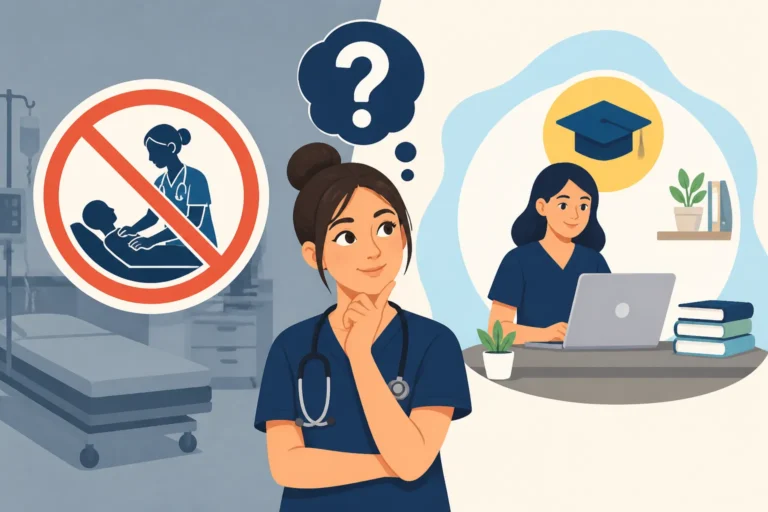
Competency-Based RN to BSN Programs
Let's be real, balancing the demanding schedule of a registered nurse with the desire to advance your education can feel like trying to solve a Rubik's Cube blindfolded. Traditional semester-based programs, with their rigid class times and set deadlines, often just don't fit into the chaotic reality of working in healthcare. This guide is here to shed light on competency-based RN to BSN programs, offering a flexible and often faster pathway to earning your Bachelor of Science in Nursing without sacrificing your career or your sanity.
Understanding Competency-Based RN to BSN Programs
For many nurses, the idea of going back to school brings with it a wave of dread about classroom lectures, group projects, and assignments due at inconvenient times. But what if there was a way to leverage your existing knowledge and experience, moving through coursework at your own pace, and only focusing on what you still need to learn? That's the promise of competency-based education.
What is Competency-Based Education CBE?
Competency-based education, or CBE, is an educational model that focuses on what you know and can do rather than how much time you spend in a classroom. In a CBE program, you advance by demonstrating mastery of specific skills and knowledge, known as competencies, rather than accumulating credit hours based on seat time. Think of it like this: instead of sitting through a 16-week course on nursing ethics, you demonstrate your understanding of ethical principles through assessments, projects, and perhaps even simulations. If you already grasp the material, you prove it and move on. If you need more time, you take it.
This model is particularly well-suited for experienced registered nurses who already possess a wealth of clinical experience and practical knowledge. Many RNs who have been working for years find themselves bored or frustrated by traditional programs that force them to re-learn concepts they already apply daily. CBE respects that prior learning and allows you to accelerate your progress where you're already competent.
How CBE Differs from Traditional Nursing Programs
The distinction between competency-based and traditional programs is quite significant, and understanding these differences is key to deciding which path is right for you. In a traditional program, you enroll in courses that run for a fixed duration, typically a semester or quarter. Everyone in the class moves at the same pace, attending lectures, participating in discussions, and submitting assignments on a pre-set schedule. Your final grade is often an accumulation of points from tests, papers, and participation.
CBE, on the other hand, breaks down the curriculum into individual competencies. You gain access to learning materials for these competencies, and then, at your own speed, you work through them. Once you feel confident, you take an assessment to demonstrate mastery. This could be an exam, a case study analysis, a research paper, or a simulated scenario. There are no fixed "classes" in the traditional sense, and you're not waiting for classmates to catch up or struggling to keep pace with an overly fast schedule. It's about personal progress, driven by your ability to demonstrate the required competencies. This is a huge shift from the "time in class" focus of traditional education.
The Core Philosophy Behind Competency-Based Learning
At its heart, competency-based learning is about student empowerment and real-world applicability. The philosophy posits that what truly matters isn't the number of hours you spent in a lecture hall, but whether you can actually perform the tasks and understand the concepts required for professional practice. For nurses, this means focusing on clinical judgment, evidence-based practice, leadership skills, and community health – all vital areas that a BSN emphasizes.
This model acknowledges that adult learners, especially working professionals like RNs, often bring diverse backgrounds and experiences to their education. It values that practical experience, integrating it into the learning process rather than dismissing it. By allowing you to bypass content you've already mastered, CBE ensures that your precious time and resources are focused on building new knowledge and refining skills that will genuinely enhance your nursing practice and career trajectory. This makes the journey to earn your BSN more efficient and personally relevant.
Is a Competency-Based RN to BSN Program Right for You?
Deciding on the right educational path is a deeply personal choice. While competency-based programs offer incredible flexibility, they aren't a one-size-fits-all solution. It's crucial to honestly assess your learning style, personal discipline, and life circumstances before diving in.
Ideal Candidates for Self-Paced Learning
Competency-based RN to BSN programs truly shine for individuals who thrive in a self-directed learning environment. If you're someone who is highly self-motivated, organized, and enjoys setting your own schedule, then CBE could be your perfect match. Many working nurses, particularly those with unpredictable shifts, find this model incredibly appealing. Imagine finishing a night shift, grabbing a few hours of sleep, and then dedicating a focused block of time to your studies when you're most alert, rather than trying to squeeze into a rigid university lecture schedule.
These programs are also excellent for RNs who have been out of school for a while but possess strong practical knowledge. You can often test out of competencies you've already mastered through years of bedside experience, potentially shortening your overall program duration. If you've looked at traditional RN to BSN requirements and felt frustrated by the prospect of re-learning things you already know, a competency-based program might offer the refreshing challenge you're looking for, allowing you to focus on growth areas rather than repeating content. If you're considering the time commitment, our guide on How Long Does an RN to BSN Take might offer further insights into various program lengths.
Balancing Work, Life, and Studies
This is where competency-based programs truly stand out for the working RN. We all know how demanding a nurse's schedule can be – those unpredictable shifts, the double-backs, the sheer mental and physical exhaustion. Traditional programs often exacerbate this stress, adding fixed class times, commutes, and group projects that demand synchronous collaboration. With a CBE program, you dictate when and where you study. You can fit your learning around your family responsibilities, your work schedule, and even those rare moments of personal downtime.
For example, if your hospital recently changed its scheduling system, leading to more varied shifts, a CBE program allows you to adjust your study habits dynamically. You can hit the books hard during a lighter week and ease off during a particularly demanding one. This adaptability is invaluable, preventing burnout and allowing you to maintain your professional performance while pursuing your educational goals. It's about integrating education into your life, not forcing your life to conform to your education. For more insights on this balance, check out our piece on How to Balance Work and RN to BSN.
When Traditional Programs Might Be a Better Fit
While CBE offers immense advantages, it’s not for everyone. If you thrive on external deadlines, enjoy the structure of regular classroom discussions, and benefit from the immediate, in-person interaction with professors and peers, a traditional online or on-campus RN to BSN program might be a better choice. Some individuals find the self-directed nature of CBE overwhelming or struggle with self-motivation without the consistent external push of due dates and class attendance.
Moreover, if you are a new graduate RN with limited clinical experience, or if you feel less confident in your foundational nursing knowledge, the guided structure of a traditional program might provide a more supportive learning environment. The consistent feedback loops and opportunities for live discussion in traditional settings can be beneficial for solidifying new concepts. It’s important to acknowledge your learning preferences; if you know you need that weekly check-in or the camaraderie of a cohort, don't force yourself into a model that might not align with your natural inclinations.
Navigating the Competency-Based Curriculum
Once you've determined that a competency-based program aligns with your learning style and lifestyle, understanding the nuts and bolts of how these programs function becomes the next crucial step. It's a different rhythm than what many of us experienced in our initial nursing education.
How Modules and Assessments Work
In a competency-based RN to BSN program, the curriculum is typically broken down into distinct learning modules or units, each focused on a specific competency or set of competencies. For instance, you might have modules on "Community Health Nursing," "Nursing Leadership and Management," or "Evidence-Based Practice." Within each module, you'll find learning resources, which could include textbooks, articles, videos, online simulations, and interactive exercises. Your job is to engage with these materials until you feel confident that you've mastered the learning objectives.
Once you believe you've achieved mastery, you'll take an assessment. These assessments vary widely by program and competency. They might include multiple-choice exams, essay questions, research papers, care plan development, presentations, or even a simulation of a clinical scenario. The key difference here is that you're not aiming for a "B" or a "C"; you're aiming for "mastery," which usually means scoring a certain percentage or demonstrating a required level of proficiency. If you don't pass, you typically get feedback, study more, and then re-attempt the assessment, often with different questions or scenarios, until you prove your understanding. For preparation for various nursing assessments, including foundational concepts, resources like Uworld can be incredibly valuable in honing your knowledge and test-taking strategies.
Credit for Prior Learning and Experience
One of the most appealing aspects of a competency-based RN to BSN program for experienced nurses is the potential to earn credit for prior learning and experience. Many RNs come into these programs with an associate's degree or diploma and years of invaluable clinical work under their belts. Competency-based programs are often designed to acknowledge and award credit for the knowledge you've already gained. This could significantly reduce the number of competencies you need to complete, saving you both time and money.
For example, a program might recognize your current RN license as evidence of competency in certain foundational nursing skills. They may also evaluate transcripts from your ADN program for transfer credit that aligns with their BSN curriculum. Some programs even offer portfolio assessments where you can submit evidence of your professional experience, continuing education, and certifications to demonstrate mastery of specific competencies. It's definitely worth asking prospective schools about their specific policies on how your ADN vs BSN: Key Differences and work experience translate into credit.
The Role of Faculty and Mentors
While the learning is self-paced, you're certainly not alone in a competency-based program. The role of faculty and mentors in CBE is different from traditional settings but no less crucial. Instead of delivering lectures, faculty members often act as mentors, coaches, and subject matter experts. They are there to guide you through the learning materials, provide clarifying explanations, offer feedback on your assessments, and support you when you encounter challenging concepts.
You'll typically have access to faculty through email, online discussion boards, virtual office hours, or scheduled one-on-one sessions. They are your go-to resource if you're stuck on a particular competency or need additional insights to truly master a topic. For instance, if you're struggling with a complex nursing theory assignment, your faculty mentor can help you break down the concepts and point you to additional resources. This personalized support is a hallmark of effective CBE programs, ensuring that even though you're learning independently, you always have expert guidance at your fingertips.
Advantages and Potential Hurdles of CBE
Every educational pathway comes with its unique set of pros and cons. Competency-based RN to BSN programs are no exception. Weighing these carefully against your personal circumstances is vital for making an informed decision about your future.
The Benefits of Flexibility and Accelerated Completion
The number one advantage that draws most working nurses to competency-based programs is the unparalleled flexibility. Imagine having the power to truly manage your academic schedule around your demanding work shifts, family commitments, and personal life. You're not tied to specific class times or weekly deadlines, which means if you have an unexpected double shift or a sick child, your studies can adapt rather than falling completely by the wayside. This flexibility significantly reduces stress and burnout, making the pursuit of a BSN much more manageable for busy professionals.
Beyond flexibility, the potential for accelerated completion is a huge draw. If you are particularly disciplined and can dedicate consistent time to your studies, or if you already possess a strong knowledge base from your ADN and clinical experience, you can move through competencies at a faster pace. Many students in CBE programs manage to finish their degrees in a significantly shorter timeframe than traditional programs, sometimes even completing a 1-Year RN to BSN Programs or even a 6-Month RN to BSN Programs if they're truly dedicated. This means you can earn your BSN sooner, unlock new career opportunities, and potentially see an increase in your earning potential more quickly. This efficiency is a massive benefit, particularly when you consider the return on investment for your education. Our guide on RN to BSN Completion Timeline explores these options further.
Challenges of Self-Motivation and Structure
While flexibility is a huge perk, it can also be a significant challenge for some learners. Competency-based programs demand a high degree of self-motivation and discipline. Without fixed class schedules or professors constantly reminding you of deadlines, it's entirely up to you to stay on track. This can be tough, especially after a long shift when all you want to do is relax. Procrastination can easily creep in, turning a flexible program into a never-ending one if you're not careful.
Another potential hurdle is the lack of external structure. Some students thrive in environments where they are part of a cohort, moving through the curriculum together, and benefiting from peer interaction and group projects. In a self-paced CBE program, while there are often online discussion forums and opportunities to connect with other students, the day-to-day learning experience is largely solitary. If you find accountability from group work or peer support essential for your learning process, you might need to actively seek out those connections or consider whether a more structured environment, even an online one, like those discussed in RN to BSN Online vs In-Person, might be a better fit.
Financial Implications and Cost Savings
The cost of an RN to BSN program is a significant consideration for most nurses. Competency-based programs often present a unique financial model that can lead to substantial cost savings. Instead of paying per credit hour, which can rack up quickly, many CBE programs charge a flat tuition rate per term (often 3-6 months). During this term, you can complete as many competencies as you can master. This means that if you are highly motivated and can accelerate your pace, you can complete more coursework for the same tuition price, effectively lowering your per-competency cost.
Imagine being able to complete double the modules in a term compared to a slower pace – you're essentially getting your education at half the cost for that portion of the degree. This model incentivizes efficient learning and can make an RN to BSN more affordable than traditional programs, especially if you can leverage your existing knowledge to test out of initial competencies. However, it's important to understand the pricing structure thoroughly and consider all potential fees. Looking into RN to BSN Financial Aid Options can also help you plan your budget.
Choosing the Best Competency-Based RN to BSN Program
Selecting the right program is more than just picking the first one that pops up in a search. It's about finding an institution that aligns with your professional goals, learning needs, and personal circumstances. Doing your homework here will pay dividends in the long run.
Importance of Accreditation and Reputation
This cannot be stressed enough: accreditation is paramount. When researching competency-based RN to BSN programs, ensure that the institution and, specifically, the nursing program itself are accredited by a recognized nursing accrediting body. The two main ones in the U.S. are the Accreditation Commission for Education in Nursing (ACEN) and the Commission on Collegiate Nursing Education (CCNE). Our guide on CCNE vs ACEN Accreditation Explained can help clarify the differences. Attending an unaccredited program can have serious repercussions, including making you ineligible for certain certifications, preventing you from pursuing higher degrees, and causing issues with employer recognition.
Beyond accreditation, consider the program's reputation. Look for schools known for their strong nursing programs and positive student outcomes. Research their NCLEX pass rates (if applicable for new grads, though less direct for RN-to-BSN), student support services, and post-graduation employment rates. Talk to alumni if possible. A reputable program not only provides quality education but also carries weight on your resume, which can be a significant factor when applying for advanced positions or graduate studies down the line.
Key Features to Look For in a Program
When you're evaluating different competency-based RN to BSN programs, pay close attention to several key features that can make or break your experience. First, examine the flexibility of the learning platform. Is it intuitive and easy to navigate? Does it offer 24/7 access to materials? How are assessments delivered, and what are the retake policies? A smooth, user-friendly platform can significantly reduce frustration.
Secondly, investigate the student support services. What kind of access will you have to academic advisors, faculty mentors, and technical support? Will there be resources for writing assistance or career services? Even in a self-paced program, robust support is essential. Third, look into their policy on transfer credits and recognition of prior learning. How much of your ADN coursework or professional experience can they apply towards your BSN? This can directly impact your completion time and cost. Finally, don't forget to ask about clinical requirements. Many online RN to BSN programs, even competency-based ones, require some form of practicum or community health project, so understand what that entails and how it's facilitated. This aspect is crucial and discussed in more detail in RN to BSN Clinical Hours Explained.
Comparing Reputable CBE Institutions
Several institutions have embraced the competency-based model for their RN to BSN programs, becoming pioneers in this flexible educational approach. One of the most well-known is Western Governors University (WGU). WGU's College of Health Professions is a prominent example of how CBE can be effectively implemented for nursing education. Students at WGU pay a flat tuition rate per six-month term and complete as many units as they can. The school emphasizes continuous enrollment and dedicated faculty mentors who guide students through their learning paths. This model has proven incredibly popular with working nurses due to its high degree of flexibility and potential for accelerated completion.
Another institution offering competency-based learning is Capella University, which provides a "FlexPath" option for its RN to BSN. Similar to WGU, FlexPath allows students to progress at their own speed, taking as many courses as they can in a 12-week billing period. This caters specifically to self-motivated learners who want to control their pace. When comparing such programs, delve into their specific course content, faculty qualifications, and student success rates. Reading reviews from current and former students, as well as looking at statistics for graduation and career advancement, can provide invaluable insight. Don't forget to explore our comprehensive guide on Online RN to BSN Programs: Complete Guide for a broader view of options.
Strategies for Thriving in Your CBE Journey
Embarking on a competency-based RN to BSN program is a marathon, not a sprint, and requires specific strategies to ensure success. It’s not just about what you learn, but how you learn it.
Mastering Time Management and Self-Discipline
The biggest key to success in a competency-based program is impeccable time management and self-discipline. Since there aren't external deadlines pushing you forward daily, you need to become your own project manager. Start by creating a realistic study schedule that integrates seamlessly with your work and personal life. Block out specific times each day or week dedicated solely to your studies, and treat these blocks as non-negotiable appointments. Even short, consistent study sessions (e.g., 30 minutes before a shift, an hour on your day off) can be more effective than sporadic cramming.
Utilize tools like calendars, planners, or productivity apps to track your progress and set mini-deadlines for yourself. Break down larger competencies into smaller, manageable tasks. For example, instead of just seeing "Community Health Nursing," break it down into "read chapters 1-3," "review concepts for assessment," "complete practice questions." Celebrating these small victories can help maintain momentum. Remember, you're investing in yourself, and a little discipline now pays off immensely in the long run. Our article, How Many Hours a Week for RN to BSN, provides more insights into structuring your study time effectively.
Utilizing Resources and Support Systems
Even though you’re learning independently, you don’t have to do it alone. Competency-based programs often provide a wealth of resources, and savvy students learn to leverage them fully. First and foremost, engage with your faculty mentors. They are experts in their fields and are there to help you grasp complex concepts, clarify instructions, and provide feedback on your progress. Don't hesitate to reach out with questions or for additional guidance.
Beyond faculty, many programs offer online student communities, discussion forums, or even virtual study groups. Connecting with fellow students can provide invaluable peer support, shared study tips, and a sense of camaraderie. Furthermore, explore any supplementary resources the university provides, such as online libraries, writing centers, or tutoring services. For specific subjects, like preparing for comprehensive exams or reinforcing core nursing knowledge, external study resources like those offered by Uworld can complement your program materials, helping you solidify your understanding and approach assessments with confidence. These resources are designed to help you succeed, so make them work for you!
Preparing for Competency Assessments
Competency assessments are your gateway to progressing through the program, so preparing effectively is paramount. The first step is to thoroughly understand what each assessment requires. Review the rubrics, instructions, and examples provided by your program. If it's an exam, understand the format (e.g., multiple choice, essay, case study). If it's a project, know the specific criteria for demonstrating mastery.
Next, make sure you've truly engaged with all the learning materials for that competency. Don't just skim – actively read, take notes, and synthesize information. Practice applying concepts through case studies or critical thinking exercises. If your program offers practice assessments, take them seriously and use them to identify areas where you need further study. For content that is particularly challenging, consider breaking it down into smaller sections and seeking clarification from your faculty mentor. Approach each assessment not as a hurdle, but as an opportunity to demonstrate your comprehensive understanding and readiness to apply that knowledge in real-world nursing scenarios.
Disclaimer
The information provided in this article is for general informational purposes only and does not constitute professional advice. While we strive to offer accurate and up-to-date content, nursing education requirements, program offerings, and accreditation standards can change. Always consult with academic advisors, program coordinators, and official university resources for the most current and specific information regarding competency-based RN to BSN programs.