Do You Need Clinicals for an RN to BSN
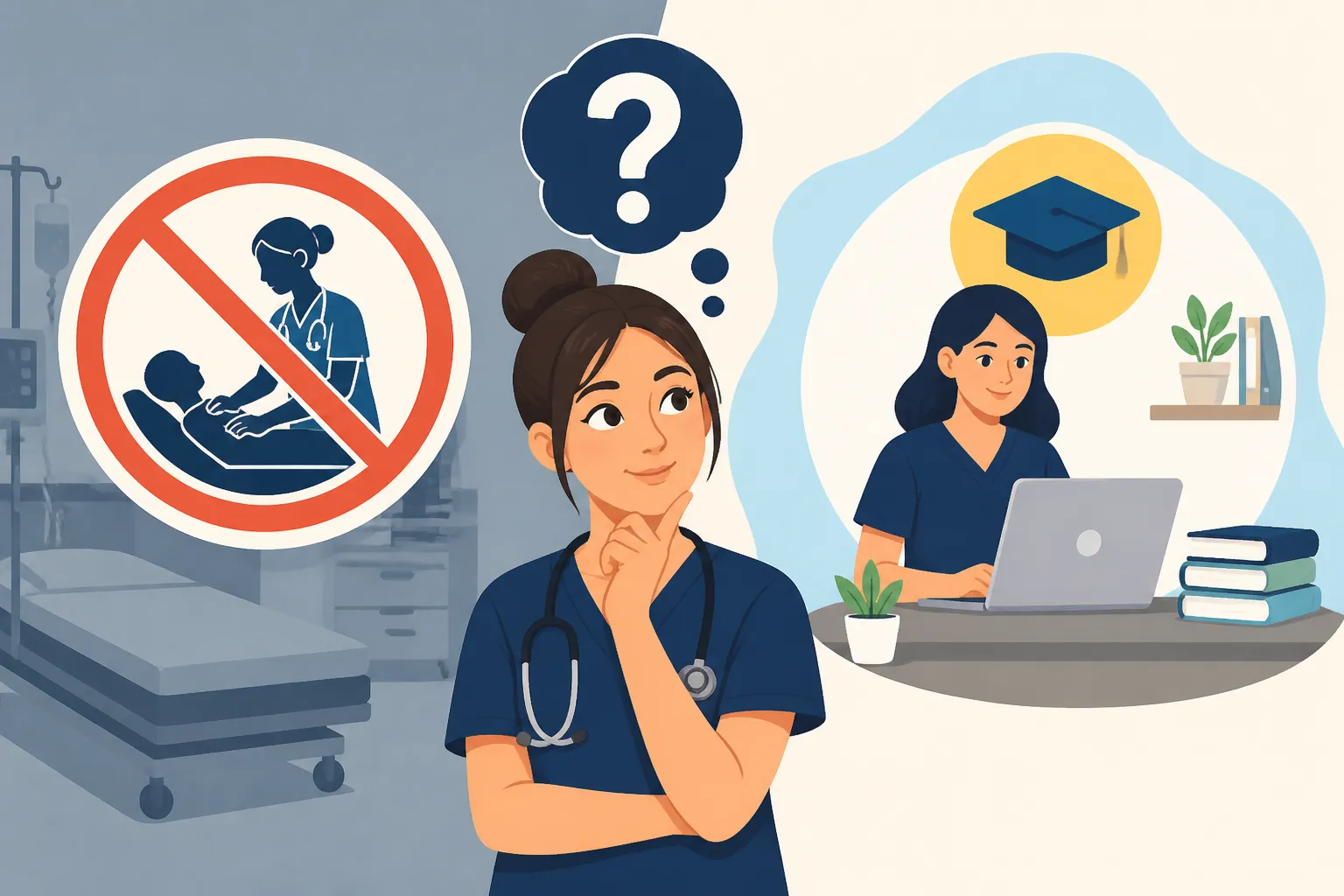
It's a common worry for busy registered nurses considering furthering their education: will an RN to BSN program demand endless hours of traditional clinicals, adding another layer of complexity to an already packed schedule? The good news is, for most RN to BSN programs, especially online ones, the answer to traditional, direct patient care clinical rotations is generally "no," and this guide will unpack exactly what you can expect instead.
Understanding the RN to BSN Degree
Many nurses begin their careers with an Associate Degree in Nursing (ADN) or a nursing diploma. These programs are fantastic for getting you into the workforce quickly, equipping you with the essential skills for direct patient care at the bedside. You're already a licensed RN, meaning you've proven your clinical competency by passing the NCLEX and meeting state board requirements. So, why go back to school for a Bachelor of Science in Nursing (BSN)?
What an RN to BSN Program Is For
An RN to BSN program isn't about teaching you how to be a nurse again; you've already mastered that hands-on role. Instead, it's designed to broaden your understanding of nursing theory, leadership, community health, research, and evidence-based practice. Think of it as enhancing your critical thinking, communication, and decision-making skills, preparing you for more complex roles, and equipping you to contribute to healthcare policy and quality improvement. It delves into the "why" behind nursing actions, promoting a holistic view of patient care and public health. This deeper dive often leads to better patient outcomes and professional growth.
Bridging the Gap from ADN to BSN
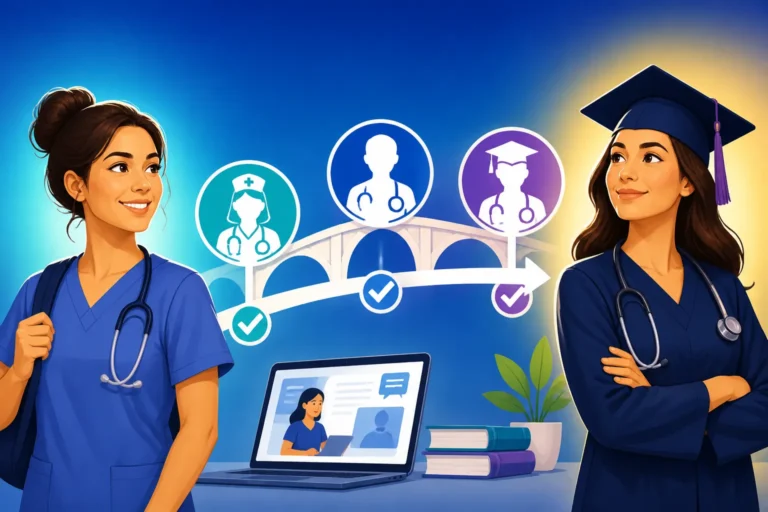
The RN to BSN journey is about building upon your existing foundation of clinical experience and expanding your academic knowledge. It recognizes the invaluable hands-on experience you've gained since becoming an RN. Many institutions even grant you a significant chunk of credit for your active RN license, acknowledging that your practical skills are already well-honed. The goal is to elevate your professional practice, not to re-teach basic nursing skills. For a more detailed breakdown, you might want to read our comprehensive guide on Online RN to BSN Programs Complete Guide to see how these programs are structured to support working nurses.
The Truth About Clinicals in RN to BSN Programs
Let's address the elephant in the room: traditional clinicals. Those intense, hands-on shifts in hospitals, honing skills like IV insertion or wound care, are typically not a component of RN to BSN programs. This is a massive relief for many working nurses who are already juggling careers, families, and other life commitments.
Why Traditional Clinicals Aren't Usually Required
The fundamental reason traditional clinicals are absent is simple: you're already a licensed Registered Nurse! Your ADN or diploma program, coupled with your licensure and professional experience, signifies that you have met the competency requirements for direct patient care. An RN to BSN program assumes you're already proficient in those core nursing tasks. Adding more hours of basic bedside clinicals would be redundant and frankly, a waste of your valuable time and resources. Your previous education and work history effectively count as your clinical foundation, often translating into significant transfer credits. If you're curious about how your prior learning translates, explore our piece on RN to BSN Transfer Credit Explained.
What Replaces Traditional Clinical Hours
Instead of repeating direct patient care, RN to BSN programs focus on what are often called "practicum experiences" or "community health rotations." These experiences are far less about direct hands-on medical interventions and much more about applying theoretical knowledge to real-world scenarios in a broader healthcare context. They emphasize leadership, public health, health promotion, disease prevention, and understanding healthcare systems. These are crucial components of the RN to BSN Curriculum Overview. They typically involve working on projects, shadowing nursing leaders, or engaging with community organizations, often without the need for traditional hospital scrubs or a stethoscope.
Exploring Non-Direct Care Experiences The "Clinicals" You Do Do
While you won't be performing wound care or administering medications during your RN to BSN practicum, you will be engaging in invaluable experiences that expand your professional horizons. These experiences are designed to integrate the theoretical knowledge gained in your coursework with practical application in diverse settings.
Community Health Projects
Community health is a cornerstone of the BSN curriculum, and for good reason. It shifts the focus from individual patient care to population health, preventive medicine, and addressing health disparities within specific communities. Many RN to BSN programs incorporate a community health practicum where you might:
- Participate in health fairs: This could involve blood pressure screenings, diabetes education, or vaccination clinics in local community centers, schools, or workplaces. You'll apply your communication skills to educate diverse populations.
- Develop health education materials: You might create brochures, presentations, or social media campaigns on topics like nutrition, smoking cessation, or mental health awareness for a specific target group, such as new mothers or elderly residents.
- Work with public health agencies: This could involve shadowing public health nurses, assisting with data collection for epidemiological studies, or contributing to local health initiatives aimed at improving community well-being. For example, you might collaborate with the local health department in a city like Philadelphia or Phoenix to understand their efforts in managing chronic disease within underserved neighborhoods. These experiences help you understand public health policies and interventions on a grander scale.
Leadership and Management Practicums
A BSN also prepares nurses for leadership roles, whether formally as a charge nurse or nurse manager, or informally as a mentor and change agent on their unit. Leadership practicums might involve:
- Shadowing nursing leaders: Spending time with a nurse manager, a clinical nurse specialist, or even a chief nursing officer can provide incredible insight into administrative duties, budgeting, staffing, and conflict resolution within a healthcare organization. You'd observe their decision-making processes and how they navigate complex healthcare systems.
- Participating in quality improvement initiatives: You might join a hospital committee focused on reducing readmission rates, improving patient satisfaction scores, or implementing new evidence-based protocols. This could involve data analysis, process mapping, and presenting findings.
- Mentorship and preceptor roles: Some programs encourage you to take on a more formal mentorship role for new nurses or nursing students, applying your leadership skills in guiding and educating others, further solidifying your own knowledge base. This is where a strong foundational understanding, perhaps reinforced by resources like Uworld for reviewing core nursing concepts, can really shine as you mentor others.
Capstone Projects and Evidence-Based Practice
Many RN to BSN programs culminate in a capstone project, which is often a significant practicum experience itself. These projects are deeply rooted in evidence-based practice and allow you to synthesize all the knowledge you've gained.
- Identifying a clinical problem: You might identify an issue on your unit or within your facility, such as high rates of catheter-associated urinary tract infections (CAUTIs) or inconsistent pain management protocols.
- Conducting a literature review: You'll research existing scientific evidence to understand best practices and potential solutions, using scholarly databases and critical appraisal skills learned in your courses.
- Developing an intervention or proposal: Based on your research, you'll propose an evidence-based intervention, educational program, or policy change aimed at addressing the identified problem. This might involve creating a detailed implementation plan and outlining expected outcomes.
- Presenting your findings: You'll often present your project to faculty, peers, and sometimes even clinical stakeholders, demonstrating your ability to drive change and improve patient care through research and critical thinking. This is truly where you see the value of what you learn in an RN to BSN Research Course Explained.
How Online RN to BSN Programs Handle Practicum Requirements
The flexibility of online learning is a huge draw for working nurses, and thankfully, online RN to BSN programs are specifically designed to accommodate your busy life, including how they manage practicum requirements.
Finding Approved Sites and Preceptors
For the non-direct care practicums, online programs usually have a system in place to help you find appropriate sites and preceptors. You won't typically be thrown to the wolves to figure it out entirely on your own.
- Program guidance and resources: Most reputable online programs, like those offered by universities such as Western Governors University or Capella University, will provide extensive resources, including lists of approved facilities, templates for outreach, and sometimes even dedicated practicum coordinators to assist you. They understand that you're a working professional and aim to make this process as smooth as possible.
- Leveraging your workplace: Often, you can complete your practicum hours right in your current workplace. If your program requires a community health project, for instance, you might collaborate with your hospital's patient education department, a local non-profit health organization, or even your workplace's employee wellness program. For leadership practicums, you could shadow your own unit manager or participate in hospital-wide committees. This is one of the huge benefits of these programs, reducing travel and scheduling headaches.
- Flexibility in scheduling: Unlike rigid traditional clinical rotations, these practicum hours are often self-scheduled in collaboration with your preceptor and program requirements. This allows you to integrate them into your work and family life much more realistically. If you're wondering How to Balance Work and RN to BSN, this flexibility is a huge part of the answer.
Flexibility for Working Nurses
The entire structure of an online RN to BSN program, including its practicum components, is built with the working nurse in mind. It acknowledges that you already have a demanding career and likely personal responsibilities.
- Asynchronous coursework: Most online programs offer asynchronous learning, meaning you can access lectures, readings, and assignments at your convenience, fitting them around your shifts. This makes it feasible to pursue an Online RN to BSN Programs Complete Guide without completely uprooting your life.
- No relocation required: Since clinicals are not traditional, you don't need to worry about relocating or commuting long distances to a specific clinical site. You can generally complete your practicum hours in your local community, making it ideal for nurses across the country, whether you're in a bustling city like Los Angeles or a more rural setting.
- Building on existing skills: The practicums are designed to build on your existing nursing knowledge and experience, not to teach you brand-new invasive procedures. This means less time spent learning foundational skills and more time applying higher-level concepts.
Key Considerations When Choosing an RN to BSN Program
Deciding to pursue your BSN is a significant step, and while the absence of traditional clinicals is a relief, there are still important factors to weigh when selecting the right program for you. You want a program that not only fits your lifestyle but also provides a high-quality education. Our resource on How to Choose an RN to BSN Program offers a deep dive into these considerations.
Accreditation and Program Structure
Accreditation is paramount when selecting any nursing program. It ensures the program meets rigorous educational standards and that your degree will be recognized by employers and for future advanced degrees.
- CCNE or ACEN accreditation: Always ensure the RN to BSN program you choose is accredited by either the Commission on Collegiate Nursing Education (CCNE) or the Accreditation Commission for Education in Nursing (ACEN). These are the two primary accrediting bodies for nursing education in the U.S. Without this, your degree might not be recognized, potentially hindering your career advancement or ability to pursue graduate studies. Understanding CCNE vs ACEN Accreditation Explained can help you discern the differences.
- Program length and format: Consider how long you want to take to complete your degree. Some programs are Fastest Online RN to BSN Programs, allowing completion in as little as 6 to 12 months, while others offer more flexible, part-time options that might take longer. Look into the specific course structure – are there weekly deadlines, or is it more self-paced within terms? Knowing the RN to BSN Completion Timeline can help you plan effectively.
- Practicum requirements: While not traditional clinicals, the specific practicum requirements can vary. Some programs might emphasize community health more heavily, while others focus on leadership. Make sure the types of experiences align with your professional goals and what you're willing and able to do. Confirm whether your current workplace can serve as a practicum site.
Work-Life Balance and Program Demands
Even without traditional clinicals, an RN to BSN program is still a significant commitment. It requires discipline, time management, and dedication.
- Time commitment: Be realistic about the time you can dedicate to coursework each week. Even a fully online program will require several hours of reading, writing, and studying. Many nurses find they need to commit anywhere from 10-20 hours per week, depending on whether they're enrolled full-time or part-time. Our guide on How Many Hours a Week for RN to BSN can provide a more in-depth look.
- Support systems: Consider what support the program offers. Do they have academic advisors, writing centers, or technical support? A strong support system can make a huge difference, especially in an online learning environment.
- Personal and professional goals: Reflect on why you're pursuing this degree. Is it for career advancement, increased salary, or personal growth? Keeping your goals in mind can help motivate you through challenging times and help you choose a program that aligns with your ultimate aspirations. Understanding whether Is an RN to BSN Worth It for your specific situation is a crucial question to ask yourself.
Here's a quick summary of what to expect regarding "clinicals" in an RN to BSN:
| Type of Experience | Description | Direct Patient Care? | Typically Required in RN to BSN? |
|---|---|---|---|
| Traditional Clinicals | Hands-on patient care (med administration, assessments, procedures) in acute care settings (hospitals). | Yes | No |
| Community Health Practicum | Projects focusing on population health, health promotion, education in non-hospital settings. | Indirectly (education/screening) | Yes, often a core component |
| Leadership/Management Practicum | Shadowing nurse leaders, participating in quality improvement, mentorship roles. | No | Often included |
| Capstone Project | Independent research and proposal for an evidence-based solution to a healthcare problem. | No | Yes, often a culminating experience |
In conclusion, you can breathe a sigh of relief. The RN to BSN journey is designed to build on your existing nursing expertise, not to repeat the hands-on clinical training you've already completed. It's an opportunity to grow as a professional, broaden your impact, and advance your career, all while maintaining the flexibility you need as a working nurse.
Disclaimer
The information provided in this article is for general informational purposes only and does not constitute professional advice. Nursing program requirements can vary significantly by institution and state. Always consult with academic advisors, program coordinators, and official university resources for the most accurate and up-to-date information regarding specific program requirements, including clinical or practicum hours.