RN to BSN with 100% Online Coursework
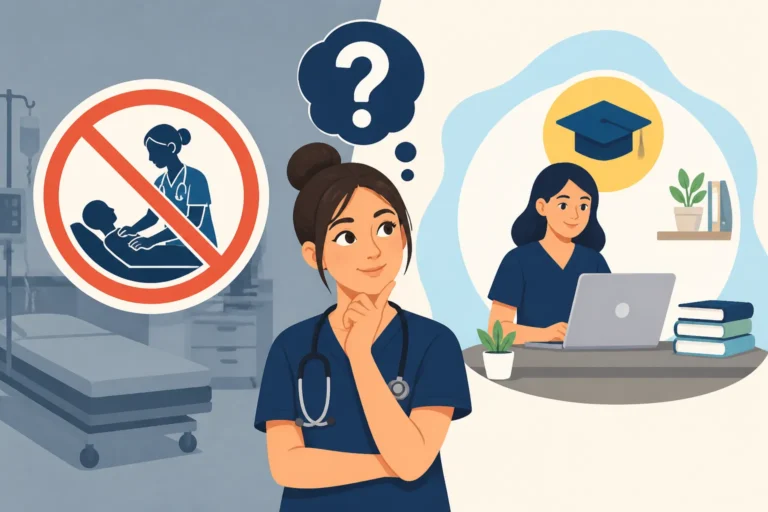
Let's be real, you're a working RN, juggling shifts, family, and maybe even a social life, and the thought of adding "student" to that mix feels like an impossible dream. Traditional brick-and-mortar programs with fixed class times and commuting? Forget about it! That's why the idea of an RN to BSN program with 100% online coursework is so appealing, and in this guide, we're going to dive deep into what these flexible programs offer and how you can truly make one work for your busy life.
Understanding 100% Online RN to BSN Programs
The term "100% online" can sometimes be a bit confusing, especially when we're talking about nursing education, which inherently involves hands-on practice. But for an RN to BSN program, it truly means the didactic (classroom) portion is entirely virtual, offering unparalleled flexibility. It’s designed specifically for licensed registered nurses who already have their ADN or nursing diploma and are looking to earn their Bachelor of Science in Nursing. You've already got the clinical experience and the foundational nursing knowledge; now it's about broadening your professional scope and deepening your understanding of evidence-based practice, leadership, and community health.
What "100% Online" Really Means for an RN to BSN
When a program advertises itself as 100% online, it typically means that all your lectures, assignments, discussions, and exams are conducted through an online learning platform. You won't be expected to show up to a physical campus for classes, seminars, or labs. This is a game-changer for many nurses who live far from a university or whose work schedules make traditional attendance impossible. Imagine studying from your living room after a night shift, or catching up on readings during your kids' soccer practice. That's the freedom a truly online program offers.
However, it's crucial to understand that "100% online coursework" doesn't always mean "no clinical component whatsoever." While some programs proudly tout being a "No-Clinical RN to BSN Programs", others integrate what they call "practicum" or "community health experience" components. These are often project-based, require you to work within your existing healthcare setting or a community organization, or involve virtual simulations. The key is that these experiences are structured to be completed locally or remotely, without requiring you to travel to a university-affiliated site. It's a nuanced distinction, but one that busy nurses definitely need to clarify when they're exploring different programs.
Advantages for Working Nurses
For seasoned nurses like you, the advantages of a 100% online RN to BSN are pretty clear and often life-changing. First and foremost is the incredible flexibility. You get to set your own study schedule, often accessing materials and submitting assignments asynchronously. This means you can tailor your learning around your shifts, family commitments, and personal life, rather than the other way around. No more missing important family events because of a mandatory class, or trying to find childcare for an evening lecture.
Another huge perk is the elimination of commute time and costs. Think about the gas money saved, the wear and tear on your car, and the precious hours reclaimed from sitting in traffic. For nurses in rural areas, or those working night shifts, this isn't just a convenience; it's often the only feasible way to pursue higher education. Plus, online programs often offer multiple start dates throughout the year, meaning you don't have to wait for a traditional fall or spring semester to kick off your academic journey. This flexibility allows you to seamlessly integrate your studies into your existing routine, rather than having to completely overhaul your life. It's all about making your educational goals achievable, even with a demanding nursing career. Learning How to Balance Work and RN to BSN is often the biggest hurdle, and online programs inherently address many of these challenges.
Potential Challenges and Misconceptions
While the allure of 100% online coursework is strong, it's important to go into it with open eyes. One of the biggest challenges for many is the need for immense self-discipline and motivation. There's no professor looking over your shoulder, no classmates to physically meet up with for study groups. You are largely responsible for managing your time, staying on track with readings, and meeting deadlines. It can feel a bit isolating at times, so proactive engagement in online discussion boards and seeking out virtual study partners is key.
Another misconception is that "online" means "easier." While the format is more flexible, the academic rigor of a quality RN to BSN program remains high. You'll be delving into complex topics like research methodology, public health policy, and advanced physical assessment. Additionally, technology requirements can sometimes pose a hurdle. You'll need a reliable computer, stable internet access, and a willingness to navigate various learning management systems (like Canvas or Blackboard) and online communication tools. Some programs may also require specific software for simulations or virtual labs. It's not insurmountable, but it requires a comfort level with digital tools.
Core Components of a Fully Online RN to BSN Curriculum
Even with 100% online coursework, an RN to BSN program is designed to build upon your existing ADN or diploma education, expanding your knowledge base and preparing you for a broader scope of practice and leadership roles. The curriculum is carefully structured to fill the gaps between an associate's and a bachelor's degree, emphasizing critical thinking, research skills, and community health perspectives. For a comprehensive overview, checking out an RN to BSN Curriculum Overview can be very insightful.
Typical Coursework You'll Encounter
While specific course titles might vary between institutions, there's a common thread that runs through most online RN to BSN programs. You can expect to take courses that cover a wide range of essential nursing topics. These often include advanced health assessment, which refines your skills in patient evaluation; nursing theory, which explores the foundational concepts guiding nursing practice; and nursing research, teaching you how to critically appraise and apply evidence-based findings to improve patient outcomes.
Many programs also place a strong emphasis on community health nursing, where you'll learn about population health, disease prevention, and health promotion across diverse communities. Leadership and management courses are also standard, preparing you for roles that involve team coordination, advocacy, and quality improvement initiatives. Professional development and ethics courses ensure you're well-versed in the legal and ethical considerations of advanced nursing practice. You might also find courses on informatics, global health, or cultural competence, reflecting the evolving landscape of healthcare. These courses are designed to broaden your perspective beyond acute care settings and equip you with the skills needed for today's complex healthcare environment.
Demystifying Clinical and Practicum Requirements
Here's where the "100% online coursework" often meets a unique interpretation of "clinical" for RN to BSN students. Since you’re already a licensed RN with hands-on experience, these programs don't typically require new direct patient care rotations in hospitals like a traditional pre-licensure BSN program would. Instead, the focus shifts to applying advanced nursing concepts in practice through various indirect or community-focused experiences.
Many online RN to BSN programs incorporate practicum or capstone projects that you can complete within your current workplace or a community setting. For example, you might design and implement a health education program for a specific population at your hospital, conduct a quality improvement project on your unit, or develop a proposal for a new community health initiative. Some programs use advanced simulation software or virtual patient scenarios to fulfill certain requirements. The idea is to apply the theoretical knowledge gained from your online courses to real-world or simulated situations, demonstrating your ability to lead, research, and advocate. Always check the specific program details regarding RN to BSN Clinical Hours Explained to ensure it aligns with your expectations and state board of nursing requirements.
Technology and Support Systems
Successfully completing a 100% online RN to BSN program heavily relies on robust technology and accessible support systems. Most reputable online programs utilize a sophisticated Learning Management System (LMS) such as Canvas, Blackboard, or Brightspace. This is your virtual classroom, where you'll access course materials, submit assignments, participate in discussion forums, and communicate with instructors and classmates. It's essentially the hub for all your academic activity.
Beyond the LMS, you'll find a wealth of digital resources. Online libraries offer extensive databases, journals, and e-books, ensuring you have access to the latest evidence-based research without stepping foot in a physical library. Technical support is paramount; imagine being stuck on a late-night assignment because you can't access a file! Good programs offer 24/7 tech support or extended hours to assist with any platform issues. Additionally, many institutions provide online tutoring services, academic advising via phone or video conferencing, and virtual career services. Some programs even integrate external study tools and resources like Uworld into their curriculum or recommend them for NCLEX prep and general nursing knowledge reinforcement, ensuring students have every advantage to succeed. These comprehensive support structures are designed to replicate the in-person student experience as much as possible, just in a digital format.
Choosing the Right 100% Online RN to BSN Program
With so many options out there, how do you pick the best 100% online RN to BSN program for you? It can feel overwhelming, but by focusing on a few key areas, you can narrow down your choices and find a program that truly fits your needs and career goals. This is where understanding How to Choose an RN to BSN Program becomes critical.
Accreditation: Your Non-Negotiable Factor
This cannot be stressed enough: accreditation is absolutely paramount. You must ensure that any online RN to BSN program you consider is accredited by either the Accreditation Commission for Education in Nursing (ACEN) or the Commission on Collegiate Nursing Education (CCNE). These are the two recognized accrediting bodies for nursing education in the United States. Why is this so important? An unaccredited degree might not be recognized by employers for hiring or promotion, by state boards of nursing for licensure, or by other universities if you decide to pursue graduate studies (like an MSN or DNP).
Choosing an unaccredited program is like investing time and money into a degree that might be worthless in the long run. Reputable employers, especially those aiming for Magnet status, almost exclusively hire BSN-prepared nurses from accredited programs. Always verify a program's accreditation status directly on the ACEN or CCNE website, rather than just taking the school's word for it. This due diligence is critical for protecting your investment in your education and your future career. For more details, explore our guide on Accredited Online RN to BSN Programs.
Program Structure and Flexibility
The beauty of online learning lies in its flexibility, but not all online programs are created equal. You'll find variations in how they structure their coursework, which can significantly impact your learning experience. Some programs are fully asynchronous, meaning you can access lectures and complete assignments at any time within a given week, offering maximum flexibility. This is often ideal for nurses with unpredictable schedules. Others might include synchronous components, requiring you to log in at specific times for live online lectures or group discussions. While less flexible, these can foster a stronger sense of community.
Then there are competency-based programs, which are a unique beast. These allow you to advance through courses as soon as you demonstrate mastery of the material, often letting you finish faster if you're dedicated and can move quickly. Western Governors University (WGU) is a well-known example of a competency-based model. Many online programs also offer multiple start dates throughout the year, meaning you don't have to wait for a traditional semester to begin. This can be a huge advantage if you're eager to start your studies right away. Consider your learning style, your work schedule, and your personal preferences when evaluating these structural differences.
Cost, Financial Aid, and Time Commitment
Let’s talk numbers, because an RN to BSN degree is a significant investment. The How Much Does an RN to BSN Cost can vary widely depending on the institution, whether it’s a public or private university, and your residency status. While tuition is the primary cost, remember to factor in technology fees, online learning platform fees, textbooks, and potentially professional liability insurance for practicum components. Don't be shy about asking admissions counselors for a detailed cost breakdown.
Thankfully, there are many ways to make your RN to BSN more affordable. Explore RN to BSN Financial Aid Options, including federal student aid (FAFSA), grants, scholarships specifically for nurses, and employer tuition reimbursement programs. Many hospitals offer generous benefits for nurses pursuing their BSN, recognizing the value it brings to patient care and the organization. As for time, while you're not commuting to class, an online RN to BSN program still demands a substantial time commitment. Most programs estimate 15-20 hours of study per week for a full-time student, though this can vary. Understanding How Long Does an RN to BSN Take will help you set realistic expectations for your completion timeline. Creating a financial plan and a realistic study schedule from the outset will set you up for success.
Support Services and Student Success
Even though you’re learning online, you’re still a student of the university, and you deserve access to robust support services. A quality online program will offer the same level of academic and personal support as its on-campus counterparts, just delivered virtually. Look for institutions that provide dedicated online student advisors who can guide you through course selection, academic planning, and graduation requirements. Online tutoring services for challenging subjects like statistics or research are incredibly valuable.
Career services are also important, even for working professionals. They can help with resume building, interview preparation, and exploring new career pathways that open up with a BSN. Mental health counseling, IT support, and even virtual writing centers are resources that can significantly enhance your online learning experience. Don’t hesitate to ask prospective schools about the breadth and accessibility of their online student support. A strong support network can make all the difference in helping you navigate the demands of an online degree and truly thrive academically.
Applying and Thriving in Your Online RN to BSN Program
Once you've done your research and found a few programs that tick all your boxes, the next steps involve the application process and then, the exciting part: actually starting and excelling in your studies. It can feel like a big leap, but with the right preparation and strategies, you'll be well on your way to earning that BSN.
Streamlining the Application Process
Applying to an online RN to BSN program typically involves a few key steps. First, you'll need to meet the general RN to BSN Admission Requirements, which almost always include holding an active, unencumbered RN license. You'll also need official transcripts from all previous colleges and nursing schools, demonstrating a certain GPA (often a minimum of 2.0-2.5 on a 4.0 scale, though some programs may have a higher requirement). Many programs will also ask for a personal statement or essay, allowing you to articulate your career goals and why you're pursuing your BSN.
The good news is that for RN to BSN programs, prerequisites are often minimal since your ADN or diploma has already covered many foundational science and general education courses. However, some schools might require a statistics course or a specific science elective if you haven't taken it yet. Be sure to gather all your documents well in advance and don't hesitate to reach out to the admissions office with any questions. They are there to help you navigate the process.
Strategies for Online Learning Success
Succeeding in a 100% online RN to BSN program requires a different set of skills than traditional in-person learning, but they are entirely learnable. The most crucial strategy is time management. Block out dedicated study times in your schedule, just as you would for a physical class. Treat these appointments seriously. Create a comfortable, distraction-free study space at home. When I was going through my BSN, I found that even just 30 minutes before a shift and an hour after could add up significantly over the week.
Active participation in online discussion boards is also vital. This isn't just about getting participation points; it's how you connect with your peers, clarify concepts, and engage with the material on a deeper level. Don't be afraid to ask questions, share your clinical experiences, and offer insights. Leverage all the available resources: online library, tutoring services, and academic advising. Tools like Uworld, often used for NCLEX preparation, can also be invaluable throughout your BSN studies for reinforcing core nursing concepts and practicing critical thinking skills through their extensive question bank. Lastly, remember to take breaks, practice self-care, and celebrate small victories along the way. Online learning is a marathon, not a sprint!
Post-Graduation: What a BSN Opens Up
Earning your BSN, especially through a flexible 100% online program, is more than just a piece of paper; it's a stepping stone to a wealth of new opportunities. Many hospitals, particularly those with Magnet designation, now require or strongly prefer BSN-prepared nurses for entry-level and advancement positions. A BSN can open doors to roles in leadership, case management, public health, nursing education, and even specialized areas like informatics or research.
Beyond specific job titles, a BSN equips you with enhanced critical thinking, leadership, and evidence-based practice skills, making you a more effective and adaptable clinician. You'll be better prepared to advocate for your patients, implement quality improvement initiatives, and contribute to positive patient outcomes. Furthermore, a BSN is the foundational degree required for pursuing graduate-level nursing education, such as an MSN or DNP. If your long-term goal is to become a Nurse Practitioner, Clinical Nurse Specialist, or Nurse Educator, your online RN to BSN is the essential first step. Ultimately, earning your BSN is an investment in your career longevity, earning potential, and professional growth, making it well Is an RN to BSN Worth It.
Comparison of Online RN to BSN Program Structures
| Feature | Asynchronous Online (Self-Paced) | Synchronous Online (Live Sessions) | Competency-Based Online |
|---|---|---|---|
| Typical Format | Pre-recorded lectures, readings, discussion boards. No fixed class times. | Live virtual classes via video conferencing at set times. | Progress based on demonstrating mastery, not seat time. |
| Flexibility for Work | Highest. Study anytime, day or night. Ideal for rotating shifts. | Moderate. Requires adherence to a fixed schedule, though no commute. | Highest. Accelerate if you learn quickly. |
| Pacing | Student-driven within weekly deadlines. | Instructor-led, fixed pace. | Student-driven, can be very fast or slower. |
| Interaction with Peers | Primarily through discussion forums, group projects. | Real-time discussions, virtual group work. | Less direct peer interaction, more independent. |
| Best For | Nurses needing maximum flexibility due to unpredictable schedules or family commitments. | Nurses who thrive with live interaction and structured routines, enjoy virtual classroom feel. | Highly self-motivated nurses with strong prior knowledge who want to finish quickly. |
| Common Providers | Many universities (e.g., University of Alabama, Ohio University) | Some traditional universities with online extensions. | Western Governors University (WGU), Capella University. |
Disclaimer
Please remember that the information provided in this guide is for general informational purposes only and does not constitute professional advice. Nursing program requirements, accreditation standards, and career opportunities can change. Always verify specific details with the individual academic institutions, state boards of nursing, and relevant accrediting bodies before making any educational or career decisions.