Online MSN Requirements Explained
Thinking about making the leap to an online Master of Science in Nursing (MSN) can feel both exciting and incredibly daunting. You're probably juggling a full-time nursing job, maybe a family, and the very idea of going back to school, even online, brings up a wave of questions about what it really takes. It’s not just about the commitment, but also the nitty-gritty details of applications, prerequisites, and how on earth you'll manage it all. This comprehensive guide is here to demystify those exact worries, laying out all the essential online MSN requirements so you can confidently plan your next career move.
Understanding the Landscape of Online MSN Programs
Stepping into the world of graduate nursing education, especially through an online format, can feel like navigating a maze. But trust me, the opportunities and flexibility that online MSN programs offer today are truly revolutionary for working nurses. It's not just about getting a degree; it's about transforming your career, often without having to press pause on your current life.
Why Online MSN Programs Are Gaining Popularity
For years, the traditional image of higher education involved sitting in lecture halls, rushing between classes, and finding a quiet corner in the library. But let's be real, for a working registered nurse, that scenario is often a pipe dream. You're already working demanding shifts, managing patient care, and likely have personal commitments that make rigid on-campus schedules impossible. This is precisely where online MSN programs shine. They offer an unparalleled level of flexibility, allowing you to study on your own terms, whether that's late at night after the kids are asleep, during your days off, or in between shifts. This adaptability is a game-changer, removing many of the logistical hurdles that once prevented dedicated nurses from pursuing advanced degrees. The ability to complete coursework from virtually anywhere, be it your living room or a quiet break room, means that nurses in rural areas or those with limited local educational options can now access top-tier programs. It's a testament to how far technology has come in making education accessible to a wider, more diverse pool of talent, ensuring that quality nursing education isn't limited by geography or a nine-to-five schedule.
The Diverse Range of MSN Specializations Available Online
One of the most thrilling aspects of pursuing an MSN is the sheer variety of specializations you can choose from. This isn't just a generic degree; it's a pathway to becoming an expert in a specific area of nursing that truly aligns with your passion and career goals. Do you dream of becoming a primary care provider, diagnosing and treating patients across the lifespan? Then a Family Nurse Practitioner (FNP) specialization might be for you. Perhaps you're drawn to mental health, recognizing the critical need for psychiatric support in your community; in that case, a Psychiatric Mental Health Nurse Practitioner (PMHNP) path could be your calling. Other popular online specializations include Adult-Gerontology Nurse Practitioner (AGNP), Pediatric Nurse Practitioner (PNP), and even non-clinical roles like Nurse Educator, Nursing Informatics, or Nurse Administrator. Each specialization has its own unique set of skills, knowledge, and clinical experiences required, tailoring your education to a very specific and impactful role within healthcare. This diversity means you can carve out a niche that not only fulfills your professional ambitions but also addresses critical needs within the healthcare system, leading to a truly rewarding career.
Dispelling Common Myths About Online Nursing Education
Despite their growing popularity and proven success, online nursing programs, especially at the graduate level, still grapple with some persistent misconceptions. One common myth is that an online degree is somehow "less than" a traditional, in-person one. This couldn't be further from the truth. Accredited online MSN programs adhere to the same rigorous academic standards, employ the same highly qualified faculty, and cover the exact same curriculum as their on-campus counterparts. The quality of education is identical; it's merely the delivery method that differs. Another misconception is that online learning lacks interaction. While you might not be in a physical classroom, modern online platforms foster incredibly engaging and collaborative learning environments. You'll participate in discussion forums, group projects, virtual simulations, and even live online sessions, connecting with peers and professors from across the country. Plus, many online programs still require hands-on clinical experiences, ensuring you gain the practical skills essential for advanced practice. For example, some students find resources like Uworld's practice questions invaluable for reviewing complex topics and preparing for the comprehensive exams at the end of their programs, regardless of whether their learning was online or in-person. It's about adapting the learning experience, not diminishing its quality.
Essential Academic Prerequisites for Online MSN Programs
Before you even start thinking about applications, it's crucial to understand the foundational academic requirements that most online MSN programs will demand. These aren't just arbitrary hurdles; they're designed to ensure you have the necessary knowledge base and academic readiness to succeed in graduate-level nursing studies.
The Crucial Role of Your BSN Degree (or Equivalent)
At the heart of most online MSN programs is the prerequisite of a Bachelor of Science in Nursing (BSN). This isn't just a formality; it signifies that you've completed a comprehensive undergraduate nursing curriculum, developing a strong foundation in nursing theory, research, leadership, and community health. Many institutions explicitly require a BSN from an accredited institution. However, don't despair if you're an Associate Degree in Nursing (ADN) graduate or even a diploma nurse. There are fantastic "RN to MSN Programs Explained" that provide a bridge, allowing you to earn your BSN and seamlessly transition into MSN coursework. These programs are specifically designed for working registered nurses who are ready to advance their education but need that intermediate step. It's worth noting that some programs might accept a bachelor's degree in a non-nursing field, often with specific prerequisite courses or a direct-entry MSN pathway, but this is less common for online MSN programs which typically target licensed RNs with prior nursing education. Always check the specific program's requirements carefully to ensure your academic background aligns.
Navigating GPA Expectations and What to Do with a Lower GPA
Grade Point Average (GPA) is often a significant factor in MSN program admissions. Most competitive online MSN programs look for a minimum undergraduate GPA, typically in the range of 3.0 on a 4.0 scale. However, this isn't a hard and fast rule for every program or every applicant. Some programs might have slightly lower minimums, while others, particularly those at highly ranked universities, might expect a 3.5 or higher. If your undergraduate GPA isn't quite where you'd like it to be, don't throw in the towel just yet. Many schools understand that life happens and that an older GPA might not accurately reflect your current academic potential or professional capabilities. In such cases, you might be able to strengthen your application by demonstrating recent academic success. This could involve taking a few post-baccalaureate courses, especially in relevant science or statistics subjects, and excelling in them. Some programs might offer provisional acceptance or consider a strong professional portfolio to offset a slightly lower GPA. It truly pays to investigate "MSN Programs with No GPA Requirement" or those that emphasize recent academic performance. Being proactive in addressing any GPA concerns shows your commitment and readiness for the rigors of graduate study.
Specific Undergraduate Coursework and Science Requirements
Beyond your BSN and overall GPA, many online MSN programs will scrutinize your undergraduate transcript for specific prerequisite courses. These foundational courses are critical because they provide the scientific and analytical backdrop for advanced nursing practice. Common prerequisites often include anatomy and physiology, microbiology, chemistry, statistics, and sometimes even a strong social science or psychology component. The exact number of credits and specific course titles can vary significantly between institutions, so it's essential to check each program's "MSN Program Prerequisites" list meticulously. For instance, some programs might require two semesters of A&P with lab components, while others might be satisfied with one. If you're missing a prerequisite, don't panic! Many universities offer online or hybrid options to complete these courses before matriculating into the MSN program. It’s also wise to ensure these courses meet the recency requirements of your chosen program; some institutions prefer that science courses, in particular, have been completed within the last five to ten years. Planning ahead and addressing any gaps in your coursework early can save you a lot of stress down the line and ensure a smooth application process.
Professional Experience and Licensure Requirements
Beyond your academic achievements, your real-world nursing experience and professional standing are equally vital components of your online MSN application. Programs want to see that you're not just academically capable but also have a solid foundation in clinical practice and a commitment to the nursing profession.
The Importance of Active RN Licensure
This might seem obvious, but it's a non-negotiable requirement for virtually all online MSN programs: you must hold an active, unencumbered Registered Nurse (RN) license. The specific state where your license is held often matters, especially for online programs. Many online programs are designed to accommodate students from various states, but it's crucial to ensure that the program you choose is authorized to offer distance education in your state of residence. State boards of nursing have varying regulations regarding out-of-state online education, and failing to verify this could lead to issues with licensure upon graduation. An "unencumbered" license means you don't have any disciplinary actions, restrictions, or pending investigations against your license. This demonstrates your professional integrity and adherence to ethical nursing practice, which is paramount for advanced practice roles. Having a clean licensure record is a fundamental testament to your readiness to assume greater responsibility and leadership in healthcare.
Clinical Experience: What Counts and How Much You Need
While holding an RN license is the entry point, many online MSN programs, especially those leading to advanced practice registered nurse (APRN) licensure like Nurse Practitioner, will also require a specific amount of clinical experience. This isn't just about having worked as an RN; it's about having accumulated meaningful, hands-on patient care experience. The typical requirement ranges from one to two years of full-time RN experience in an acute care setting. However, this can vary widely depending on the specialization. For example, a Psychiatric Mental Health Nurse Practitioner (PMHNP) program might prefer experience in mental health settings, while an Adult-Gerontology Acute Care Nurse Practitioner (AGACNP) program would highly value ICU or ER experience.
This clinical background demonstrates that you've honed your assessment skills, critical thinking, communication, and decision-making abilities in real-world scenarios. It ensures you're familiar with the demands and complexities of patient care, providing a crucial context for the advanced theoretical knowledge you'll gain in your MSN program. Without this foundation, the advanced concepts and clinical reasoning taught at the graduate level might lack a practical anchor. Always check the specific requirements of your desired "MSN Clinical Hours Requirements" to understand what type and how much experience they're looking for, as some programs are more flexible than others regarding the setting of your prior experience.
Addressing Special Cases: RN to MSN Without a BSN
For many dedicated ADN-prepared nurses, the idea of pursuing an MSN is compelling, but the thought of going back for a separate BSN first can feel like an extra, unnecessary hurdle. Thankfully, the educational landscape has evolved, and "RN to MSN Without a BSN" programs, often called "bridge programs" or "direct-entry MSN for ADN nurses," are increasingly common. These programs are specifically designed for ADN-prepared RNs who have significant clinical experience and wish to transition directly into graduate-level studies. They typically integrate baccalaureate-level nursing coursework into the early phases of the MSN curriculum, allowing you to fulfill your BSN requirements and then seamlessly progress into the MSN core courses.
These bridge programs recognize the valuable experience and competency ADN nurses bring to the table. While the total credit load might be higher than a traditional post-BSN MSN program, the integrated nature often makes it more efficient, both in terms of time and cost, than earning two separate degrees. It’s an excellent pathway for those committed to advanced practice but who, for various reasons, didn't pursue a BSN initially. Remember that even with these bridge options, you'll still need an active, unencumbered RN license and often a minimum amount of relevant clinical experience to be considered.
Application Components Beyond Transcripts
Once you've met the academic and professional prerequisites, the application itself becomes your opportunity to tell your story and showcase why you're a strong candidate for an online MSN program. These additional components are crucial for demonstrating your unique qualifications and potential.
Crafting a Compelling Personal Statement or Essay
Your personal statement, often referred to as an essay or statement of purpose, is arguably one of the most critical parts of your "MSN Admission Requirements." This is your chance to move beyond the numbers and bullet points of your transcript and resume and really let your voice shine. Admissions committees want to understand why you're pursuing an MSN, why this particular specialization, and why you believe you'd be a successful graduate student in their program.
A compelling personal statement typically includes:
- Your Journey into Nursing: Briefly touch upon what led you to become a nurse and significant experiences that shaped your practice.
- Your Clinical Experience: Highlight specific situations or patient encounters that have deepened your understanding and solidified your desire for advanced practice. Perhaps you encountered complex cases that made you realize the need for a higher level of autonomy or diagnostic skill.
- Your Motivation for an MSN: Clearly articulate your goals. Do you want to improve patient outcomes, impact health policy, or educate the next generation of nurses? Be specific about your chosen specialization and how it aligns with your long-term career aspirations.
- Why This Program: Research the program extensively. Mention specific faculty members whose work you admire, unique curriculum offerings, or the program's philosophy that resonates with you. This shows you’ve done your homework and aren't just sending a generic application.
- Your Readiness for Online Graduate Study: Acknowledge the demands of online learning and demonstrate your self-discipline, time management skills, and comfort with technology.
This isn't a place for fluff; it's a strategic narrative that demonstrates introspection, clarity of purpose, and a genuine passion for advancing your nursing career. Give yourself plenty of time to write, revise, and get feedback on your statement.
Securing Strong Letters of Recommendation
Letters of recommendation serve as external validations of your character, capabilities, and potential for success in a demanding graduate program. Most online MSN programs require two to three letters. Choosing the right recommenders is key. You'll want individuals who know you well in a professional or academic capacity and can speak to your strengths, work ethic, leadership potential, critical thinking skills, and suitability for advanced nursing practice.
Ideal recommenders often include:
- A direct supervisor or nurse manager: Someone who has observed your clinical practice, leadership abilities, teamwork, and professionalism in your current or most recent nursing role.
- A former nursing professor or academic advisor: If you've been out of school for a while, this might be challenging, but if you've recently completed your BSN or other relevant coursework, an academic recommender can speak to your scholarly abilities.
- A physician or advanced practice provider: Someone you've collaborated closely with in a clinical setting who can attest to your clinical judgment and professional demeanor.
When asking for a letter, do so well in advance of the deadline. Provide your recommenders with your resume, personal statement draft, and information about the specific MSN program you're applying to. This context will help them write a more detailed and impactful letter tailored to your application. A strong letter goes beyond merely stating you're a good nurse; it provides specific examples of your accomplishments and potential.
Resumé or Curriculum Vitae: Highlighting Your Nursing Journey
Your resume (or curriculum vitae, CV, for more extensive academic/research backgrounds) is a concise summary of your professional and academic history. For an online MSN application, it needs to clearly articulate your nursing journey and highlight experiences relevant to advanced practice.
Key elements to include:
- Contact Information: Professional and up-to-date.
- Education: List your BSN (or ADN, if pursuing a bridge program) with dates, institution, and accreditation. Mention any academic honors.
- Nursing Licensure and Certifications: Clearly state your active RN license number, state of issuance, and expiration date. Include any specialty certifications you hold (e.g., CCRN, CEN, BLS, ACLS).
- Professional Experience: List your nursing positions in reverse chronological order. For each role, include your title, employer, dates of employment, and 3-5 bullet points describing your key responsibilities and accomplishments. Focus on quantifiable achievements where possible (e.g., "Managed a caseload of 10-12 critically ill patients," "Implemented a new patient education protocol that reduced readmissions by 5%").
- Professional Memberships: Any involvement in nursing organizations (e.g., ANA, AACN) demonstrates your commitment to the profession.
- Volunteer Experience: Relevant healthcare-related volunteer work can also be a plus.
- Publications/Presentations/Research (if applicable): For those with a stronger academic or research bent, this section is crucial.
Your resume should be meticulously organized, free of typos, and highlight your progression as a nurse, demonstrating your readiness for the elevated responsibilities that an MSN entails. Ensure it presents a clear and professional image of your qualifications.
The Role of Entrance Exams like the GRE (and When They're Waived)
For many years, the Graduate Record Examinations (GRE) was a standard requirement for admission into most graduate programs, including MSNs. It’s designed to assess verbal reasoning, quantitative reasoning, and analytical writing skills. However, in recent years, there's been a significant shift, and many online MSN programs have moved away from requiring the GRE.
Why the change? Universities increasingly recognize that an applicant's undergraduate GPA, professional nursing experience, personal statement, and strong letters of recommendation often provide a more holistic and accurate picture of their potential for success in an MSN program. Mandating the GRE can also create an unnecessary barrier for qualified working nurses, especially those who may have been out of school for a while.
You'll find that a growing number of institutions offer "MSN Programs with No GRE Requirement," often waiving it for applicants who meet certain criteria, such as a strong undergraduate GPA (e.g., 3.0 or 3.25 or higher) or a specified number of years of relevant RN experience. Some programs might only require the GRE if your GPA falls below a certain threshold. It’s always best to check the specific "Do You Need the GRE for an MSN" section on each program's admissions page. If it is required, dedicate time to preparation. Resources like Uworld, known for their comprehensive question banks and explanations, can be incredibly helpful for standardized test preparation, even for graduate-level exams if you choose a program that still requires them. Don't assume; always verify the GRE policy for each program on your list.
Technology and Time Commitment Considerations
Embarking on an online MSN journey is more than just academic requirements; it demands a readiness for a different mode of learning and a realistic understanding of the time and effort involved.
Essential Technical Skills and Equipment for Online Learning
While you don't need to be a tech guru, a certain level of comfort with technology is non-negotiable for online learning. Your success will heavily rely on your ability to navigate digital platforms and utilize various software effectively. Before you even apply, ensure you have reliable access to the following:
- A dependable computer: This means a laptop or desktop (tablets or phones are usually not sufficient for sustained coursework) that is relatively new, with sufficient processing power and memory. You’ll be running multiple applications, streaming lectures, and managing large files.
- High-speed internet access: A stable and fast internet connection is paramount. Dropped connections during synchronous sessions or slow downloads can be incredibly frustrating and hinder your progress.
- Webcam and microphone: Essential for participating in live online classes, virtual group meetings, and possibly for proctored exams.
- Up-to-date software: This typically includes a modern web browser (Chrome, Firefox, Edge), word processing software (Microsoft Word or Google Docs), spreadsheet software (Excel), and presentation software (PowerPoint). Many universities provide free or discounted access to Microsoft Office 365 or similar suites for enrolled students.
- Learning Management System (LMS) proficiency: Most online programs utilize an LMS like Canvas, Blackboard, Moodle, or Brightspace. Familiarity with navigating these platforms—uploading assignments, participating in discussion boards, accessing course materials, and checking grades—will make your life significantly easier.
- Basic troubleshooting skills: Knowing how to restart your router, clear browser cache, or check for software updates can save you precious study time when minor tech glitches arise.
Investing in reliable technology and brushing up on your digital literacy before starting your "Online MSN Programs: Complete Guide" will set you up for smoother sailing.
Understanding the Time Commitment and Balancing Life
Let's be completely candid: pursuing an online MSN while working as an RN, and possibly managing family responsibilities, is a colossal undertaking. It requires immense dedication, meticulous time management, and often, a willingness to make temporary sacrifices. Don't be fooled by the "online" aspect into thinking it's easier or less time-consuming than traditional programs. In many ways, it demands more self-discipline and proactive engagement.
The general rule of thumb for graduate-level coursework is to expect to spend approximately 10-15 hours per week per course. So, if you're taking two courses a semester, you're looking at 20-30 hours of dedicated study time on top of your work schedule and personal life. This commitment also fluctuates, with heavier loads during exam periods, major project deadlines, or intensive clinical preparations.
It’s absolutely critical to create a realistic study schedule, communicate your commitments to your family and employer, and build in time for self-care to avoid burnout. Think about whether a "Part-Time vs Full-Time RN to BSN" (or rather, MSN, in this case) schedule makes more sense for your current life circumstances. Many universities offer both options, allowing you to tailor the program length to your capacity. Be honest with yourself about how much you can realistically take on, and don't hesitate to start with a lighter course load to find your rhythm.
Navigating Clinical Placement and Preceptor Requirements
This is often one of the most significant logistical challenges for online MSN students, particularly those pursuing APRN roles. While coursework is delivered online, the vast majority of accredited nurse practitioner programs require substantial "MSN Clinical Hours Requirements" to gain hands-on experience in your chosen specialty. These hours must be completed under the direct supervision of a qualified preceptor in an appropriate clinical setting.
The responsibility for securing these clinical placements and preceptors often falls primarily on the student, although some programs offer varying levels of support. This can be a daunting task, as finding willing preceptors who meet the program's criteria (e.g., specific certification, years of experience) and have availability can be highly competitive and time-consuming. You'll need to network, reach out to local clinics, hospitals, and private practices, and be persistent. The process typically involves:
- Identifying potential preceptors: Often through professional contacts, facility outreach, or the program's network.
- Verifying qualifications: Ensuring the preceptor meets your program's specific academic and licensure criteria.
- Formalizing agreements: The university will usually have a formal affiliation agreement that needs to be signed by the clinical site and the preceptor.
- Meeting health and background checks: You'll need to complete various health screenings, immunizations, background checks, and sometimes drug screenings required by both the university and the clinical site.
Starting this process early, even before your clinical courses begin, is highly advisable. Understanding how to find NP preceptors and the requirements for those placements is paramount to ensuring your progression through the program. This hands-on experience is critical for developing the competencies required for advanced practice and is often the most rewarding part of the entire MSN journey.
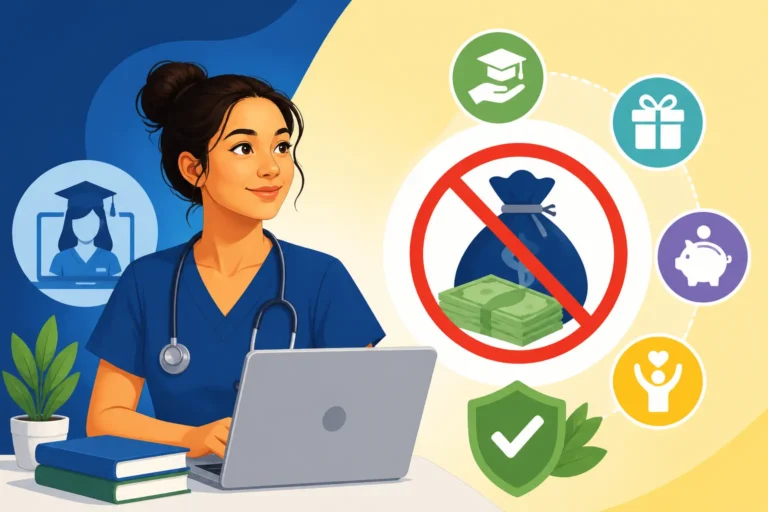
Financial Aid and Funding Your Online MSN
The cost of a graduate degree can be a major source of anxiety, but numerous resources are available to help make your online MSN dream a reality. You don't have to navigate the financial landscape alone; understanding your options is the first step.
Exploring Federal and State Financial Aid Options
Just like undergraduate studies, federal and state financial aid programs are often available for eligible graduate students pursuing an online MSN. The Free Application for Federal Student Aid (FAFSA) is your gateway to many of these opportunities. By completing the FAFSA, you can be considered for:
- Federal Student Loans: These are often the most common form of financial aid for graduate students. Federal Direct Unsubsidized Loans are available regardless of financial need, and students are responsible for all interest that accrues. Graduate PLUS Loans are another option, which can cover the remaining cost of attendance up to the school's certified amount, with interest rates often higher than unsubsidized loans.
- Federal Work-Study: While less common for fully online graduate students, some institutions might offer work-study opportunities that align with distance learning, allowing you to earn money to help cover educational expenses.
- State-Specific Aid: Many states offer grants or scholarships specifically for residents pursuing higher education, particularly in high-demand fields like nursing. Check with your state's higher education agency for information on programs specific to your location.
Remember that eligibility for these programs often depends on your enrollment status (half-time, full-time), satisfactory academic progress, and other federal guidelines. Filing your FAFSA early is always recommended to maximize your chances of securing aid. Understanding "MSN Financial Aid and Scholarships" is a critical step in planning your educational investment.
Discovering Scholarships and Grants for Graduate Nursing Students
Beyond federal loans, a wealth of scholarships and grants exists specifically for graduate nursing students. These are fantastic because, unlike loans, they don't have to be repaid! Searching for these opportunities can be time-consuming, but the effort can pay off significantly.
Sources for scholarships and grants include:
- Professional Nursing Organizations: Organizations like the American Nurses Association (ANA), the National Student Nurses' Association (NSNA), and specialty-specific groups (e.g., American Association of Nurse Practitioners, American Psychiatric Nurses Association) often have their own scholarship programs.
- Foundations and Trusts: Many private foundations are dedicated to supporting healthcare education. A quick online search for "nursing scholarships" or "MSN grants" will yield numerous results.
- University-Specific Scholarships: Don't overlook the institution you plan to attend. Many universities have their own internal scholarship funds for graduate students, often based on merit, need, or specific demographics. Always inquire with the financial aid office and your program department.
- Employer-Sponsored Scholarships: Some hospitals or healthcare systems offer scholarships to their employees who are pursuing advanced degrees, especially if they plan to return and work for the organization after graduation.
- Minority Nursing Associations: Organizations like the National Black Nurses Association, the National Association of Hispanic Nurses, and the Asian American/Pacific Islander Nurses Association provide valuable resources and scholarships for minority nursing students.
Each scholarship will have its own eligibility criteria, application process, and deadlines, so meticulous research and organization are key. While they might seem like small amounts individually, they can collectively make a significant dent in the total cost of an "Online MSN Programs: Complete Guide."
Employer Tuition Reimbursement and Other Funding Strategies
For working nurses, employer tuition reimbursement is an invaluable resource that can substantially reduce the financial burden of an online MSN. Many hospitals and healthcare systems recognize the value of an educated workforce and offer programs to support their employees' continuing education.
- Tuition Reimbursement Programs: These programs typically cover a certain percentage or a capped dollar amount of your tuition costs per year, often with a commitment to continue working for the organization for a specified period after graduation. It's essential to thoroughly understand the terms and conditions, including eligibility requirements, application processes, and any academic performance clauses. Talk to your HR department or nurse manager about what's available at your workplace.
- Student Loan Forgiveness Programs: While not direct funding for your degree, certain federal programs, like the Public Service Loan Forgiveness (PSLF) program, can forgive the remaining balance on your federal student loans after you've made 120 qualifying monthly payments while working full-time for a qualifying employer (e.g., non-profit hospitals, government organizations). If you plan to work in the public sector, researching these options is crucial.
- Stipends and Grants for Specific Roles: Some healthcare organizations or government agencies might offer stipends or grants for nurses willing to specialize in high-demand areas or work in underserved communities after graduation.
Combining these strategies – federal aid, scholarships, and employer support – can significantly ease the financial strain of pursuing your MSN. It's all about being proactive, researching thoroughly, and leveraging every available resource to figure out "How to Pay for an MSN."
Choosing the Right Online MSN Program and Preparing for Success
With so many online MSN programs available, selecting the one that best fits your needs, goals, and learning style can feel overwhelming. But by focusing on key criteria, you can make an informed decision and set yourself up for success.
Accreditation: Why It's Non-Negotiable
When it comes to nursing education, accreditation is not just a fancy seal of approval; it's a fundamental pillar of quality assurance and a non-negotiable requirement. For an online MSN program, you must ensure it holds specialized nursing accreditation from either the Commission on Collegiate Nursing Education (CCNE) or the Accreditation Commission for Education in Nursing (ACEN).
Here's why accreditation is so critical:
- Quality Assurance: Accreditation signifies that the program has met rigorous standards for curriculum, faculty qualifications, student support, and learning outcomes. It ensures you're receiving a high-quality education that prepares you for advanced practice.
- Licensure Eligibility: Graduating from an unaccredited program can jeopardize your ability to sit for national certification exams for APRN roles (e.g., FNP, PMHNP) and subsequently obtain state licensure. State boards of nursing almost universally require graduation from an accredited program.
- Financial Aid Eligibility: Federal financial aid is typically only available to students enrolled in accredited institutions and programs.
- Transferability of Credits: If you ever need to transfer credits or pursue further education (like a DNP), credits from an accredited program are far more likely to be accepted.
- Employer Recognition: Hospitals and other healthcare employers prioritize candidates who have graduated from accredited programs, as it attests to the caliber of their education.
Always verify the accreditation status directly with the accrediting body and the school. Don't just take the school's word for it; a quick check on the CCNE or ACEN website can confirm their status. Choosing an accredited program is the single most important decision you'll make when considering an "Online MSN Programs: Complete Guide."
Understanding Program Structure and Support Systems
Online learning can be a profoundly rewarding experience, but it thrives on structure and robust support systems. When evaluating online MSN programs, delve into how they're structured and what resources they offer to help you succeed.
Consider these aspects:
- Course Delivery Format: Are courses primarily asynchronous (self-paced, allowing you to access materials anytime) or synchronous (requiring live online attendance at specific times)? A hybrid approach often offers the best of both worlds. Understanding this will help you gauge how well it fits your schedule.
- Faculty-to-Student Ratio: A smaller ratio often translates to more personalized attention and easier access to professors.
- Student Support Services: What kind of support does the university offer? Look for academic advising, technical support (available 24/7?), online tutoring, writing centers, and career services. These resources can be lifesavers when you hit a challenging course or need help with a paper.
- Community and Engagement: How does the program foster a sense of community among online learners? Are there virtual student organizations, discussion forums, or opportunities to connect with peers? Feeling connected can combat the isolation that some online students experience.
- Clinical Placement Assistance: As discussed, clinicals are a big deal. Does the program offer dedicated clinical placement coordinators to assist you in finding preceptors and sites, or is it entirely student-driven? Some programs, like those from Chamberlain University or Western Governors University, are well-known for offering varying degrees of support in this area, which can be a huge factor for working nurses.
- Curriculum Design: Does the curriculum feel comprehensive and relevant to your chosen specialization? Look for detailed course descriptions and learning objectives. Consider if the program offers an "Accelerated MSN Programs" option if you're looking to complete your degree faster.
A strong support infrastructure is vital for navigating the complexities of an online graduate nursing program and can significantly impact your overall experience and success.
Preparing for the Rigors of Graduate-Level Online Study
Even with the best program and robust support, the transition to graduate-level online study requires specific preparation and a shift in mindset. It's not just about managing your time; it's about developing new study habits and embracing a different kind of academic challenge.
- Sharpen Your Academic Skills: Graduate school demands a higher level of critical thinking, analytical reasoning, and independent research. If it's been a while since you've been in school, consider refreshing your skills in academic writing, research methods, and statistics. Many universities offer brush-up courses or workshops. For instance, being proficient with APA formatting for papers is usually non-negotiable.
- Embrace Self-Discipline: Online learning places a huge emphasis on self-motivation and discipline. There's no professor physically present to remind you of deadlines. You need to be proactive in managing your schedule, staying on top of readings, and completing assignments.
- Become a Proactive Communicator: Don't hesitate to reach out to your professors, academic advisors, or technical support when you have questions or encounter issues. Online learning requires you to be an assertive communicator.
- Build Your Support Network: Connect with your classmates! Form study groups, share insights, and support each other. These peer relationships can be incredibly valuable, offering both academic and emotional support.
- Prioritize Self-Care: Graduate school is a marathon, not a sprint. It's easy to get caught up in the demands and neglect your well-being. Schedule time for exercise, hobbies, family, and rest. Burnout is a real risk, so actively managing your stress levels is crucial for long-term success.
By proactively addressing these aspects, you'll be well-equipped to thrive in your online MSN program and emerge as a highly competent and confident advanced practice nurse.
| Requirement Category | Common Expectation | Important Considerations |
|---|---|---|
| Academic Background | BSN from an accredited institution | RN to MSN bridge programs exist for ADN-prepared nurses. |
| GPA | Minimum 3.0 on a 4.0 scale (some as low as 2.75, some as high as 3.5+) | Recent academic success in post-baccalaureate courses can sometimes offset a lower undergraduate GPA. |
| Prerequisite Courses | Anatomy & Physiology, Microbiology, Chemistry, Statistics, sometimes Psychology | Verify specific course titles, credit hours, and recency requirements (e.g., science courses within 5-10 years). Online options are often available for missing prerequisites. |
| RN Licensure | Active, unencumbered Registered Nurse (RN) license | Must be valid in the state where you will complete clinicals; verify program's state authorization for distance learning. |
| Clinical Experience | 1-2 years of full-time RN experience (often acute care) | Type of experience may be specialized depending on the MSN track (e.g., ICU for acute care NP, mental health for PMHNP). |
| Personal Statement/Essay | Clearly articulated goals, motivations, relevant experience, and fit with program | This is your chance to tell your story and show genuine interest. |
| Letters of Recommendation | 2-3 professional or academic references (supervisors, professors, APRNs/MDs) | Choose recommenders who know you well and can speak to your clinical skills, work ethic, and potential for graduate study. Provide them with ample context. |
| Resume/CV | Detailed overview of education, licensure, certifications, and nursing experience | Highlight accomplishments and relevant skills; ensure it's up-to-date and professional. |
| GRE | Often waived, especially with a strong GPA or significant experience | Check individual program requirements carefully; if required, dedicate time for preparation using resources like Uworld or other test prep materials. |
| Technology Skills | Proficiency with computers, internet, common software, and learning management systems | Reliable computer, high-speed internet, webcam, microphone are essential. |
| Clinical Placements | Completion of required clinical hours under preceptor supervision | Responsibility for securing placements often falls on the student, though some programs offer support. Start networking early. |
Disclaimer
Please note that the information provided in this guide is intended for general informational purposes only and should not be considered as professional academic or financial advice. Admission requirements, tuition costs, and program structures can vary significantly between institutions and are subject to change. Always consult directly with the admissions office of your chosen nursing program and a financial aid advisor for the most accurate and up-to-date information pertaining to your specific situation.