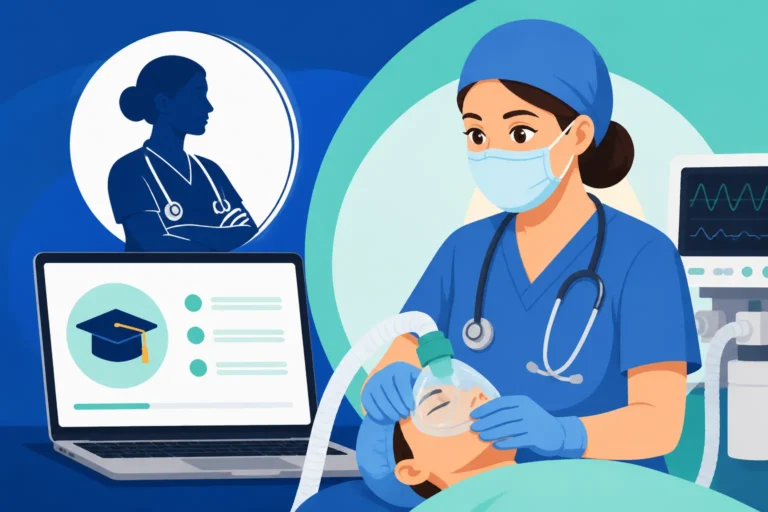
MSN vs NP: What’s the Difference
It's incredibly common for nurses to feel a bit lost in the alphabet soup of advanced nursing degrees and roles. You've heard of MSN, you've heard of NP, and often, they're thrown around interchangeably, leading to confusion about what each truly entails and which path is right for your career. This guide is here to untangle that knot, clearly explaining the fundamental differences and critical connections between an MSN degree and a Nurse Practitioner role, so you can confidently chart your future.
Unpacking the Master of Science in Nursing MSN Degree
Let's start by clarifying what an MSN actually is: it's an academic degree, a Master of Science in Nursing. Think of it as a higher level of formal education in the nursing field, building upon the foundational knowledge you gained with your ADN or BSN. This degree signifies advanced theoretical knowledge, research skills, and often, specialized expertise in a particular area of nursing. It’s an intellectual journey that expands your understanding of healthcare systems, evidence-based practice, and leadership principles.
What an MSN Truly Represents
An MSN degree is, at its heart, an advanced academic credential. It prepares nurses for a variety of roles that go beyond the traditional bedside care you might be familiar with as an Registered Nurse (RN). While it's a stepping stone for many who wish to become Nurse Practitioners, it's crucial to understand that simply having an MSN doesn't automatically make you an NP. The curriculum typically delves deep into areas like advanced pathophysiology, pharmacology, health assessment, nursing theory, research methods, and healthcare policy. This rigorous academic foundation is designed to equip nurses with the critical thinking and problem-solving skills needed to address complex healthcare challenges.
For example, a nurse with an MSN might pursue a career in public health, developing and implementing community-wide health initiatives based on population health data and epidemiological research. They might work in a hospital setting, not as a direct care provider, but as a quality improvement specialist, analyzing patient outcomes and designing protocols to enhance safety and efficiency. The MSN opens doors to roles where nurses can influence healthcare at a systemic level, making a broad impact far beyond individual patient encounters.
Diverse MSN Specializations Beyond Clinical Roles
One of the most exciting aspects of pursuing an MSN is the sheer diversity of specializations available that don't directly lead to becoming a Nurse Practitioner. Many nurses are passionate about areas like education, leadership, and healthcare technology, and the MSN offers tailored pathways for these interests. These non-clinical tracks are vital to the functioning and evolution of the healthcare system, ensuring a strong workforce, efficient operations, and innovation.
Consider the Nurse Educator track, which prepares nurses to teach future generations of healthcare professionals in academic settings or provide staff development within hospitals. These educators are crucial for maintaining the quality and competency of the nursing workforce, designing curricula, evaluating learning outcomes, and mentoring students. Then there's Nursing Informatics, a field for nurses who love technology and data. These specialists use information systems to improve patient care, manage health information, and enhance communication among healthcare providers. They might design electronic health record systems or develop data analytics tools to identify trends in patient care. The Nurse Administrator or Nurse Executive tracks, on the other hand, focus on preparing nurses for leadership and management positions, overseeing nursing units, departments, or even entire healthcare organizations. They deal with budgets, staffing, policy implementation, and strategic planning, ensuring that nursing services are delivered effectively and efficiently. Each of these specializations leverages the advanced knowledge gained through an MSN, but applies it in unique, non-bedside capacities, offering a rich tapestry of career options.
Academic Rigor and Program Structure
Embarking on an MSN program is a significant academic commitment, demanding dedication and intellectual curiosity. The typical coursework often includes advanced physiology, advanced pharmacology, health policy, ethical considerations in nursing, and in-depth research methods. You'll likely engage in extensive literature reviews, critical analysis of current healthcare practices, and potentially a capstone project or thesis that allows you to contribute original research or develop a practical solution to a healthcare problem. The length of an MSN program can vary, generally taking between 18 months to 3 years for full-time students, though part-time options are widely available to accommodate working nurses.
Admission requirements for an MSN program usually include a Bachelor of Science in Nursing (BSN) from an accredited institution, a current unencumbered RN license, a minimum GPA (often 3.0 or higher), and sometimes a certain amount of clinical experience. Some programs may also require a personal statement, letters of recommendation, and an interview. You can explore various options, including Online MSN Programs: Complete Guide, to understand the different formats and how they might fit your life. Many online MSN programs offer flexibility, allowing you to balance your studies with your professional and personal responsibilities. The rigor, however, remains consistent, focusing on developing your ability to think critically, lead effectively, and apply evidence-based knowledge to complex healthcare scenarios.
Demystifying the Nurse Practitioner NP Role
Now, let's shift our focus to the Nurse Practitioner (NP) role. Unlike an MSN, which is a degree, NP is a specific, licensed professional role within healthcare. An NP is an advanced practice registered nurse (APRN) who has typically completed an MSN or a Doctor of Nursing Practice (DNP) degree, allowing them to provide a broad range of healthcare services. They bridge the gap between nursing and medicine, often serving as primary care providers or specialists in various settings. This role involves significant autonomy and responsibility, empowering nurses to directly diagnose and treat patients.
What Defines a Nurse Practitioner
A Nurse Practitioner is a highly skilled and educated healthcare provider. What truly defines them is their expanded scope of practice, which differentiates them significantly from a Registered Nurse (RN). NPs are trained to assess, diagnose, and treat illnesses, order and interpret diagnostic tests, and prescribe medications, all within their scope of practice and state regulations. This means they often function much like physicians in certain settings, focusing on holistic patient care that considers not just physical symptoms, but also mental, emotional, and social well-being.
For instance, an NP working in a family practice clinic might see patients for routine check-ups, manage chronic conditions like diabetes or hypertension, provide preventive care, and address acute illnesses such as colds or infections. They perform physical exams, develop treatment plans, and educate patients on managing their health. The level of independence an NP has can vary by state, with some states granting full practice authority, allowing NPs to practice, diagnose, and treat patients without physician oversight, while others require collaborative agreements. This enhanced autonomy is a hallmark of the NP role, reflecting their advanced education and specialized training.
Common Nurse Practitioner Specialties and Their Focus
Just like physicians, Nurse Practitioners can specialize in a wide array of areas, focusing on specific patient populations or types of care. This specialization is usually determined during their MSN or DNP program, where they choose a track that aligns with their clinical interests. These specializations are crucial for meeting the diverse healthcare needs of communities, ensuring that patients receive expert care tailored to their age, health conditions, and specific circumstances.
Some of the most common NP specializations include the Family Nurse Practitioner (FNP), who provides comprehensive care to individuals and families across the lifespan, from infants to seniors. FNPs are often found in primary care clinics, rural health centers, and urgent care facilities. The Psychiatric Mental Health Nurse Practitioner (PMHNP) specializes in mental health care, diagnosing and treating psychiatric disorders, providing therapy, and prescribing psychotropic medications. They work in psychiatric hospitals, outpatient mental health clinics, and private practices. The Adult-Gerontology Primary Care Nurse Practitioner (AGPCNP) focuses on adults and elderly patients, managing chronic conditions and providing preventive care, while the Adult-Gerontology Acute Care Nurse Practitioner (AGACNP) works with the same population but in acute care settings like hospitals and intensive care units, managing complex, critical illnesses. Other vital specializations include Pediatric Nurse Practitioners (PNP) for children, Neonatal Nurse Practitioners (NNP) for newborns, Women's Health Nurse Practitioners (WHNP) for gynecological and reproductive health, and Emergency Nurse Practitioners (ENP) for urgent and emergent care. You can delve deeper into these options with resources like Nurse Practitioner Specializations Explained to see which one might resonate with your career aspirations.
The Path to Becoming a Licensed Nurse Practitioner
Becoming a licensed Nurse Practitioner is a multi-step journey that requires significant educational and professional commitment. It all starts with becoming a Registered Nurse, typically by earning an Associate's Degree in Nursing (ADN) or a Bachelor of Science in Nursing (BSN) and then passing the NCLEX-RN exam. Most aspiring NPs then gain some years of valuable clinical experience as an RN, which provides a practical foundation before pursuing advanced education.
The next critical step is to complete an accredited graduate program, almost universally an MSN or a Doctor of Nursing Practice (DNP) with an NP specialization. These programs typically integrate advanced theoretical coursework with extensive clinical hours, ensuring students gain hands-on experience in diagnosing and managing patient care under the supervision of experienced preceptors. For example, an FNP student might complete hundreds of hours in family practice clinics, while a PMHNP student would gain experience in psychiatric hospitals or mental health centers. After successfully completing the graduate program, candidates must pass a national certification exam specific to their chosen NP specialty. Organizations like the American Nurses Credentialing Center (ANCC) or the American Academy of Nurse Practitioners Certification Board (AANPCB) administer these exams. This is where study resources like Uworld come into play, offering comprehensive question banks and explanations to help candidates prepare for the rigorous certification exams. Finally, once certified, the nurse must apply for state licensure as an NP, meeting all specific requirements in their practice state, which can include fingerprinting, background checks, and verification of education and certification. This intricate process ensures that all practicing NPs are highly qualified and competent to provide advanced patient care. Understanding NP Certification Exams Explained can shed more light on this crucial step.
The Core Differences: Degree vs. Role
When we talk about MSN and NP, the most fundamental distinction is captured in the simple phrase: "degree versus role." An MSN is an academic credential, a piece of paper that signifies a certain level of education. An NP, on the other hand, is a job title, a professional designation that describes a set of responsibilities and a scope of practice within healthcare. While the two are often closely linked, especially as an MSN is usually a prerequisite for becoming an NP, they are not interchangeable, and understanding this core difference is vital for making informed career decisions.
Academic Credential vs. Clinical Practice Authority
Let's dive deeper into this fundamental difference. The Master of Science in Nursing (MSN) is an academic degree awarded by a university. It demonstrates that you have completed a rigorous program of study in advanced nursing theory, research, and specialized knowledge. This degree enhances your critical thinking, leadership capabilities, and understanding of complex healthcare systems. You can use an MSN to pursue roles like a nurse educator, a nurse administrator, a health policy analyst, or a researcher – positions where your advanced knowledge is applied in various capacities, often without direct patient diagnosis or treatment.
In contrast, a Nurse Practitioner (NP) is a role that carries specific clinical practice authority. This means an NP is legally permitted, based on their advanced education and licensure, to perform tasks such as diagnosing illnesses, ordering and interpreting diagnostic tests (like X-rays or blood work), developing treatment plans, and prescribing medications. This authority is granted through a combination of completing an accredited NP program (which typically culminates in an MSN or DNP) and then passing a national certification exam and obtaining state licensure. So, while an MSN provides the academic foundation, it's the subsequent certification and licensure that grant the actual clinical practice authority of an NP. You can have an MSN without being an NP, but you cannot be a licensed NP without an MSN (or DNP) and the necessary certifications.
Scope of Practice and Autonomy
The scope of practice is another critical area where MSN holders and Nurse Practitioners diverge. For a nurse with an MSN but not an NP license, their scope of practice generally aligns with their RN license, albeit with enhanced knowledge and skills applicable to their chosen non-clinical specialization. For example, an MSN-prepared nurse informaticist will use their advanced knowledge to manage data systems, but they won't be independently diagnosing a patient's pneumonia or prescribing antibiotics. Their impact is systemic, influencing care indirectly through improved processes, education, or administration.
Nurse Practitioners, however, possess a significantly expanded scope of practice, allowing them to engage in direct patient care at an advanced level. This includes performing comprehensive physical assessments, formulating differential diagnoses, ordering and interpreting a wide range of diagnostic tests, and managing acute and chronic conditions. A key aspect of their autonomy is the ability to prescribe medications, a privilege not held by general RNs or MSN-prepared nurses in non-NP roles. The degree of this prescriptive authority and independent practice can vary significantly by state, with some states granting full practice authority while others require NPs to work under physician supervision or a collaborative agreement. This higher level of clinical autonomy and direct patient care responsibility is what truly sets the NP role apart from other MSN-level positions.
Career Trajectories and Impact
The career trajectories for someone with an MSN versus a licensed Nurse Practitioner are distinctly different, reflecting their varied scopes of practice and ultimate impact on healthcare. An individual with an MSN but not an NP license typically moves into roles that leverage their advanced knowledge in areas like education, administration, research, or policy development. For instance, they might become a Director of Nursing for a hospital, a faculty member at a nursing school, a clinical research coordinator, or a public health program manager. Their influence is often felt broadly, through shaping the nursing workforce, improving healthcare systems, or generating new evidence for practice.
Conversely, the career trajectory for a Nurse Practitioner is primarily focused on advanced clinical patient care. NPs work directly with patients in various settings, including hospitals, clinics, private practices, long-term care facilities, and community health centers. They are frontline providers, managing patient health, preventing disease, and delivering health education. Their impact is often immediate and personal, directly improving patient outcomes through their diagnostic and treatment capabilities. While both MSN-prepared nurses and NPs are indispensable to the healthcare landscape, they contribute in different yet equally valuable ways. Understanding these differences is key when considering your Nursing Career Paths and Salaries.
How They Intersect: The Journey to Advanced Practice Nursing
Despite their distinct definitions, the MSN degree and the Nurse Practitioner role are often deeply intertwined. For most aspiring Nurse Practitioners, the MSN degree serves as the foundational academic pathway, providing the necessary advanced theoretical and clinical knowledge to qualify for the NP role. It's not uncommon for nurses to view their MSN as a direct step towards becoming an NP, understanding that the degree itself is a gateway to a more advanced clinical future.
The MSN as a Gateway to Becoming an NP
For a vast majority of nurses aiming to become a Nurse Practitioner, completing an accredited Master of Science in Nursing (MSN) program is the standard and most common educational prerequisite. The MSN curriculum specifically designed for NP tracks integrates the core advanced nursing knowledge with specialized clinical coursework and hands-on experience in a chosen population focus, such as family, pediatrics, or adult-gerontology. These programs are meticulously structured to build competencies in advanced health assessment, pathophysiology, and pharmacology, which are absolutely essential for an NP to effectively diagnose and manage patient care.
Think of it this way: the MSN provides the robust academic framework and specialized clinical training that equips an RN to transition into the higher level of responsibility and autonomy that comes with being an NP. It's where you learn not just what to do, but why you do it, based on scientific evidence and advanced nursing theory. Without this foundational MSN degree (or increasingly, a DNP), obtaining the national certification and state licensure required to practice as a Nurse Practitioner would simply not be possible. Therefore, while not every MSN holder becomes an NP, nearly every NP has an MSN or a DNP, solidifying the MSN's role as a critical academic gateway.
Other Paths: DNP and Post-Master's Certificates
While an MSN is the most common educational path, it's not the only way to become a Nurse Practitioner. The healthcare landscape is constantly evolving, and with it, educational requirements for advanced practice roles are also shifting. The Doctor of Nursing Practice (DNP) has emerged as an increasingly preferred or, in some cases, required terminal degree for Nurse Practitioners. Many programs now offer direct BSN to DNP pathways, or MSN to DNP bridge programs, emphasizing leadership, systems-level change, and evidence-based practice beyond the clinical focus of an MSN. Nurses often weigh the pros and cons of these options, asking MSN vs DNP: Which to Choose as they plan their careers.
Another important avenue for advanced practice nurses is the Post-Master's NP Certificate. This option is particularly valuable for nurses who already hold an MSN in a non-NP specialty (like nursing education or administration) or for NPs who wish to specialize in a different patient population without having to complete an entire second MSN program. For example, an MSN-prepared Nurse Educator might pursue a Post-Master's FNP Certificate to transition into clinical practice as a Family Nurse Practitioner. These certificate programs typically focus heavily on the clinical coursework and hours specific to the new specialty, building upon the existing MSN foundation. Understanding how these Post-Master's NP Certificate Explained can provide flexibility and open new career doors for nurses already holding an advanced degree.
Strategic Educational Planning for Future Goals
Embarking on advanced nursing education requires thoughtful strategic planning, especially when considering the MSN as a stepping stone to an NP role. It’s not just about earning a degree; it’s about aligning your education with your long-term career aspirations. When researching programs, it’s paramount to look beyond just the name and delve into the curriculum, faculty expertise, and clinical placement support. Are you passionate about working with children, families, or specific adult populations? Your choice of NP specialization, embedded within your MSN program, will dictate your future patient demographic and clinical environment.
Furthermore, always ensure that any program you consider, whether an MSN or a DNP, holds appropriate accreditation from recognized bodies like the Commission on Collegiate Nursing Education (CCNE) or the Accreditation Commission for Education in Nursing (ACEN). This accreditation is not merely a formality; it’s a critical stamp of quality that ensures your degree will be recognized for national certification and state licensure as an NP. Without proper accreditation, your hard work and financial investment could be in vain. For a deeper dive, read about CCNE vs ACEN Accreditation Explained. Thinking strategically now about these factors will save you potential headaches and ensure a smooth transition from student to advanced practice nurse.
Choosing Your Path: MSN, NP, or Both?
Deciding whether to pursue an MSN for a non-clinical role, an MSN to become an NP, or even a DNP, is a deeply personal and professional decision. There's no single "right" answer, as the ideal path depends entirely on your individual aspirations, strengths, and vision for your nursing career. It's about weighing your passion for direct patient care against your desire to influence healthcare at a broader, systemic level through leadership, education, or informatics.
Assessing Your Career Aspirations
The first and most crucial step in deciding your advanced nursing path is to deeply assess your personal and professional career aspirations. Do you envision yourself on the front lines, diagnosing and treating patients, building long-term relationships, and managing complex health conditions directly? If so, the Nurse Practitioner role, which requires an MSN (or DNP) with a clinical specialization, is likely your calling. You're probably someone who thrives on clinical challenges, enjoys critical thinking in patient care, and desires a greater level of autonomy in practice.
However, if your passion lies more in shaping the future of nursing, developing educational programs, leading healthcare teams, or leveraging technology to improve patient outcomes on a larger scale, then an MSN in a non-clinical specialization might be a better fit. Perhaps you've found immense satisfaction in mentoring new nurses, or you're fascinated by the data trends in patient care, or you have a knack for improving workflows. These roles, while not involving direct patient diagnosis and treatment, are incredibly impactful and essential to the healthcare system. It’s vital to reflect on what truly energizes you and where you feel you can make the most significant contribution. Thinking about How to Choose an NP Specialty might help if you're leaning towards the NP route.
Financial Investment and Return
No discussion about advanced degrees would be complete without considering the financial investment and the potential return. Pursuing an MSN or DNP, regardless of the track, represents a significant commitment of time and money. Tuition costs can range from tens of thousands to over a hundred thousand dollars, depending on the institution, program length, and whether it's an in-state or out-of-state program. You'll also need to factor in living expenses, textbooks, and potentially lost income if you reduce your work hours during your studies.
However, the investment often comes with a substantial return. Generally, obtaining an advanced degree like an MSN or DNP, particularly for the Nurse Practitioner role, can lead to a significant increase in earning potential compared to an RN with only a BSN. Nurse Practitioners often command higher salaries due to their expanded scope of practice and the demand for their services. For example, while an MSN-prepared nurse in a leadership role might see a healthy salary increase, a Nurse Practitioner typically experiences an even more pronounced jump. It’s worth exploring resources like MSN Salary Explained and Nurse Practitioner Salary Guide to get a clear picture of what you can expect financially in different roles and specialties. Weighing these financial aspects against your career goals is an important part of your decision-making process.
Navigating Educational Program Options
Once you have a clearer vision of your career path, the next step is to navigate the myriad of educational program options available. This can feel overwhelming, but breaking it down into manageable considerations will help. First, consider the program format: do you prefer a traditional on-campus experience with face-to-face interaction, or do you need the flexibility of an Online MSN Programs: Complete Guide? Online programs are a lifesaver for many working nurses, allowing them to continue their careers while pursuing their education. However, even online NP programs will require in-person clinical rotations, so understanding how those are arranged is critical.
Next, look closely at the curriculum. Does it align with your chosen specialization? Does it offer the depth of knowledge and clinical hours required for national certification in your desired NP role? Research the faculty – are they experienced practitioners or researchers in your area of interest? Also, consider the program's reputation and its pass rates for national certification exams. Speak to alumni if possible, to get a realistic perspective on the program’s demands and support systems. Some programs, like those offered by Purdue Global or Walden University, are known for their strong online presence and support for working professionals, while others, like Drexel University, offer a mix of online and hybrid formats. Don't rush this decision; a thorough investigation now will ensure you choose a program that sets you up for success.
Comparison Table: MSN Degree vs. Nurse Practitioner Role
| Feature | Master of Science in Nursing (MSN) | Nurse Practitioner (NP) |
|---|---|---|
| Nature | An academic degree (educational credential) | A licensed professional role (job title with specific clinical authority) |
| Primary Focus | Advanced nursing theory, research, leadership, education, systems thinking | Advanced clinical practice, direct patient care, diagnosis, treatment, prescribing |
| Education Level | Graduate-level degree (often required for NP) | Requires an MSN or DNP, plus national certification and state licensure |
| Scope of Practice | Varies by specialization (e.g., education, administration, informatics). | Expanded scope; includes diagnosing, ordering tests, prescribing medications |
| Clinical Hours | May have some clinicals for certain specializations (e.g., Nurse Educator), but generally less intensive for non-NP tracks. | Extensive clinical hours required for hands-on patient care and competency validation. |
| Licensure/Certification | RN license required for admission. No additional practice licensure specific to the MSN itself. | Requires national board certification in a specialty and state NP licensure. |
| Career Examples | Nurse Educator, Nurse Administrator, Nurse Informaticist, Clinical Nurse Specialist (non-NP roles), Researcher | Family NP, Psychiatric-Mental Health NP, Adult-Gerontology NP, Pediatric NP |
| Prescriptive Authority | Generally none. | Possesses prescriptive authority (varies by state). |
| Autonomy Level | High autonomy in specialized non-clinical roles. | High clinical autonomy, often independent practice in some states. |
| Pathway to NP | The most common educational prerequisite for becoming a Nurse Practitioner. | The culmination of advanced education and clinical training leading to a distinct practice role. |
Disclaimer
The information provided in this article is intended for general informational purposes only and does not constitute professional advice. While we strive to provide accurate and up-to-date content, nursing education requirements, licensure, and scope of practice can vary significantly by state and institution. Always consult with official academic advisors, nursing board representatives, and relevant professional organizations to ensure you have the most current and specific information pertaining to your individual circumstances and career goals.