Microbiology Prerequisite Explained
Many aspiring nurses, particularly those eyeing an Accelerated BSN program, often find themselves scratching their heads when they encounter "Microbiology" on the list of required prerequisites. It can feel like an unexpected roadblock, especially if your first degree wasn't science-focused. This guide is here to break down exactly what the microbiology prerequisite entails, why it’s a non-negotiable part of your journey, what to expect from the course material, and practical strategies to conquer it, ensuring a smooth path to your nursing career.
Understanding the Microbiology Prerequisite for Accelerated BSN Programs
For many of you dreaming of a quick pivot into nursing, an Accelerated BSN (ABSN) program is an amazing pathway. But before you can dive into clinical rotations and patient care, there's a foundational science knowledge base you need to build. Among the most critical of these is microbiology. It's not just a hoop to jump through; it's a vital part of your future competency as a registered nurse.
What Exactly is Microbiology for Nursing Students?
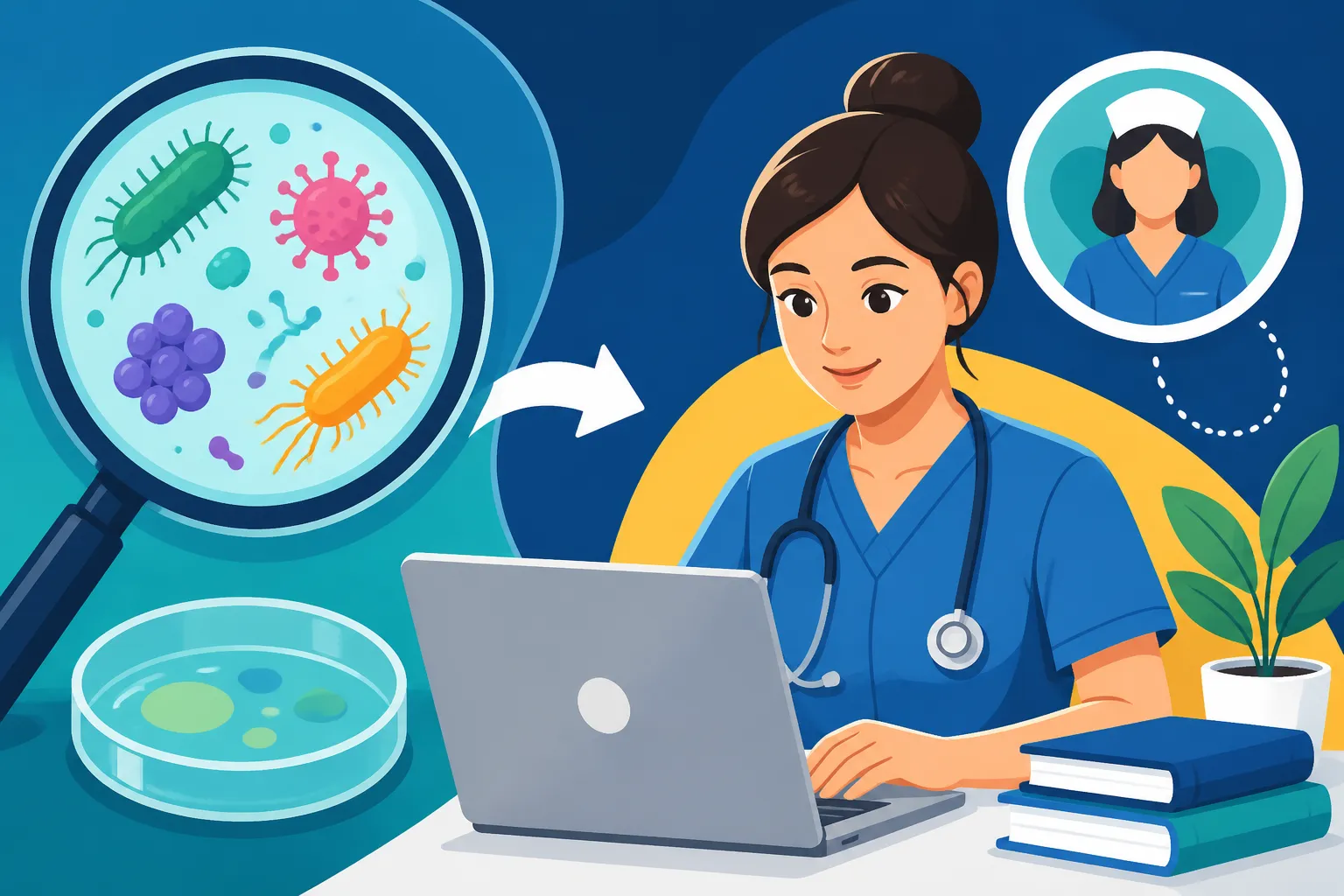
When an ABSN program lists microbiology as a prerequisite, they're typically referring to a college-level course that delves into the fascinating, albeit microscopic, world of microorganisms. This isn't just about bacteria and viruses; it covers a broad spectrum of tiny living things like fungi, protozoa, and even some multicellular parasites. The course isn't designed to make you a microbiologist, but rather to equip you with a foundational understanding of how these organisms interact with the human body, especially in the context of health and disease.
You'll explore their structures, how they grow and reproduce, how they spread, and crucially, how our bodies respond to them. It’s the science that underpins so much of what nurses do daily, from handwashing to managing complex infections. Expect a blend of lectures and a significant laboratory component that brings these tiny worlds to life, even if only under a microscope.
Why is Microbiology a Mandatory Prerequisite?
It might feel like just another hurdle, but trust me, there's a very good reason why virtually every reputable nursing program requires microbiology. Think about your daily interactions as a nurse: you’re constantly dealing with patients who have infections, wounds, or compromised immune systems. Without a solid understanding of the microbes causing these issues, you'd be flying blind. This course forms the bedrock of so many other crucial nursing topics.
First and foremost, it’s about patient safety. Knowing how bacteria, viruses, and fungi operate is paramount to effective infection control, preventing healthcare-associated infections (HAIs), and protecting both your patients and yourself. Secondly, it directly impacts your understanding of pharmacology, especially when it comes to antibiotics, antivirals, and antifungals. How can you effectively administer medications if you don't grasp why they work against specific pathogens? Finally, it builds critical thinking skills necessary for assessing patients, interpreting lab results, and understanding disease processes. This deep understanding is exactly what ABSN programs are looking for when evaluating your preparedness. You can explore other general requirements for these programs in our guide to Accelerated BSN Requirements.
Diving Deep into Microbiology Course Content
So, you've accepted that microbiology is essential, but what exactly will you be learning? The content can seem overwhelming at first, but it's all designed to build a cohesive picture of how microorganisms affect human health. Breaking it down helps make it much more manageable.
Key Topics You'll Cover in a Microbiology Course
A typical microbiology prerequisite course will systematically introduce you to various types of microorganisms and their significance in healthcare. You'll likely start with a historical overview, appreciating pioneers like Louis Pasteur and Robert Koch, who laid the groundwork for our understanding of infectious diseases. Then, you'll move into the core concepts. Expect to spend considerable time on bacteriology, learning about different bacterial structures (Gram-positive vs. Gram-negative), metabolism, growth patterns, and how they cause disease. This foundation is critical for understanding common bacterial infections like strep throat, UTIs, and pneumonia.
Next up, you'll delve into virology, exploring viruses, how they replicate, and the diseases they cause, from the common cold and flu to more severe conditions like HIV and Hepatitis. Mycology focuses on fungi, which are responsible for conditions like candidiasis and ringworm. You might also touch upon parasitology, examining protozoa and helminths that cause diseases like malaria or giardiasis. Beyond individual microbes, you'll study the principles of sterilization, disinfection, and antisepsis – topics directly applicable to maintaining sterile environments in healthcare. And, of course, the grand finale is often an introduction to the human immune system, understanding how our bodies naturally defend against these microbial invaders and how vaccines bolster that defense. This broad spectrum of knowledge is what will truly prepare you for the rigorous curriculum of an Accelerated BSN for Non-Nursing Majors.
The Crucial Role of the Lab Component
While lectures provide the theoretical framework, the laboratory component of a microbiology course is where the real magic (and sometimes frustration!) happens. This isn't just about watching a professor; it's about hands-on learning that solidifies your understanding and develops essential practical skills. You'll spend hours in the lab, peering through microscopes, performing Gram stains to differentiate bacteria, culturing microbes on agar plates, and observing their growth characteristics.
You'll also get to conduct experiments demonstrating concepts like antibiotic sensitivity (seeing which antibiotics kill which bacteria), which directly translates to understanding how healthcare providers choose the right treatment. The lab component isn't just about identifying tiny organisms; it's also about mastering aseptic technique. This critical skill – preventing contamination – is something you'll use every single day as a nurse, whether you're starting an IV, changing a dressing, or performing a catheter insertion. Learning how to work cleanly and meticulously in the lab sets the stage for working safely and effectively in clinical settings. Many programs will expect you to have completed specific Accelerated BSN Clinical Requirements once you are in the program, so these foundational lab skills are key.
The Indispensable Value of Microbiology for Nurses
It’s easy to see microbiology as just a required science course, but its value for nurses goes far beyond checking a box. This isn't abstract theory; it's real-world, life-saving knowledge that will inform countless decisions you make as a healthcare professional.
Strengthening Your Foundation in Infection Prevention and Control
Imagine stepping onto a hospital unit, knowing that every surface, every patient, and even the air might carry invisible threats. Without a firm grasp of microbiology, that scenario would be terrifying. This course fundamentally strengthens your understanding of infection prevention and control, which is arguably one of the most critical aspects of nursing practice. You'll learn why proper hand hygiene is the single most effective way to prevent the spread of disease, not just that you should do it. You'll understand the mechanisms behind healthcare-associated infections (HAIs) like C. diff or MRSA, and how environmental controls, sterilization procedures, and isolation precautions work to break the chain of transmission.
This knowledge empowers you to be a proactive advocate for patient safety, identifying potential risks and implementing evidence-based practices to mitigate them. From understanding how viruses spread through aerosols to the importance of proper personal protective equipment (PPE), microbiology provides the scientific rationale for every infection control measure you'll encounter in your nursing career. It's the difference between blindly following policy and truly understanding the why behind it.
Informing Clinical Decision-Making and Patient Education
As a nurse, you’re often the first line of defense and observation. Your microbiology knowledge will be crucial in interpreting a patient's symptoms, understanding their lab results, and anticipating potential complications. When you see a patient with a fever, chills, and a high white blood cell count, your microbiology background will help you connect those dots to a possible bacterial infection, differentiating it from a viral illness. You'll understand why a certain antibiotic is prescribed for a specific bacterial strain, and why another might be ineffective due to antibiotic resistance—a growing global health crisis.
Furthermore, this knowledge makes you a more effective patient educator. You can explain to a diabetic patient why foot care is essential to prevent fungal infections, or teach a new parent how viruses spread in daycare settings. You can help patients understand the importance of finishing their antibiotic course, even if they feel better, to prevent the development of resistant bacteria. Being able to explain these complex concepts in an understandable way to patients and their families fosters trust and promotes better health outcomes. For more insight into what you'll learn, our guide on What You Learn in an RN to BSN Program offers a look at a slightly different degree, but the core clinical knowledge overlaps.
Preparing for Advanced Nursing Concepts and NCLEX Success
Think of microbiology as a foundational course that unlocks a deeper understanding of almost every subsequent nursing subject. When you study pharmacology, you'll revisit bacterial mechanisms of action for antibiotics. In pathophysiology, you'll apply your knowledge of pathogens to understand how various diseases progress. In critical care, you'll need to grasp complex infections in immunocompromised patients. Even in mental health, certain infections can manifest with neurological or psychiatric symptoms.
Perhaps most importantly, a strong grasp of microbiology is a significant asset when it comes to preparing for the NCLEX-RN exam. Questions on infection control, medication administration, lab values, and patient education frequently rely on a fundamental understanding of microorganisms and how they affect the body. Being comfortable with these concepts from your prerequisite course will give you a significant advantage, allowing you to focus on the application of nursing principles rather than struggling with basic scientific facts. This robust preparation extends to understanding broader nursing roles and career paths, even those leading to an Accelerated BSN to MSN Path.
Navigating Your Options for Completing the Prerequisite
Okay, so you’re convinced of microbiology's importance. Now, how do you actually get this requirement checked off your list? The good news is that there are several pathways available, each with its own benefits and considerations.
Exploring Online Microbiology Courses
For many aspiring ABSN students, especially those balancing work, family, or other commitments, online microbiology courses are a lifesaaving option. The flexibility they offer is unparalleled. You can often complete coursework on your own schedule, from anywhere with an internet connection, which is fantastic for working nurses or those with busy lives. Many community colleges and university extension programs now offer fully online or hybrid microbiology courses.
However, there's a crucial caveat: the lab component. Microbiology is inherently hands-on. Some online courses manage this by providing home lab kits, virtual simulations, or requiring a proctored, in-person lab session at a designated site. It's absolutely critical to confirm with your target ABSN programs that they accept online microbiology courses, especially those with virtual lab components. Don't assume; always verify to avoid any disappointment or wasted effort. Our article on How to Complete ABSN Prerequisites Online dives deeper into how to navigate these choices.
Traditional In-Person vs. Hybrid Formats
While online learning offers flexibility, traditional in-person microbiology courses still hold significant advantages for some students. The face-to-face interaction with professors and classmates can be invaluable for clarifying complex concepts, asking immediate questions, and fostering study groups. The lab component in an on-campus setting is often more robust, with access to advanced equipment, a wider range of cultures, and direct supervision from instructors. This can provide a richer, more tactile learning experience that really helps cement understanding, especially if you learn best by doing.
Hybrid programs offer a compelling middle ground, blending the best of both worlds. Typically, the lecture portion of a hybrid course is delivered online, giving you that scheduling flexibility. However, the lab component requires in-person attendance, often condensed into fewer, longer sessions. This format is increasingly popular, as it allows students to gain the hands-on experience crucial for microbiology while still accommodating busy schedules. The choice between these formats often comes down to your learning style, time constraints, and the specific requirements of your desired ABSN program.
Assessing Community Colleges and Universities
When choosing where to take your microbiology prerequisite, both community colleges and four-year universities are viable options, each with its own set of pros and cons. Community colleges often offer more affordable tuition rates per credit, which can be a huge factor if you're paying out-of-pocket for several prerequisites. They also tend to have more flexible scheduling, including evening or weekend classes, to accommodate adult learners. The class sizes are sometimes smaller, potentially leading to more individualized attention.
Universities, on the other hand, might offer a more intense, research-oriented curriculum, potentially appealing if you thrive in an academically rigorous environment. Their instructors might have more advanced degrees or research experience. However, university courses typically come with a higher price tag. The most important thing, regardless of where you take it, is to ensure the course is fully accredited and that the credits will be accepted by your target ABSN programs. Always double-check with the admissions office of your chosen nursing schools before enrolling to confirm credit transferability. This is a common concern addressed in our guide, Accelerated BSN Transfer Credit Explained.
Strategies for Acing Your Microbiology Course
Microbiology can be a challenging course, packed with new terminology, complex processes, and a lot of memorization. But with the right strategies, you can absolutely ace it and build a strong foundation for your nursing studies. Remember, every challenge overcome now makes your ABSN journey smoother later.
Effective Study Habits and Time Management
Success in microbiology, like in many science courses, hinges on consistent, active study and smart time management. Don't fall into the trap of cramming everything the night before a test; microbiology builds on previous concepts, so a steady pace is key. Try breaking down the material into smaller, digestible chunks. Instead of trying to memorize a whole chapter, focus on a specific group of bacteria or a single immune response mechanism each day. Utilize active recall techniques: after reading a section, close your book and try to explain the concepts aloud in your own words, or draw diagrams. Flashcards are your friend for all the new terminology and organism names.
Consider forming a study group with classmates. Explaining concepts to others or having them explain to you is an incredibly effective way to solidify your understanding. Block out dedicated study times in your schedule, treating them like non-negotiable appointments. If you're struggling with applying knowledge or seeing connections, practice questions can be incredibly helpful. Platforms like Uworld, while primarily known for NCLEX prep, also offer robust question banks that can help you practice applying microbiology concepts, reinforcing your understanding of challenging topics in a test-like environment, which can be a lifesaver when you're preparing for exams. For more general advice, check out our Accelerated BSN Study Tips.
Leveraging Resources for Success
You don't have to tackle microbiology alone. There's a wealth of resources available, and smart students know how to use them. Your primary resource, of course, is your professor. Attend office hours, ask questions, and seek clarification on anything you don't understand. They are experts and often have insights or examples that can make a tricky concept click. Don't be shy about reaching out! Many schools also offer free tutoring services for challenging science courses; a peer tutor can often explain things in a way that resonates with you.
Beyond your institution, look for supplemental online resources. Many textbooks come with online companions, practice quizzes, and interactive diagrams. Educational YouTube channels (like Crash Course Biology or Amoeba Sisters for visual learners) can provide alternative explanations that clarify complex processes. There are also many reputable scientific websites that offer free, accurate information on various microbial topics. Remember, the goal isn't just to pass, but to truly understand the material, so explore different avenues until you find what works best for your learning style.
Maintaining Motivation in a Challenging Subject
Let's be real: some days, microbiology will feel like a slog. There's a lot of information, and it can be dense. The key to staying motivated is to consistently connect the dots between what you’re learning and your ultimate goal of becoming a nurse. When you're struggling to memorize the different types of bacterial flagella, remind yourself that this knowledge will help you understand how bacteria move and spread infection. When you're overwhelmed by the intricacies of the immune system, remember that this is how our bodies fight off disease, and you'll be teaching patients about it.
Visualize yourself in clinicals, applying this knowledge to patient care. Imagine being able to confidently explain an infection to a worried family member, or understanding a complex lab result. Break down your larger goal into smaller, achievable milestones. Passing a quiz, understanding a difficult concept, or performing well in a lab session – celebrate these small victories. This positive reinforcement will fuel your momentum and keep you going, even when the subject feels particularly tough. Truly grasping the 'why' behind these prerequisites can make a huge difference in your learning journey.
Overcoming Common Challenges with the Microbiology Prerequisite
It's common to face a few bumps in the road when working through prerequisites, especially a challenging one like microbiology. Don't let these potential obstacles discourage you; they are often surmountable with strategic planning and perseverance.
What if Your Previous Grades Aren't Up to Par?
One of the most common anxieties for aspiring ABSN students is having a less-than-stellar grade in a previous science course, or even in microbiology itself if you took it years ago. ABSN programs are highly competitive, and strong grades in prerequisites, especially sciences, are often a firm requirement. If your grade in microbiology (or another key science) is below the minimum GPA requirement for your target programs, you have a few options.
The most direct approach is to retake the course. Many programs will either average the grades or, more favorably, take the higher grade. By retaking it, you not only improve your GPA but also demonstrate a commitment to academic success and a stronger grasp of foundational knowledge. When retaking, treat it as a fresh start, applying the study strategies discussed earlier. Some programs might also look at an upward trend in your academic record, or allow you to write an addendum to your application explaining past challenges and how you've grown. Always consult directly with the admissions counselors for specific guidance on how their program handles retaken courses and Accelerated BSN GPA Requirements.
Ensuring Your Credits Transfer Smoothly
Nothing is more frustrating than putting in the effort to complete a prerequisite, only to find out your target nursing program won't accept the credits. This is a legitimate concern, especially if you're taking the course at a different institution than where you plan to apply for your ABSN. The key here is proactive communication. Before you even enroll in a microbiology course, especially an online one or one from a community college, confirm its transferability with the admissions office of every ABSN program you're considering.
Ask specific questions: Do they accept online labs? Is there a time limit on how old a prerequisite can be (some programs won't accept science courses older than 5-7 years)? Is the institution accredited by a recognized regional or national accrediting body? Get these confirmations in writing if possible. It’s also wise to send them the course description or syllabus if they request it, so they can properly evaluate the course content. By doing your homework upfront, you can save yourself a lot of headaches down the line and ensure your hard-earned credits count towards your nursing goal.
Balancing Prerequisite Completion with Other Commitments
Life doesn't stop just because you're trying to get into nursing school. Many students are working full-time, raising families, or managing other significant responsibilities while trying to knock out prerequisites. Balancing a demanding science course like microbiology with these commitments can feel overwhelming. This is where strategic planning and self-awareness come into play.
If your schedule is packed, an online or hybrid microbiology course might be your best bet, offering the flexibility to study during non-traditional hours. Be realistic about how much you can handle. Taking microbiology alongside another intense science course like Anatomy & Physiology might be too much for some individuals, leading to burnout or lower grades. Prioritize your commitments and be honest about your capacity. Lean on your support system – family, friends, or even your employer – to help create the space you need for study. Remember, this phase is temporary, and the hard work you put in now will pay off immensely when you're finally accepted into your dream ABSN program and on your way to becoming a registered nurse. It’s all part of the larger Accelerated BSN Application Timeline.
| Feature | Online Course (with virtual/home lab) | Hybrid Course (online lecture, in-person lab) | Traditional In-Person Course |
|---|---|---|---|
| Flexibility | Highest | High (for lectures) | Lowest |
| Cost | Varies, often comparable to CC | Varies, often comparable to CC/Univ. | Varies, often highest at Univ. |
| Lab Experience | Virtual simulations, home kits, less hands-on | Balanced, dedicated lab time | Most hands-on, direct supervision |
| Pace | Often self-paced or accelerated | Structured with online & in-person deadlines | Structured, fixed schedule |
| Instructor Access | Email, virtual office hours | Mix of virtual & in-person office hours | Direct in-person interaction |
| Social Interaction | Minimal | Moderate (lab component) | Highest |
| Acceptance by ABSN | Verify individually with each program! | Generally accepted | Generally accepted |
Disclaimer
Please remember that the information provided in this guide is for general informational purposes only and should not be considered professional academic or career advice. Requirements for nursing programs, including prerequisites, can vary significantly by institution and are subject to change. Always consult directly with the admissions department of any Accelerated BSN program you are considering to verify their specific microbiology prerequisite requirements, acceptable course formats, and credit transfer policies.