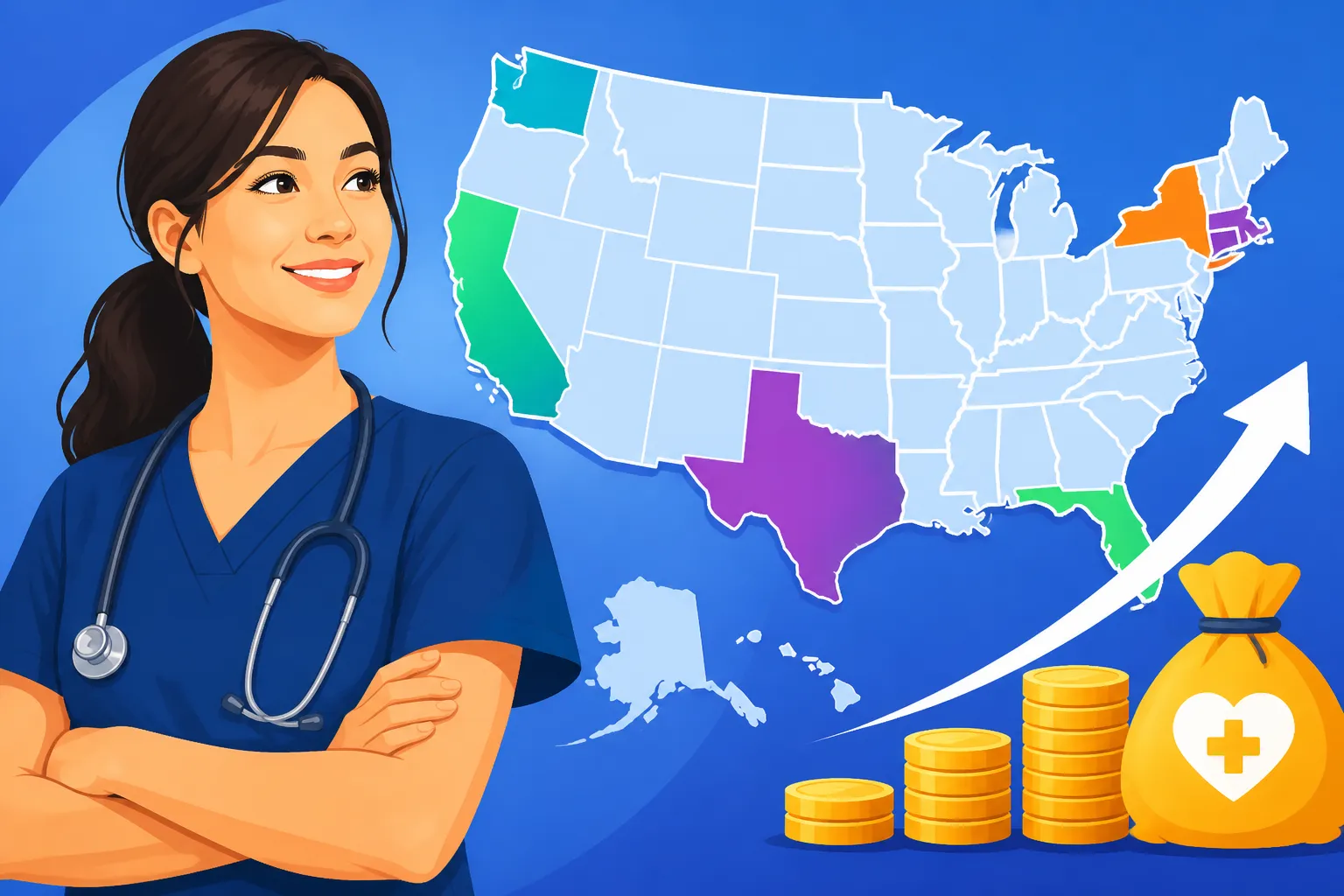
Best-Paying States for Nurse Practitioners
It's incredibly frustrating to invest so much time, energy, and financial resources into becoming a Nurse Practitioner, only to feel like you're not earning what you're truly worth. Many NPs grapple with the desire to maximize their earning potential while also finding a state that offers the best opportunities and quality of life. This comprehensive guide will illuminate the top-paying states for Nurse Practitioners, delve into the factors that influence these salaries, and help you consider what truly matters when planning your professional future.
Why State Matters: Understanding Nurse Practitioner Salary Dynamics
When you look at average nurse practitioner salaries across the United States, it's clear that the numbers aren't uniform. There's a significant variance from one state to another, and this isn't just a random occurrence. Several interconnected factors contribute to these disparities, making some states significantly more lucrative for NPs than others. Understanding these dynamics is the first step toward making an informed career decision.
The Cost of Living Connection
One of the most immediate and impactful factors influencing NP salaries is the local cost of living. States with notoriously high costs of housing, transportation, and everyday expenses often compensate their professionals, including Nurse Practitioners, with higher salaries to enable them to maintain a decent standard of living. It’s a simple economic principle: if it costs more to live somewhere, employers generally have to pay more to attract and retain talent. This is why you'll often see states like California or New York at the top of the salary lists; a $150,000 salary in San Francisco might feel less substantial than a $100,000 salary in a more affordable Midwestern state.
However, it's crucial not to be solely swayed by the raw number. A high salary can quickly be eroded by exorbitant rent, state income taxes, and property values. When evaluating a state, always consider the net impact of the salary against the cost of living index. What looks good on paper might not translate into greater disposable income or savings. This is a critical nuance often overlooked by those solely chasing the highest figures.
Supply, Demand, and Healthcare Needs
Another major driver of NP salaries is the classic economic principle of supply and demand. If a state has a high demand for healthcare services and a relatively low supply of qualified Nurse Practitioners, salaries will naturally trend upwards to attract more professionals. This demand can stem from several sources: an aging population requiring more care, a shortage of primary care physicians, or specific public health challenges that require advanced practice nurses. Rural areas, for instance, often face critical healthcare provider shortages, leading to higher salaries and incentive programs for NPs willing to practice there.
Conversely, states with a robust supply of NPs or less pressing healthcare needs might see slower salary growth or lower average wages due to increased competition for positions. This is why some regions are constantly recruiting, while others have more established, less volatile markets. Always investigate the local healthcare landscape and projected job growth, as outlined in articles like Nursing Job Outlook and Demand. The demand for specific specialties, such as Psychiatric Mental Health Nurse Practitioners (PMHNP) or Family Nurse Practitioners (FNP), can also vary by state and significantly impact earning potential.
The Impact of Full Practice Authority
Perhaps one of the most significant legislative factors influencing a Nurse Practitioner's earning potential and career satisfaction is the scope of practice regulations in a given state. States grant different levels of practice authority, ranging from "full practice" to "restricted practice." In states with full practice authority, NPs can assess, diagnose, treat, and manage patients, order and interpret diagnostic tests, and prescribe medications without physician supervision. This autonomy can lead to higher earning potential because NPs can operate their own clinics or take on more complex, higher-paying roles without the overhead or restrictions associated with collaborative agreements.
On the other hand, states with restricted or reduced practice authority require NPs to have a collaborative agreement with a physician, sometimes limiting their ability to prescribe or practice independently. This can impact earning potential by limiting the types of roles available, reducing autonomy, and sometimes even dictating a lower billing rate for services. For those seeking maximum professional independence and higher compensation, understanding NP Full Practice Authority States is paramount. This regulatory environment directly influences an NP's ability to fully utilize their education and experience, and thus, their market value.
The Golden Tickets: Top-Paying States for Nurse Practitioners
Alright, let's get down to brass tacks. You've worked hard to earn your Master of Science in Nursing (MSN) and become an NP, and now you want to know where your skills are most valued, financially speaking. While exact figures can fluctuate annually due to various market conditions, certain states consistently appear at the top of the list for Nurse Practitioner salaries. These are the places where your expertise is likely to yield the highest financial returns.
Diving into the Top Earners
Based on recent labor statistics, several states consistently offer the highest average salaries for Nurse Practitioners. These aren't just minor bumps; we're talking about significant differences that can impact your long-term financial health and overall career satisfaction.
- California: Often leading the pack, California boasts some of the highest NP salaries in the nation, frequently exceeding $150,000 annually. This is largely due to its high cost of living, large and diverse population, and a strong demand for healthcare providers, especially in urban centers like Los Angeles and the San Francisco Bay Area. NPs in California also benefit from a significant level of practice authority, though not full practice across the board.
- New Jersey: Another consistent high-payer, New Jersey often sees NP salaries well above the national average, often in the $140,000-$150,000 range. Its proximity to major metropolitan areas, high population density, and established healthcare infrastructure contribute to this.
- New York: Similar to New Jersey, New York offers competitive salaries, especially in and around New York City. Nurse Practitioners in the Empire State can expect averages typically in the $135,000-$145,000 range. The high demand in this densely populated state, combined with a high cost of living in many areas, drives these figures.
- Massachusetts: Known for its world-class healthcare systems and academic medical centers, Massachusetts is another excellent state for NP compensation, often seeing averages in the $135,000-$145,000 range. The strong healthcare industry here creates a high demand for skilled NPs.
- Washington: Out in the Pacific Northwest, Washington State is increasingly becoming a hotspot for high NP salaries, frequently in the $130,000-$140,000 range. With a growing tech industry and expanding populations, demand for healthcare services is on the rise, and the state has favorable practice laws for NPs.
- Oregon: Neighboring Washington, Oregon also offers competitive wages for NPs, typically in the $125,000-$135,000 range. It shares some of the same drivers as Washington, including a growing population and a progressive stance on NP practice authority.
It's important to remember that these are average figures. Your actual salary can vary based on your specialty, years of experience, practice setting (hospital, clinic, private practice), and negotiation skills. To truly get a sense of specific earnings, you'll want to dive into resources like Nurse Practitioner Salary in California or Nurse Practitioner Salary in New York for more localized data.
Emerging Markets and Regional Hotspots
While the usual suspects often top the lists, it's worth keeping an eye on emerging markets and regional hotspots that are seeing significant growth in NP demand and, consequently, salaries. States like Arizona, Texas, and Florida, for example, are experiencing rapid population growth, particularly among older adults, which fuels an increasing need for healthcare services. While their average salaries might not always hit the absolute top tier, the growth trajectory and opportunities can be very appealing.
These states often present a unique balance: a rising demand for NPs, potentially more affordable living costs than the coastal giants, and evolving healthcare landscapes. For instance, parts of Texas, while perhaps not reaching California's highest averages, offer a considerably lower cost of living, meaning your dollar might stretch further. Always consider the full picture, not just the initial salary figure. Investigating a state's specific healthcare initiatives and population demographics can uncover hidden gems where your earning power, combined with quality of life, is exceptionally high.
Key Factors Driving High Pay in These States
The consistent high pay in states like California, New Jersey, and Massachusetts isn't accidental. It's a combination of factors working in tandem. Firstly, high cost of living is a primary driver; employers must offer competitive wages to attract professionals to expensive areas. Secondly, population density and growth lead to a greater demand for healthcare services, especially in urban and suburban areas. When more people need care, more providers are needed, which drives up compensation.
Thirdly, many of these states have robust healthcare infrastructures with numerous hospitals, specialized clinics, and academic medical centers. This creates a competitive job market among employers, pushing salaries upwards. Finally, favorable legislative environments regarding Nurse Practitioner scope of practice play a crucial role. While not all top-paying states have full practice authority, many have fewer restrictions than lower-paying states, allowing NPs to bill for a wider range of services and practice with greater autonomy, thus increasing their value to employers. Understanding these underlying drivers helps you predict future trends and identify truly sustainable high-earning environments.
Here's a quick look at some of the top-paying states for Nurse Practitioners, keeping in mind that these figures are averages and can shift:
| State | Average Annual NP Salary (Approx.) | Typical Range (Approx.) | Cost of Living Index (US Avg = 100) | Full Practice Authority? |
|---|---|---|---|---|
| California | $155,000 | $120,000 – $190,000 | 138.5 | Yes, with some caveats |
| New Jersey | $147,000 | $115,000 – $180,000 | 112.5 | Yes |
| New York | $145,000 | $110,000 – $175,000 | 120.5 | Yes |
| Massachusetts | $142,000 | $110,000 – $170,000 | 127.5 | Yes |
| Washington | $138,000 | $105,000 – $165,000 | 116.5 | Yes |
| Oregon | $133,000 | $100,000 – $160,000 | 113.5 | Yes |
| Nevada | $130,000 | $100,000 – $155,000 | 104.5 | Yes |
Note: Salaries and cost of living indices are approximate and subject to change based on current market data and economic conditions. "Full Practice Authority" status can also evolve with legislative changes.
Beyond the Paycheck: Other Crucial Considerations for NPs
While a high salary is undeniably attractive, it's only one piece of the puzzle when choosing where to build your Nurse Practitioner career. Many other factors significantly influence your professional satisfaction, work-life balance, and overall quality of life. Overlooking these can lead to burnout, frustration, or a sense that you're not truly thriving, even if your bank account looks healthy.
Navigating Practice Authority and Licensure
We touched on this earlier, but it truly bears repeating: a state's practice authority laws are incredibly important. Imagine moving to a state for a fantastic salary, only to find that your ability to practice independently is severely restricted. This can feel incredibly limiting, especially after the rigorous training you've undergone. States with full practice authority often offer a more fulfilling and autonomous career path for NPs, allowing you to establish independent practices, innovate in healthcare delivery, and fully utilize your skills.
Conversely, states with reduced or restricted practice can create bureaucratic hurdles, requiring extensive physician oversight for prescribing or diagnosing. This isn't just a matter of professional pride; it can directly impact your day-to-day work, your ability to serve patients effectively, and even your long-term career growth. Before making any moves, thoroughly research NP Prescriptive Authority by State and the overall scope of practice. Ensuring that the state's regulations align with your professional goals and desired level of autonomy is crucial. You'll also need to understand the specific licensure requirements for NPs in that state, as these can vary.
Quality of Life and Professional Growth
Beyond the numbers, think about what truly makes you happy outside of work. Are you an outdoors enthusiast who craves mountains and trails? Or do you prefer the hustle and bustle of city life, with easy access to cultural events and diverse culinary scenes? The cost of living is part of this equation, but so are factors like climate, traffic, public safety, school systems (if you have a family), and community vibe. A higher salary might not feel worth it if you're miserable in your environment or spending all your extra cash on childcare and a punishing commute.
Consider the opportunities for professional growth as well. Are there major teaching hospitals, research institutions, or specialized clinics where you could further develop your skills or pursue advanced certifications? Does the state offer strong professional organizations for NPs that provide networking and continuing education? For example, states with a high concentration of academic medical centers might offer more opportunities for NPs interested in roles like Nurse Educator or those looking to expand into Nursing Informatics. Your career path is a journey, and you want to ensure the environment supports your evolution.
Strategic Preparation for Success
Regardless of which state you choose, success as a Nurse Practitioner hinges on solid preparation, starting with your certification exams. Whether you're aiming for the AANP (American Association of Nurse Practitioners) or ANCC (American Nurses Credentialing Center) certification, mastering the content is non-negotiable. These exams are comprehensive and demand a deep understanding of advanced clinical practice, pharmacology, and patient management.
Many aspiring NPs find immense value in utilizing dedicated study resources to ensure they are fully prepared. Platforms like Uworld, for example, are widely recognized for their comprehensive question banks and detailed rationales, which simulate the actual exam experience and help solidify knowledge. The critical thinking skills honed through such rigorous preparation are not just for passing an exam; they are fundamental to effective and safe practice, no matter where you eventually work. Investing in high-quality study materials before taking the boards is a strategic move that pays dividends throughout your career. A well-prepared NP, confident in their foundational knowledge, is better equipped to navigate the challenges and opportunities of any healthcare environment.
Making the Leap: Planning Your Move to a High-Earning State
Deciding to move to a new state for career opportunities as a Nurse Practitioner is a huge decision, and it requires careful planning beyond just looking at salary figures. The logistical and professional steps can feel overwhelming, but with a structured approach, you can navigate the transition smoothly and set yourself up for long-term success.
Researching Specific Locations
Once you've narrowed down a few top-paying states that align with your practice authority preferences and lifestyle, it's time to get hyper-local. Salaries, demand, and quality of life can vary dramatically even within a single state. For instance, an NP working in rural Northern California will likely have a different experience and compensation structure than one in San Diego. Look into specific cities or regions. Are there major hospital systems that are known employers of NPs? What's the local job market like for your particular specialization, whether that's Family Nurse Practitioner or Pediatric Nurse Practitioner?
Consider the healthcare landscape: is it dominated by large integrated health systems, or are there many smaller clinics and private practices? This can influence everything from benefits packages to work culture. Explore cost-of-living calculators that compare specific cities, not just state averages. Websites like Numbeo or BestPlaces can give you a granular look at everything from housing costs to grocery prices, helping you understand how far your prospective salary will truly stretch. The goal here is to get past the generalizations and envision your actual day-to-day life in that specific community.
Networking and Job Search Strategies
Moving to a new state often means starting your professional network from scratch. Before you even pack a box, start connecting with NPs in your target area. LinkedIn is an invaluable tool for this. Join state-specific NP associations and online forums. Reach out to alumni from your MSN program who might be practicing there. Informational interviews can provide invaluable insights into the local job market, employer reputations, and what it’s truly like to work as an NP in that region.
When it comes to the job search itself, tailor your resume and cover letter to highlight your experience and how it aligns with the needs of healthcare facilities in that specific state. Utilize national job boards like Indeed, Glassdoor, and LinkedIn, but also check local hospital system career pages and state nursing association job boards. Some Nurse Practitioners also find success working with specialized healthcare recruiters who have deep knowledge of the local market. For those still honing their skills or preparing for advanced practice, remember that foundational knowledge and board exam success are key. Comprehensive review programs, such as those offered by Uworld, not only prepare you for certification but also build the strong clinical reasoning that employers actively seek.
Financial Planning for the Transition
Relocating can be expensive, so a solid financial plan is essential. Factor in moving costs, temporary housing if needed, new licensure fees, and the cost of living during your job search period. Ideally, you’ll want to have several months of living expenses saved up before making the move. Research potential tax implications in your new state, including income tax, property tax, and sales tax, as these will affect your net income.
Consider whether your current employer offers any relocation assistance, or if prospective employers in your target state might provide a signing bonus or relocation package. Many hospitals, especially those in high-demand areas or seeking specific specialties, offer such incentives to attract top talent. Exploring options like RN to BSN Financial Aid Options or MSN Financial Aid and Scholarships can provide a blueprint for financial planning, even if you’re past the student phase. Ultimately, a well-thought-out financial strategy will minimize stress during your transition, allowing you to focus on settling into your new role and enjoying your new high-earning environment.
Disclaimer
Please note that the information provided in this article is intended for general informational purposes only and does not constitute financial, legal, or professional advice. Nurse Practitioner salaries, cost of living, and state practice laws are subject to change and can vary based on numerous individual factors. It is essential to conduct your own thorough research, consult with financial advisors, and verify all information with official state boards of nursing and reputable employment resources before making any career or relocation decisions.