How Difficult Is an Online RN to BSN
It's completely normal to feel a knot of apprehension in your stomach when you start thinking about going back to school for your online RN to BSN. You're already a working nurse, likely juggling shifts, family responsibilities, and the general chaos of life. The idea of adding academic coursework, deadlines, and studying to that already overflowing plate can feel incredibly daunting. This guide is here to frankly address the question of how difficult an online RN to BSN program really is, breaking down the challenges you might face and, more importantly, offering realistic strategies to navigate them successfully.
Demystifying the "Difficulty" of an Online RN to BSN
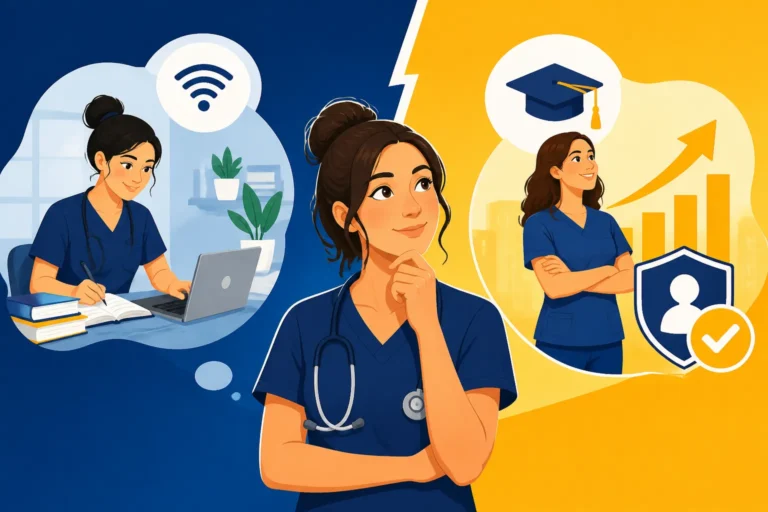
When nurses ask, "How difficult is an online RN to BSN?", they're often thinking of a few different things. Is it the academic content itself? Is it the sheer volume of work? Or is it the unique challenges that come with learning online while balancing a demanding nursing career and personal life? The truth is, it's a blend of all these things, but it's important to differentiate between perceived difficulty and the actual, manageable challenges you'll encounter.
It's a Different Kind of Challenge
For many nurses coming from an ADN background, the "difficulty" of a BSN isn't usually about struggling with basic patient care concepts. You've been there, done that, and probably taught a few new grads a thing or two. The BSN curriculum shifts focus from purely technical, hands-on skills to a broader, more theoretical, and leadership-oriented perspective. You'll dive into subjects like community health, evidence-based practice, nursing research, and leadership and management principles. This requires a different kind of critical thinking – moving beyond individual patient care to considering public health, systems, and outcomes. It's a mental pivot that can feel challenging if you're used to the more immediate, task-oriented nature of daily floor nursing.
Common Misconceptions About Online Learning
There's a lingering misconception that online degrees are somehow "easier" or less rigorous than their in-person counterparts. Let me tell you, as someone who’s seen many nurses through this journey, that couldn't be further from the truth. Online RN to BSN programs, especially those from reputable and accredited institutions, adhere to the same academic standards as traditional programs. What is different is the mode of delivery and the level of self-directed learning required. This can make it feel harder for those who thrive in a structured, in-person classroom setting with immediate access to professors and peers. However, the flexibility offered by online programs is a game-changer for working professionals, often making the achievable seem impossible in a traditional format.
Academic Expectations and Coursework Demands
Let's get down to the nitty-gritty of the coursework itself. While you won't be relearning how to insert an IV or administer medication – you're already an expert at that! – the academic rigor of an online RN to BSN program lies in developing your understanding of nursing theory, leadership, and community health.
Curriculum Focus Beyond the Bedside
The core curriculum of an online RN to BSN program is designed to expand your professional horizons beyond direct bedside care. You'll take courses that delve into topics such as:
- Community Health Nursing: This isn't just about treating individuals; it's about understanding health disparities, preventive care, and health promotion across entire populations. You might be designing health education programs or analyzing public health data.
- Nursing Leadership and Management: These courses prepare you for charge nurse roles, unit management, or even advocating for policy changes. You'll learn about budgeting, staffing, conflict resolution, and quality improvement.
- Nursing Research and Evidence-Based Practice: You'll learn how to critically evaluate research studies, understand statistical data, and apply the latest evidence to improve patient outcomes and inform your practice. This is a foundational skill that elevates your nursing practice.
- Health Informatics: Understanding how technology impacts healthcare delivery, patient data, and electronic health records is crucial in modern nursing.
These subjects require extensive reading, analytical thinking, and the ability to articulate your ideas in written assignments and online discussions. It's a mental workout that builds on your existing clinical experience, deepening your understanding of the "why" behind nursing care. You can find more details about what specifically you will encounter in an online program by looking at an RN to BSN Curriculum Overview and What You Learn in an RN to BSN Program.
Time Commitment and Pacing
The time commitment is often where the "difficulty" truly hits home for many nurses. An online RN to BSN isn't a walk in the park; it demands significant dedicated study time. While you're not commuting to a campus, you'll still need to put in the hours for lectures, readings, assignments, and discussions.
- Full-time vs. Part-time: Many working nurses opt for part-time programs to make the workload more manageable. A full-time program might expect 15-20 hours (or more) of study per week, while a part-time schedule could range from 8-15 hours. Consider how long does an RN to BSN take when making this decision.
- Accelerated Programs: If you're looking for a swift completion, an Accelerated RN to BSN Programs might sound appealing, but be warned: these are intense. They condense a significant amount of material into a short timeframe, often demanding 25+ hours a week. This is where your self-discipline and time management skills will be truly tested.
It's crucial to be realistic about how many hours you can genuinely dedicate without sacrificing your well-being or job performance.
Assessment Methods
In an online RN to BSN program, your knowledge will be assessed through a variety of methods that differ from the practical skill checks you might be used to.
- Discussion Boards: Active participation in online discussions is key. You'll be expected to post thoughtful responses to prompts and engage with your peers' posts, often several times a week. This requires consistent engagement.
- Research Papers and Projects: Expect to write multiple papers applying nursing theory, analyzing evidence, or proposing solutions to healthcare challenges. Group projects, where you collaborate virtually with classmates, are also common.
- Exams and Quizzes: These will test your understanding of theoretical concepts, critical thinking, and application of BSN-level knowledge. Many programs use online proctoring services, requiring a webcam and a secure testing environment. For many, study resources like Uworld, known for its extensive question bank and detailed rationales, can be an invaluable tool not just for NCLEX preparation but for honing critical thinking skills required for BSN exams.
The Unique Demands of Online Learning
Beyond the academic content, the online learning environment itself presents unique challenges and demands a specific skillset.
Self-Discipline and Motivation
This is, arguably, the biggest hurdle for online students. There's no professor physically present to remind you of deadlines, no classmates to meet for study groups in the library. You are solely responsible for logging in, completing assignments, and staying on track. Procrastination can quickly derail your progress. It requires an incredible amount of internal drive and organization to manage your schedule and remain motivated, especially after a long shift.
Technology Proficiency
While most online learning platforms are user-friendly, a basic level of tech proficiency is non-negotiable. You'll need to be comfortable with:
- Navigating learning management systems (like Canvas, Blackboard, or Brightspace).
- Using word processing, presentation, and spreadsheet software.
- Participating in video conferences.
- Accessing online library resources and databases.
- Troubleshooting minor tech issues (or knowing where to get help).
If technology isn't your strong suit, plan to dedicate extra time to familiarize yourself with the tools your program uses.
Communication and Collaboration
Online learning doesn't mean you're isolated. You'll communicate regularly with professors and peers through emails, discussion boards, and virtual meetings. Group projects are also a common feature, requiring you to coordinate with classmates across different time zones and schedules. Effective written communication is paramount, as tone and intent can sometimes be misunderstood without non-verbal cues.
Clinical or Practicum Requirements
Here's where many nurses get a little worried. The good news is that most No-Clinical RN to BSN Programs are available, or at least they don't involve the traditional direct-patient-care clinicals you did in your ADN. However, nearly all accredited RN to BSN programs, especially those that want to meet Accredited Online RN to BSN Programs standards from bodies like the CCNE or ACEN, will have a community health, leadership, or capstone project with a "direct care component" or "practicum."
This isn't typically hands-on hospital work. Instead, it involves applying BSN-level concepts in a real-world setting, such as:
- Developing a health education program for a local community center.
- Shadowing a nurse leader in a hospital administration role.
- Conducting a quality improvement project at your workplace.
These experiences still require dedicated time and coordination, often with a preceptor and your school. It's a valuable part of the curriculum, but it's important to understand the RN to BSN Clinical Hours Explained and plan for it accordingly.
Juggling Life, Work, and Your Degree
This is, for many, the ultimate measure of "difficulty." It's not the coursework itself that breaks nurses, but the attempt to cram it into an already packed life.
The Working Nurse's Reality
As a working RN, you know your job isn't a 9-to-5 desk gig. You deal with long shifts, irregular hours, physical and emotional demands, and sometimes, the sheer exhaustion of caring for others. Adding an online RN to BSN program on top of that is a monumental undertaking. You'll find yourself studying during lunch breaks, after night shifts, or on your "days off" that are no longer really off. This means less time for relaxation, hobbies, and social activities. It's a sacrifice, and it’s important to acknowledge that upfront.
Family Commitments
If you have a family – children, a partner, or even aging parents you care for – the challenge intensifies. Finding quiet study time, especially with kids at home, can feel like an impossible mission. Your partner's support becomes crucial, as does having honest conversations about shared responsibilities and carving out dedicated time for your studies. It can feel like you're constantly dividing your attention, and guilt can easily creep in.
Strategies for Time Management and Support
This isn't just about finding more hours; it's about making the most of the hours you have and enlisting your support network.
- Create a Realistic Schedule: Map out your work shifts, family commitments, and then block out specific, non-negotiable study times. Be honest about when you're most alert and productive.
- Communicate with Your Employer: Some employers offer tuition reimbursement or even schedule flexibility for nurses pursuing higher education. It's worth asking!
- Delegate and Ask for Help: This is where your family and friends come in. Can your partner take on more childcare duties for a few hours? Can a friend help with errands? Don't be afraid to ask.
- Utilize Small Pockets of Time: Waiting for an appointment? Review flashcards or listen to a recorded lecture. Stuck on a break at work? Read a chapter. Every little bit adds up. Our guide on How to Balance Work and RN to BSN dives deep into these strategies.
Actionable Strategies to Conquer the Challenge
So, it's challenging, but it's absolutely doable. Thousands of nurses successfully earn their online RN to BSN every year. The key is to be prepared and strategic.
Choosing the Right Program for You
This first step is foundational to your success. Not all online RN to BSN programs are created equal, and what works for one nurse might be disastrous for another.
- Accreditation Matters: Always choose a program that is accredited by the CCNE (Commission on Collegiate Nursing Education) or ACEN (Accreditation Commission for Education in Nursing). This ensures the quality of your education and that your degree will be recognized by employers and for future graduate studies. You can learn more about Why RN to BSN Accreditation Matters and CCNE vs ACEN Accreditation Explained.
- Flexibility and Pacing: Look for programs that offer multiple start dates, asynchronous coursework (meaning you can log in any time, day or night), and options for part-time enrollment. Some offer competency-based learning, allowing you to move faster through material you already know. Consider if you need a Fastest Online RN to BSN Programs or if a more traditional pace is better.
- Cost and Financial Aid: Research the overall How Much Does an RN to BSN Cost and explore RN to BSN Financial Aid Options. A cheaper program might be worth the initial savings, but if it doesn't fit your life, it could end up costing you more in frustration and potential dropout.
- Support Services: Does the program offer dedicated academic advising, technical support, online tutoring, and career services? These can be invaluable resources when you hit a bump in the road.
Take your time with this decision. Read our Online RN to BSN Programs: Complete Guide and How to Choose an RN to BSN Program to make an informed choice that aligns with your life.
Leveraging Study Resources and Support Systems
You don't have to go it alone. There are numerous resources designed to support online nursing students.
- Utilize Your Program's Resources: Most online programs offer virtual tutoring, writing centers, and library services. Don't be shy about reaching out for help with a challenging concept or a complex paper.
- Peer Support: Connect with classmates through online discussion forums or create your own virtual study groups. Sharing insights, commiserating over difficult assignments, and holding each other accountable can be a huge motivator.
- External Study Tools: Beyond what your program provides, consider external resources. For example, if you find critical thinking and application questions challenging, Uworld offers a robust platform that can help sharpen these skills, making complex BSN concepts more accessible. This kind of supplemental practice can be incredibly beneficial for mastering the material.
- Family and Friends: As mentioned before, clearly communicate your needs to your support system. Let them know when you need uninterrupted study time and appreciate their help with household tasks or childcare.
Prioritizing Self-Care and Preventing Burnout
This is not a luxury; it's a necessity. Pushing yourself to the brink will not make you a better student or a better nurse.
- Schedule Down Time: Just as you schedule study time, schedule time for rest, hobbies, and connecting with loved ones. Even a short break can recharge your batteries.
- Mindful Breaks: Step away from the screen. Go for a walk, do some stretches, listen to music, or practice deep breathing.
- Healthy Habits: Don't neglect sleep, nutrition, and exercise. These are your foundational tools for managing stress and maintaining focus.
- Recognize Warning Signs: If you're feeling overwhelmed, constantly exhausted, or losing interest, those are signs of burnout. Re-evaluate your schedule, reach out to your academic advisor, or talk to a trusted friend or colleague.
Perceived vs. Actual Difficulty
To help visualize, here’s a breakdown of common concerns versus the reality in an online RN to BSN program:
| Perceived Difficulty | Actual Reality & Management Strategies |
|---|---|
| "It will be too hard academically." | Reality: The content shifts to leadership, research, and community health – a different kind of challenge, not necessarily "harder" in terms of core nursing skills. Strategy: Embrace new learning, utilize academic support, and consider resources like Uworld for critical thinking practice. |
| "I won't understand online learning." | Reality: Online platforms are designed for ease of use. The challenge is self-discipline. Strategy: Get comfortable with technology, create a structured study schedule, and practice self-motivation. |
| "I don't have enough time with work/family." | Reality: This is often the most difficult aspect. It's about integration, not just addition. Strategy: Choose flexible programs (part-time, asynchronous), communicate clearly with your support system, delegate tasks, and maximize small pockets of study time. Refer to guides like RN to BSN for Working Nurses for specific tips. |
| "I'll feel isolated and unsupported." | Reality: Online programs offer various avenues for connection. Strategy: Actively engage in discussion boards, form virtual study groups, reach out to professors, and leverage your program's student support services. |
| "Online degrees aren't respected." | Reality: Accredited online RN to BSN programs are highly respected by employers, especially as the BSN becomes the industry standard. Strategy: Focus on attending a CCNE or ACEN accredited program to ensure your degree holds weight. You'll find that Why Hospitals Prefer BSN Nurses is a significant factor. |
| "I'll need to do more hospital clinicals." | Reality: Most RN to BSN programs focus on "practicum" or "direct care components" that are community- or leadership-focused, not traditional bedside clinicals. Strategy: Clarify the specific practicum requirements of any program you consider. Our guide on RN to BSN with No Additional Clinicals can provide more insight. |
| "I'll just get burned out and quit." | Reality: Burnout is a real risk if you don't manage your energy. Strategy: Prioritize self-care, schedule breaks, maintain healthy habits, and recognize your limits. It's a marathon, not a sprint. Consider if Is an RN to BSN Worth It for you and focus on the benefits to keep your motivation high. |
An online RN to BSN program is certainly a challenge, but it's a manageable one for motivated nurses. It demands discipline, strategic planning, and a commitment to self-care, but the academic content is designed to build on your existing expertise. By understanding the nature of the difficulty and proactively implementing strategies for success, you can absolutely achieve this significant career milestone.
Disclaimer
The information provided in this guide is for general informational purposes only and does not constitute professional advice. Program requirements, costs, and availability can vary significantly between institutions and are subject to change. Always consult directly with academic advisors and program admissions departments for the most accurate and up-to-date information.