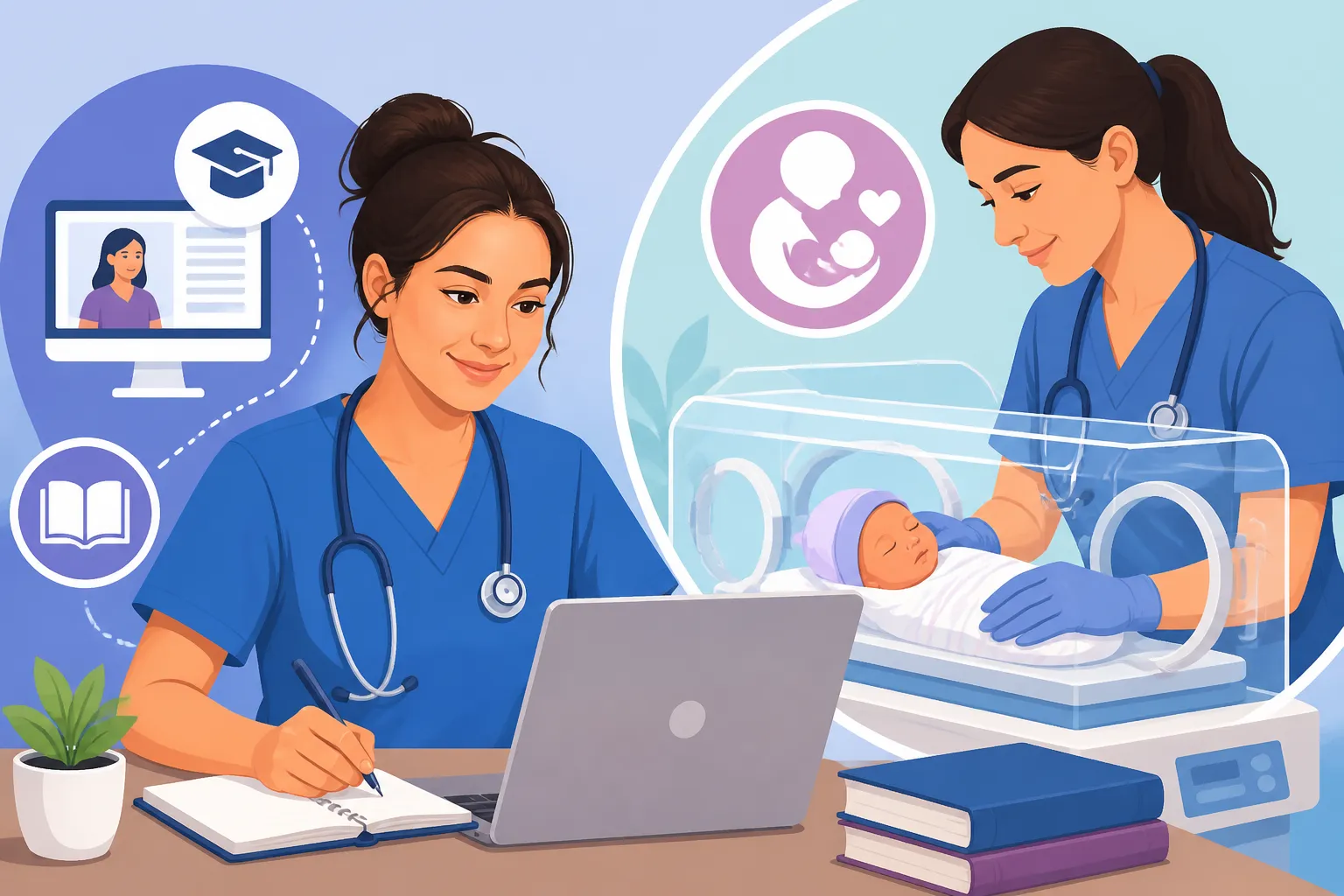
How to Become a Neonatal NP
For registered nurses who feel a deep calling to care for the tiniest, most vulnerable patients, the desire to specialize and take on greater responsibility in the Neonatal Intensive Care Unit (NICU) is incredibly common. The path to becoming a Neonatal Nurse Practitioner (NNP) can seem daunting, filled with educational hurdles and specific experience requirements, leaving many wondering exactly where to start and what to expect. This comprehensive guide will walk you through every essential step, from foundational education to advanced practice and certification, helping you confidently navigate your journey to becoming an NNP.
Understanding the Neonatal Nurse Practitioner Role
Becoming a Neonatal Nurse Practitioner isn't just about earning an advanced degree; it's about stepping into a critical, highly specialized role where you become a primary healthcare provider for neonates facing complex medical challenges. It's a journey that demands exceptional clinical skill, critical thinking, and a profound sense of compassion.
What Exactly Does an NNP Do?
A Neonatal Nurse Practitioner is an advanced practice registered nurse (APRN) who specializes in providing comprehensive care to newborns, particularly those who are premature, critically ill, or require complex medical interventions. Think of them as the front-line experts in the NICU, working tirelessly to stabilize, treat, and manage the health of fragile infants.
Their day-to-day responsibilities are incredibly diverse and demanding. NNPs diagnose and manage acute and chronic conditions, perform physical assessments, interpret diagnostic tests (like X-rays and lab results), and develop treatment plans in collaboration with neonatologists and other specialists. They might be resuscitating a premature infant in the delivery room, managing ventilators for a baby with severe respiratory distress syndrome, or coordinating care for a newborn with a congenital heart defect. For example, an NNP might be the one initiating orders for antibiotics for suspected sepsis, adjusting fluid balance for a micro-preemie, or performing complex procedures like umbilical line insertions or endotracheal intubation. They also play a crucial role in educating and supporting anxious parents, helping them understand their baby's condition and treatment plan, which is often one of the most empathetic aspects of the role. Their primary work environments are typically Level III and Level IV NICUs, delivery rooms, and occasionally special care nurseries.
Why Choose a Neonatal NP Career?
The decision to become an NNP is often driven by a unique blend of passion for newborns and a desire for advanced professional autonomy and impact. Many nurses are drawn to this specialty because of the profound vulnerability of neonatal patients, and the incredible privilege of helping them thrive against challenging odds. The work is deeply rewarding, offering the chance to witness tiny miracles daily.
Beyond the emotional fulfillment, there are significant professional advantages. The demand for NNPs remains strong due to advancements in neonatal care that allow increasingly complex and premature infants to survive, requiring specialized long-term care. This translates into excellent job security and competitive compensation, often significantly higher than that of a registered nurse. Furthermore, NNPs enjoy a higher level of autonomy in practice, making critical decisions and leading care teams. You'll often find yourself at the forefront of medical innovation, applying cutting-edge research to improve patient outcomes. It's a career where your expertise directly contributes to giving the most vulnerable new lives a fighting chance, making every challenging shift incredibly meaningful.
Educational Pathway to Becoming an NNP
The journey to becoming a Neonatal Nurse Practitioner is a structured path that requires commitment to advanced education and specialized clinical experience. It's not a sprint, but a carefully planned marathon.
Essential Foundational Degrees and RN Experience
Before you can even think about applying to an NNP program, you need to establish a strong nursing foundation. This typically begins with earning a Bachelor of Science in Nursing (BSN). While some ADN-prepared nurses may find pathways to advanced degrees, a BSN is widely considered the gold standard and is often a prerequisite for most Master of Science in Nursing (MSN) and Doctor of Nursing Practice (DNP) programs. The BSN curriculum provides a broader understanding of nursing theory, research, leadership, and community health, which are all crucial for advanced practice. If you're currently an ADN-prepared RN, a program like an Online RN to BSN Programs: Complete Guide can be an excellent way to bridge this gap efficiently while continuing to work.
Once you have your BSN and your registered nurse (RN) license, the next critical step is gaining hands-on experience in a relevant clinical setting. Most NNP programs require at least one to two years of full-time clinical experience as an RN in a Level III or Level IV Neonatal Intensive Care Unit (NICU), or sometimes in a Pediatric Intensive Care Unit (PICU) with significant neonatal exposure. This experience is non-negotiable. It equips you with the fundamental skills of caring for critically ill infants, understanding their complex physiology, and recognizing subtle changes in their condition – knowledge that is absolutely essential before you can advance to the practitioner level. Admissions committees look for this experience to ensure you have a realistic understanding of the demands of neonatal care and a solid base upon which to build advanced practice skills.
Pursuing a Master of Science in Nursing or Doctor of Nursing Practice
With your BSN and crucial NICU experience under your belt, the next academic leap involves pursuing an advanced degree with a specialization in neonatal care. Historically, the Master of Science in Nursing (MSN) has been the entry-level degree for NNPs. These programs typically take about two to three years of full-time study, depending on your prior education and the program's structure. Many institutions offer Online MSN Programs: Complete Guide or RN to MSN Programs Explained options, providing flexibility for working nurses.
However, the Doctor of Nursing Practice (DNP) is increasingly becoming the preferred, and in some cases, the required, degree for advanced practice nurses, including NNPs. The DNP is a practice-focused doctorate that prepares nurses for leadership roles, evidence-based practice, and system-level improvements, alongside direct patient care. While an MSN still qualifies you to sit for certification and practice as an NNP, pursuing a DNP can offer additional career opportunities in areas like education, policy, and higher-level administrative roles. The decision between an MSN and a DNP often comes down to your long-term career goals and the specific program availability. Both degrees, when specialized in neonatology, will provide the advanced theoretical knowledge and clinical competencies required for the NNP role, covering advanced pathophysiology, advanced pharmacology, and advanced physical assessment specifically tailored to the neonatal population.
Accredited NNP Programs: What to Look For
Choosing the right NNP program is paramount to your success. Accreditation is not just a fancy seal of approval; it’s a non-negotiable requirement for your degree to be recognized for licensure and certification. Always ensure that any NNP program you consider is accredited by either the Commission on Collegiate Nursing Education (CCNE) or the Accreditation Commission for Education in Nursing (ACEN). These bodies ensure that the program meets rigorous standards for quality and prepares graduates to be safe and competent practitioners.
When evaluating programs, delve into their curriculum. A strong NNP program will offer a comprehensive blend of didactic coursework and extensive clinical experiences focused solely on neonatology. Look for courses that cover:
- Advanced Neonatal Pathophysiology: Deep dives into the diseases and conditions affecting newborns.
- Advanced Neonatal Pharmacology: Understanding medications and their unique pharmacokinetics/pharmacodynamics in neonates.
- Advanced Neonatal Physical Assessment: Specialized assessment techniques for infants, including neurological, cardiac, and respiratory systems.
- Neonatal Procedures and Resuscitation: Hands-on training for critical interventions.
- Professional Role Development: Ethics, health policy, and the legal aspects of advanced practice.
- Evidence-Based Practice and Research: Integrating current research into clinical decisions.
Beyond coursework, investigate the program's clinical components. How are MSN Clinical Hours Requirements structured? Do they assist with finding preceptors, which can be a significant challenge? A robust program will have established partnerships with Level III and IV NICUs, ensuring you gain diverse and high-quality clinical experiences under the supervision of experienced NNPs and neonatologists. The quality of your clinical rotations is just as vital as your classroom learning.
Clinical Experience and Certification
Once you're immersed in an NNP program, the focus shifts to honing your practical skills and preparing for the all-important certification exam. This phase is intense, combining academic rigor with hands-on patient care.
Gaining Critical NICU Experience
While previous NICU experience is a prerequisite for entry into most NNP programs, the clinical component during your advanced degree program is where you truly develop into a practitioner. These clinical rotations are designed to move you from the role of an RN to an advanced practice provider, often under the direct supervision of an NNP or neonatologist. You'll apply the theoretical knowledge from your courses to real-life patient scenarios, gradually taking on more responsibility in patient assessment, diagnosis, treatment planning, and management.
This clinical immersion is typically substantial, with most MSN NNP programs requiring 600-1,000 direct patient care hours, and DNP programs often exceeding 1,000 hours. These hours are typically accrued in high-acuity Level III and Level IV NICUs, where you will encounter a wide array of complex cases, from extremely premature infants to full-term newborns with severe birth defects or critical illnesses. A crucial part of this process is finding experienced preceptors who can guide and mentor you. Many programs offer support in this area, recognizing the challenge of securing placements; this can be a key factor when you consider How to Find NP Preceptors. These experiences are where your critical thinking truly sharpens, and you learn the nuances of independent practice within a collaborative healthcare team.
The NNP Certification Exam
After successfully completing your NNP program, the final academic hurdle is passing the national certification examination. For Neonatal Nurse Practitioners, this exam is administered by the National Certification Corporation (NCC). Achieving NNP certification demonstrates that you meet national standards of competency for entry-level advanced practice in neonatal nursing.
The NCC NNP exam is comprehensive, covering a broad spectrum of knowledge critical to neonatal care. You can expect questions across several key content areas, including:
- Neonatal Physiology and Pathophysiology: Understanding normal development and disease processes in newborns.
- Assessment and Diagnosis: Advanced techniques for evaluating infant health and identifying conditions.
- Pharmacology: Safe and effective medication management for neonates.
- Management of Common Neonatal Conditions: Expertise in treating respiratory, cardiac, neurological, gastrointestinal, and infectious diseases.
- Professional Practice Issues: Legal, ethical, and professional responsibilities of an NNP.
Preparing for this exam requires a strategic approach. Many students utilize a combination of study methods, including textbooks, review courses, and practice questions. Resources like Uworld are often recommended by students and faculty alike for their challenging questions and detailed rationales, which can be invaluable for understanding complex concepts and identifying areas needing further study. Think of it as intense preparation, similar to how you prepared for your NCLEX, but at an advanced practice level. Passing this exam is a monumental achievement and unlocks the door to state licensure. It's an integral part of the broader discussion on NP Certification Exams Explained.
Licensure and Career Advancement
With your NNP certification in hand, the final steps involve obtaining state licensure and then exploring the many rewarding career paths available to Neonatal Nurse Practitioners.
State Licensure Requirements
While national certification demonstrates your clinical competence, practicing as an NNP requires state-specific licensure as an Advanced Practice Registered Nurse (APRN). Each state has its own Board of Nursing, which oversees the licensure process. This typically involves submitting your academic transcripts, proof of national NNP certification from the NCC, and an application with associated fees. Some states may also require a criminal background check or additional continuing education requirements.
A critical aspect of state licensure for APRNs, including NNPs, is the scope of practice and prescriptive authority. These can vary significantly from state to state. In some states, NNPs may have full practice authority, meaning they can practice, diagnose, and prescribe medications independently, often without physician oversight. Other states may have reduced or restricted practice authority, requiring a collaborative agreement with a physician for certain aspects of practice. It's essential to research the specific APRN regulations in the state where you intend to practice. Resources discussing NP Prescriptive Authority by State and NP Full Practice Authority States can provide valuable insights into these critical distinctions. Understanding these regulations is vital for practicing legally and effectively.
Career Opportunities and Salary Expectations
The career outlook for Neonatal Nurse Practitioners is incredibly positive. The specialty is in high demand, driven by advances in medical technology that allow more premature and critically ill infants to survive, requiring specialized, long-term care. According to the Bureau of Labor Statistics, the overall employment of nurse practitioners is projected to grow much faster than the average for all occupations.
NNPs primarily work in hospital settings, specifically in Level III and IV NICUs, but can also be found in specialty clinics, follow-up clinics for high-risk infants, and even in some academic roles. Your salary as an NNP will be influenced by several factors, including your geographic location (major metropolitan areas often pay more), years of experience, the type and size of the healthcare facility, and any additional certifications or DNP-level education. While specific numbers vary, NNPs generally earn a very competitive salary, often ranging from $100,000 to over $150,000 annually, with experienced NNPs in high-demand areas earning even more. This makes it one of the more lucrative advanced practice nursing roles. For a deeper dive into earning potential, explore resources like Neonatal Nurse Practitioner Salary and Job Outlook.
Beyond direct patient care, earning your NNP credential can open doors to various career advancements. You might pursue leadership roles within the NICU, become a clinical educator for new nurses or NNP students, or transition into research. For those with a DNP, opportunities in academia, healthcare policy, or executive leadership are also within reach. The NNP role is not just a job; it's a dynamic, impactful career with continuous opportunities for growth and contribution to an incredibly specialized and vital field of healthcare.
| Step | Description | Key Requirements | Typical Timeline |
|---|---|---|---|
| 1. Foundational Education | Earn a Bachelor of Science in Nursing (BSN). | High school diploma, college prerequisites, 3-4 years for BSN (or 1-2 years for RN-to-BSN). | 4 years (BSN) or 1-2 years (RN-BSN) |
| 2. RN Licensure | Pass the NCLEX-RN and obtain state Registered Nurse (RN) license. | Approved nursing program completion. | Varies by state; immediately post-graduation |
| 3. Clinical Experience | Work as an RN in a Level III or IV NICU or PICU. | 1-2 years full-time experience is typically required for NNP program admission. | 1-2+ years |
| 4. Advanced Education (MSN/DNP) | Enroll in an accredited NNP-specialized Master of Science in Nursing (MSN) or Doctor of Nursing Practice (DNP) program. | BSN, RN license, 1-2 years relevant experience, competitive GPA, GRE (sometimes). | 2-3 years (MSN); 3-4 years (DNP) |
| 5. Clinical Practicum | Complete extensive supervised clinical hours in neonatal care settings during your advanced program. | Completion of didactic coursework, secured preceptors. | Integrated throughout MSN/DNP program |
| 6. NNP Certification | Pass the national certification exam administered by the National Certification Corporation (NCC). | Completion of an accredited NNP program. | Post-graduation |
| 7. State APRN Licensure | Apply for state-specific Advanced Practice Registered Nurse (APRN) licensure as an NNP. | NNP certification, official transcripts, background check, state application. | Varies by state; post-certification |
| Total Approximate Time | 6-10+ years |
Disclaimer
Please remember that the information provided in this guide is for general informational purposes only and does not constitute professional advice. Nursing education requirements, licensure regulations, and career opportunities can vary significantly by state and institution. Always consult with official academic advisors, state boards of nursing, and accredited program representatives for the most accurate and up-to-date information relevant to your specific situation.