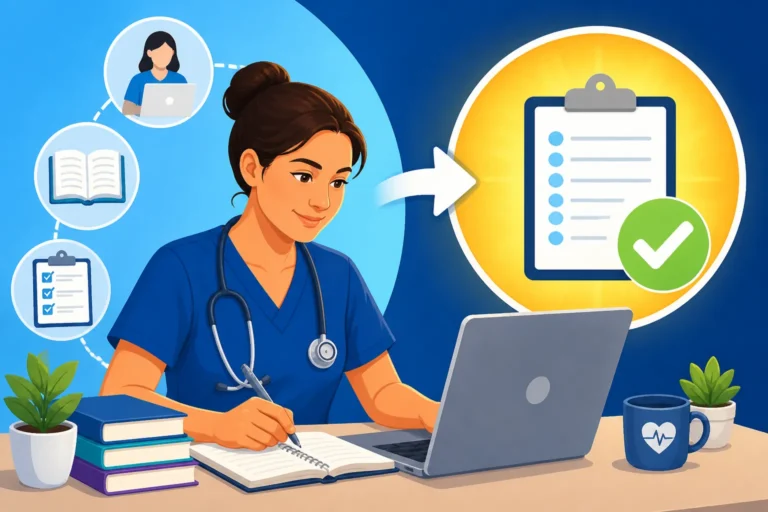
Is an Accelerated BSN Right for You
The journey to becoming a registered nurse is often seen as a long and winding road, especially if you already hold a bachelor's degree in a different field. Many aspiring nurses find themselves frustrated by the thought of going back to school for another four years, juggling life, work, and family. This comprehensive guide is here to demystify the Accelerated Bachelor of Science in Nursing (ABSN) program, shedding light on its unique structure, intense demands, and the kind of person who truly thrives in this fast-paced environment, helping you determine if it's the right next step for your nursing career dreams.
Understanding the Accelerated BSN Pathway
An Accelerated BSN program is specifically designed for individuals who have already earned a bachelor's degree in a non-nursing field and are looking to transition into nursing quickly. Think of it as a supercharged version of a traditional BSN, condensing all the essential nursing coursework and clinical experiences into a shorter timeframe, usually ranging from 11 to 18 months. It’s not just a faster pace; it's an entirely different learning curve that builds upon your prior academic achievements.
What Makes an ABSN Different?
Unlike a traditional BSN program that typically spans four years, an ABSN leverages your previous college education, assuming you've already completed general education requirements like humanities, social sciences, and some basic sciences. This allows the program to focus almost exclusively on core nursing courses and intensive clinical rotations. The curriculum is packed, with little to no breaks between semesters, demanding your full attention and commitment. For a deeper dive into the structure, you might want to read our article on Accelerated BSN Programs Explained.
Who Are ABSN Programs Designed For?
ABSN programs are really for the highly motivated, often second-career individuals. Perhaps you have a biology degree but realized your passion is direct patient care, or maybe you worked in marketing for years and are now drawn to the stability and impact of nursing. These programs are tailored for those who are ready to immerse themselves completely in their studies. They presuppose a certain level of academic maturity, discipline, and the ability to handle a rigorous, fast-paced curriculum. Our guide on Accelerated BSN for Non-Nursing Majors offers more insights into this specific demographic.
The Demanding Reality of an Accelerated BSN Program
Let's be real: an ABSN program is not for the faint of heart. It's an intense, all-consuming educational journey that requires immense dedication, resilience, and excellent time management skills. Many students describe it as drinking from a firehose, but with the right mindset and preparation, it's absolutely achievable.
Navigating the Academic Rigor and Fast Pace
Imagine taking a full semester's worth of college material and compressing it into eight weeks, then doing that back-to-back for over a year. That’s the academic reality of an ABSN. You'll be introduced to complex medical concepts, pharmacology, pathophysiology, and nursing theory at a dizzying speed. There's often limited time for review, and you're expected to retain a vast amount of information quickly. This requires strong study habits, excellent organizational skills, and a proactive approach to learning. Many students find group study sessions invaluable, not just for understanding material but also for emotional support. Resources like Uworld, for example, can be incredibly helpful for practicing critical thinking questions and solidifying your understanding of complex topics as you move through the program.
The Commitment to Clinical Rotations
Beyond the classroom, a significant portion of your ABSN experience will be spent in hospitals and other healthcare settings for clinical rotations. These are hands-on experiences where you apply what you've learned to real patient care under the supervision of experienced nursing faculty. You'll likely rotate through various specialties such as medical-surgical, pediatrics, obstetrics, psychiatric nursing, and critical care. These clinicals are not only educational but also physically and emotionally demanding. You'll be on your feet for long hours, observing, assisting, and eventually leading aspects of patient care. Understanding the scope of these practical hours is key, and our article on Accelerated BSN Clinical Requirements details what to expect.
Balancing Life and Studies During an ABSN
One of the biggest struggles for ABSN students is finding balance. The demanding schedule often means that working a job, even part-time, is extremely challenging, if not impossible, for many. Family commitments can also feel overwhelming. It’s crucial to have a strong support system in place – family, friends, or even fellow students – who understand the immense time commitment you’re making. Many successful ABSN students advise treating the program like a full-time job, dedicating 40-60 hours a week to coursework, studying, and clinicals. This can be a huge shift, particularly for those accustomed to a different career pace, so consider carefully if Can You Work During an Accelerated BSN is a question you're asking.
Pros and Cons of an Accelerated BSN
Like any significant life decision, pursuing an ABSN comes with its own set of advantages and disadvantages. It’s important to weigh these carefully against your personal circumstances, career goals, and financial situation.
The Upsides of an Accelerated BSN
The most obvious benefit is speed. You can transition into a new, rewarding career in a fraction of the time it would take to earn a traditional four-year BSN. This quick entry into the workforce means you can start earning a competitive nursing salary sooner, which is a big draw for many career changers.
Furthermore, earning a BSN degree is increasingly becoming the industry standard, opening more doors for employment, particularly in Magnet-recognized hospitals that often prefer or require BSN-prepared nurses. A BSN also provides a strong foundation for future advanced nursing degrees, such as an MSN or DNP, allowing you to pursue leadership roles or become a Nurse Practitioner down the line. For those pondering the long-term gains, our article Is an Accelerated BSN Worth It provides a comprehensive financial and career outlook.
The Challenges and Drawbacks
The intensity of an ABSN program is a double-edged sword. While it gets you to your goal faster, it means a very compressed learning experience, which can be incredibly stressful. There's less time to absorb material, and the pace can feel relentless. This fast-track format might not suit every learning style, especially if you prefer a more gradual, reflective approach to new information.
Another significant consideration is the cost. While the overall duration is shorter, the per-credit hour cost can sometimes be higher than traditional programs, and you're compressing all those expenses into a shorter period. You'll also need to account for living expenses during a time when your ability to work might be severely limited. Admissions can also be highly competitive, requiring strong academic records and sometimes specific prerequisite coursework. If you're wondering about the financial burden, take a look at How Much Does an Accelerated BSN Cost.
Financial and Career Outlook
Investing in an ABSN is a big decision, and understanding the financial implications and potential career benefits is crucial. It’s not just about the upfront cost, but the long-term return on investment.
Understanding the Cost and Funding Options
The cost of an ABSN program can vary widely depending on the institution, ranging from around $25,000 to over $70,000 for the entire program. This doesn't include living expenses, books, uniforms, or licensure exam fees. However, several financial aid options are available, including federal student loans, grants, and scholarships specifically for nursing students or career changers. It's always wise to fill out the Free Application for Federal Student Aid (FAFSA) to see what federal aid you qualify for. Additionally, some hospitals offer tuition reimbursement programs, especially if you commit to working for them after graduation. Researching specific program costs and financial aid resources early on is highly recommended.
The Return on Investment for Your Nursing Career
Despite the significant upfront cost and intensity, an ABSN can offer an excellent return on investment. Earning your BSN opens doors to a wider array of nursing positions and often commands a higher starting salary compared to an Associate Degree in Nursing (ADN). According to the U.S. Bureau of Labor Statistics, employment of registered nurses is projected to grow much faster than average. With a BSN, you're better positioned for career advancement, leadership roles, and specialized practice areas that require a higher level of education. Many nurses also find that the critical thinking skills honed in an ABSN program make them highly adaptable and valuable assets in any healthcare setting. This fast-track to a BSN is a direct route to a stable and impactful career.
Is an Accelerated BSN the Right Path for You?
Deciding whether an ABSN program is the right fit involves a deep dive into your personal and professional aspirations, your current life situation, and your capacity for intense academic work. It's not a decision to be taken lightly, but with careful consideration, you can make an informed choice.
Self-Assessment: Key Questions to Ask Yourself
Before you commit to an ABSN, ask yourself these crucial questions:
- Do I have a strong academic foundation? Success in an ABSN often hinges on having a solid understanding of prerequisite sciences like anatomy, physiology, microbiology, and chemistry.
- Am I highly self-motivated and disciplined? You’ll need to manage your time effectively and stay on top of a heavy workload without constant external prompting.
- Do I have a robust support system? Your family, friends, or partner need to be on board and willing to support you through a demanding period where your availability will be limited.
- Can I afford to significantly reduce or stop working? Most ABSN programs are full-time commitments, making it difficult to maintain substantial employment.
- Am I prepared for the emotional and physical demands? Nursing school is challenging, and an accelerated program amplifies that. You'll face stressful situations and long hours.
- Why do I want to be a nurse? Your underlying motivation will be a powerful fuel during tough times.
If you answered yes to most of these, an ABSN might indeed be a viable and exciting option. If not, it might be worth exploring alternative nursing pathways, like a traditional BSN program, or ensuring you build up the necessary prerequisites and support before diving in. Many students find resources like Uworld extremely helpful for both content review and test preparation, offering a realistic simulation of the NCLEX exam, which is the ultimate goal after graduation.
Preparing for Success in an Accelerated Program
If you decide the ABSN path is for you, preparation is key. Make sure all your prerequisite courses are completed, and consider reviewing subjects like anatomy and physiology to ensure the information is fresh in your mind. Start building a strong support network and communicate your commitments clearly to those around you. Financially, saving up as much as you can to minimize the need to work during the program will alleviate a significant source of stress. Also, familiarize yourself with study strategies tailored for intense programs, and don't hesitate to utilize resources like Uworld for continuous practice and readiness for the NCLEX. Thinking ahead can truly help you not just survive, but truly thrive in your program, as detailed in our guide on How to Survive an Accelerated BSN.
| Factor | Accelerated BSN (ABSN) | Traditional BSN |
|---|---|---|
| Duration | 11-18 months (after existing bachelor's degree) | 4 years |
| Target Audience | Individuals with a non-nursing bachelor's degree | High school graduates or those seeking a first bachelor's degree |
| Pace | Highly intense, condensed curriculum | More gradual, balanced pace |
| Prerequisites | Specific science & general education courses often required | Integrated into the 4-year curriculum |
| Work-Life Balance | Extremely challenging, often requires full-time dedication | More flexibility, often allows part-time work |
| Cost | Concentrated into a shorter period; varies widely | Spread over 4 years; varies by institution |
| Career Entry | Faster entry into the RN workforce | Standard entry to the RN workforce |
Ultimately, an Accelerated BSN program is a rigorous but rewarding path for dedicated individuals ready to make a significant career change. It demands your full commitment but offers a quicker route to a fulfilling profession that makes a real difference in people's lives. It’s a testament to your determination and intellectual capability, propelling you into a dynamic field with countless opportunities.
Disclaimer
The information provided in this article is for general informational purposes only and does not constitute professional advice. Always consult with academic advisors, financial aid counselors, and nursing program representatives for the most accurate and up-to-date information regarding specific programs, requirements, and financial aid options.