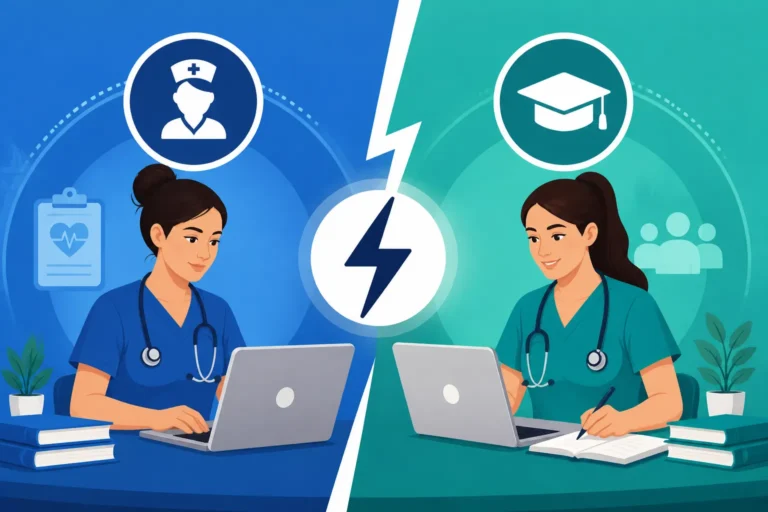
Is an RN to BSN Worth the Cost
You're an RN, you're working hard, and the thought of going back to school for your BSN is constantly nagging at you. It’s a huge decision, one that comes with a significant investment of time, energy, and, let’s be honest, money. Many nurses find themselves asking, "Is an RN to BSN worth the cost?" It’s a completely valid question, especially with student loan debt being such a pervasive issue. This guide will meticulously break down the financial and non-financial considerations to help you determine if an RN to BSN is the right move for your career and your wallet.
Understanding the Financial Investment of an RN to BSN
Let's be real, the dollar signs can be daunting. Going back to school, even online, isn't free. When you're weighing the pros and cons of an RN to BSN program, it's crucial to look beyond just the sticker price and consider the full scope of the financial commitment. This includes direct costs, indirect expenses, and even the opportunity cost of your time.
Direct Costs: Tuition, Fees, and Materials
The most obvious part of the cost equation is tuition and fees. These can vary wildly depending on the institution. State universities often have lower tuition rates for in-state residents, while private universities and out-of-state programs can be considerably more expensive. Don't forget those pesky fees! They add up quickly – application fees, technology fees, graduation fees, and sometimes even fees for online learning platforms. It’s not just the per-credit hour cost; make sure you get a comprehensive breakdown from the admissions office.
Beyond tuition and fees, you'll also be budgeting for textbooks, digital resources, and potentially even specific software. While some programs integrate e-books or open educational resources, others might require you to purchase multiple texts per course, which can easily run into hundreds of dollars each semester. Additionally, you might need a reliable computer, a good internet connection, and perhaps even a printer if you don't already have them, as most online programs require robust tech access. When exploring different options, be sure to ask prospective schools about the Total Cost of an Online RN to BSN.
Indirect Costs and Opportunity Loss
It's not just about what you pay out; it's also about what you might not earn. This is the often-overlooked "opportunity cost." If you plan to reduce your work hours to accommodate your studies, that's a direct loss of income. Even if you continue to work full-time, the time you spend studying is time you could have spent working overtime, taking on extra shifts, or simply enjoying leisure activities.
Think about the impact on your personal life and potential burnout. While not a direct financial cost, the mental and emotional toll of balancing work, family, and school can be immense. Consider how you'll manage your finances if your income decreases or if you need to hire help for childcare or household tasks to free up study time. These are all real financial implications that need to be factored into your decision. It's a huge commitment, and understanding the full financial picture is the first step in deciding if an RN to BSN is truly worth it for you.
The Return on Investment: Financial and Career Advancement
Now, let's talk about the payoff. The good news is that for many nurses, an RN to BSN often provides a significant return on investment, not just in terms of salary, but also in opening doors to new career possibilities and increased job security. It's about looking at your career as a long-term investment.
Salary Increase and Earning Potential
One of the most compelling reasons to pursue an RN to BSN is the potential for a higher salary. While the exact increase varies by location, employer, and years of experience, a Bachelor of Science in Nursing (BSN) generally correlates with higher earning potential compared to an Associate Degree in Nursing (ADN). According to recent data, BSN-prepared nurses often earn an average of several thousand dollars more per year than their ADN-prepared counterparts. This isn't just a small bump; over a 30-year career, that annual difference can add up to hundreds of thousands of dollars. You can learn more about this by exploring the topic of whether a BSN Increase Your Salary.
This isn't just about a starting salary, either. Many healthcare systems, especially those seeking or holding Magnet Recognition, will offer differential pay or higher pay scales for nurses with BSNs. This means that even if the initial raise isn't monumental, your earning ceiling is higher, and you're positioned for more substantial raises throughout your career. Think about it: a small investment now can lead to substantial financial gains down the road.
Enhanced Career Opportunities and Job Security
Beyond direct salary, a BSN significantly broadens your career horizons. Many specialized nursing roles, such as nurse management, case management, public health, or even nursing informatics, prefer or require a BSN. If you've ever dreamt of moving beyond direct bedside care or taking on more leadership, a BSN is often the critical stepping stone.
Moreover, a BSN can be a significant factor in job security. Hospitals and healthcare organizations are increasingly prioritizing BSN-prepared nurses, a trend driven by research indicating that a higher proportion of BSN nurses leads to improved patient outcomes. This means that in a competitive job market, or during times of workforce adjustments, BSN-prepared nurses may have an advantage. If you're looking to solidify your position or explore diverse roles, the BSN opens many doors. The Career Benefits of Earning a BSN are truly extensive.
| Factor | ADN-Prepared Nurse (Average) | BSN-Prepared Nurse (Average) | Potential Benefit of BSN |
|---|---|---|---|
| Annual Salary Range | $65,000 – $85,000 | $70,000 – $95,000 | Higher earning potential, especially in Magnet hospitals or specialized roles. |
| Job Market Preference | Entry-level positions | Preferred for many roles | Increased employability and competitive edge in hiring. |
| Career Advancement | Limited management roles | Access to leadership, education, and specialized roles. | Opens pathways to diverse and higher-paying positions outside of direct bedside care. |
| Pathway to MSN/DNP | Requires bridge programs | Direct entry into graduate programs | Streamlined path to advanced practice nursing or nursing education. |
| Patient Outcomes Link | Standard care | Linked to improved patient outcomes | Valued by employers for quality of care and safety initiatives. |
Non-Financial Benefits and Professional Growth
While money and promotions are important, the worth of an RN to BSN extends far beyond your paycheck. There are profound non-financial benefits that contribute to your professional growth, enhance your practice, and ultimately make you a more well-rounded and effective nurse.
Enhanced Critical Thinking and Clinical Skills
An RN to BSN program isn't just about ticking boxes; it's designed to deepen your understanding of nursing theory, research, and evidence-based practice. You'll delve into subjects like community health, leadership, and health policy, which might not have been extensively covered in your ADN program. This expanded curriculum hones your critical thinking skills, enabling you to approach complex patient situations with a broader perspective and more sophisticated problem-solving abilities.
For instance, you might learn how to critically appraise research studies to implement the latest evidence-based interventions in your practice, rather than simply following protocols. This intellectual growth translates directly into improved patient care and greater confidence in your own clinical judgment. It’s about becoming a leader at the bedside, advocating more effectively for your patients, and understanding the broader healthcare landscape that impacts their well-being. This deeper knowledge, often reinforced by comprehensive study resources like Uworld's foundational content reviews, ensures you're not just practicing nursing but mastering it.
Leadership and Professional Development Opportunities
Earning your BSN often positions you for leadership roles within your organization. These programs typically include coursework specifically focused on nursing leadership, management principles, and quality improvement. This means you're not just gaining a degree; you're developing the skills to inspire teams, drive change, and contribute to system-level improvements in healthcare.
You might find yourself empowered to take on charge nurse duties, join hospital committees, or even mentor new nurses. This kind of professional development is incredibly rewarding and can lead to a deeper sense of fulfillment in your career. It also builds a robust professional network and credibility among your peers and superiors, further cementing your value to any healthcare institution. The program itself can be challenging, but many nurses find that the skills gained make tackling difficulties like those discussed in "Is an RN to BSN Hard" much more manageable.
Pathway to Advanced Education and Specialization
Perhaps one of the most significant non-financial benefits of a BSN is that it serves as the essential foundation for further academic pursuits. If you ever envision becoming a Nurse Practitioner, a Nurse Educator, a Clinical Nurse Specialist, or entering any advanced practice role, an MSN or DNP will be required. An RN to BSN program provides a seamless pathway to these graduate degrees, whereas an ADN might require additional bridge programs or prerequisite courses, adding time and expense.
Consider this degree as an investment in your long-term career trajectory. It keeps all future doors open. Without a BSN, you could hit a ceiling in your career aspirations, limiting your ability to specialize or move into higher-level roles. With it, the possibilities are vast, including pursuing a RN to MSN Programs Explained or a RN to BSN to MSN Bridge Explained path, allowing you to advance even further.
Strategies to Maximize the Value and Affordability of Your RN to BSN
Deciding an RN to BSN is worth it is one thing; making it happen is another. Fortunately, there are many ways to make this educational journey more manageable, both financially and academically. Smart planning can significantly reduce the overall cost and time commitment, making the investment even more valuable.
Financial Aid, Scholarships, and Employer Assistance
Don't assume you have to bear the full financial burden alone. There's a wide array of financial aid options available for nursing students. Start by completing the Free Application for Federal Student Aid (FAFSA) to see if you qualify for federal grants or low-interest student loans. Many universities also offer institutional scholarships specifically for RNs returning to school.
Beyond federal and institutional aid, look for scholarships from professional nursing organizations, community groups, and private foundations. These can often be found with a little digging and can significantly offset tuition costs. Even something as simple as a scholarship search can turn up opportunities you never knew existed. Crucially, many employers recognize the value of a BSN-prepared workforce and offer tuition reimbursement programs. Talk to your HR department or nurse manager; your hospital might be willing to pay a substantial portion of your tuition if you commit to working for them for a certain period after graduation. Learn more about RN to BSN Financial Aid Options to get started.
Choosing the Right Program Format and Pace
The flexibility of online RN to BSN programs is a huge advantage for working nurses. However, not all online programs are created equal. Some offer self-paced learning, allowing you to complete coursework at your own speed, while others follow a more traditional semester-based schedule. Choosing a program that aligns with your lifestyle and learning style can prevent burnout and ensure you finish what you start.
Consider Fastest Online RN to BSN Programs if you're eager to get it done quickly, but be realistic about your capacity to handle an accelerated workload while maintaining your job and personal life. On the other hand, a slower, part-time pace might extend the timeline but reduce stress and allow you to continue working full-time without sacrificing your well-being. Look into programs with multiple start dates, such as those offered by institutions like Western Governors University (WGU), which are often competency-based and allow you to accelerate if you can demonstrate mastery. The structure of the program greatly influences how you balance your commitments, a topic deeply explored in "How to Balance Work and RN to BSN".
Transfer Credits and Prior Learning Assessment
One of the best ways to reduce the cost and duration of an RN to BSN program is to maximize your transfer credits. Most RN to BSN programs are designed to accept a significant number of credits from your ADN program and your general education courses. However, the exact number can vary, so always have your transcripts evaluated early in the application process. Some programs also award credit for your active RN license, further reducing the number of courses you need to take.
Additionally, some innovative programs offer prior learning assessment (PLA) or credit for experience. This means if you can demonstrate knowledge acquired through work experience or professional development, you might be able to test out of certain courses or receive credit for skills you already possess. This is a fantastic way to leverage your years of experience as an RN and avoid paying for or re-learning what you already know. Always seek out Accredited Online RN to BSN Programs to ensure your credits will be recognized and your degree respected. Exploring RN to BSN Transfer Credit Explained can provide even more insight.
The Long-Term View: Why a BSN Keeps Paying Off
The decision to pursue an RN to BSN is a long-term investment in your future. It's not just about what it costs now, but what it gains you over the span of your entire nursing career. The benefits accumulate, far outweighing the initial expense for many.
Meeting Industry Standards and Future-Proofing Your Career
The healthcare landscape is constantly evolving, and the trend toward a BSN-prepared nursing workforce is undeniable. Professional organizations like the American Association of Colleges of Nursing (AACN) advocate for the BSN as the minimum educational requirement for entry into professional nursing practice. While not yet a universal mandate, many states and hospitals are moving in this direction. For instance, New York's "BSN in 10" law requires RNs to obtain their BSN within ten years of initial licensure.
By earning your BSN, you're not just keeping up; you're getting ahead. You're future-proofing your career against potential shifts in hiring practices and ensuring you remain competitive and desirable in any job market. It removes barriers to employment in prestigious hospitals, especially those with Magnet status, and positions you as a nurse committed to excellence and lifelong learning. This is an investment in your longevity and adaptability in the nursing profession. Understanding the Online RN to BSN Programs: Complete Guide can clarify how various programs meet these evolving standards.
Personal Fulfillment and Professional Confidence
Beyond the tangible benefits of salary and promotions, there's an immense sense of personal fulfillment that comes with achieving a higher educational goal. Many nurses report feeling more confident, empowered, and articulate in their practice after earning their BSN. The expanded knowledge base, exposure to new perspectives, and development of leadership skills can profoundly impact how you view yourself as a professional and how you interact with patients and colleagues.
This isn't something you can put a price tag on. The ability to engage in deeper critical thinking, contribute to unit-level improvements, or mentor newer nurses can lead to a more satisfying and impactful career. It’s about being able to say, "I pushed myself, I grew, and I’m a better nurse for it." That feeling alone can make the entire journey worthwhile. The challenging coursework, often supported by robust materials like those found in Uworld's comprehensive study banks, truly builds a stronger, more capable nurse ready for any challenge.
Broadening Your Impact on Patient Care
Ultimately, nursing is about patient care. The BSN curriculum is designed to enhance your ability to positively impact patient outcomes. Studies consistently show a correlation between a higher percentage of BSN-prepared nurses on staff and lower patient mortality rates, fewer medication errors, and overall improved patient satisfaction. This isn't just theory; it's real-world impact.
By strengthening your skills in evidence-based practice, community health, and leadership, you're not just bettering your own career; you're becoming a more effective advocate and caregiver for your patients. You're learning to view health not just as an individual issue, but within the context of families, communities, and health systems. This holistic approach can lead to more comprehensive care plans and a greater understanding of the factors influencing patient well-being, enhancing your ability to make a difference every single day. The Why Hospitals Prefer BSN Nurses article further elaborates on this vital connection.
Disclaimer
The information provided in this article is for general informational purposes only and does not constitute professional financial or educational advice. Readers should consult with a qualified financial advisor, academic counselor, or university admissions department to discuss their individual circumstances, costs, and opportunities. Specific salary figures, job outlooks, and program details can vary widely by location, institution, and market conditions.