MSN to DNP Bridge Explained
Navigating the path to advanced nursing practice can feel like a maze, especially when you're looking beyond your Master of Science in Nursing (MSN) and wondering what's next. Many dedicated nurses with an MSN find themselves at a crossroads, pondering how to further their education without starting from scratch. This guide will walk you through the MSN to Doctor of Nursing Practice (DNP) bridge program, explaining exactly what it is, who it's for, and how it can propel your career.
Understanding the Landscape of Advanced Nursing Degrees
For nurses, education isn't just about degrees; it's about evolving your practice, leadership, and impact on patient care. Many start with an Associate Degree in Nursing (ADN) or a Bachelor of Science in Nursing (BSN), then move on to an MSN to become a nurse practitioner (NP), clinical nurse specialist (CNS), nurse educator, or nurse leader. But there's an even higher level of practice-focused education that some choose to pursue: the DNP.
Why Pursue a DNP?
Stepping into the DNP realm isn't a decision taken lightly. It's often fueled by a deep desire to lead, innovate, and contribute at the highest level of nursing practice. Imagine working on a hospital committee, reviewing current evidence-based practices for preventing readmissions, and realizing you could be the one to design and implement a system-wide change based on the latest research. That's the kind of impact a DNP prepares you for. This terminal degree focuses on translating research into practice, improving healthcare systems, and influencing health policy. You're not just providing care; you're shaping the environment where care is delivered, striving for better patient outcomes and more efficient healthcare delivery. It’s about becoming a change agent, a policy advocate, and an expert clinician all rolled into one.
The Difference Between an MSN and a DNP
While both the MSN and DNP prepare nurses for advanced roles, their fundamental focus and ultimate goals differ significantly. Think of it this way: an MSN is often about mastering a specific area of advanced practice, like becoming a Family Nurse Practitioner (FNP) or a Psychiatric Mental Health Nurse Practitioner (PMHNP). You gain the specialized knowledge and skills to assess, diagnose, and treat patients within a particular scope. For a deeper dive into these options, you might find our guide on How to Become a Nurse Practitioner helpful.
The DNP, on the other hand, is about leading and innovating within healthcare systems. While it builds upon advanced clinical knowledge, its curriculum emphasizes system-level changes, quality improvement, evidence-based practice, and healthcare policy. It's less about direct patient care in every instance and more about optimizing patient care through leadership, research translation, and policy influence. For a detailed comparison, explore MSN vs DNP: Which to Choose. The DNP often requires a capstone project that addresses a real-world healthcare problem, whereas an MSN might culminate in a comprehensive exam or a smaller-scale project.
What Exactly is an MSN to DNP Bridge Program?
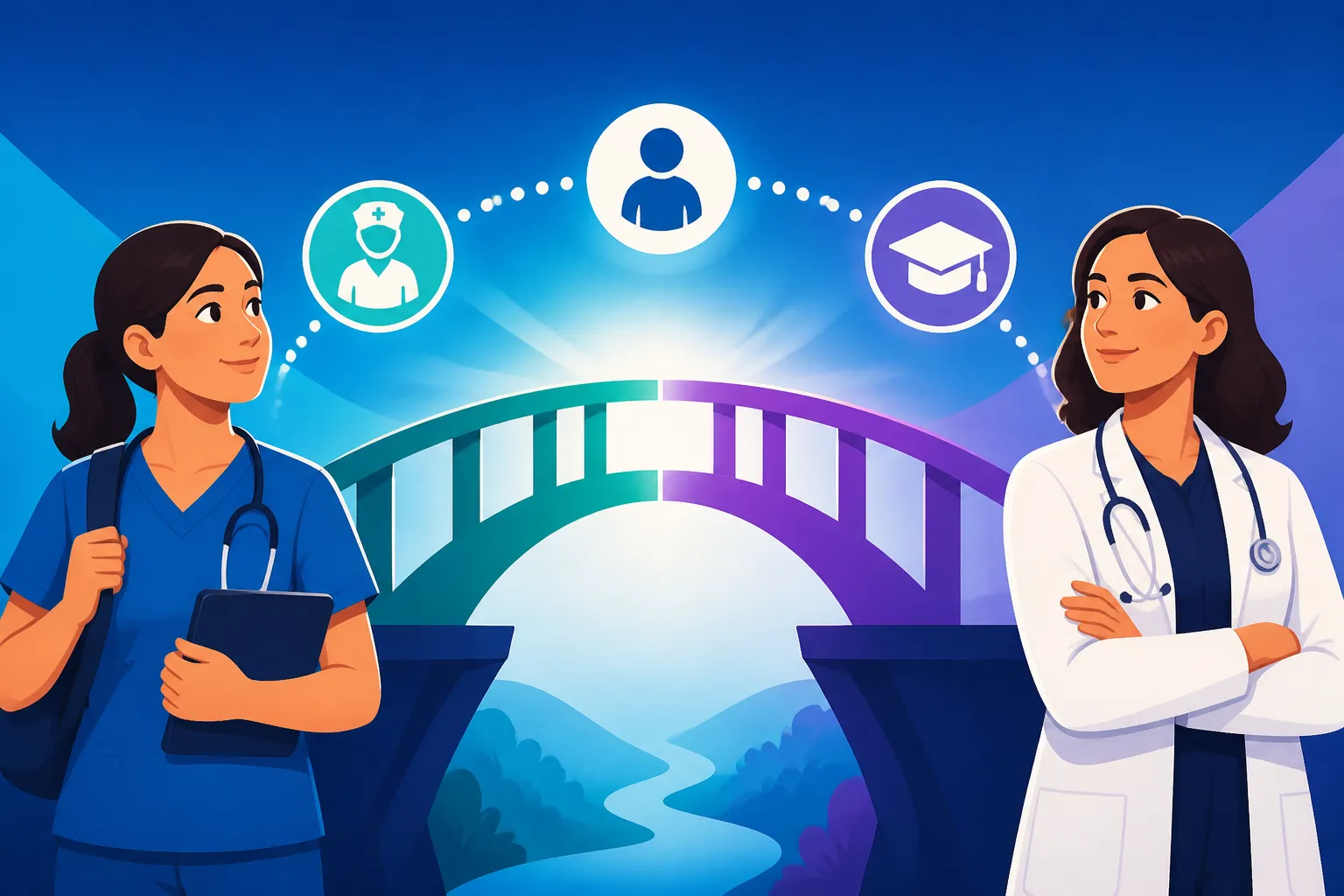
So, you've already got your MSN, perhaps you're a seasoned Nurse Practitioner with years of clinical experience, and the idea of going back for a DNP sounds appealing, but also daunting. The thought of repeating coursework or having a significantly longer program length can be a major deterrent. This is precisely where the MSN to DNP bridge program shines. It's designed to acknowledge your existing advanced education and clinical expertise, allowing you to seamlessly transition to the DNP without unnecessary redundancy.
Who is This Program For?
An MSN to DNP bridge program is specifically tailored for registered nurses who have already completed a Master of Science in Nursing degree. This includes a wide array of advanced practice registered nurses (APRNs) such as:
- Nurse Practitioners (NPs): Family Nurse Practitioners, Adult-Gerontology NPs, Pediatric NPs, Psychiatric Mental Health NPs, and more, who are looking to expand their leadership capabilities, influence health policy, or pursue academic roles. Many find that while their NP certification allows them to provide excellent patient care, a DNP provides the tools to address larger systemic issues they encounter in their daily practice.
- Clinical Nurse Specialists (CNSs): Nurses who specialize in a particular area of nursing practice and aim to lead quality improvement initiatives, develop evidence-based protocols, or serve as expert consultants within healthcare organizations.
- Certified Nurse Midwives (CNMs): Those who wish to integrate advanced practice with a focus on leadership, policy, and program development in maternal-child health.
- Certified Registered Nurse Anesthetists (CRNAs): While many CRNAs now pursue DNP programs as an entry-to-practice requirement, those with an MSN in Nurse Anesthesia can also opt for a bridge program to further develop their leadership and practice expertise.
- Nurse Educators, Leaders, and Managers with an MSN: These professionals often find that a DNP bolsters their ability to implement educational reforms, lead larger departments, or contribute to strategic planning within healthcare institutions or academic settings.
Essentially, if you already possess an MSN and are looking to advance your career into leadership, policy, or higher-level clinical roles with a focus on system-wide improvements and evidence-based practice translation, the MSN to DNP bridge is designed with you in mind.
Common Program Structures and Formats
Understanding how these programs are structured can help you choose one that fits your busy life as a working professional. Most MSN to DNP bridge programs are designed with flexibility in mind, recognizing that students are often juggling careers and family responsibilities.
- Online Programs: The vast majority of MSN to DNP bridge programs are offered fully online, or in a hybrid format. This is a huge boon for working nurses, allowing them to complete coursework from anywhere, often on their own schedule. This flexibility makes pursuing higher education a realistic goal, even for those in remote areas or with demanding work schedules. You can learn more about the broader landscape in our Online MSN Programs: Complete Guide.
- Hybrid Programs: These programs combine online didactic coursework with occasional on-campus intensives or residencies. These in-person components might be for orientation, networking, or specific skill-building workshops, offering a balance between flexibility and direct engagement.
- Part-time vs. Full-time: Most programs offer both part-time and full-time options. Full-time students might complete the program in 1.5 to 2 years, while part-time students typically take 2.5 to 4 years. This allows you to tailor the academic load to your personal and professional commitments.
- Didactic vs. Clinical Hours: The MSN to DNP bridge curriculum primarily focuses on advanced didactic coursework related to evidence-based practice, healthcare policy, leadership, and informatics. However, DNP programs also include a significant number of post-master's clinical hours, culminating in a scholarly project. These clinical hours are distinct from the direct patient care hours completed during an NP program; they are often focused on systems-level practice, leadership, policy development, or quality improvement initiatives. It’s less about performing patient assessments and more about implementing change, evaluating outcomes, and leading projects in a clinical setting.
Navigating the Admission Requirements
Even with an MSN under your belt, applying to a DNP program requires careful preparation. You're applying to a doctoral-level program, so the bar is set high to ensure candidates are ready for the rigor. Don't be discouraged; view it as an opportunity to showcase your readiness and commitment.
Essential Prerequisites
The foundation of your application will, of course, be your existing academic and professional credentials.
- Master of Science in Nursing (MSN) Degree: This is the absolute cornerstone. Your MSN must be from an institution accredited by either the Accreditation Commission for Education in Nursing (ACEN) or the Commission on Collegiate Nursing Education (CCNE). Accreditation is non-negotiable and ensures the quality and recognition of your degree.
- Minimum GPA: Most DNP programs require a competitive GPA from your MSN coursework, typically a 3.0 or higher on a 4.0 scale. Some highly competitive programs might ask for a 3.5 or higher. If your GPA is slightly below the threshold, some programs might consider other strengths in your application, like extensive professional experience or strong GRE scores (if required). For more on general graduate nursing requirements, check out Online MSN Requirements Explained.
- Active, Unencumbered RN License: You must hold a current, unencumbered registered nurse (RN) license in the state where you plan to complete your clinical rotations. Depending on the program and your prior MSN specialization, you might also need an active APRN license and certification (e.g., FNP-C, AGACNP-BC).
- Work Experience: While not always a strict prerequisite for all DNP programs, relevant clinical experience is almost always expected, especially if you're coming from an APRN role. Admissions committees want to see that you have a solid foundation in nursing practice and an understanding of healthcare systems.
Application Components
Beyond the basic academic requirements, you'll need to compile a comprehensive application package that tells your story and demonstrates your potential for doctoral-level study.
- Personal Statement or Essay: This is your chance to articulate your motivations for pursuing a DNP, your career goals, and how the program aligns with your aspirations. Admissions committees want to see how you envision using your DNP to make a significant impact on healthcare. Be specific about your interests—do you want to address healthcare disparities in your community, lead a quality improvement project, or influence state-level health policy?
- Letters of Recommendation: Typically, two to three letters of recommendation are required. These should come from individuals who can speak to your academic abilities, clinical competence, leadership potential, and professional character. Ideal recommenders include former professors, nurse managers, supervisors, or physicians with whom you've worked closely.
- Professional Resume or Curriculum Vitae (CV): This document should highlight your nursing education, professional experience, certifications, professional memberships, publications (if any), presentations, and any leadership roles or community service. It's an opportunity to showcase your breadth of experience and accomplishments.
- Transcripts: Official transcripts from all post-secondary institutions you've attended are required.
- Interviews: Some DNP programs, particularly highly competitive ones, may require an interview as part of the admission process. This allows the faculty to assess your communication skills, critical thinking, and overall fit for the program.
What to Expect from the Curriculum and Clinicals
Once you're accepted into an MSN to DNP bridge program, you'll embark on a rigorous academic journey that builds upon your existing knowledge and propels you into advanced leadership and scholarly practice. The curriculum is designed to transform you from an advanced clinician into a leader capable of driving systemic change.
Core DNP Coursework
The core DNP curriculum expands beyond direct patient care, focusing on the broader aspects of healthcare delivery and management. You'll delve into subjects that equip you with the skills to analyze, interpret, and apply research to improve patient outcomes and healthcare systems.
- Evidence-Based Practice and Research Methods: A significant portion of DNP education focuses on how to critically appraise research, synthesize evidence, and translate it into practice. This isn't about conducting bench science research, but rather about using existing research to inform and improve clinical decision-making and healthcare processes. You'll learn how to identify gaps in practice, search for robust evidence, and implement changes effectively.
- Healthcare Policy and Advocacy: This area of study prepares you to understand the complex healthcare landscape, including policy development, legislative processes, and how to advocate for patients and the nursing profession at local, state, and national levels. Imagine using your DNP to lobby for improved mental health services or to influence funding decisions for community health initiatives.
- Leadership and Organizational Systems: These courses equip you with the skills to lead interprofessional teams, manage complex healthcare organizations, and foster a culture of quality and safety. You’ll explore various leadership theories, change management strategies, and how to navigate organizational dynamics.
- Healthcare Informatics and Technology: In today's digital age, understanding healthcare information systems and technology is crucial. You'll learn how to leverage data to improve patient care, enhance efficiency, and inform decision-making, from electronic health records to telehealth innovations.
- Epidemiology and Population Health: These courses provide a foundation for understanding disease patterns, risk factors, and health trends within populations, enabling you to design and implement public health interventions and improve health outcomes for communities.
Throughout this demanding coursework, resources like Uworld's comprehensive study materials can be invaluable, especially if you're looking to refresh your understanding of complex physiological concepts or enhance your critical thinking skills for evidence-based practice assignments. Their question banks, while often geared towards certification exams, can help solidify knowledge across a broad range of nursing topics.
The DNP Project and Clinical Hours
The DNP program culminates in a scholarly DNP project and often requires additional post-master's clinical hours, distinct from those completed for your MSN.
- The DNP Project: This is the capstone of your doctoral studies. Unlike a PhD dissertation, which focuses on generating new theoretical knowledge through original research, the DNP project focuses on applying existing evidence to solve a practical problem within a clinical or organizational setting. This could involve developing a new patient education program, implementing a quality improvement initiative, evaluating a specific healthcare intervention, or designing a new staffing model. The project demonstrates your ability to lead, implement, and evaluate practice changes.
- Post-Master's Clinical Hours: While your MSN program likely had extensive direct patient care clinical hours, DNP programs often require additional clinical hours (typically 500-1000 hours, sometimes more, depending on prior MSN hours) that emphasize systems-level and leadership competencies. These hours might involve working with administrators, policy makers, or quality improvement teams. They're about translating theory into practice within a broader context. Finding these preceptorships can be challenging, but is crucial. Our article on How to Find NP Preceptors offers great advice, much of which applies to DNP-focused clinical experiences as well. You'll work closely with mentors who guide you in applying advanced nursing knowledge to complex organizational challenges.
Time Commitment and Financial Considerations
Deciding to pursue an MSN to DNP bridge program is a significant commitment, both in terms of your time and financial resources. It's crucial to have a clear understanding of what you're signing up for before you begin.
How Long Does an MSN to DNP Take?
The duration of an MSN to DNP bridge program can vary widely based on whether you enroll full-time or part-time, the specific program's structure, and the number of post-master's clinical hours required.
- Full-Time Study: If you can dedicate yourself fully to the program, you might complete it in as little as 1.5 to 2 years. This is an intense pace, often requiring you to significantly reduce or pause your professional work commitments. Expect a heavy course load and a demanding schedule that requires excellent time management and study habits.
- Part-Time Study: Most working nurses opt for a part-time schedule, which allows them to continue their careers while pursuing their degree. Part-time programs typically take 2.5 to 4 years to complete. This pace is more manageable for those balancing work, family, and academic responsibilities, though it still requires significant dedication. Remember, an online program's flexibility, even part-time, doesn't mean it's less work; it just means you have more control over when you do that work.
- Acceleration Options: Some programs may offer accelerated tracks, especially for those with extensive prior graduate-level coursework or specific certifications. However, "accelerated" in a DNP context still means a rigorous schedule. It's important to be realistic about how much you can handle without burning out. Regardless of the pace, maintaining focus and utilizing study aids, such as those offered by Uworld, can be essential for mastering the advanced concepts and preparing for complex assignments.
Costs and Funding Your DNP
Investing in a DNP is an investment in your future, but it comes with a price tag. Understanding the potential costs and available funding options is key to making this dream a reality.
- Tuition and Fees: The cost of an MSN to DNP bridge program varies significantly between institutions, state residency, and public vs. private universities. You can expect tuition to range anywhere from $30,000 to over $100,000 for the entire program. Beyond tuition, factor in technology fees, clinical fees, graduation fees, textbooks, and other course materials. For a broader overview of graduate nursing costs, our guide on How Much Does an MSN Cost can provide a good baseline, though DNP costs are generally higher.
- Financial Aid Options: Don't let the sticker price deter you. Many avenues exist to help fund your DNP education:
- Federal Student Aid: Eligibility for federal loans and grants is often available for doctoral programs. Start by completing the Free Application for Federal Student Aid (FAFSA).
- Scholarships and Grants: Numerous organizations, nursing associations, and universities offer scholarships specifically for DNP students. These are often merit-based or need-based and don't require repayment. Look into local, state, and national nursing organizations, as well as specific university scholarships. Our article on MSN Financial Aid and Scholarships provides valuable insights that often apply to DNP programs too.
- Employer Tuition Reimbursement: Many hospitals and healthcare systems recognize the value of advanced education and offer tuition reimbursement programs for their employees. This can significantly offset the cost of your DNP. It's always worth checking with your HR department about available benefits.
- Military Benefits: Veterans and active-duty military personnel may be eligible for educational benefits through programs like the GI Bill.
Careful financial planning is crucial. Create a detailed budget, explore all funding options, and consider the return on investment. The potential for increased salary, leadership opportunities, and professional satisfaction often makes the DNP a worthwhile endeavor. You can learn more about the potential earnings in our DNP Salary Explained guide.
Choosing the Right MSN to DNP Bridge Program
With so many programs out there, how do you pick the one that's truly the best fit for you? It's not just about getting in; it's about thriving in a program that supports your unique goals and learning style.
Accreditation and Reputation
This is perhaps the most critical factor. Enrolling in an unaccredited program is a costly mistake that can invalidate your degree and hinder your ability to get certified or licensed in advanced roles.
- CCNE vs. ACEN Accreditation: Just like with your ADN or BSN, your MSN to DNP program must be accredited by either the Commission on Collegiate Nursing Education (CCNE) or the Accreditation Commission for Education in Nursing (ACEN). These bodies ensure that the program meets rigorous quality standards. Always verify a program's accreditation status directly on the accrediting body's website, not just on the school's marketing materials.
- Institutional Reputation: While accreditation is essential, the overall reputation of the university matters too. Look at factors like faculty expertise, research output, alumni success stories, and national rankings. A strong institutional reputation can open doors to better networking opportunities and increase the value of your degree in the job market. Consider schools known for their strong nursing departments and commitment to innovation. For instance, universities like Ohio State University or Duke University consistently rank high for their nursing programs.
Program Flexibility and Support
A DNP program is demanding, and the right support system can make all the difference, especially for busy working professionals.
- Online Learning Environment: If you're considering an online program, evaluate the quality of its online learning platform. Is it user-friendly? Does it offer robust discussion boards, easy access to course materials, and reliable technical support? Many online students find that a well-designed learning management system (LMS) is crucial for a positive experience.
- Faculty Expertise and Availability: Research the faculty members you'll be learning from. Do their areas of expertise align with your interests? Are they active in research, policy, or clinical practice? More importantly, are they accessible and supportive? Strong mentorship from DNP-prepared faculty is invaluable for navigating your scholarly project and career trajectory.
- Student Support Services: What kind of support does the program offer? Look for academic advising, writing centers, library resources, career services, and mental health support. Even in online programs, these services should be readily available and tailored to the needs of graduate students.
- Clinical Placement Assistance: If your DNP program requires additional clinical hours, inquire about how the program assists with finding preceptors and clinical sites. As we mentioned earlier, securing appropriate clinical placements can be a significant hurdle, and a program that provides robust support in this area is a huge advantage. Understanding MSN Clinical Hours Requirements is a good start, but ensure the DNP program explicitly addresses their role in helping you fulfill these.
Choosing the right MSN to DNP bridge program is a personal decision that impacts your career trajectory. Take your time, do your research, and don't hesitate to reach out to admissions counselors and current students to gather all the information you need. Understanding the commitment and benefits, like those explored in Is an MSN Worth It, will help inform your decision for this advanced degree. Ultimately, a DNP can empower you to become a transformative leader in healthcare, making a profound difference in the lives of patients and the future of nursing.
Disclaimer
The information provided in this article is for general informational purposes only and does not constitute professional advice. Nursing program requirements, costs, and career opportunities can change. Always consult with academic advisors, university admissions departments, and official accreditation bodies for the most accurate and up-to-date information regarding specific programs and career paths.