Nurse Licensure Compact and RN to BSN
Getting your RN to BSN is a huge step, but the complexities of nursing licensure, especially if you're looking at online programs or living near state lines, can feel like navigating a maze blindfolded. Many nurses find themselves asking, "How will my license work if I study online in a different state?" or "Will I have to get a new license just to do my BSN clinicals?" This guide is here to shed light on the Nurse Licensure Compact (NLC) and demystify how it intertwines with pursuing your RN to BSN, ensuring you can advance your education with confidence and clarity.
Understanding the Nurse Licensure Compact NLC for Your Nursing Career
The world of nursing is constantly evolving, and so are the regulations that govern it. For decades, a nurse's license was valid only in the state where it was issued. This created a lot of headaches, especially for nurses living close to state borders, those wanting to work in travel nursing, or even those just needing to move for family reasons. Imagine having to reapply for licensure, wait for processing, and pay fees every single time you wanted to practice in a new state! It was a significant barrier to mobility and sometimes even to career advancement. That's where the Nurse Licensure Compact came into play, aiming to streamline this process and offer more flexibility to registered nurses.
What Exactly is the NLC and Why Does it Matter
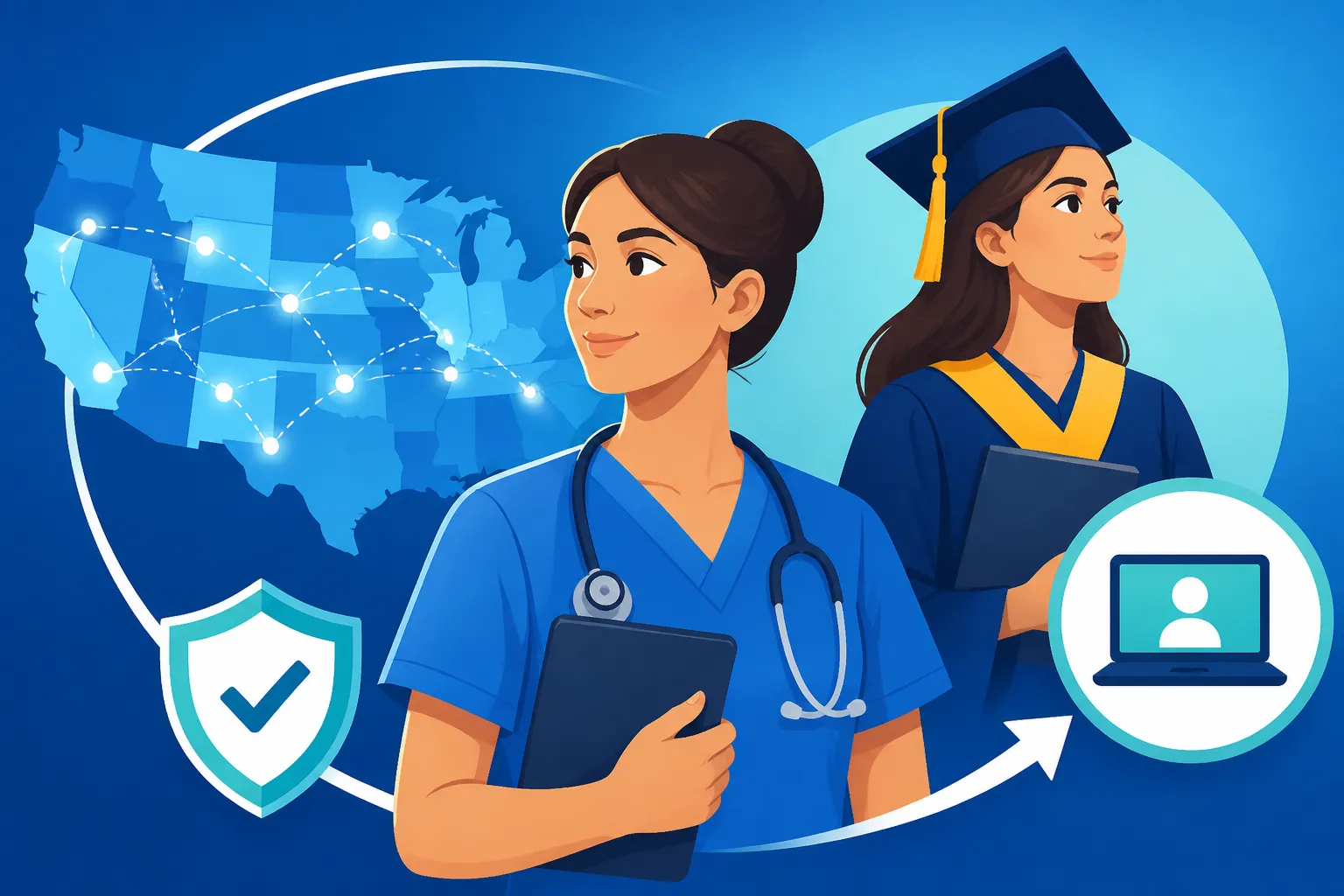
At its core, the Nurse Licensure Compact (NLC) is an agreement among participating U.S. states that allows registered nurses (RNs) and licensed practical/vocational nurses (LPN/VNs) to have one multi-state license, granting them the privilege to practice in any NLC member state. Think of it like your driver's license; you get it in your home state, but you can drive legally across state lines without needing a new one for every state you visit. For nurses, this means fewer administrative hurdles and quicker transitions between practice settings. This is a game-changer, especially for those considering the flexibility of online education, as it can directly impact how you handle clinical requirements or even post-graduation job searches.
The NLC matters immensely because it reflects the growing need for a mobile nursing workforce, particularly in areas with nursing shortages or during public health crises. Without it, responding to emergencies like hurricanes or widespread disease outbreaks would be far more cumbersome, as nurses would be restricted to their single-state licenses. For individual nurses, it opens up a world of opportunities, from travel nursing assignments to telehealth positions, or even just working at a hospital a few miles across a state border. If you're pondering the long-term value of a BSN, understanding how the NLC expands your professional landscape is key to realizing why an RN to BSN is worth it.
How Multi-State Licensure Works in Practice
So, how does this multi-state licensure actually work? It all hinges on your "primary state of residence." This isn't just where you own property or where you work; it's generally defined as the state where you hold your driver's license, where you vote, and where you file your federal taxes. When you obtain your initial RN license in an NLC state, that becomes your multi-state license, allowing you to practice in all other NLC states without needing additional licenses. If you move from one NLC state to another, you’ll endorse your license to your new primary state of residence, and once issued by that state, it becomes your new multi-state license. This process is far simpler than applying for a completely new license from scratch.
However, it's crucial to understand that if your primary state of residence is not an NLC state, you'll still hold a single-state license, even if you previously held a multi-state license in another NLC state. In this scenario, if you wish to practice in an NLC state, you'd apply for a single-state license in that NLC state, rather than a multi-state one. The nuances can be tricky, and it's always wise to check the most current map of NLC states and their specific regulations on the National Council of State Boards of Nursing (NCSBN) website. This information is vital for nurses, whether they are just starting their careers or contemplating advanced degrees like an MSN.
Navigating the NLC with an Online RN to BSN Program
Online RN to BSN programs offer incredible flexibility, allowing nurses to continue working and manage their personal lives while advancing their education. However, this flexibility also brings questions regarding licensure, especially if you're enrolling in a program based in a state different from your own. The NLC significantly simplifies many of these concerns, but it doesn't erase all of them. Understanding the connection between your primary state of residence, the state where your online program is located, and the state where you might complete clinical hours is crucial for a smooth academic journey.
Your Primary State of Residence and NLC Rules
When you enroll in an online RN to BSN program, your current RN license from your primary state of residence is the foundation. If you live in an NLC state and hold a multi-state license, you're generally good to go for the didactic (classroom) portion of your online program, regardless of where the university is physically located. The online coursework itself typically doesn't require licensure in the school's state. However, the picture can get a little more complex when it comes to clinicals.
For example, let's say you live in Arizona, which is an NLC state, and you decide to enroll in an online RN to BSN program offered by a university in Florida, also an NLC state. Since you hold a multi-state license from Arizona, you are authorized to practice and complete clinical hours in Florida without needing to apply for a separate Florida license. This is the beauty of the NLC: it removes a huge layer of bureaucracy. However, if your primary state of residence isn't an NLC state, and you want to do clinicals in an NLC state, you'd need to secure a single-state license in that NLC state. Always confirm your status with both your state board of nursing and your chosen program's admissions team, especially when looking into online RN to BSN programs: complete guide.
Implications for Clinical Placements in Different States
Clinical placements are often the trickiest part of the NLC for online students. Many online RN to BSN programs, such as those from institutions like Western Governors University or Capella University, allow students to complete their clinical requirements in their local communities, which is incredibly convenient. But what happens if your community is in a different state from the university's base, or if you plan to do your clinicals in a state that isn't your primary residence?
Here's where the NLC is truly beneficial. If your primary state of residence is an NLC state, your multi-state license enables you to complete clinical placements in any other NLC state. This offers tremendous flexibility. You could be living in Virginia, enrolled in an online program based in Texas, and complete your community health clinicals in Maryland, as all are NLC states. No extra licenses needed. This ease of movement is a significant advantage for working nurses pursuing their RN to BSN while working full-time, as it broadens their options for securing suitable clinical sites.
However, if you reside in a non-NLC state, or if the state where you intend to complete clinicals is not an NLC member state (and your primary residence isn't in an NLC state), you will likely need to obtain a single-state license for that particular state. This process can take time and involves additional fees and paperwork. Therefore, before committing to an online program, especially one that requires in-person clinicals, it is absolutely essential to confirm that your licensure will be valid in the state where you plan to fulfill those hours. Institutions are generally very helpful with this information, but the ultimate responsibility rests with you to ensure compliance with state board of nursing regulations. Tools like Uworld can be incredibly helpful for keeping up with these regulations and preparing for licensure exams, even if the primary focus of an RN to BSN is not NCLEX preparation, the platform offers regulatory updates and comprehensive nursing knowledge.
Key Considerations for RN to BSN Students in NLC States
Embarking on an RN to BSN journey, especially online, means becoming well-versed in the administrative side of nursing education. While the NLC simplifies many aspects of licensure, it doesn't eliminate the need for diligence. There are specific actions and checks you, as a nursing student, should undertake to ensure your academic and professional progression remains seamless. These steps will save you from potential headaches down the line and ensure that your hard work translates directly into career advancement.
Verifying Program Eligibility and State Regulations
Before you even hit "apply" on an online RN to BSN program, you need to do your homework. The first step is to confirm that your current RN license is in good standing and that your primary state of residence participates in the NLC. You can usually find the most up-to-date list of NLC states on the NCSBN website. Then, when looking at specific online programs, always verify that the institution is authorized to offer distance education in your state. While most accredited online RN to BSN programs are widely available, some states have specific regulations regarding out-of-state institutions, especially for programs leading to licensure.
It's not just about the program's accreditation, though that is paramount for any reputable nursing degree. It’s also about understanding your state's specific requirements for what license you need for RN to BSN programs, and how they interact with NLC rules. Some states have particular rules regarding direct care components or specific clinical hours explained for RN to BSN programs, even if the bulk of the coursework is online. For instance, while some programs are known for being no-clinical RN to BSN programs, others might require project-based or indirect patient care experiences that still fall under state board scrutiny. Don't be shy about reaching out to the admissions office of prospective schools and asking direct questions about their policies for NLC-licensed nurses and out-of-state enrollment. Getting clear answers upfront can prevent a lot of stress later.
Maintaining Your License While Advancing Your Education
Even as you're knee-deep in nursing theory and research papers for your RN to BSN, remember that maintaining your active RN license is non-negotiable. Your RN to BSN program builds upon your existing licensure, so letting it lapse could halt your academic progress. This means staying on top of renewal deadlines, completing any required continuing education units (CEUs) your state mandates, and keeping your contact information updated with your state board of nursing.
For NLC holders, this is particularly important. A multi-state license is only valid as long as your primary state of residence maintains its NLC status and you continuously meet its renewal requirements. If you were to move to a non-NLC state during your program, your multi-state privilege would revert to a single-state license, and you would then need to endorse your license in the new state of residence and potentially obtain additional licenses for any other states where you plan to perform clinicals. Keeping a close eye on your licensure status is part of being a responsible nursing professional, and it's something that tools like Uworld can help remind you of, offering up-to-date information on state board requirements. Think of your license as the key to your entire nursing career and education; you wouldn't want to misplace it!
Here's a quick reference table outlining key NLC considerations for RN to BSN students:
| Aspect | NLC Multi-State License Holder (Primary Residence in NLC State) | Single-State License Holder (Primary Residence in Non-NLC State) |
|---|---|---|
| Online Coursework | Generally no issues regardless of school's state. | Generally no issues regardless of school's state. |
| Clinical Placements | Can complete clinicals in any other NLC state without additional licensure. | Must obtain a single-state license in the clinical state (if different from primary residence). |
| Moving During Program | Must endorse to new NLC state; new state issues multi-state license. | Must endorse to new state; will hold single-state license in new state. |
| Renewal Responsibility | Adhere to renewal requirements of your primary state of residence. | Adhere to renewal requirements of your single-state license state. |
| Employer Tuition Support | May be easier to secure if NLC allows greater mobility. | Employer support may be tied to state-specific employment terms. |
Benefits and Potential Pitfalls of the NLC for BSN-Prepared Nurses
Completing your RN to BSN is a significant achievement, opening doors to advanced practice, leadership roles, and potentially higher earning potential. When you combine that enhanced education with the flexibility of the Nurse Licensure Compact, the career landscape expands even further. However, like any powerful tool, the NLC comes with responsibilities and potential pitfalls that BSN-prepared nurses must be aware of to fully leverage its advantages.
Expanded Career Opportunities and Mobility
One of the most immediate and exciting benefits of holding a multi-state license as a BSN-prepared nurse is the sheer breadth of career opportunities it unlocks. Imagine being able to seamlessly apply for nursing positions in neighboring states without the bureaucratic headache of new licensure applications. This is a game-changer for those seeking new experiences, higher salaries, or a change of scenery. Hospitals actively recruit nurses across state lines, and with an NLC license, you become a much more attractive candidate, especially in high-demand areas.
This expanded mobility isn't just about physical relocation. It significantly boosts opportunities in travel nursing, allowing you to easily take on assignments from California to Florida (provided both are NLC states, and you originate from an NLC state). It's also incredibly valuable for the growing field of telehealth, where you might be providing care to patients located in various NLC states from your home office. Many positions, like those in informatics or case management, also benefit from the NLC, as they might involve overseeing patient care or coordinating services across state lines. The combination of a BSN, which often leads to more specialized roles and greater autonomy, and the NLC means you're not just a nurse; you're a nurse with a passport to a wider professional world. This synergy makes understanding RN to BSN completion timeline and your career goals even more important.
Understanding Your Responsibilities as a Multi-State License Holder
While the NLC provides incredible freedom, it also comes with increased responsibility. The cardinal rule of the NLC is that you are accountable to the Nurse Practice Act of your primary state of residence and the Nurse Practice Act of any state where you are practicing. This means you must be knowledgeable about the specific laws, rules, and regulations in every NLC state where you provide care. What might be acceptable practice in one state could be a violation in another. For a BSN-prepared nurse with enhanced skills and a broader scope of practice, this requires continuous vigilance and ongoing professional development.
Furthermore, any disciplinary action taken against your multi-state license in one NLC state will be reported to the other compact states. This means a disciplinary action in, say, Texas, could impact your ability to practice in North Carolina or Georgia, even if the incident occurred solely in Texas. This underscores the importance of maintaining impeccable professional conduct and staying updated on nursing best practices. Resources like Uworld, which provides comprehensive practice questions and rationales, can be invaluable not only for exam preparation but also for reinforcing your understanding of safe and ethical nursing practice. Always ensure you know how to choose an RN to BSN program that will support your continuous learning and ethical practice, setting you up for success in your career.
Disclaimer
Please note that the information provided in this article is intended for general informational purposes only and does not constitute legal or professional advice. Nursing licensure requirements, including those related to the Nurse Licensure Compact (NLC), are subject to change and can vary significantly by state. It is essential for all nurses and nursing students to consult with their specific state board of nursing and their chosen educational institution for the most accurate, up-to-date, and personalized guidance regarding licensure, program eligibility, and clinical requirements. Relying solely on general information without verifying it with official sources may lead to unexpected challenges.