RN to BSN as a Path to MSN
Many Registered Nurses (RNs find themselves at a crossroads after earning their ADN or diploma, loving their direct patient care roles but feeling a strong pull towards greater impact, leadership, or specialized practice. The challenge often lies in figuring out the most effective and efficient way to bridge that gap, especially with work-life balance always a pressing concern. This guide will walk you through how earning your RN to BSN degree is not just an endpoint but a strategic and often essential pathway to achieving your Master of Science in Nursing (MSN), opening doors to advanced practice and leadership roles you might only dream of right now.
Laying the Foundation: The RN to BSN Journey
For many, the journey into nursing starts with an Associate Degree in Nursing (ADN) or a nursing diploma, which are fantastic ways to get into direct patient care quickly. But as the healthcare landscape evolves, so too do the expectations for nurses. The RN to BSN program isn't just about adding more credits; it's about building a broader, deeper foundation for your nursing practice.
What an RN to BSN Program Offers
An Online RN to BSN Programs: Complete Guide focuses on expanding the knowledge you gained in your initial RN education. Think of it as broadening your lens from direct patient care tasks to understanding the larger systems and theories that influence care delivery. You'll delve into subjects like community health, leadership, research, and evidence-based practice. These aren't abstract concepts; they are the tools that allow you to analyze situations, advocate more effectively for your patients, and contribute to policy improvements within your healthcare setting.
For example, while your ADN program taught you how to administer medication safely, an RN to BSN program might explore the pharmacology principles in greater depth, or how to critically evaluate new drug studies. It teaches you to look beyond the immediate patient interaction to the community, cultural, and systemic factors that impact health. This holistic perspective is invaluable, not just for personal growth but for becoming a more impactful healthcare professional overall. Many nurses find that the skills developed, like critical thinking and research utilization, make them feel more confident and competent on the floor.
Why the BSN is More Than Just a "Bridge" Degree
Calling an RN to BSN a "bridge" program often understates its value. While it certainly bridges the gap between an ADN and a bachelor's degree, it fundamentally transforms your approach to nursing. Hospitals, particularly those seeking or maintaining Magnet recognition, increasingly prefer and sometimes even require nurses to hold a BSN. This preference isn't arbitrary; studies consistently link baccalaureate-prepared nurses to better patient outcomes, lower mortality rates, and reduced readmission rates.
Earning your BSN equips you with advanced critical thinking, leadership, and communication skills. You'll learn how to analyze health trends, implement quality improvement initiatives, and even take on charge nurse roles with greater confidence. It's about developing the nuanced understanding required to navigate complex healthcare systems and advocate for change. Furthermore, a BSN is often a non-negotiable prerequisite for pursuing advanced degrees, making it an essential stepping stone if your long-term goal includes an MSN or beyond. Without that BSN, many of the advanced practice doors simply won't open for you. If you're wondering Is an RN to BSN Worth It, consider it an investment in your entire future nursing career trajectory.
The Strategic Leap: Connecting Your BSN to an MSN
Once you've secured your BSN, the path to an MSN becomes significantly clearer. For many nurses, the MSN is the gateway to becoming a Nurse Practitioner, Clinical Nurse Specialist, Nurse Educator, or Nurse Administrator, roles that demand a higher level of autonomy, expertise, and leadership.
Understanding RN to MSN Bridge Programs
It's true that some schools offer "RN to MSN" bridge programs that allow ADN-prepared nurses to earn their master's degree without first completing a separate BSN program. These programs typically integrate the BSN-level coursework into the master's curriculum, creating a streamlined, albeit intensive, pathway. They're designed for highly motivated RNs who are certain about pursuing an MSN and want to minimize the total time spent in school.
These RN to MSN Programs Explained are often rigorous, combining undergraduate and graduate-level courses. While they can be appealing for their efficiency, it's crucial to understand that you'll still be covering all the foundational BSN material—it's just packaged differently. This means tackling advanced research, leadership theory, and community health principles alongside your advanced practice coursework. The benefit is often a faster route to earning that MSN, making it a powerful option for those ready to commit to a demanding academic schedule.
The Traditional BSN to MSN Route
For many, the more common and perhaps less overwhelming route is to complete an RN to BSN program first, gain some valuable experience as a BSN-prepared nurse, and then apply to an MSN program. This allows you to fully digest and apply the BSN-level knowledge in practice before diving into the specialized and often more intense curriculum of a master's program. Having that BSN under your belt also means you've already met a key admission requirement for virtually all MSN programs.
This phased approach can offer greater flexibility, allowing you to choose a specialized MSN program that truly aligns with your long-term career goals, whether that's becoming a Family Nurse Practitioner, a Psychiatric Mental Health Nurse Practitioner, or pursuing a MSN Nurse Educator Track. By taking the BSN first, you establish a solid academic and professional foundation, potentially making the transition to graduate studies smoother. You'll have sharpened your academic skills, learned how to manage a demanding course load, and developed a clearer vision for your advanced practice role, all of which contribute to success in an MSN program.
Unlocking Advanced Nursing Roles and Impact with an MSN
Earning an MSN is a pivotal achievement that propels your nursing career into new dimensions. It’s not just about a higher degree; it’s about a fundamental shift in your role, responsibility, and the kind of impact you can have on patient care and the healthcare system at large.
Expanding Your Clinical Expertise and Leadership Scope
With an MSN, you move beyond the generalist role of an RN into specialized, advanced practice. Whether you become a Nurse Practitioner (NP), Clinical Nurse Specialist (CNS), or Certified Nurse Midwife (CNM), you'll gain the autonomy to diagnose, treat, and manage complex patient conditions, often including prescribing medication, depending on your specialty and state regulations. This requires a profound expansion of your clinical expertise, moving into areas like advanced pathophysiology, advanced pharmacology, and advanced physical assessment.
Beyond direct patient care, an MSN also significantly broadens your leadership scope. You might lead clinical teams, develop new protocols based on evidence-based practice, or educate other nurses and healthcare professionals. For instance, an MSN in Nursing Leadership or Nurse Administration prepares you to manage nursing units, entire departments, or even contribute to hospital-wide strategic planning. It empowers you to implement changes that improve patient safety, streamline operations, and enhance the overall quality of care. Many nurses find this shift from bedside care to a more systemic, influential role incredibly rewarding.
Diverse Career Pathways and Specializations
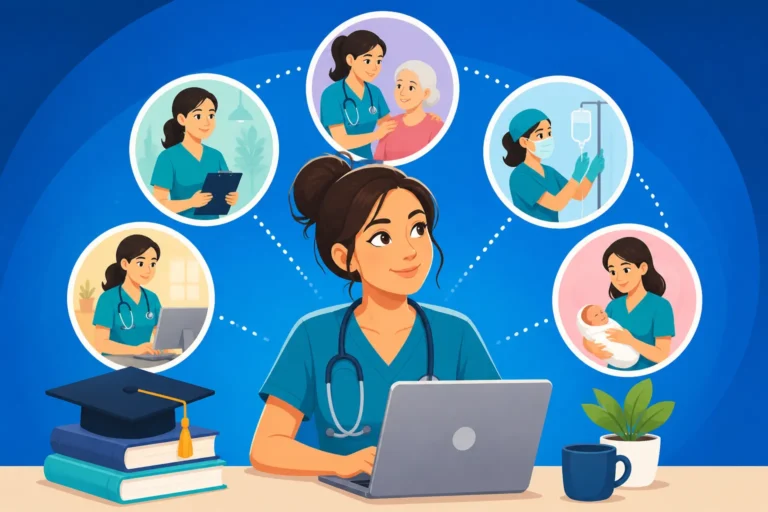
One of the most exciting aspects of earning an MSN is the sheer diversity of career pathways it unlocks. The world of advanced practice nursing is rich with specializations, each offering unique challenges and rewards. For example, if you're passionate about mental health, a Psychiatric Mental Health Nurse Practitioner (PMHNP) role might be ideal. If you envision working with families across the lifespan, becoming a Family Nurse Practitioner (FNP) could be your calling. Other popular specializations include How to Become a Pediatric Nurse Practitioner or Adult-Gerontology Nurse Practitioner, among many others.
Beyond clinical practice, an MSN can lead to roles in academia, such as a Nurse Educator, shaping the next generation of nurses. It can open doors to positions in public health, policy, or even entrepreneurship, where you might start your own practice or consultancy. This degree truly diversifies your professional options, allowing you to tailor your career to your passions and strengths. You're not just a nurse anymore; you're an advanced practice clinician, a leader, an educator, or an innovator, making a significant difference in a specialized area of healthcare.
The Financial and Professional Return on Investment
Let's be real: pursuing further education involves a significant investment of time and money. However, an MSN often delivers a substantial return on that investment, both financially and professionally. Advanced practice nurses consistently earn higher salaries than RNs. While an RN to BSN Salary Increase is notable, the jump from a BSN to an MSN is often even more significant. For example, the median salary for a Registered Nurse (RN) as of May 2023 was around $86,000, according to the Bureau of Labor Statistics. For Nurse Practitioners (NPs), that median shot up to over $126,000, with top earners making well over $160,000 annually. This substantial increase in earning potential can help offset the cost of your education over time.
Beyond the salary, the professional return is immense. An MSN provides greater job security, increased autonomy, and a wider range of career advancement opportunities. You'll be qualified for positions that demand critical thinking and leadership, placing you at the forefront of healthcare innovation. This professional growth, coupled with the ability to provide more comprehensive care and positively impact patient outcomes on a larger scale, makes the RN to BSN to MSN pathway a truly worthwhile endeavor for many dedicated nurses.
Practical Steps for Your Educational Progression
Embarking on the RN to BSN to MSN journey is a significant undertaking, but with careful planning, it's absolutely achievable. It's about making informed choices and setting yourself up for success.
Choosing the Right Accredited Programs
The first and arguably most crucial step is to select programs that are properly accredited. For nursing programs, this typically means accreditation by either the Commission on Collegiate Nursing Education (CCNE) or the Accreditation Commission for Education in Nursing (ACEN). Choosing an accredited program ensures that your degree will be recognized by employers, licensing boards, and future educational institutions. Without proper accreditation, your hard-earned degree might not allow you to practice or advance your education. You can learn more about CCNE vs ACEN Accreditation Explained to understand the differences.
When you're looking at RN to BSN options, consider program format. Many nurses opt for Online RN to BSN Programs: Complete Guide due to their flexibility, allowing you to continue working while studying. Look for programs with multiple start dates, a supportive faculty, and a curriculum that aligns with your interests. For the MSN phase, consider what specialization you're interested in – Family Nurse Practitioner, Psychiatric Mental Health NP, Nurse Educator, etc. Research faculty expertise, clinical placement support (a huge deal for NPs!), and program length. Reputable institutions often have strong alumni networks and resources that can be invaluable. Don't be afraid to reach out to admissions counselors and even current students to get a real feel for the program.
Managing the Time and Financial Commitment
Let's be honest, balancing work, family, and school is tough. Most nurses pursuing an RN to BSN or MSN are already working professionals, often with family responsibilities. It requires exceptional time management and a strong support system. Many online RN to BSN programs are designed with working nurses in mind, offering asynchronous courses that you can complete on your own schedule. This flexibility is key to successfully balancing your demanding responsibilities. For the MSN, especially advanced practice roles, the clinical hour requirements can be substantial, so planning how you'll manage those hours alongside your job is critical. Resources like the online study tools from Uworld can be incredibly helpful for managing coursework and preparing for exams efficiently, allowing you to maximize your study time.
Financially, the cost of an RN to BSN and then an MSN can be a significant concern. The How Much Does an RN to BSN Cost can vary widely between institutions. Thankfully, there are many avenues for financial assistance. Explore federal student aid, scholarships specifically for nursing students, and tuition reimbursement programs offered by employers. Many hospitals are eager to support their nurses in pursuing higher education, as it ultimately benefits patient care. Always compare tuition rates, fees, and potential hidden costs. Creating a detailed budget and exploring all available funding options will alleviate some of the financial stress and allow you to focus more on your studies. Remember, this is an investment in your future, and there are resources out there to help you make it happen.
Comparing the Pathways: RN, BSN, and MSN
| Degree Level | Typical Education Length (Post-High School) | Primary Focus/Role | Key Benefits |
|---|---|---|---|
| RN (ADN/Diploma) | 2-3 years (ADN), 2-3 years (Diploma) | Direct Patient Care, Foundational Nursing Skills | Quick entry into practice, essential for hands-on care |
| BSN | 4 years (Traditional), 1-2 years (RN-BSN) | Enhanced Critical Thinking, Leadership, Community Health, Evidence-Based Practice | Broader career opportunities, leadership roles, preparation for graduate studies, improved patient outcomes |
| MSN | 2-3 years (Post-BSN) | Advanced Practice (NP, CNS, CNM), Nurse Educator, Administrator, Informatics | Autonomy in practice, specialization, higher earning potential, leadership at a systemic level |
Disclaimer
Please remember that the information provided in this guide is intended for general informational purposes only and does not constitute professional advice. Nursing program requirements, accreditation standards, career opportunities, and salary expectations can vary significantly by institution, location, and specialization. Always consult with academic advisors, university admissions departments, and relevant professional organizations for the most accurate and up-to-date information regarding your specific educational and career goals.