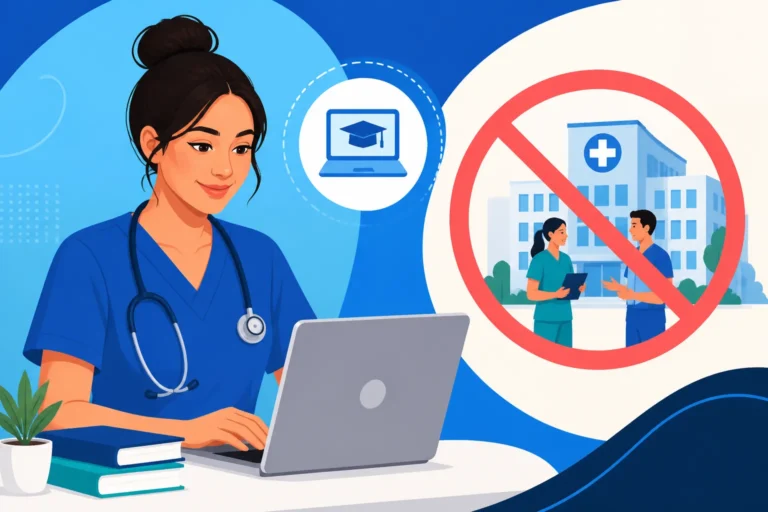
RN to BSN Programs with No GPA Requirement
It’s a common worry for many registered nurses: you’ve got your ADN, you’re rocking it at the bedside, but the thought of going back for your BSN is looming, often accompanied by a quiet anxiety about your past academic record. Maybe your GPA wasn't stellar straight out of nursing school, or perhaps those early college courses didn't reflect your true potential. The good news is, you’re not alone in feeling this, and more importantly, this guide is here to show you that a less-than-perfect GPA doesn’t have to derail your dreams of earning a Bachelor of Science in Nursing.
The Reality of GPA Requirements in RN to BSN Programs
It’s easy to feel disheartened when you see admission requirements listing a minimum GPA, especially if your Associate Degree in Nursing (ADN) was a few years back. You might wonder if you even stand a chance. But here's the honest truth: while some traditional programs do have strict cut-offs, many modern RN to BSN programs, particularly online options, are designed with the working nurse in mind and understand that a GPA doesn't always tell the full story of a dedicated healthcare professional. They recognize the immense value of your practical experience and current licensure.
Why Some Programs Have Lower or No Explicit GPA Minimums
The landscape of nursing education is constantly evolving, largely driven by the ongoing demand for highly qualified nurses. Hospitals and healthcare systems are increasingly preferring, and in many cases, requiring nurses to hold a BSN, partly due to research linking BSN-prepared nurses to improved patient outcomes. This push has created a significant incentive for nursing schools to make BSN completion more accessible for ADN-prepared nurses.
Because of this, many programs have shifted towards a more holistic review process. They understand that a nurse who graduated with a 2.5 GPA a decade ago but has since gained invaluable experience in a busy emergency room or critical care unit is a highly competent and valuable candidate. Your current RN license, which demonstrates your practical proficiency and commitment to ongoing learning, often carries significant weight. These programs prioritize your professional trajectory and the skills you've honed on the job, acknowledging that real-world experience can be just as, if not more, indicative of future academic success than a transcript from years past.
Understanding Different Types of GPA Considerations
When you see a GPA requirement, it’s important to realize that not all GPAs are created equal in the eyes of an admissions committee. Often, schools will specify which GPA they’re looking at, and understanding these nuances can actually open up more doors than you might initially think.
Some programs look at your overall GPA, which is a cumulative average of all college-level coursework you've ever taken. This is often the most intimidating for nurses with varied academic histories. However, other institutions might focus more specifically on your nursing GPA, meaning only the grades earned in your ADN core nursing courses. If you excelled in your clinical rotations and core nursing classes, this could be a huge advantage, even if your general education courses were a bit weaker. Still others might concentrate on your prerequisite GPA, looking only at specific courses deemed essential for the BSN curriculum, such as Anatomy and Physiology, Microbiology, or Statistics. Furthermore, some universities might consider your grades from your last 60 credits as a more accurate reflection of your recent academic performance, rather than holding earlier, less mature academic attempts against you. This targeted approach acknowledges that you've grown and developed academically since your initial college experiences.
Finding RN to BSN Programs That Are GPA-Flexible
The hunt for a BSN program that aligns with your professional goals and academic history can feel like searching for a needle in a haystack, especially if GPA is a concern. But these programs do exist, and knowing what to look for can make all the difference. Many institutions recognize the invaluable real-world experience nurses bring to the table, often outweighing a number on a transcript.
Searching for Programs with Alternative Admission Criteria
When you’re sifting through potential programs, don't just glance at the "minimum GPA" line and move on if it seems too high. Dig deeper. Many institutions, particularly online ones, employ what's called a "holistic review" process. This means they look at your entire application package – your essays, letters of recommendation, professional experience, and current licensure – rather than relying solely on your GPA. You might find programs that explicitly state they consider applicants with a "2.5 GPA or higher, or demonstrate professional readiness through experience."
Terms to look out for in admission sections include "alternative admission pathways," "experience-based admission," "provisional acceptance," or a simple statement like "applicants are reviewed on an individual basis." It's highly recommended to reach out directly to admissions counselors. These professionals are there to help you navigate the requirements and can often provide insights into how flexible a program truly is. For instance, a program might list a 2.75 GPA, but an admissions counselor could explain that strong recent performance in a few key prerequisite courses, coupled with extensive nursing experience, can make an applicant competitive even if their cumulative GPA is slightly below that. When you're ready to dive into the application process, understanding the full scope of How to Apply to an RN to BSN Program can provide immense clarity.
Leveraging Your RN License and Experience
For many RN to BSN programs, especially those designed for ADN-prepared nurses, your valid, unencumbered registered nurse license is arguably the most critical admission requirement. It’s not just a piece of paper; it’s proof that you’ve already met rigorous professional standards, passed the NCLEX, and are actively practicing in the field. This credential speaks volumes about your capability and dedication.
Beyond your license, your years of experience as a practicing RN can be a powerful asset. Think about all the skills you've gained since earning your ADN: critical thinking, patient advocacy, complex care management, leadership in a clinical setting, and effective communication. Many programs are now designed to give credit for this experiential learning. Some even offer portfolio assessments where you can document your professional achievements, continuing education units, and specialized certifications (like ACLS, PALS, or specific unit certifications) to demonstrate your advanced knowledge and skills. Letters of recommendation from nurse managers, supervisors, or even physicians who can attest to your clinical excellence and professional growth can significantly bolster your application, showing that while your past academic GPA might be a number, your current professional performance is truly outstanding. Your hands-on expertise is a testament to your ability to thrive in a challenging academic environment.
Specific Strategies for Nurses with Lower GPAs
While some RN to BSN programs are more flexible, it's still crucial to present the strongest application possible. For nurses with a lower GPA, this often means focusing on areas where you can demonstrate your current academic potential and professional strengths. It's about showing admissions committees that your past grades don't define your current capabilities or your commitment to advancing your nursing career.
Excelling in Prerequisite Courses
Even if a program boasts a flexible GPA policy, many will still require specific prerequisite courses, particularly in areas like microbiology, anatomy and physiology, chemistry, and statistics. If your GPA is a concern, one of the most impactful strategies is to re-take any prerequisite courses where you earned a C or lower, or to take any outstanding prerequisites and commit to achieving high grades – an A or B – in them.
Think of it this way: strong performance in recent coursework directly addresses any doubts about your current academic ability. It demonstrates not only your mastery of foundational scientific and mathematical concepts but also your discipline, dedication, and improved study habits. Many online learning platforms and community colleges offer these courses, sometimes in accelerated formats, allowing you to quickly boost your academic profile. Utilizing resources like Uworld for reviewing complex science concepts or even for refreshing your general nursing knowledge can be incredibly beneficial. By acing these new courses, you are effectively showing admissions committees that you are ready and able to handle the academic rigor of a BSN program, setting a new, higher standard for your transcript.
Crafting a Strong Application Beyond Your Transcript
Your GPA is just one component of your application. For those with a lower GPA, other elements become even more critical in showcasing your potential. This is your chance to tell your story, highlight your strengths, and explain any past academic struggles in a professional and proactive manner.
Start with a compelling personal statement or essay. This is where you can candidly, yet positively, address your GPA. Perhaps you were a young student, balancing work and family, or experienced a personal hardship that affected your grades. Frame it as a learning experience, emphasizing how those challenges have shaped you into a resilient, mature, and dedicated nurse. Crucially, articulate your current passion for nursing, your career goals, and why you are now fully prepared for the academic demands of a BSN program. Next, focus on securing powerful letters of recommendation. Ask nurse managers, charge nurses, or former clinical instructors who know your work ethic and capabilities intimately. A letter from a supervisor detailing your leadership skills, critical thinking in difficult situations, and commitment to patient care can speak volumes.
Finally, ensure your resume or CV is impeccable. Beyond listing your employment history, highlight specific professional achievements: certifications earned, committees served on, quality improvement projects you participated in, preceptor roles, or continuing education courses completed. Show them not just where you've worked, but how you've grown and contributed to the nursing profession. The goal is to paint a comprehensive picture of a highly competent, motivated, and professional RN ready for the next step in their career, making your application stand out for reasons far beyond a numerical GPA. For a deeper understanding of what programs seek, reviewing RN to BSN Requirements Explained can be quite insightful.
Exploring Types of Flexible RN to BSN Programs
The good news for working nurses concerned about GPA is that the educational landscape has diversified considerably. Many programs have evolved to meet the unique needs of adult learners who are balancing careers, families, and further education, often offering more flexible admission criteria than traditional on-campus programs.
Online and Competency-Based Programs
Online RN to BSN programs are a fantastic option for their inherent flexibility, and many also offer more accommodating admission policies. These programs are specifically designed for working nurses, allowing you to complete coursework on your own schedule, often asynchronously. This flexibility extends to admissions; many online programs prioritize your current RN license and professional experience, understanding that your practical skills are a testament to your ability to succeed. For those who thrive in a self-directed environment, a fully RN to BSN Online vs In-Person program might be the perfect fit.
A particularly noteworthy option for GPA-conscious applicants are competency-based RN to BSN programs. Institutions like Western Governors University (WGU) and Capella University are pioneers in this model. Instead of traditional semesters and letter grades for each course, you advance by demonstrating mastery of specific competencies. This approach values what you already know and allows you to accelerate through material you've mastered through experience, focusing your time on areas where you need to build knowledge. For admissions, while they still have criteria, they often look at your overall profile, including your RN license and work history, more holistically. The focus is less on past grades and more on your proven ability to demonstrate nursing competencies. These models often have resources for self-assessment and review, and tools like Uworld can be invaluable for strengthening foundational knowledge or preparing for specific assessments within such programs. Learning more about Competency-Based RN to BSN Programs can help you determine if this innovative approach aligns with your learning style.
Programs with Provisional Admission or Pathway Options
Don't discount programs that might seem out of reach at first glance. Many universities understand that a blanket GPA cutoff can exclude highly capable nurses. To address this, some offer provisional admission. This means that if your GPA falls slightly below their stated minimum but your overall application is strong – perhaps you have excellent professional references and a compelling personal statement – they might admit you on a provisional basis. Typically, this involves maintaining a specific GPA (e.g., 3.0) during your first few courses (often 9-12 credits). Successfully meeting this condition converts your admission to full status, proving you are indeed ready for the academic challenge. This pathway offers a fantastic opportunity for nurses to demonstrate their current academic potential.
Another excellent route is through pathway programs or bridge programs. These are often collaborations between community colleges and universities, specifically designed for ADN-prepared nurses who might not meet the standard four-year university admission criteria directly. These pathways can allow you to complete specific courses or modules, sometimes at a community college, to strengthen your transcript before matriculating into the university's BSN program. It’s a structured way to build a stronger academic foundation and prove your readiness, often with the guidance and support of dedicated advisors. Always inquire about these types of options, as they can be hidden gems for nurses looking to bridge an academic gap.
Important Considerations When Choosing a Program
Finding a program that's flexible with GPA requirements is a fantastic first step, but it's just one piece of the puzzle. As you weigh your options, several other critical factors will influence your success and the long-term value of your degree. You want to ensure that the program you choose not only accepts you but also prepares you effectively for your future nursing career.
Accreditation and Program Quality
This is non-negotiable: always prioritize accreditation. For nursing programs, this typically means accreditation by either the Commission on Collegiate Nursing Education (CCNE) or the Accreditation Commission for Education in Nursing (ACEN). An accredited program ensures that the curriculum meets rigorous national standards for nursing education, which is crucial for several reasons.
First, an unaccredited degree may not be recognized by employers, especially larger hospital systems or those seeking Magnet Recognition Program® status. Many states also require degrees from accredited programs for licensure endorsement or for applying to advanced practice roles. Second, if you ever decide to pursue graduate studies, such as an MSN or DNP, most reputable master's and doctoral programs will only accept applicants with a BSN from an accredited institution. Don't let the convenience of a flexible program overshadow the necessity of proper accreditation. Always verify a program's accreditation status directly through the CCNE or ACEN websites. Understanding Why RN to BSN Accreditation Matters is paramount, and a closer look at the differences between CCNE vs ACEN Accreditation Explained can help you make an informed choice.
Cost, Time, and Support Systems
Even with GPA flexibility, the practicalities of earning your BSN loom large. Consider the total cost of the program, including tuition, fees, books, and any technology requirements. Don't be shy about exploring financial aid options, including federal grants, student loans, and scholarships specifically for nurses. Many employers also offer tuition reimbursement programs, which can significantly offset the cost. A thorough understanding of RN to BSN Financial Aid Options or even How Much Does an RN to BSN Cost can help you budget effectively.
Next, assess the program's length and flexibility. If you're working full-time, a program with asynchronous online courses and multiple start dates might be more manageable than a rigid, fast-paced one. Inquire about the typical RN to BSN Completion Timeline and whether part-time options are truly viable for working nurses. Lastly, investigate the support systems available to online students. Does the program offer dedicated academic advisors, technical support, career services, and library access? Strong support can make a monumental difference, especially if you're returning to school after a long break. You’re making a significant investment of your time and money, so ensure the program is structured to help you succeed, not just get you in the door.
Success Strategies Once Admitted
Congratulations, you've been admitted! Now the real work begins. While getting into a flexible RN to BSN program is a huge accomplishment, thriving in it requires dedication, strategic planning, and leveraging available resources. Balancing your nursing career, personal life, and academic demands can be challenging, but it's entirely achievable with the right approach.
Time Management and Study Habits
One of the biggest hurdles for working nurses going back to school is finding enough time to study. It's not about having more hours in the day, but about how effectively you use the ones you have. Start by creating a realistic study schedule and sticking to it. Identify pockets of time in your day – before a shift, during a lunch break, or an hour before bed – and designate them for coursework. Treat these study blocks like you would a work appointment: non-negotiable.
For online programs, self-discipline is key. Break down large assignments into smaller, manageable tasks. Utilize digital calendars, reminders, and productivity apps to stay organized. Engage actively with your online courses by participating in discussion forums, asking questions, and connecting with classmates. Forming virtual study groups can be incredibly beneficial for accountability and peer support. Remember, you're a seasoned nurse with excellent critical thinking skills; now apply those same organizational and analytical abilities to your academic work. For deeper insights on managing your responsibilities, explore our guide on How to Balance Work and RN to BSN.
Utilizing Academic Resources and Support
You don't have to navigate your RN to BSN journey alone. Universities provide a wealth of resources designed to help students succeed, and you should take full advantage of them. Don't hesitate to reach out to your professors with questions or for clarification; they are there to guide you. Academic advisors are also invaluable for course planning, understanding program requirements, and connecting you with other support services.
Many institutions offer writing centers, tutoring services, and academic coaching, even for online students. If you find yourself struggling with a particular subject, like nursing research or statistics, these resources can provide personalized assistance. Utilize the university's online library, which typically offers extensive databases of peer-reviewed journals, e-books, and research guides relevant to your nursing studies. Furthermore, continue to use professional review tools you might already be familiar with. For instance, Uworld, often used for NCLEX preparation, can also serve as an excellent resource for reinforcing core nursing knowledge, understanding complex concepts, and practicing critical thinking skills throughout your BSN program. By proactively engaging with these resources, you're not just surviving your program; you're setting yourself up to truly excel and maximize your learning experience. You might also find value in understanding What to Expect in an RN to BSN Program to mentally prepare for the curriculum.
Here’s a quick overview of different program types and their flexibility:
| Program Type | Common GPA Flexibility | Alternative Requirements Often Considered | Pros | Cons |
|---|---|---|---|---|
| Traditional Online RN to BSN | Often 2.5-2.75 minimum, but may review holistically. | RN license, professional experience, strong essays, references. | Flexibility for working nurses, good for self-paced learners. | May still have set course schedules, less direct faculty interaction than on-campus. |
| Competency-Based RN to BSN | Focuses on demonstrated mastery, less on past GPA. | RN license, work experience, ability to pass competency assessments. | Highly flexible, can accelerate if you master content quickly, may save money. | Requires strong self-discipline, not for all learning styles. |
| Provisional Admission Programs | May accept slightly below stated minimum (e.g., 2.0-2.5). | Commitment to achieve a specific GPA in initial courses, strong overall application. | Gives a chance to prove current academic capability. | Added pressure to perform well in initial courses, potential for delayed full admission. |
| Pathway/Bridge Programs | Often designed for those who don't meet direct admission. | Completion of specific prerequisite courses, ADN with good nursing course grades. | Structured support to meet university standards, clear roadmap. | Can add extra time to your overall degree completion. |
Disclaimer
Please note that while every effort has been made to provide accurate and up-to-date information, nursing program requirements and policies can change frequently. This guide is intended for informational purposes only and does not constitute official academic or career advice. Always verify specific admission requirements, accreditation status, costs, and program details directly with the nursing schools or universities you are considering.