Best Nurse Specialties for Work-Life Balance
Let's be real, the nursing profession is incredibly rewarding, but it can also be incredibly demanding. Long shifts, emotional labor, and the constant pressure of patient care can take a serious toll, leaving many nurses feeling burned out and yearning for a better work-life balance. If you're a nurse dreaming of a career path that offers more predictability, less stress, and more time for yourself and your loved ones, this guide is for you. We'll explore various nursing specialties that are known for providing a more sustainable professional life without sacrificing the passion for helping others.
Understanding Work-Life Balance in Nursing
Before we dive into specific roles, it's crucial to understand what "work-life balance" truly means in the context of nursing. It's not a one-size-fits-all concept, and what works for one nurse might not for another. However, there are common threads that often lead to a greater sense of equilibrium between professional duties and personal life.
What "Balance" Really Means for Nurses
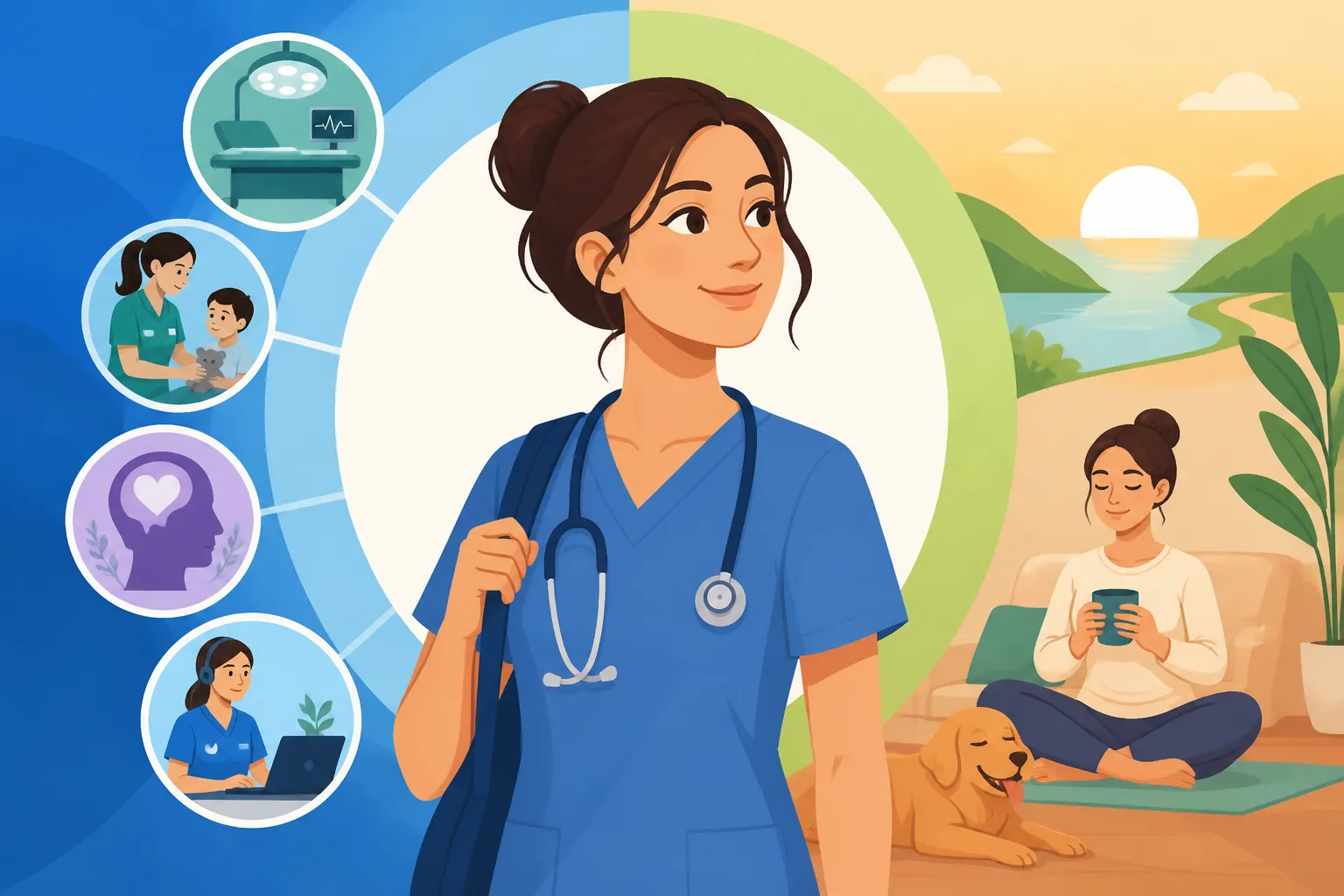
For many nurses, achieving balance isn't just about reducing hours; it's about control, flexibility, and emotional bandwidth. It often means having predictable schedules, avoiding the erratic nature of shift work or the grueling pace of high-acuity units. It might mean fewer weekends, fewer holidays spent away from family, or simply a job where you don't carry the emotional weight of your patients home with you every single night. For some, it's about the ability to work from home, eliminating commute times and offering a new level of autonomy. It's about finding a role where the demands of the job align with your personal values and commitments, allowing you to recharge and engage in life outside of work.
The Burnout Reality
The unfortunate reality is that nursing has a high rate of burnout, especially in fast-paced, high-stress environments like emergency rooms, intensive care units, and busy medical-surgical floors. The emotional drain of caring for critically ill patients, dealing with staffing shortages, and navigating complex healthcare systems can lead to compassion fatigue and a feeling of being constantly overwhelmed. This isn't a personal failing; it's a systemic issue that pushes many dedicated nurses to seek alternative paths. Recognizing this widespread problem is the first step toward finding a solution that prioritizes your well-being. Many nurses are actively seeking roles where they can still make a significant impact without sacrificing their mental and physical health, leading to increasing interest in specialties that offer more predictable hours and less direct patient care intensity.
Top Nursing Specialties for Enhanced Work-Life Balance
The good news is that the field of nursing is vast, offering a multitude of roles that can provide a much-desired improvement in work-life balance. These specialties often shift the focus from acute, bedside care to preventative health, education, or administrative functions.
Public Health Nursing
Public health nurses (PHNs) are the backbone of community well-being, focusing on the health of populations rather than individual patients. Their work is incredibly impactful, often involving health education, disease prevention, and advocating for healthier communities. Think about the nurses who conduct vaccination clinics, educate school children on hygiene, or work with local health departments to manage disease outbreaks. The hours are typically Monday to Friday, standard business hours, with weekends and holidays off. There's usually no shift work or on-call requirements, making it a stark contrast to hospital-based roles. Becoming a public health nurse often involves working for local government agencies, non-profits, or community health centers. If you're passionate about making a broad impact on health and prefer a consistent schedule, this could be an excellent fit. You can learn more about this fulfilling role in our guide on How to Become a Public Health Nurse.
School Nursing
If you're looking for a nursing role that aligns perfectly with a family schedule, school nursing might be your calling. School nurses provide direct care for students, manage chronic conditions like asthma and diabetes, administer medications, and act as a crucial link between students, families, and healthcare providers. The major perk? Their schedule typically mirrors the academic calendar, meaning summers off, holidays, and weekends free. This predictable schedule is a huge draw for nurses with children or those who simply crave a consistent routine. While there can be emergencies during the school day, the overall pace is generally less frantic than a hospital setting. It’s a specialty that emphasizes preventative care and health education, allowing nurses to foster a healthier environment for an entire student body.
Clinic and Outpatient Nursing
Moving away from the 24/7 demands of inpatient care, clinic and outpatient nursing roles offer a significantly improved work-life balance. These positions are typically found in doctor's offices, specialty clinics (like dermatology, cardiology, or oncology outpatient clinics), urgent care centers, and ambulatory surgery centers. The hours are predominantly daytime, Monday through Friday, with minimal to no weekend or holiday work. For instance, working in a bustling family practice clinic in Sacramento means you're typically done by 5 or 6 PM, leaving your evenings free. While the patient volume can still be high, the acuity is generally lower, and the focus shifts to scheduled appointments, patient education, and follow-up care. This predictability can be a game-changer for many nurses.
Nursing Informatics
For nurses who love technology and data, nursing informatics offers a fascinating pathway to a balanced life. These roles involve integrating nursing science, computer science, and information science to manage and communicate data, information, and knowledge in nursing practice. Essentially, informatics nurses help design, implement, and optimize healthcare technology systems, like electronic health records (EHRs). Many informatics positions are office-based, and increasingly, remote. This means standard business hours, often Monday through Friday, with no direct patient care responsibilities. Imagine working from your home office in Phoenix, helping to streamline a new charting system for a major hospital network. The work is analytical, problem-solving oriented, and offers a completely different pace from the bedside. The compensation for this specialized role is also quite competitive; for more details, check out our article on Nursing Informatics Salary.
Case Management Nursing
Case management nurses play a vital role in coordinating patient care, ensuring continuity, and advocating for patient needs across various healthcare settings. They work with patients and their families to develop care plans, connect them with resources, and navigate complex healthcare journeys, whether it's after a hospital discharge or for managing chronic conditions. These roles can be found in hospitals (often in a discharge planning capacity), insurance companies, long-term care facilities, or as part of community health initiatives. Most case management positions offer regular business hours, typically Monday through Friday, with few, if any, weekend or holiday shifts. The work is challenging in its own way, requiring strong communication and organizational skills, but it generally offers a much more predictable schedule than direct bedside care. To delve deeper into this specialty, consider reading about How to Become a Case Management Nurse.
Telehealth and Remote Nursing
The rise of technology has opened up numerous opportunities for nurses to work from the comfort of their own homes. Telehealth nurses provide care remotely through phone calls, video consultations, and online platforms. This can include anything from triaging symptoms and offering health advice to chronic disease management and post-operative follow-ups. Many remote nursing positions are also available in areas like utilization review, nurse advising, or even developing online nursing education programs. The flexibility offered by these roles is unparalleled, often allowing nurses to set their own schedules, choose full-time or part-time options, and eliminate the daily commute. This can be a huge benefit for nurses with young children or those living in rural areas who want access to diverse job opportunities without relocating. This flexibility makes it a prime candidate among Remote and Work-from-Home Nursing Specialties.
Home Health Nursing
Home health nursing involves providing care to patients in their homes, which can offer a unique blend of autonomy and flexibility. While the hours can sometimes extend beyond a traditional 9-to-5, many home health nurses have significant control over their daily schedules and patient visits. You're often responsible for managing your own caseload, scheduling appointments, and traveling between patients' homes. This can mean starting your day later or earlier depending on your preferences, and fitting personal appointments in between visits. For nurses who enjoy independent work and a change of scenery from a hospital floor, home health can be very appealing. The one-on-one patient interaction is also a major plus for many, as it allows for deeper connections than often possible in a busy hospital.
Factors to Consider When Choosing a Work-Life Friendly Specialty
While the idea of a better work-life balance is universally appealing, finding the right specialty for you involves a bit of self-reflection and practical consideration. It's not just about what's available, but what truly fits your personal and professional aspirations.
Your Personal Definition of Balance
This is perhaps the most crucial factor. What does "work-life balance" really mean to you? Is it strictly about predictable daytime hours? Or is it more about the emotional toll of the job? Perhaps you're okay with some evening work if it means never missing your child's school events. Do you value summers off above all else? Or is working from home the ultimate dream? For some, it might be about avoiding direct patient care entirely, while for others, it's about reducing the high-acuity, critical situations. Sit down and truly evaluate your priorities. What are you willing to compromise on, and what are your absolute non-negotiables? Understanding your specific needs will help narrow down the vast options within nursing specialties.
Required Education and Certifications
When considering a shift to a new specialty, it's important to assess if additional education or certifications are needed. For roles like nursing informatics or case management, a Bachelor of Science in Nursing (BSN) is often the baseline, and some positions might prefer or require a Master of Science in Nursing (MSN). For instance, an MSN can open doors to advanced practice roles or leadership positions that often come with more autonomy and, sometimes, more predictable schedules. Pursuing further education, even an Online MSN Programs: Complete Guide, can be a significant investment, but it's one that can pay dividends in career satisfaction and lifestyle flexibility. Certain specialties might also require specific certifications, such as a Public Health Nurse certification or a Case Management certification, which can involve studying for and passing an exam.
Salary Expectations Versus Lifestyle
It's a common concern: will moving to a less intense specialty mean taking a pay cut? The answer is, it depends. While some highly specialized or critical care roles might offer higher base salaries or shift differentials, many of the work-life friendly specialties still provide competitive compensation. For example, Nursing Informatics Salary can be quite strong, reflecting the specialized skills required. Public health and school nursing roles, while offering incredible lifestyle benefits like summers off, might have a different pay structure than a hospital-based RN. It’s essential to research the average salaries for the specialties you're considering in your geographic area. Think about it this way: what value do you place on your time, your mental health, and your ability to be present for your family? Sometimes, a slightly lower salary can be a worthwhile trade-off for a significantly improved quality of life. Our comprehensive guide on Nursing Degrees and Salaries Explained can provide a broader context for these considerations.
Geographic Location and Job Market
The availability of these work-life friendly nursing roles can vary significantly by location. What might be abundant in a major metropolitan area like New York City or Los Angeles could be scarcer in a rural community. For example, large hospital systems in urban areas often have dedicated nursing informatics departments or robust case management teams. Smaller towns might have school nursing positions, but perhaps fewer opportunities in specialized clinics. It's crucial to research the job market in your desired location. LinkedIn, Indeed, and even directly checking local hospital or school district websites can give you a good sense of current openings. Consider if you're open to remote work, which can dramatically expand your opportunities beyond your immediate vicinity.
Transitioning to a New Nursing Specialty
Making a career change, even within nursing, can feel daunting, but it's an achievable goal with careful planning and a strategic approach. Many nurses successfully pivot to roles that better suit their lifestyle needs. For more general advice on navigating these shifts, you might find our article on How to Switch Nursing Specialties helpful.
Gaining Relevant Experience and Skills
You might think your current experience doesn't directly translate, but that's often not true. For example, an emergency room nurse's critical thinking skills are invaluable in case management, even if the direct patient care is different. To gain specific experience, consider these steps:
- Volunteer: Offer your time at a community health clinic or a school nurse's office to get a feel for the environment and build connections.
- Shadowing: If possible, ask if you can shadow a nurse in your desired specialty for a day or two. This provides invaluable insight into the day-to-day realities.
- Continuing Education: Enroll in online courses or workshops focused on the skills needed for your new path. For instance, courses in data analysis might be beneficial for informatics, or a certificate in case management.
- Take on new projects: At your current job, look for opportunities to develop skills relevant to your target specialty. Perhaps you can lead a patient education initiative, or participate in a hospital committee focused on quality improvement or technology implementation.
Networking and Professional Development
Networking is often key to opening doors to new opportunities. Attend local nursing conferences or professional association meetings. Join online forums or LinkedIn groups related to your desired specialty. Speak to nurses already working in those roles. Informational interviews—where you connect with someone in your target role to learn about their job—can be incredibly insightful and help you build a network. Professional development also includes staying current with nursing trends and expanding your knowledge base. Many organizations, like the American Nurses Association (ANA) or specialty-specific associations, offer resources, continuing education, and networking events. You can explore a broader context of roles and career paths in our Nursing Specializations Explained guide.
Utilizing Certification Prep Resources
As you transition, you might find that certain certifications are highly recommended or even required for your new specialty. This is where dedicated preparation resources come into play. Platforms like Uworld are fantastic for helping nurses prepare for various certification exams, from foundational NCLEX prep to advanced specialty certifications. Uworld offers comprehensive question banks, detailed rationales, and performance tracking that can simulate the actual exam experience. Whether you're aiming for a public health certification, a case management certification, or even something like an informatics certification, utilizing a robust study tool like Uworld can significantly boost your confidence and chances of success. It provides a structured way to review content and identify areas where you need to focus more attention, making the certification process smoother and more efficient.
Comparing Work-Life Friendly Nursing Specialties
To help you visualize the differences and find the best fit, here's a comparison of some of the specialties discussed:
| Specialty | Typical Work Environment | Typical Hours | Key Work-Life Balance Pros | Potential Considerations |
|---|---|---|---|---|
| Public Health Nurse | Community settings, clinics, government agencies | Mon-Fri, 8 AM – 5 PM | Predictable schedule, no nights/weekends, holidays off | Less direct individual patient care, can be field-based |
| School Nurse | K-12 Schools | School calendar hours | Summers off, holidays, weekends, predictable daily routine | Managing minor emergencies, solo practitioner at times |
| Clinic/Outpatient Nurse | Doctor's offices, specialty clinics, urgent care (non-ER) | Mon-Fri, daytime | No nights/weekends, predictable schedule, less acute care | Can still be fast-paced, high patient volume |
| Nursing Informatics | Office, often remote | Mon-Fri, 9 AM – 5 PM | Often remote, standard hours, analytical work, no direct patient care | Requires tech skills, less patient interaction |
| Case Management Nurse | Hospitals, insurance companies, home care agencies | Mon-Fri, daytime | Predictable schedule, less direct patient care, advocacy-focused | Requires strong organizational/communication skills |
| Telehealth/Remote Nurse | Home office (remote) | Flexible; can be Mon-Fri or varied shifts | High flexibility, work-from-home, no commute, autonomy | Requires strong assessment skills without physical contact |
| Home Health Nurse | Patients' homes | Flexible, self-scheduled | High autonomy, one-on-one patient care, varied work environment | Travel required, can involve some after-hours calls |
This table is a simplified overview, and specific roles within each specialty can vary. Always research specific job descriptions to understand the exact demands and benefits. Moreover, understanding How Much More BSN Nurses Earn can also help you weigh the financial aspects of different career trajectories.
Disclaimer
The information provided in this article is for general informational purposes only and does not constitute professional medical, career, or educational advice. While we strive to provide accurate and up-to-date information, nursing specialties, salary expectations, and program requirements can change. Always consult with academic advisors, career counselors, and official program websites for the most current and personalized guidance regarding your nursing career and educational pursuits.