Labor and Delivery Nurse Certification and Requirements
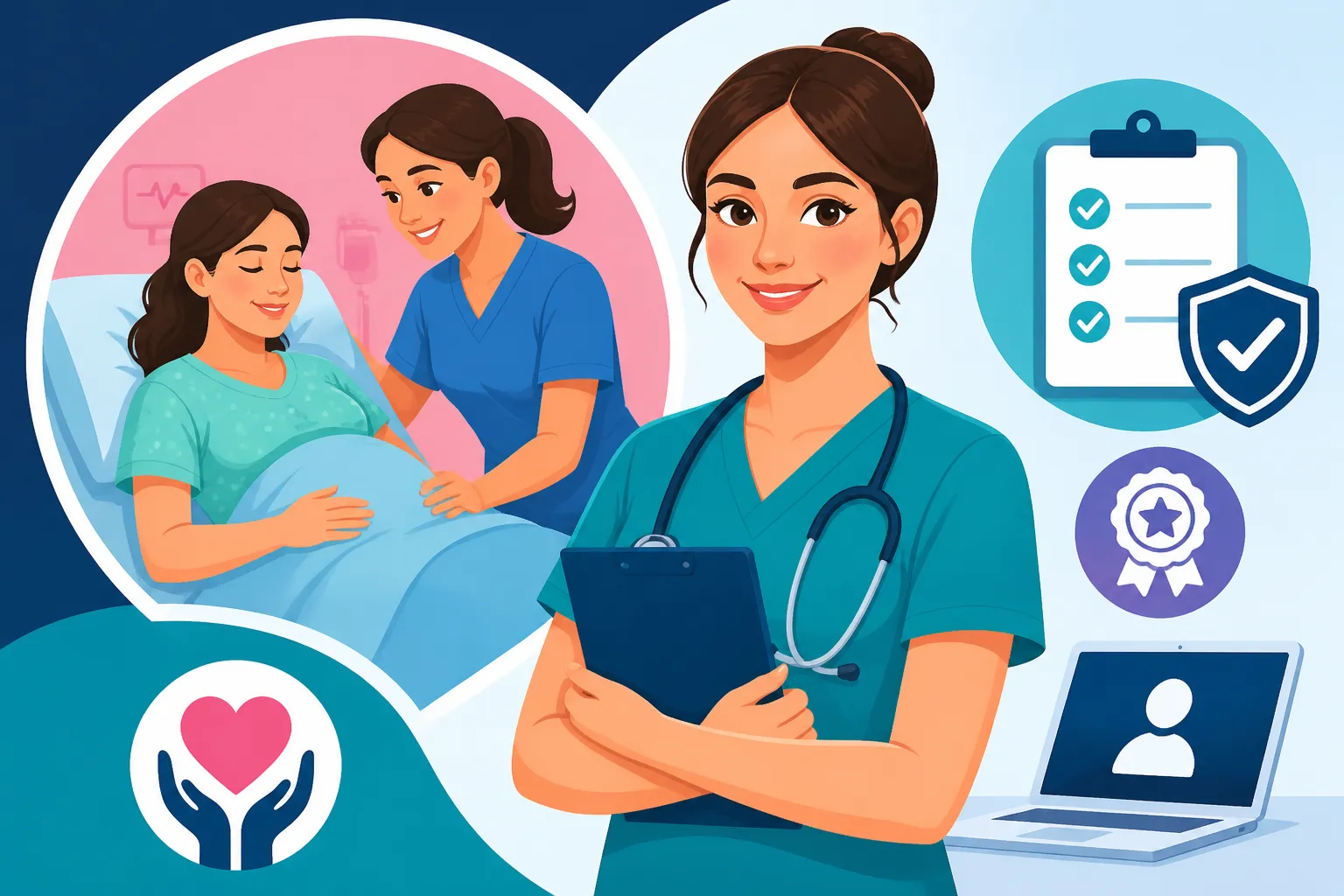
Alright, let's talk about becoming a certified Labor and Delivery (L&D) nurse. If you've ever dreamt of being there for one of life's most profound moments, helping bring new life into the world, then L&D nursing might just be your calling. It's a field filled with immense joy, incredible responsibility, and sometimes, intense challenges. But knowing you're truly prepared for every scenario that walks through those hospital doors—that’s where specialized certification comes in. This guide is all about demystifying the certifications and requirements you’ll need to officially elevate your expertise in this incredibly rewarding area of nursing.
Why Labor and Delivery Nurse Certification Matters
You might already be a phenomenal RN, caring for patients with skill and compassion. But when it comes to a high-stakes, specialized area like Labor and Delivery, proving your dedicated expertise through certification isn't just a nice-to-have; it's a game-changer. It tells everyone—your patients, your colleagues, and even yourself—that you've gone the extra mile.
Elevating Your Professional Standing
Think about it: when a patient is entrusting you with their most vulnerable moments, the birth of their child, they want to know they're in the most capable hands possible. Having a specialized certification, like the RNC-OB, isn't just a fancy set of letters after your name; it's a badge of honor. It signifies that you’ve dedicated time and effort to master the intricacies of obstetric nursing, passing a rigorous exam that validates your specialized knowledge. This distinction enhances your credibility and earns you respect among peers and physicians, positioning you as a true expert in the field. It also demonstrates a commitment to lifelong learning, which is a hallmark of an exceptional nurse.
Enhancing Patient Care and Safety
The direct impact of specialized knowledge on patient outcomes in L&D cannot be overstated. From understanding complex fetal heart tracings to managing emergent situations like hemorrhage or shoulder dystocia, every moment counts. Certification ensures you possess a deep, current understanding of evidence-based practices, protocols, and critical interventions specific to obstetrics. This advanced knowledge translates directly into safer care for both mother and baby. You'll be better equipped to anticipate complications, react swiftly and effectively during crises, and provide the most accurate patient education. Ultimately, a certified L&D nurse contributes significantly to reducing maternal and infant morbidity and mortality rates, making a tangible difference in real lives.
Career Advancement and Opportunities
In today's competitive healthcare landscape, specialized certifications often open doors to new career opportunities and even higher earning potential. Many Magnet-recognized hospitals, known for their nursing excellence, strongly encourage or even require L&D nurses to hold certifications. If you're looking to climb the clinical ladder, take on charge nurse roles, become a preceptor, or move into leadership positions within an L&D unit, certification can give you a significant advantage. It signals to employers that you are a highly motivated, skilled professional who invests in their own development. Beyond that, many employers offer incentives, such as bonuses or tuition reimbursement, for nurses who achieve and maintain specialty certifications, making it a wise investment in your Nursing Degrees and Salaries Explained.
Key Certifications for Labor and Delivery Nurses
When you decide to specialize in Labor and Delivery, there are a few standout certifications that will truly solidify your expertise. These aren't just generic nursing certifications; they are specific to the unique demands of caring for expectant mothers, those in labor, and their newborns.
Inpatient Obstetric Nursing (RNC-OB)
This is arguably the gold standard for L&D nurses. The RNC-OB credential, offered by the National Certification Corporation (NCC), validates the knowledge and skills of registered nurses working in inpatient obstetric settings. It's a comprehensive exam that covers everything from antepartum care and intrapartum management to postpartum care and neonatal stabilization.
To be eligible for the RNC-OB, you generally need an active, unencumbered RN license in the U.S. or Canada, along with specific clinical experience. Typically, the NCC requires at least 2,000 hours of experience in inpatient obstetric nursing within the past 24 months, with a minimum of 200 hours accrued in the 12 months immediately preceding the application. The exam itself is a computer-based test, featuring multiple-choice questions designed to assess critical thinking and clinical judgment across various domains of L&D practice. Preparing for it often involves dedicated study using review courses, textbooks, and practice questions. Many nurses find platforms like Uworld incredibly helpful for honing their test-taking skills and reviewing content areas, as it provides a comprehensive question bank and detailed rationales.
Electronic Fetal Monitoring (C-EFM)
Electronic fetal monitoring (EFM) is a cornerstone of intrapartum care, and being proficient in its interpretation is absolutely critical for L&D nurses. The C-EFM certification, also offered by the NCC, demonstrates advanced knowledge in assessing fetal well-being through EFM. This isn't just about reading squiggly lines; it's about understanding the physiological basis of fetal heart rate patterns, recognizing ominous signs, and knowing when and how to intervene swiftly.
Eligibility for the C-EFM is a bit more flexible, often requiring either an active RN license or proof of professional experience in healthcare that involves EFM. For L&D nurses, this is a natural fit. The exam focuses on principles of fetal heart rate monitoring, interpretation of various patterns, maternal factors affecting the fetus, and appropriate nursing interventions. While it can be taken independently, many L&D nurses pursue it in conjunction with or after achieving their RNC-OB, as it complements that broader certification perfectly. Resources like those from Uworld can be invaluable for mastering the nuances of fetal monitoring interpretation, which is often a challenging but essential skill for L&D nurses.
Maternal Newborn Nursing (RNC-MNN)
While the RNC-OB focuses more broadly on the entire obstetric experience, the RNC-MNN, also from the NCC, zeroes in on the care of mothers and newborns during the postpartum period. This certification is ideal for nurses working on postpartum units, couplet care units, or in nurseries. While not strictly an "L&D" certification in the delivery sense, it's highly relevant for nurses who work across the continuum of maternal-newborn care or whose L&D roles extend into immediate postpartum.
Eligibility requirements are similar to the RNC-OB, focusing on clinical hours in the maternal newborn specialty. For a nurse whose primary role is actively managing labor and birth, the RNC-OB is usually the priority, but the RNC-MNN is an excellent option for those specializing in the initial recovery and bonding phase.
Neonatal Resuscitation Program (NRP)
This isn't a certification in the same vein as the NCC credentials, but it is an absolute requirement for virtually all L&D nurses. The Neonatal Resuscitation Program (NRP) provides critical training in the resuscitation of newborns who are not breathing or are breathing inadequately at birth. Administered by the American Academy of Pediatrics (AAP) and the American Heart Association (AHA), NRP teaches a systematic approach to neonatal resuscitation, including initial steps, positive-pressure ventilation, chest compressions, and medication administration.
Most hospitals require all L&D staff, including nurses, to be current in NRP. This course involves both online learning and hands-on simulation, ensuring that nurses are skilled in rapid assessment and intervention when a newborn needs immediate assistance. Given the unpredictable nature of birth, every L&D nurse must be prepared to resuscitate a newborn at a moment's notice. It's truly life-saving knowledge.
General Requirements to Become a Certified L&D Nurse
Beyond the specific certification exams, there are foundational steps and ongoing commitments that underpin your journey to becoming a certified Labor and Delivery nurse. These requirements ensure that you have a solid educational background, practical experience, and a dedication to continuous learning.
Foundational Nursing Education and Licensure
Before you can even think about specialized L&D certifications, you absolutely need to be a Registered Nurse (RN). This means you'll have earned either an Associate's Degree in Nursing (ADN) or a Bachelor of Science in Nursing (BSN) from an accredited program, and successfully passed the NCLEX-RN exam to obtain your state nursing license. While an ADN can get you in the door to becoming an RN, many hospitals, especially those with Magnet status, prefer or even require nurses to have a BSN. If you started with an ADN, pursuing an Online RN to BSN Programs: Complete Guide can significantly enhance your career prospects and make you a more competitive candidate for specialized roles. For those coming from a non-nursing background but aspiring to become an RN quickly, Accelerated BSN Programs Explained offer an intensive pathway to obtaining that essential BSN.
It's crucial that your RN license is active and unencumbered. Any disciplinary actions or restrictions on your license could prevent you from being eligible for certification. The certification bodies will verify your licensure status, so maintaining a clean record is paramount.
Clinical Experience in Obstetric Nursing
Passing a test is one thing, but true expertise in L&D comes from hands-on experience. This is why all major certifications, like the RNC-OB, have significant clinical experience requirements. For example, the National Certification Corporation (NCC) typically mandates a specific number of hours of direct patient care in the obstetric specialty within a defined timeframe, often 2,000 hours in the past 24 months, with a portion of those hours being recent.
Gaining this experience usually means working as an RN in an L&D unit, a maternal-child unit, or a high-risk antepartum unit. These hours allow you to apply theoretical knowledge, develop critical thinking skills, manage a variety of patient scenarios, and become proficient with L&D specific equipment and procedures. If you're a new grad or just starting in L&D, focus on absorbing everything you can from your preceptors and seasoned colleagues. Ask questions, seek out diverse patient assignments, and volunteer for educational opportunities. This period of accumulating clinical hours is invaluable preparation for both the certification exam and your ongoing career. You might also want to explore How to Become a Labor and Delivery Nurse for a more detailed roadmap.
Continuing Education and Professional Development
Nursing is a field that is constantly evolving, and L&D is no exception. New research, technologies, and best practices emerge regularly. To maintain your certification, you'll be required to engage in ongoing continuing education (CE). This isn't just a hoop to jump through; it's a vital component of staying competent and providing the best possible care.
The NCC, for instance, requires certified nurses to accrue a certain number of continuing education hours in their specialty area every three years. These hours can often be earned through various avenues: attending conferences, participating in online modules, completing journal articles with quizzes, or taking advanced courses. Engaging in professional development also means staying active in professional organizations, reading relevant nursing journals, and participating in unit-based education. This commitment to continuous learning ensures that your knowledge remains current, and your skills are sharp, allowing you to adapt to changes in the field and confidently tackle new challenges. Many of these CEs can even count towards your state RN license renewal as well.
Preparing for Your L&D Certification Exam
Okay, you've got your RN license, you've put in the hours, and now you're ready to tackle that certification exam. This is an exciting step, but it can also feel a bit daunting. Don't worry, with a strategic approach, you'll be well-prepared to ace it.
Utilizing Study Resources and Courses
The first step in effective exam preparation is gathering the right tools. There are numerous resources specifically designed to help L&D nurses prepare for their RNC-OB or C-EFM exams. These include:
- Review Courses: Many organizations, both national and local, offer intensive review courses. These courses often provide a structured overview of the exam content, highlight key areas, and offer test-taking strategies. Some are in-person, while others are available online, offering flexibility for working nurses.
- Textbooks and Study Guides: Specialty textbooks on obstetric nursing or fetal monitoring are essential for foundational knowledge. Look for comprehensive study guides specifically for the RNC-OB or C-EFM exams, as these are tailored to the exam's blueprint.
- Online Learning Platforms: This is where modern tools really shine. Platforms like Uworld are highly recommended by many nurses for their extensive question banks and detailed rationales. Uworld, for example, goes beyond just telling you the right answer; it explains why each option is correct or incorrect, helping you understand the underlying concepts. This active learning approach is incredibly effective for retaining information and improving critical thinking. They often simulate the exam environment, which helps reduce test-day anxiety.
- Professional Organizations: Organizations like the Association of Women's Health, Obstetric and Neonatal Nurses (AWHONN) often provide educational materials, practice guidelines, and sometimes even their own review courses.
When choosing resources, look for those that align with the specific certification body's exam blueprint (e.g., NCC's content outline). Quality over quantity is key; a few comprehensive, high-quality resources are more effective than a stack of mediocre ones.
Practice Exams and Question Banks
You can read all the textbooks in the world, but until you start answering practice questions, you won't truly understand how the information will be tested. Practice exams and robust question banks are absolutely crucial for several reasons:
- Familiarization with Exam Format: Certification exams have a particular structure and question style. Practice tests help you become comfortable with the multiple-choice format, how questions are phrased, and how to approach clinical scenarios presented in a test setting.
- Identifying Knowledge Gaps: When you answer practice questions, you quickly see where your knowledge is strong and where it needs work. Don't just look at the score; analyze the questions you got wrong. Is there a specific topic (e.g., postpartum hemorrhage, preterm labor, interpreting variable decelerations) that consistently trips you up? This helps you prioritize your study time.
- Improving Test-Taking Strategies: Practice helps you develop effective strategies for managing time, eliminating distractors, and tackling complex questions. This is particularly important for high-stakes exams where every second counts.
- Building Confidence: The more practice questions you do and the more comfortable you become with the material, the more confident you'll feel walking into the actual exam.
Again, this is where resources like Uworld really shine. Their extensive question banks are often designed to mimic the difficulty and style of the actual certification exams. By working through hundreds, if not thousands, of questions, you'll build the stamina and critical thinking skills needed for success. Regularly reviewing the rationales, even for questions you answered correctly, reinforces your understanding and solidifies the information.
Developing a Study Schedule
Let's be real: as a working nurse, finding time to study for a certification exam is tough. You're juggling shifts, family commitments, and maybe even trying to squeeze in some semblance of a social life. This is why a realistic and consistent study schedule is non-negotiable.
- Assess Your Time: Look at your work schedule, family obligations, and personal downtime. Identify realistic blocks of time you can dedicate to studying each week. Even 30-60 minute chunks consistently can add up.
- Set Clear Goals: Don't just say "I'll study." Instead, say "I will complete two chapters on intrapartum care and 50 practice questions this week." Specific, measurable goals help keep you on track.
- Break Down the Content: The RNC-OB and C-EFM cover a lot of ground. Don't try to cram it all at once. Break the exam blueprint into manageable sections and tackle them systematically.
- Utilize Downtime: Can you listen to a review podcast on your commute? Review flashcards during your lunch break? Every little bit helps.
- Be Flexible, But Consistent: Life happens, and you might miss a study session. Don't beat yourself up; just adjust and get back on track. Consistency is more important than perfection.
- Schedule Breaks: Your brain needs downtime to process information. Factor in regular breaks and make sure you're still getting adequate rest. Burnout is real, especially for nurses!
Remember that pursuing additional credentials, like completing an Online RN to BSN Program, often requires similar disciplined study habits. The skills you develop in organizing your time and materials for certification will serve you well in any advanced nursing education you pursue. Is an RN to BSN Worth It? Absolutely, for career growth and opening doors to further specialization!
Here's a quick comparison of the two primary L&D certifications:
| Feature | Inpatient Obstetric Nursing (RNC-OB) | Electronic Fetal Monitoring (C-EFM) |
|---|---|---|
| Issuer | National Certification Corporation (NCC) | National Certification Corporation (NCC) |
| Eligibility | Active RN license; 2,000 hrs inpatient obstetric nursing experience | Active RN license OR relevant professional healthcare experience |
| Focus | Comprehensive obstetric care (ante, intra, post-partum, neonate) | Interpretation and application of electronic fetal monitoring |
| Primary Audience | L&D, antepartum, postpartum, high-risk OB nurses | L&D nurses, antepartum nurses, midwives, physicians |
| Renewal Cycle | 3 years (requires CE in specialty) | 3 years (requires CE in specialty) |
| Prerequisites | RN licensure, specified clinical hours | RN licensure (or equivalent), clinical exposure to EFM |
Getting certified as an L&D nurse is a profound statement about your dedication to excellence in maternal and infant care. It's a challenging but incredibly rewarding path that will deepen your knowledge, enhance your skills, and ultimately allow you to make an even greater difference in the lives of the families you serve.
Disclaimer
Please note that this content is intended for informational purposes only and does not constitute professional advice. While we strive to provide accurate and up-to-date information, nursing certification requirements, program details, and career outlooks can change. Always verify information directly with the National Certification Corporation (NCC), specific academic institutions, and your state's Board of Nursing. Individual results may vary, and successful completion of a program or certification does not guarantee employment or a specific salary outcome.