Nursing Degrees and Salaries Explained
Navigating the world of nursing degrees can feel like trying to untangle a particularly stubborn IV line – confusing, complex, and full of different pathways. Many aspiring and current nurses grapple with understanding how each degree level impacts their career trajectory, earning potential, and the types of roles they can pursue. This comprehensive guide is here to demystify the various nursing degrees and explain precisely how each one influences your salary and professional opportunities in the dynamic healthcare landscape.
Understanding the Foundation of Nursing Degrees
Before you can build a towering career in nursing, you need a solid foundation. The journey often begins with an entry-level degree, but it's crucial to understand that these are just starting points. The healthcare field is constantly evolving, and so are the expectations for nursing professionals. Getting a clear picture of what each foundational degree entails is the first step toward making informed decisions about your future.
Associate Degree in Nursing ADN
The Associate Degree in Nursing (ADN) has historically been a popular entry point into registered nursing, offering a quicker and often more affordable path to becoming an RN. Typically, an ADN program takes about two years to complete, often at a community college. Graduates of ADN programs are eligible to sit for the NCLEX-RN exam and, upon passing, can begin working as registered nurses.
While the ADN provides essential bedside skills and clinical knowledge, its scope is generally focused on direct patient care in structured settings like hospitals, clinics, and long-term care facilities. Many nurses value the ADN for its ability to get them into the workforce quickly, allowing them to gain practical experience sooner. However, it’s worth noting that the healthcare industry, especially hospitals, increasingly favors nurses with a Bachelor of Science in Nursing (BSN), sometimes even making it a requirement for employment or advancement.
When it comes to salary, ADN-prepared nurses typically earn a competitive wage, especially when they first enter the field. The average ADN salary can vary significantly based on location, years of experience, and the healthcare setting. For instance, an entry-level ADN nurse in a rural community hospital might start around $55,000-$65,000 annually, while an ADN nurse with several years of experience working nights in a busy urban emergency department could earn upwards of $75,000-$85,000. It’s important to remember that while the initial pay might be similar to a new BSN graduate in some areas, the long-term earning potential and career mobility for ADN nurses can be more limited without further education.
Bachelor of Science in Nursing BSN
The Bachelor of Science in Nursing (BSN) is rapidly becoming the gold standard for registered nurses. A BSN program typically takes four years to complete, though many ADN-prepared nurses pursue an accelerated path through Online RN to BSN Programs: Complete Guide to bridge the gap. This degree provides a more comprehensive education than the ADN, delving deeper into areas like public health, leadership, research, critical thinking, and case management. The curriculum is designed to prepare nurses for a wider range of roles and to adapt to the complex demands of modern healthcare.
Many hospitals, particularly those seeking or holding Magnet Recognition from the American Nurses Credentialing Center (ANCC), now require or strongly prefer a BSN for all new hires. This preference stems from research consistently showing that BSN-prepared nurses are associated with improved patient outcomes, lower mortality rates, and fewer medication errors. Earning a BSN isn't just about meeting a requirement; it's about gaining a more robust skill set that makes you a more versatile and impactful clinician. For nurses balancing work and school, exploring options like Accelerated RN to BSN Programs can be a game-changer, allowing them to earn their degree without putting their careers on hold.
From a salary perspective, BSN-prepared nurses often start at a higher pay rate than their ADN counterparts and tend to see greater salary growth over their careers. The average BSN salary can range significantly, but new BSN graduates might expect to start around $65,000-$75,000 annually, with experienced BSN nurses easily exceeding $85,000-$100,000, particularly in high-demand specialties or regions like California or New York. Beyond direct pay, having a BSN opens doors to specialized positions, leadership roles, and opportunities in community health or case management that might not be accessible with an ADN, ultimately leading to a higher overall Nursing Salary by Degree Level. The investment in a BSN truly pays off in terms of career longevity, flexibility, and financial reward.
Advancing Your Career with Graduate-Level Degrees
For many nurses, the BSN isn't the finish line, but a launchpad for even greater professional heights. Graduate-level nursing degrees empower nurses to specialize, take on leadership roles, or even become independent healthcare providers. This advancement not only deepens expertise but also significantly broadens earning potential and career autonomy.
Master of Science in Nursing MSN
The Master of Science in Nursing (MSN) is a pivotal degree for nurses looking to advance their careers beyond traditional bedside roles. Typically requiring two to three years of study beyond a BSN, an MSN opens up a multitude of specialized pathways. These programs prepare nurses for advanced practice roles such as Nurse Practitioners (NPs), Clinical Nurse Specialists (CNS), Certified Nurse Midwives (CNM), and Certified Registered Nurse Anesthetists (CRNAs). It also qualifies nurses for leadership positions like Nurse Administrators, Nurse Educators, and those in Nursing Informatics. The beauty of the MSN is its versatility; whether you're passionate about direct patient care at an advanced level or prefer to shape nursing practice through education, policy, or management, there's an MSN specialization for you.
Online MSN programs have become incredibly popular, offering flexibility for working nurses. You can explore a wide array of options in our Online MSN Programs: Complete Guide, many of which are designed to accommodate demanding schedules. The coursework dives deep into advanced health assessment, pharmacology, pathophysiology, and specialized clinical theories, preparing graduates to manage complex patient cases, lead healthcare teams, or design and implement educational programs. Clinical hours are a significant component of most MSN programs, especially for advanced practice specialties, providing hands-on experience under the guidance of experienced preceptors.
The financial rewards for MSN-prepared nurses are substantial. Nurse Practitioners, for instance, are among the Highest-Paying Nursing Careers, with average salaries often well over $120,000 per year, and specialists like Psychiatric Mental Health Nurse Practitioners (PMHNPs) or Adult-Gerontology Acute Care Nurse Practitioners (AGACNPs) can earn even more. Nurse Anesthetists (CRNAs), who typically require an MSN or DNP, consistently rank as one of the highest-paid professions in healthcare, with salaries often exceeding $180,000 annually. Even in non-clinical roles like Nurse Educator or Nurse Administrator, an MSN can lead to salaries comfortably in the $80,000-$120,000 range, depending on experience and location. The investment in an MSN degree offers a clear and significant return on investment.
Doctor of Nursing Practice DNP
The Doctor of Nursing Practice (DNP) is a practice-focused doctoral degree that represents the highest level of clinical nursing education. While the MSN prepares nurses for advanced practice, the DNP deepens that preparation, focusing on leadership, evidence-based practice, healthcare policy, quality improvement, and systems leadership. It's designed for nurses who want to translate research into practical application, drive change in healthcare systems, and optimize patient outcomes on a broader scale. Many advanced practice specialties, particularly CRNA and some NP roles, are trending towards the DNP as the entry-level requirement, a shift that recognizes the increasing complexity of healthcare and the need for nurses with terminal clinical degrees.
A DNP program typically takes 18-36 months for post-MSN students or 3-4 years for post-BSN students, requiring extensive clinical hours and a final DNP project. This project often involves implementing a new protocol, evaluating a healthcare initiative, or developing a quality improvement plan within a clinical setting. This hands-on, systems-level approach distinguishes the DNP from a PhD, which is research-focused. For those wondering about the difference, our guide on MSN vs DNP: Which to Choose provides a detailed comparison. Nurses pursuing a DNP are not just treating patients; they are influencing the systems that deliver patient care.
Earning a DNP generally translates to higher earning potential, especially in leadership and advanced practice roles. While the salary difference between an MSN and DNP for a Nurse Practitioner might not be drastic in all areas immediately upon graduation, the DNP often provides a competitive edge for senior positions, director roles, and academic appointments. For instance, a DNP-prepared Nurse Practitioner might command a higher salary in large hospital systems or academic medical centers, often in the range of $130,000-$160,000+, depending on specialty and location. CRNAs with a DNP will also see their salaries at the top end of the scale, often exceeding $200,000. Furthermore, DNP-prepared nurses are highly sought after for roles in healthcare administration, policy development, and clinical instruction, where their expertise in system-level improvements is invaluable.
Doctor of Philosophy in Nursing PhD
Distinct from the DNP, the Doctor of Philosophy (PhD) in Nursing is a research-focused doctoral degree. This path is for nurses who are passionate about generating new knowledge, conducting scientific inquiry, and contributing to the theoretical foundation of nursing science. While DNP-prepared nurses apply existing research to improve practice, PhD-prepared nurses create the research that informs future practice. These programs are rigorous, typically taking 4-7 years to complete, involving extensive coursework in research methods, statistics, theory development, and culminate in a dissertation.
PhD programs are primarily housed in universities and are designed to cultivate nurse scientists and scholars. Graduates often pursue careers in academia as professors, researchers, or deans of nursing schools. They might work for governmental agencies like the National Institutes of Health, lead research initiatives at major medical centers, or contribute to public health policy development. Their work is crucial for advancing the nursing profession as a whole, from understanding complex health phenomena to developing innovative interventions.
While a PhD in nursing may not directly lead to the same high clinical salaries as an advanced practice DNP or MSN, the earning potential is significant and stable, often tied to academic positions or research grants. A nurse with a PhD working as a university professor can expect salaries ranging from $80,000 to over $150,000, depending on their rank, institution, and research funding. Those in leadership roles within academia or research institutes, such as research directors or deans, can command even higher salaries. The value of a PhD is often measured not just in direct financial compensation but in its profound impact on the future of nursing and healthcare through scientific discovery and the education of the next generation of nurses.
Exploring Specialized Nursing Certifications and Their Impact
Beyond degrees, specialized certifications are another powerful way for nurses to demonstrate expertise, enhance their skills, and boost their earning potential. Think of them as badges of honor that tell the world you've gone the extra mile in a particular area of nursing.
The Value of Certifications
Nursing certifications are formal recognitions that a nurse has met specific standards of knowledge and experience in a particular specialty area. These aren't just fancy pieces of paper; they signify a commitment to excellence and a deep understanding of a specialized field. For instance, a Critical Care Registered Nurse (CCRN) certification indicates expertise in managing critically ill patients, while a Certified Emergency Nurse (CEN) demonstrates proficiency in emergency care. Achieving these certifications typically involves meeting eligibility criteria (such as a certain number of practice hours in the specialty) and passing a rigorous examination. Organizations like the American Nurses Credentialing Center (ANCC) and the American Association of Critical-Care Nurses (AACN) are prominent certification bodies.
The value of certifications extends beyond personal validation. For employers, certified nurses represent a higher level of competence and dedication, which can translate into better patient outcomes and a stronger reputation for the healthcare institution. Many hospitals actively encourage and even incentivize their nurses to obtain certifications, sometimes offering reimbursement for exam fees or a differential pay increase. For nurses themselves, certifications can boost confidence, provide a sense of accomplishment, and ensure they are up-to-date with the latest evidence-based practices in their specialty. They also demonstrate to potential employers that you are serious about your career and committed to continuous learning.
From a salary perspective, certifications often lead to a pay bump or make you a more competitive candidate for higher-paying positions. While the exact increase varies, it's not uncommon for certified nurses to receive an additional $1,000 to $5,000 per year, or even more, depending on the certification and employer. For example, a nurse with specialized experience and a certification in areas like oncology (OCN) or medical-surgical nursing (CMSRN) might see a noticeable difference in their total compensation. Moreover, some advanced roles or specific units within a hospital might prioritize or even require certain certifications, making them essential for career advancement and access to the Highest-Paying Nursing Specialties. Preparing for these exams often involves dedicated study, and resources like Uworld's comprehensive question banks can be invaluable for success.
Popular Certifications and Associated Pay Bumps
There are hundreds of nursing certifications available, catering to almost every imaginable specialty. Some of the most popular and impactful for career progression and salary include:
- Critical Care Registered Nurse (CCRN): For nurses working in ICUs, CCUs, and other critical care settings.
- Certified Emergency Nurse (CEN): For RNs in emergency departments.
- Oncology Certified Nurse (OCN): For nurses specializing in cancer care.
- Certified Nurse Educator (CNE): For nurses in academic or staff development roles.
- Nursing Informatics Certification (RN-BC): For nurses working with healthcare technology and data.
- Advanced Cardiac Life Support (ACLS) / Pediatric Advanced Life Support (PALS): While often considered standard for certain units, these also demonstrate crucial life-saving skills.
The financial return on investment for these certifications can be significant. For instance, a critical care nurse who obtains their CCRN might see an immediate pay increase of 2-5% or more, in addition to opening doors to charge nurse positions or specialized critical care transport teams. A nurse pursuing a career in nursing education, by obtaining a CNE, becomes far more marketable to universities and hospital education departments, often commanding a higher starting salary than non-certified educators. Similarly, nurses in informatics with the RN-BC certification are in high demand and their specialized skill set in technology and data management often translates to an impressive Nursing Informatics Salary, easily pushing into the six figures.
Beyond the direct pay bump, certifications contribute to your overall professional profile, making you a more attractive candidate for promotions, travel nursing assignments, and even advanced practice programs. They showcase initiative, dedication, and a commitment to lifelong learning, which are qualities highly valued in the healthcare industry. Many nurses use certification exam preparation, often leveraging platforms like Uworld, not just for the exam itself but as a way to reinforce their knowledge and stay current with best practices in their field. It's a strategic move that can dramatically enhance your career trajectory and earning power.
How Experience and Location Shape Your Earning Potential
It's no secret that where you live and how long you've been doing something can significantly influence your paycheck. In nursing, these factors play a massive role in shaping your overall earning potential. The dynamic nature of healthcare means that supply, demand, and economic conditions vary wildly from one region to another, and your years of expertise are often rewarded handsomely.
The Role of Experience in Nursing Salaries
Just like in many other professions, a nurse's salary tends to grow significantly with experience. New graduate nurses, fresh out of their ADN or BSN programs, will naturally start at the lower end of the salary scale. These entry-level positions, while crucial for gaining foundational skills, typically command average wages. However, as nurses accumulate experience—say, after 2-5 years—their salaries often see a noticeable increase. This is because experienced nurses require less supervision, can handle more complex cases, and often take on mentoring roles for newer staff. They've honed their critical thinking, clinical judgment, and time management skills, making them invaluable assets to any healthcare team.
Beyond the 5-year mark, salaries continue to climb, albeit often at a slower pace, for general bedside roles. However, experience also opens the door to specialized units, charge nurse positions, and opportunities to become preceptors for new graduates, all of which can come with additional compensation. For example, an RN with 10-15 years of experience might transition from a general medical-surgical floor to an Intensive Care Unit (ICU) or Emergency Room (ER), where the demand for specialized skills and the intensity of care often warrant higher pay. This kind of specialized experience is not just about time; it's about the depth and breadth of clinical situations encountered, the mastery of complex procedures, and the ability to autonomously manage challenging patient populations.
Furthermore, long-term experience is essential for moving into leadership roles, advanced practice nursing, or even administrative positions. A seasoned RN with 15-20 years under their belt might become a nurse manager, a clinical nurse specialist, or pursue an advanced degree to become a Nurse Practitioner. Each of these transitions leverages their extensive experience to take on greater responsibility and, commensurately, earn a much higher income. This upward trajectory underscores the importance of a long-term career plan that incorporates continuous learning and strategic career moves, making your experience your most valuable asset. Our guide on How Experience Affects Nurse Pay offers more detailed insights.
Geographic Variations in Nurse Salaries
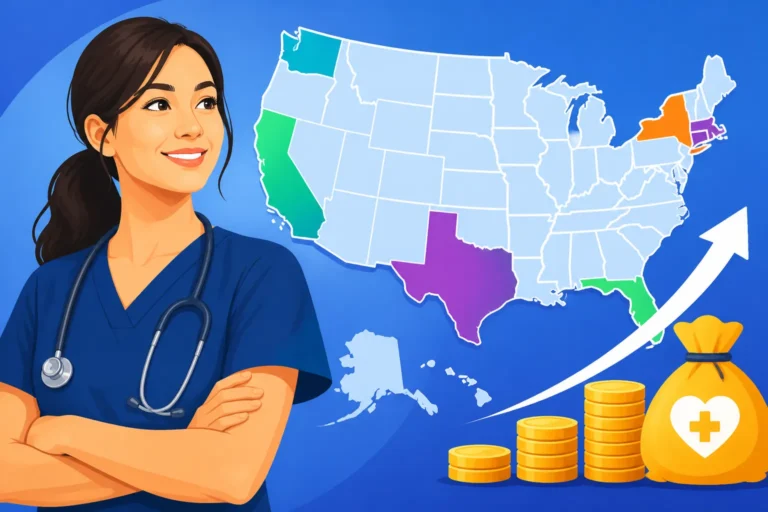
Where you live can have a dramatic impact on your nursing salary, sometimes more so than years of experience or even degree level. The cost of living, the density of healthcare facilities, and the overall demand for nurses in a particular region all play a significant role. For example, states with a high cost of living and robust healthcare systems, such as California, New York, Hawaii, and Massachusetts, consistently rank among the Highest-Paying States for Nurses. A staff RN in Los Angeles or San Francisco might earn well over $100,000 annually, while a nurse with similar experience and credentials in a lower-cost-of-living state like Alabama or Mississippi might earn $60,000-$70,000.
It's not just about states; even within a state, there can be significant differences between urban and rural areas. Major metropolitan areas tend to offer higher salaries due to a greater concentration of large hospitals, specialized medical centers, and a higher demand for nursing talent. For instance, a nurse working in New York City will likely earn more than a nurse in a small town upstate. However, it’s crucial to balance this higher pay with the local cost of living. While a nurse in California might earn $120,000, that salary might only go as far as $80,000 in a more affordable state due to housing costs, taxes, and other expenses. Therefore, understanding the concept of Nurse Salaries vs Cost of Living is essential for making informed career and relocation decisions.
The demand for nurses also influences local salaries. Areas experiencing nursing shortages or those with a high concentration of specialized medical facilities (like academic medical centers or cancer treatment centers) often offer more competitive wages and benefits to attract and retain talent. Travel nursing is a popular option for nurses looking to capitalize on these geographic pay differentials. A travel nurse can take on temporary assignments in high-demand areas, often earning significantly more than staff nurses in those same locations, sometimes as much as $2,000-$3,000+ per week for certain contracts, though this fluctuates based on need and location. This flexibility allows nurses to explore different regions and maximize their earnings by strategically choosing assignments.
Understanding the Highest-Paying Nursing Careers
For nurses driven by financial goals or a desire to work at the pinnacle of their profession, certain career paths offer significantly higher earning potential. These roles often require advanced degrees, specialized certifications, and extensive experience. Let's delve into the top-tier earning opportunities within nursing.
Top Earning Advanced Practice Registered Nurses APRNs
When we talk about the highest-paying nursing careers, the Advanced Practice Registered Nurse (APRN) roles immediately come to mind. These highly skilled professionals have earned graduate-level degrees (MSN or DNP) and are certified in specific patient populations or specialties, giving them greater autonomy and scope of practice.
-
Certified Registered Nurse Anesthetists (CRNAs): Consistently rank among the highest-paid healthcare professionals overall, not just within nursing. CRNAs administer anesthesia and related care before, during, and after surgical, obstetrical, and trauma procedures. The extensive education and high-stakes nature of their work translate into impressive salaries, often averaging over $180,000 to $200,000 annually, with many earning upwards of $250,000 depending on location, practice setting, and experience. For a deeper dive, check out our CRNA Salary Explained guide.
-
Nurse Practitioners (NPs): With various specializations, NPs provide comprehensive primary, acute, and specialty healthcare. Their salaries vary by specialty, but many command six-figure incomes.
- Psychiatric Mental Health Nurse Practitioners (PMHNPs): These NPs are in incredibly high demand, particularly with the increasing awareness and need for mental health services. They assess, diagnose, and treat mental health conditions, often prescribing medication and providing therapy. PMHNP salaries frequently range from $120,000 to $160,000+, reflecting the critical nature of their work and the shortage of providers.
- Adult-Gerontology Acute Care Nurse Practitioners (AGACNPs): Working with acutely ill adult and elderly patients, often in hospital settings like ICUs or emergency rooms. Their specialized skills in critical care command excellent compensation, typically in the $115,000 to $150,000 range.
- Family Nurse Practitioners (FNPs): While FNPs might have a slightly lower average salary than some other NP specialties, they remain very well compensated, usually earning between $100,000 and $130,000. Their broad scope in family care makes them versatile and highly sought after.
- Certified Nurse Midwives (CNMs): Providing comprehensive care to women throughout their lifespan, including gynecological exams, family planning services, and prenatal, labor and delivery, and postpartum care. CNM salaries often fall in the range of $100,000 to $130,000.
The demand for APRNs is projected to grow significantly, ensuring continued high earning potential and job security. If you're considering this path, our How to Become a Nurse Practitioner guide is a great place to start.
High-Paying Non-Bedside and Leadership Roles
Not all high-paying nursing careers involve direct patient care in a clinical setting. Many nurses leverage their clinical knowledge, leadership skills, and advanced education to excel in administrative, educational, or specialized consulting roles that offer substantial salaries and often a better work-life balance.
-
Nurse Executives and Administrators: These roles are at the top of the nursing organizational chart, overseeing entire departments, hospitals, or healthcare systems. They are responsible for strategic planning, budgeting, personnel management, and ensuring quality patient care delivery. To become a Nurse Administrator, you typically need an MSN or DNP, coupled with extensive clinical and leadership experience. Salaries for nurse executives, such as Chief Nursing Officers (CNOs) or Vice Presidents of Nursing, can range from $120,000 to well over $200,000, especially in large healthcare systems. Our Nurse Administrator Salary Explained delves into this further.
-
Nursing Informaticists: This is a growing field for nurses who love technology and data. Nursing informaticists bridge the gap between clinical practice and information technology, designing, implementing, and optimizing electronic health records (EHRs) and other healthcare IT systems to improve patient care and efficiency. An MSN or DNP in Nursing Informatics is often preferred, along with certifications like the ANCC's Informatics Nursing Certification. Given the critical role of technology in modern healthcare, these professionals are in high demand, with salaries typically ranging from $90,000 to $140,000.
-
Legal Nurse Consultants (LNCs): LNCs apply their nursing expertise to the legal field, working with attorneys on medical-legal cases. They review medical records, interpret medical jargon, identify deviations from standards of care, and serve as expert witnesses. While some LNCs are self-employed consultants, others work for law firms or insurance companies. An LNC typically needs a BSN and significant clinical experience, with certification as an LNC often boosting their marketability. Salaries for LNCs can vary widely depending on their employment status and case load, but experienced consultants can earn upwards of $75,000 to $150,000+ annually, often on a per-case or hourly basis.
These roles demonstrate that a nursing career offers diverse opportunities for growth and high earnings, extending well beyond the traditional bedside. For those looking to increase their earning potential, exploring these non-clinical, leadership, or niche specialties with additional education and certifications is a powerful strategy.
Table: Nursing Degrees, Typical Roles, and Average Salary Ranges
To give you a quick overview, here's a table summarizing the different nursing degrees, the typical roles they prepare you for, and their average salary ranges. Keep in mind that these are averages and actual salaries can vary significantly by location, experience, and employer.
| Degree Level | Typical Duration | Common Roles | Average Salary Range (Annual) | Key Career Advancement |
|---|---|---|---|---|
| ADN | 2 years | Staff RN (hospital, clinic, long-term care) | $60,000 – $80,000 | RN to BSN pathway |
| BSN | 4 years (or 1-2 years post-ADN) | Staff RN (hospital, clinic, public health), Charge Nurse, Case Manager | $70,000 – $95,000 | MSN, leadership roles |
| MSN | 2-3 years (post-BSN) | Nurse Practitioner (FNP, PMHNP, AGACNP), Clinical Nurse Specialist, Nurse Educator, Nurse Administrator, Nurse Informaticist | $90,000 – $150,000+ | DNP, senior leadership, specialized NP roles |
| DNP | 3-4 years (post-BSN); 1-2 years (post-MSN) | CRNA, advanced Nurse Practitioner, Nurse Executive, Healthcare Systems Leader, Clinical Faculty | $120,000 – $200,000+ | Executive leadership, policy-making, academic leadership |
| PhD | 4-7 years (post-BSN/MSN) | Nurse Researcher, University Professor, Dean of Nursing, Policy Analyst | $80,000 – $150,000+ | Research leadership, academic administration |
Strategies to Maximize Your Nursing Salary and Career Growth
You've worked hard to become a nurse, and it's only natural to want to maximize your earning potential and ensure a fulfilling career path. While degrees and experience are foundational, there are proactive steps you can take to continuously grow your salary and open up new opportunities.
Continuous Education and Professional Development
The healthcare field is ever-changing, and staying stagnant is not an option for career growth. Investing in continuous education is arguably the most impactful strategy for boosting your nursing salary. If you started with an ADN, pursuing your Online RN to BSN Programs: Complete Guide is a clear next step, as it unlocks higher pay scales and more diverse roles. Many hospitals now offer tuition reimbursement programs, making the financial burden of going back to school more manageable. For instance, many major hospital systems across the country provide up to $5,250 per year in tuition assistance, and sometimes even more for critical-need areas or advanced degrees. This employer tuition assistance is a significant benefit that can drastically reduce the How Much Does an RN to BSN Cost equation.
Beyond the BSN, consider pursuing an MSN or DNP. As discussed, these advanced degrees open doors to lucrative advanced practice and leadership roles. If you're leaning towards an advanced practice role, researching Best Online Nurse Practitioner Programs can help you find a program that fits your lifestyle and career goals. Don't forget about professional development courses, workshops, and conferences. These opportunities keep you updated on the latest evidence-based practices, introduce you to new technologies, and expand your professional network. Joining professional nursing organizations (like the American Nurses Association or specialty-specific associations) often provides access to these resources, mentorship opportunities, and leadership development programs. These connections can be just as valuable as formal education in opening doors.
Negotiating Your Salary and Benefits
Many nurses, especially new graduates, shy away from salary negotiation, but it's a critical skill that can significantly impact your lifetime earnings. When you receive a job offer, remember that the initial salary presented is often just a starting point. Do your research on average salaries for your role, experience level, and geographic area using resources like the Bureau of Labor Statistics or salary aggregators. Understand the market rate for a BSN Salary Explained in your specific region. Be prepared to articulate your value, highlighting your unique skills, experiences, and any certifications you hold. If you used a platform like Uworld to confidently pass your NCLEX or a specialty certification exam, mention how that demonstrates your commitment to excellence and readiness for the role.
Beyond the base salary, consider the entire compensation package. This includes health insurance, retirement plans (401k matching), paid time off, continuing education stipends, and shift differentials for working nights, weekends, or holidays. These differentials can add thousands to your annual income. For example, some hospitals offer an additional $5-$10 per hour for night shifts or weekend shifts. If you're offered a lower base salary but an excellent benefits package, calculate the total value before making a decision. Don't be afraid to ask for a higher starting salary, more vacation time, or a sign-on bonus. Even a small increase early in your career can compound significantly over the years. Our guide on Nurse Salary Negotiation Tips provides actionable advice for these crucial conversations.
Exploring Diverse Career Paths
Nursing is incredibly diverse, offering a vast array of career paths beyond traditional hospital bedside care. Don't limit yourself to what you know; actively explore different specialties and settings that might offer higher pay, better work-life balance, or unique challenges that align with your passions.
-
Travel Nursing: If you're flexible and enjoy new experiences, travel nursing can be incredibly lucrative. Travel nurses fill short-term staffing needs across the country, often earning premium pay and housing stipends. Depending on the demand and location, travel nurses can earn significantly more than staff nurses, especially during critical shortages. This path allows you to leverage your skills in high-demand areas and potentially earn a six-figure income in a single year.
-
Remote and Non-Bedside Roles: The pandemic accelerated the growth of remote nursing positions, such as telehealth nurses, case managers for insurance companies, or utilization review nurses. These roles often offer more predictable hours and the convenience of working from home, and many are well-compensated. Other non-bedside roles include occupational health nursing, school nursing, or working in ambulatory care clinics, which can also offer more regular schedules compared to acute care.
-
Entrepreneurial Ventures: For the ambitious nurse, starting your own business can lead to significant income. This could involve becoming an independent legal nurse consultant, opening a nursing education and training business, offering health coaching, or even creating nursing content or products. Your deep clinical knowledge and problem-solving skills make you uniquely qualified for such ventures.
By strategically pursuing higher education, continually developing your skills, confidently negotiating your worth, and exploring the diverse avenues available, you can truly shape a rewarding and financially prosperous nursing career.
Disclaimer
The information provided in this article is for general informational purposes only and does not constitute professional career, financial, or educational advice. While we strive to provide accurate and up-to-date information, nursing salaries, degree requirements, and career opportunities can vary significantly based on location, employer, experience, and the ever-evolving healthcare landscape. Always consult with academic advisors, career counselors, and financial experts for personalized guidance.