RN to BSN Direct Care Component Explained
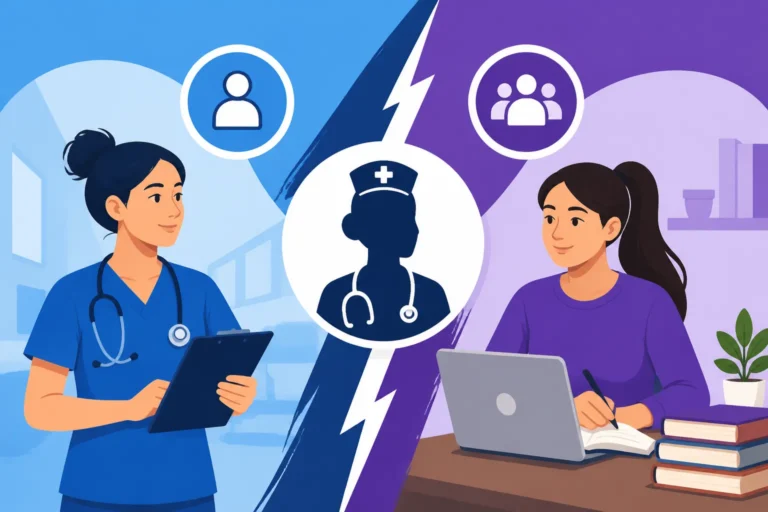
One of the biggest anxieties for working nurses considering an online RN to BSN program is the thought of going back to clinicals. After all, you're already a practicing RN, right? The idea of juggling family, work, and then adding traditional hospital shifts to your plate can feel utterly overwhelming. This guide is here to untangle the often-misunderstood "direct care component" of online RN to BSN programs, showing you what it truly entails and how you can successfully navigate it without putting your life on hold.
Understanding the Direct Care Component in RN to BSN Programs
When you hear "direct care," your mind probably jumps straight to those long, sometimes grueling, clinical rotations from your ADN days. You might be picturing yourself back in a hospital setting, performing skills checks and shadowing preceptors, all while you’re already working full-time on another unit. It’s a completely natural assumption, and honestly, it’s a valid concern for any busy RN contemplating further education. Many nurses already have a handle on direct patient care in acute settings. However, the direct care component in an RN to BSN program often looks quite different, focusing less on basic skills and more on expanding your understanding of nursing leadership, community health, and evidence-based practice.
Redefining Clinicals for the BSN-Prepared Nurse
For an RN to BSN program, the "clinical" or "direct care" component isn't about repeating what you already know how to do. You've already proven your competency at the bedside by passing the NCLEX and working as a licensed registered nurse. Instead, these experiences are designed to broaden your perspective beyond individual patient care within a hospital's four walls. They aim to help you understand healthcare delivery on a larger scale, focusing on populations, communities, and leadership roles that impact patient outcomes indirectly but powerfully. It's about developing the holistic nursing perspective that a BSN emphasizes.
For instance, rather than administering medications in an ICU, you might be involved in a community health project, assessing health disparities in a local neighborhood, or developing health education materials for a specific patient population. This shift in focus is crucial because the BSN curriculum builds upon your associate's degree or diploma education, pushing you into areas like critical thinking, research utilization, and policy advocacy. The direct care component serves as a practical application of these advanced concepts. You're not just learning about population health; you're actively engaging with it, making a tangible difference in a community setting, which can be incredibly rewarding.
Why Direct Care is a Foundational Requirement
Even though you’re already an RN, the direct care component remains a fundamental part of the BSN curriculum due to accreditation standards set by bodies like the CCNE vs ACEN Accreditation Explained. These organizations ensure that BSN graduates meet specific competencies that go beyond entry-level ADN preparation. They want to see that you can apply theoretical knowledge in real-world settings, demonstrating skills in leadership, community assessment, health promotion, and disease prevention, which are hallmarks of professional nursing practice at the baccalaureate level.
Imagine a situation where a nurse wants to implement a new patient education protocol for diabetic patients. While their ADN prepared them to provide direct care to a diabetic patient in the hospital, a BSN equips them to research the most effective teaching methods, design a program for an entire community, evaluate its outcomes, and advocate for its integration into practice. The direct care experience helps bridge that gap, giving you the practical experience to translate academic theories into effective healthcare interventions. It’s less about performing a task and more about leading, assessing, and evaluating health initiatives. These are skills that contribute to improved patient outcomes on a broader scale, demonstrating Why Hospitals Prefer BSN Nurses.
The Purpose Behind RN to BSN Direct Care Requirements
It's easy to feel frustrated by additional requirements when you're already a seasoned nurse. You might wonder, "Haven't I done enough clinicals?" The truth is, the direct care component in a BSN program serves a very distinct and elevated purpose compared to your initial nursing education. It's not about repeating skills; it's about expanding your scope and applying a different lens to your nursing practice.
Bridging the Gap from ADN to BSN Competencies
The BSN curriculum is designed to transform ADN-prepared nurses into leaders and critical thinkers who can impact healthcare systems, not just individual patients. This means developing competencies in areas such as public health, community nursing, leadership, evidence-based practice, and informatics. The direct care component acts as the bridge that allows you to apply the theoretical knowledge from your online courses to practical, real-world scenarios in these advanced areas. It's where the rubber meets the road.
For example, a course on nursing leadership might teach you about quality improvement methodologies. The direct care component might then involve you working with a local community clinic to identify a process that needs improvement – perhaps reducing wait times or improving patient follow-up after discharge. You'd then apply what you learned, analyze data, propose solutions, and potentially even help implement them. This hands-on application solidifies your understanding and builds your confidence in these higher-level nursing functions, preparing you for leadership roles and enabling you to How to Choose an RN to BSN Program that aligns with your career goals. This is a significant shift from the task-oriented clinicals of your initial nursing education.
Focusing on Community and Population Health
A significant portion of the BSN curriculum, and consequently, its direct care component, is dedicated to community and public health nursing. This focus is critical because healthcare extends far beyond the hospital walls. Understanding social determinants of health, epidemiology, and health promotion strategies for diverse populations is essential for today’s registered nurses. Your experiences in this area might take you to non-traditional settings you wouldn't have encountered during your ADN training.
Imagine spending time with a school nurse, understanding how they manage chronic conditions among students, implement vaccination programs, or address mental health needs within a school district. Or perhaps you'd collaborate with a local health department on a project to increase access to prenatal care in an underserved neighborhood. These experiences allow you to see how nursing impacts an entire community, not just one person at a time. It’s about recognizing patterns, addressing root causes of illness, and advocating for systemic changes, all of which are vital skills for a BSN-prepared nurse. Many programs will have a dedicated RN to BSN Community Health Course to support this.
Developing Leadership and Project Management Skills
Beyond direct patient interaction, the BSN direct care experience often emphasizes leadership, project management, and interdisciplinary collaboration. You’re not just following orders; you’re learning to lead initiatives, manage resources, and work effectively with various healthcare professionals and community stakeholders. This is where your ability to think critically, communicate effectively, and problem-solve really gets a workout.
Consider a scenario where you're tasked with developing an educational module for new parents on infant safety in collaboration with a local pediatrician's office. This involves researching best practices, designing the curriculum, coordinating with other health professionals, and evaluating its impact. These experiences are invaluable for nurses aspiring to charge nurse roles, unit management, or even advanced practice. They show you how to take the theoretical knowledge acquired through courses and apply it to tangible projects that improve patient care or community health. It's a key part of the RN to BSN Leadership Course and prepares you to take on greater responsibilities in your career.
What Direct Care Experiences Actually Look Like in Online Programs
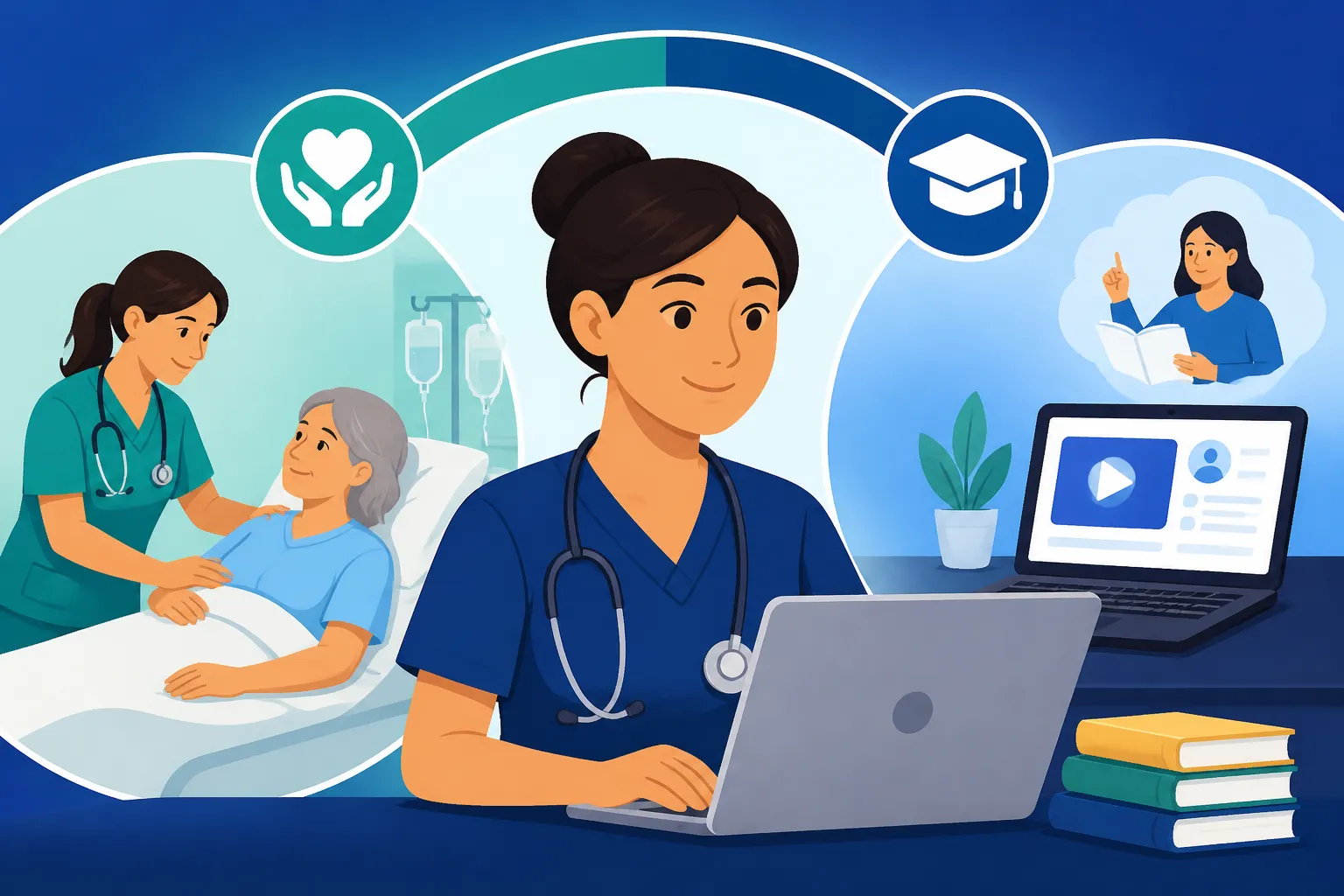
The term "direct care" in an online RN to BSN program can be quite misleading if you're picturing traditional bedside clinicals. Most online programs understand that their students are already working RNs with existing commitments. Therefore, the direct care experiences are structured to be flexible, project-based, and focused on broader nursing competencies, often utilizing your current work environment or community resources.
Indirect Patient Care Experiences
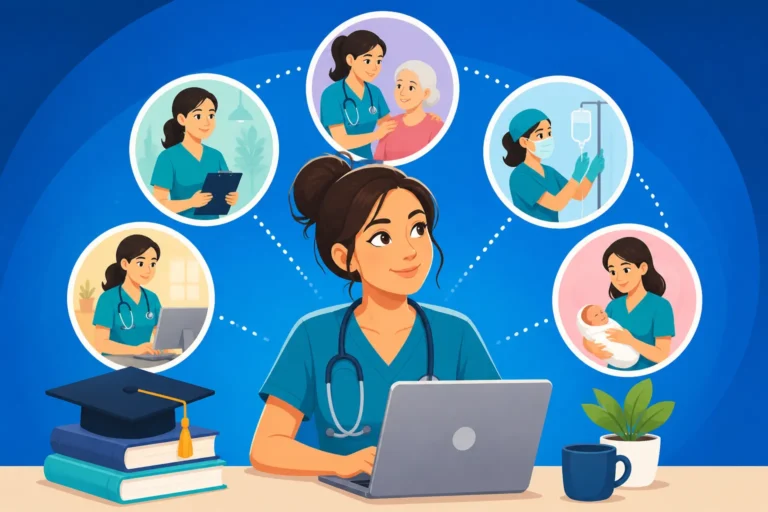
Many online RN to BSN programs fulfill their direct care requirements through what's known as "indirect patient care" experiences or community health projects. These don't typically involve hands-on patient care in a hospital but focus on population-level health interventions, health education, or quality improvement initiatives. You might find yourself in settings like community clinics, schools, public health departments, or even your current hospital, but in a non-traditional role.
For instance, at an institution like Western Governors University (WGU), their RN to BSN program is competency-based and often involves projects where you observe a nurse leader, participate in community health screenings, or develop a health education program for a specific group (e.g., nutrition classes for seniors, diabetes management workshops). These are often called "practicum experiences" rather than "clinicals." You might collect data, interview stakeholders, develop proposals, and then present your findings – all designed to apply the BSN-level concepts you're learning. The beauty of these experiences is their flexibility; you often work independently or in small groups on projects that fit your schedule.
Project-Based Learning and Community Engagement
A significant number of online RN to BSN programs structure their direct care components around project-based learning and community engagement. This means you'll be assigned a specific project that requires you to step outside your usual RN duties and apply your BSN-level knowledge to a real-world health challenge. This approach is highly practical and allows for a great deal of flexibility in how and when you complete the work.
Think about developing a health fair for your local community focusing on preventative screenings for hypertension, or creating an outreach program to educate new mothers on breastfeeding benefits in collaboration with a local OB/GYN office. You might be interviewing community members, researching evidence-based interventions, creating educational materials, and collaborating with various community organizations. These projects often culminate in a presentation or a comprehensive report, similar to an RN to BSN Capstone Project Explained. They challenge you to think like a public health nurse or a nurse leader, identifying needs, implementing solutions, and evaluating outcomes. This is where tools like Uworld can be beneficial, not just for exam prep, but for solidifying foundational nursing knowledge that you'll apply in these expanded community health contexts.
Utilizing Your Current Work Environment
Many online RN to BSN programs are designed with the working nurse in mind, which means they often allow you to utilize your current employment setting to fulfill a portion of your direct care requirements. This doesn't mean your regular shifts count as clinicals, but rather that you can identify opportunities within your workplace to complete projects or observe advanced nursing roles. This makes the experience far more integrated into your existing life.
For example, you might be tasked with a quality improvement project on your unit, such as analyzing fall rates and proposing evidence-based interventions to reduce them. Or perhaps you'll shadow a nurse manager or a clinical nurse specialist to understand the administrative and leadership aspects of nursing, fulfilling a leadership practicum. This approach minimizes the need to seek out entirely new placements and maximizes the relevance of your learning to your current practice. It’s about leveraging your professional environment to gain new perspectives on nursing roles and responsibilities. This is a common strategy for RN to BSN for Working Nurses programs.
Navigating Direct Care While Juggling Work and Life
We know it’s not just about what the direct care component is; it’s about how you actually do it when you’re already swamped with shifts, family, and other commitments. The good news is that online RN to BSN programs are specifically designed to accommodate your busy schedule, and there are plenty of strategies to make these requirements manageable.
Flexibility in Scheduling and Location
One of the greatest advantages of online RN to BSN programs is the inherent flexibility they offer in how and when you complete your direct care experiences. Unlike traditional ADN programs with rigid clinical schedules, online BSN programs often allow for self-scheduling, project-based work, and opportunities to complete hours in your local community or even your current workplace. This flexibility is what makes pursuing a BSN feasible for many working nurses.
For example, many programs offer a wide window for completing your practicum hours, allowing you to fit them around your work schedule, perhaps by dedicating specific days off or working on projects during quieter periods. You might complete assignments that involve observation or interviews in various settings like local health clinics or community centers, and you’re often empowered to find preceptors and sites that work for your schedule and interests. This autonomy is key for working adults.
Strategies for Finding Preceptors and Sites
Finding preceptors and clinical sites can sometimes feel like a daunting task, especially if your program doesn't provide them directly. However, it's often more straightforward than you might think, particularly for the types of projects involved in an RN to BSN. Networking and leveraging your existing professional relationships are your best assets here.
Start by talking to nurse managers, supervisors, or educators in your current facility. Many hospitals and healthcare systems are supportive of their nurses pursuing higher education and may have established pathways or contacts for BSN practicums. Consider other community-based organizations like school districts, local health departments, hospices, or even non-profit health organizations. Often, these organizations are eager to partner with nursing students on projects that benefit their community. Your program's academic advisor or clinical coordinator will also be an invaluable resource, providing guidance, lists of approved sites, and sometimes even direct connections. Don't be afraid to ask for help; countless nurses have successfully navigated this before you.
Integrating Practicum into Your Current Role
One of the smartest ways to approach the direct care component is to look for opportunities to integrate it into your current professional role. This not only makes the experience more convenient but also makes it highly relevant and immediately applicable to your practice. Many programs encourage this approach, recognizing the value of real-world application.
Could your leadership project focus on a quality improvement initiative on your unit? Could your community health assessment target a specific patient population you frequently encounter, perhaps patients with readmission risks? By aligning your practicum with your daily work, you’re not adding an entirely separate burden, but rather viewing your job through a BSN-level lens. This approach truly brings the curriculum to life and allows you to demonstrate how a BSN elevates your nursing practice. For many, this is a key part of How to Balance Work and RN to BSN effectively.
Programs That Offer Flexible or No Traditional Clinicals
While most accredited RN to BSN programs have some form of a direct care component, the nature and intensity can vary significantly. If the idea of any "clinical" hours truly makes you anxious, understanding the different program models is crucial. Some programs are explicitly designed to minimize or completely eliminate traditional hospital-based clinical rotations, focusing instead on diverse community or project-based experiences.
"No-Clinical" RN to BSN Program Models
When a program advertises itself as having "no clinicals," it typically means no traditional, hands-on, direct patient care in an acute care hospital setting, similar to what you did for your ADN. This can be a huge relief for many working nurses. However, it's vital to read the fine print. These programs still meet accreditation requirements by integrating "direct care" in other, often more flexible, ways.
These "no-clinical" programs usually emphasize community health practicums, leadership projects, or educational initiatives that can often be completed in non-traditional settings or even within your existing workplace. For example, you might conduct a community needs assessment, develop patient education materials, or participate in a public health campaign. The key difference is the type of experience and the flexibility in how it’s fulfilled, rather than a complete absence of any practical application component. Always confirm with the specific program what their interpretation of "no clinicals" truly means. For more specific information, check out guides on No-Clinical RN to BSN Programs.
Online Programs with Community-Based Practicums
Many online RN to BSN programs utilize community-based practicums as their primary method for fulfilling direct care requirements. This model is highly popular because it offers significant flexibility for working nurses and aligns well with the BSN's emphasis on public health and population-level care. These experiences are designed to get you out into the community, applying your nursing knowledge to broader health initiatives.
You might be involved in projects at local health clinics, schools, public health departments, senior centers, or even non-profit organizations. The focus is usually on health promotion, disease prevention, and addressing health disparities within specific populations. For instance, you could design an educational program on diabetes prevention for a local senior center or work with a school nurse to create a health and wellness program for adolescents. These experiences provide valuable insight into the diverse roles nurses play in improving community health and often allow for a more flexible schedule than traditional hospital shifts.
Hybrid Models and Immersion Experiences
While most online RN to BSN programs offer entirely online coursework with flexible practicums, some might incorporate a hybrid model or short "immersion" experiences. These are less common for the RN to BSN track compared to direct-entry BSN or MSN programs, but it’s still worth being aware of. A hybrid model might involve a few on-campus sessions for specific skills labs or simulations, while an immersion experience could be a short, intensive period of project-based work, often completed over a weekend or a few concentrated days.
These hybrid components are usually designed to be minimal and focused, providing specific hands-on application or collaborative opportunities that are difficult to replicate purely online. If a program mentions hybrid elements or immersion experiences, ensure you understand the time commitment and travel requirements before enrolling. However, for the vast majority of RN to BSN programs, especially those catering to working professionals, the direct care component is fully integrated into the online structure with flexible community or project-based options.
Tips for Success in Your Direct Care Experiences
Even with flexible options, tackling the direct care component of your RN to BSN program can feel like another hurdle. But with the right mindset and strategies, it can be one of the most enriching parts of your educational journey. Here are some tips to help you succeed and truly make the most of these opportunities.
Proactive Planning and Time Management
Success in your direct care experiences, just like in the rest of your Online RN to BSN Programs: Complete Guide, hinges on proactive planning and excellent time management. Don't wait until the last minute to think about your practicum. As soon as you begin the courses that include a direct care component, start planning.
Familiarize yourself with the requirements, potential project ideas, and deadlines. Begin researching potential sites and preceptors early. Create a detailed timeline for your project, breaking it down into smaller, manageable tasks. Schedule dedicated blocks of time in your week for practicum work, just as you would for your online coursework. Remember that unexpected delays can happen, so building in a buffer is always a good idea. Leveraging organizational tools and calendars can be incredibly helpful in keeping everything on track, ensuring you complete your RN to BSN Completion Timeline efficiently.
Effective Communication with Your Program and Preceptor
Clear and consistent communication is paramount to a successful direct care experience. Maintain open lines of communication with your academic advisor or clinical coordinator from your online program. If you have questions about requirements, need help finding a preceptor, or encounter any challenges, reach out immediately. They are there to support you and have experience guiding many students through these processes.
Equally important is establishing a strong, professional relationship with your preceptor. Clearly communicate your learning objectives, your availability, and any program-specific requirements they need to be aware of. Schedule regular check-ins to discuss your progress, ask for feedback, and ensure you're meeting their expectations and the program's objectives. A good preceptor relationship can turn a requirement into an invaluable mentorship experience.
Leveraging Resources and Coursework
Remember that your direct care experiences are not isolated tasks; they are an integral part of your RN to BSN Curriculum Overview. All the knowledge you're gaining from your online courses – from research methods and evidence-based practice to leadership theory and public health principles – should be applied to your practicum.
Actively seek connections between your coursework and your direct care project. If you're learning about health promotion strategies in a community health course, think about how you can incorporate those into your practicum project. Utilize your program's library resources to find evidence-based practices that can inform your project. Don't forget professional development tools like Uworld, which can help reinforce core nursing knowledge, allowing you to focus on applying those advanced BSN concepts. The more you connect your academic learning to your practical experience, the richer and more meaningful your entire RN to BSN journey will be, ultimately making your degree truly valuable and helping you understand Is an RN to BSN Worth It.
Maintaining a Reflective Journal or Portfolio
One excellent strategy for success and deepening your learning during your direct care experiences is to maintain a reflective journal or portfolio. This isn't just busywork; it's a powerful tool for critical thinking and professional growth. Regular reflection allows you to process your experiences, identify areas for improvement, and articulate your learning.
After each practicum session or project milestone, take time to document what you did, what you observed, what you learned, and how it connects to your BSN competencies. What challenges did you face, and how did you overcome them? How did this experience change your perspective on nursing? A portfolio can also be a fantastic way to showcase your work and newfound skills to future employers. It demonstrates your ability to apply theory to practice, lead initiatives, and contribute to improved health outcomes – all highly desirable traits for BSN-prepared nurses. This kind of thoughtful documentation highlights What You Learn in an RN to BSN Program beyond just the grades.
Comparing Direct Care Requirements Across Programs
Understanding that "direct care" isn't a one-size-fits-all term is half the battle. When researching programs, it's incredibly helpful to compare how different institutions structure these requirements. This allows you to find a program that best fits your lifestyle, learning style, and career aspirations.
Here’s a table outlining common types of direct care components you might encounter:
| Type of Direct Care Component | Description | Typical Setting(s) | Flexibility Level | Common Skills Developed |
|---|---|---|---|---|
| Community Health Practicum | Focuses on population health, health promotion, disease prevention, and community needs assessment. Often involves projects or observations in non-acute settings. | Local health department, school health, community clinics, senior centers, non-profit organizations. | High (often self-scheduled projects) | Community assessment, program planning, health education, cultural competency, advocacy. |
| Leadership/Management Practicum | Centers on developing leadership skills, understanding healthcare systems, quality improvement, and interdisciplinary collaboration. | Current workplace (shadowing, QI projects), administrative offices, hospital committees. | High (can often be integrated into work) | Leadership, critical thinking, problem-solving, team building, policy analysis, project management. |
| Public Health Nursing Project | Similar to community health but might involve more in-depth research, epidemiological analysis, or specific public health campaigns. | Public health agencies, research institutions, community outreach programs. | High (project-based, self-directed) | Research, data analysis, program evaluation, health policy understanding, grant writing. |
| Capstone Project with Applied Component | A comprehensive project integrating all BSN knowledge, often requiring a practical application or demonstration of new skills in a real-world context. | Varies widely based on project scope; could be in any healthcare or community setting. | Moderate to High (dependent on project) | Synthesis of knowledge, independent inquiry, advanced problem-solving, presentation, implementation. |
| Direct Patient Care (Modified) | Rare for online RN to BSN, but some programs might require a very limited number of hours of direct patient care with a specific BSN focus (e.g., patient education, complex case management). | Hospital units, specialty clinics (with specific learning objectives). | Low (more structured) | Advanced patient assessment, complex care planning, interdisciplinary collaboration. |
As you can see, the most common approaches for online RN to BSN programs lean heavily towards community and leadership focused experiences, providing far more flexibility than traditional hospital rotations.
Disclaimer
Please remember that specific program requirements, including direct care components, can vary significantly between universities and may change over time. It is crucial to always verify the most current and detailed information directly with the admissions office or nursing department of any program you are considering. This guide is for informational purposes only and does not constitute official academic advising.