RN to BSN for Second-Career Nurses
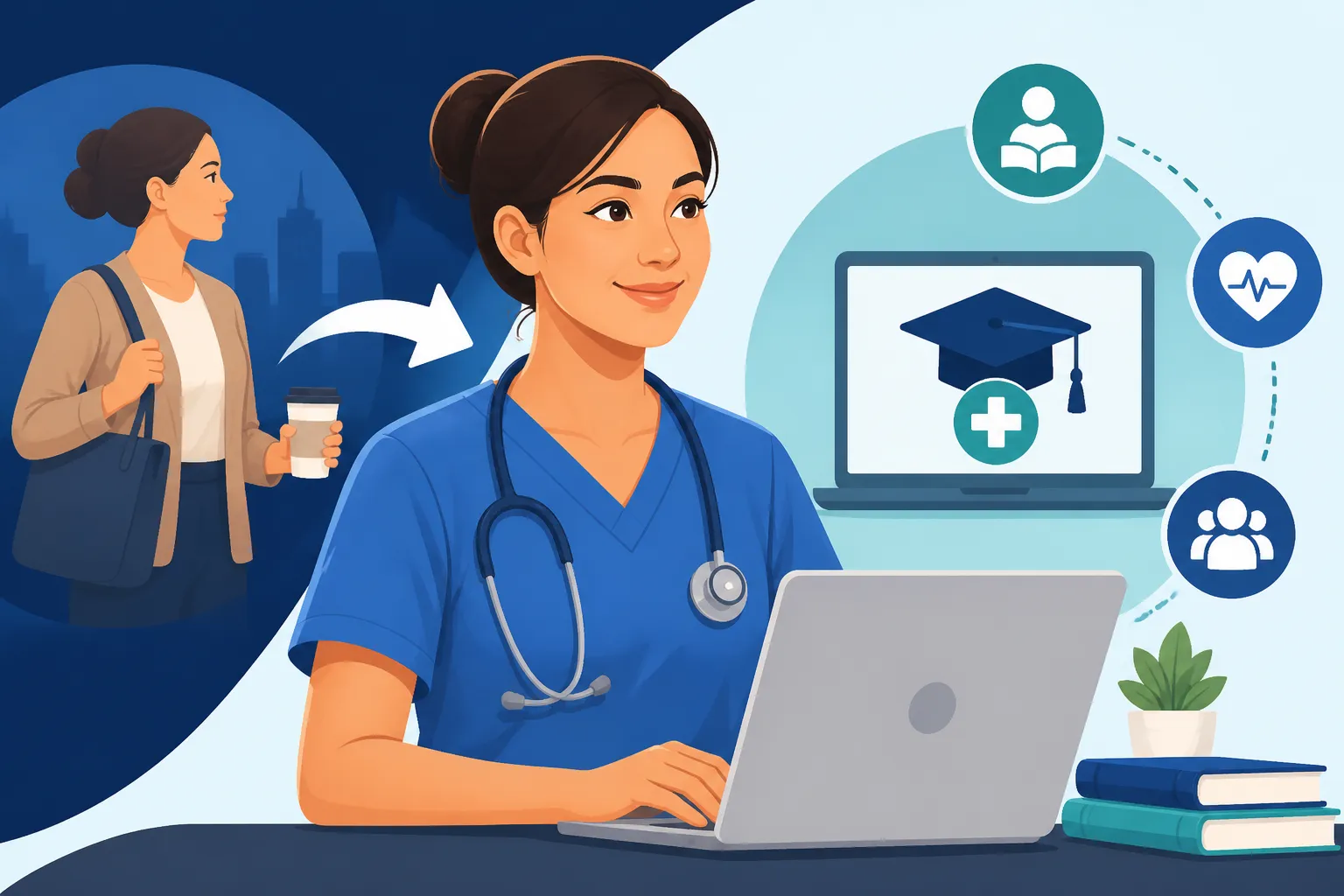
So, you've already had a career, maybe even a whole professional life in a completely different field, and now you're feeling that undeniable pull toward nursing. It's a journey many people undertake, often later in life, and while incredibly rewarding, it comes with a unique set of questions and anxieties. This guide is specifically for you, the second-career nurse, looking to bridge your ADN or diploma to a Bachelor of Science in Nursing (BSN) through an online RN to BSN program. We're going to dive deep into how these programs are perfectly suited for your life stage, how to make the most of your prior experience, and what to expect on this exciting new path.
The Unique Path of a Second-Career Nurse Going for Their BSN
It's truly admirable to embark on a new chapter, especially one as demanding and fulfilling as nursing. Many second-career nurses I've connected with express a mix of excitement, trepidation, and a strong sense of purpose. You might be juggling family responsibilities, a mortgage, or simply the mental shift of going back to school after years in the workforce. This isn't the same as being a fresh-faced college student; you bring a wealth of life experience, maturity, and often, a clearer vision of what you want from your nursing career. You've likely honed skills in communication, problem-solving, and time management in your previous roles, which are incredibly valuable in both nursing practice and academic success.
The good news is that online RN to BSN programs are practically tailor-made for your situation. They understand that you're an adult learner with real-world commitments. Unlike traditional on-campus programs that might require you to uproot your life, these online formats offer the flexibility you need. This path acknowledges that you're not just a student, but a professional, a parent, a spouse, or all of the above, and it provides a structure that can bend to fit your existing life rather than forcing you to conform to a rigid academic schedule. This flexibility is often a huge relief for those who thought furthering their education might be an impossible dream.
Why an RN to BSN is a Strategic Move for Second-Career Nurses
Making the decision to go back to school, especially after having established yourself in another career, is a significant one. You're not just getting a piece of paper; you're investing in your future and expanding your capabilities in a profession that deeply resonates with your newfound purpose. For second-career nurses, pursuing an RN to BSN isn't just about checking a box; it's about unlocking new doors and maximizing the impact of your unique journey.
Enhancing Your Clinical Practice and Leadership Skills
Even with years of experience as an RN, the BSN curriculum provides a crucial layer of knowledge that directly impacts your clinical practice. These programs delve into areas like evidence-based practice, community health, nursing research, and leadership theory. For someone like you, who has seen different organizational structures and likely managed projects or people in a previous career, these courses offer a framework to understand nursing beyond the bedside. You'll learn to critically evaluate research, leading to better patient outcomes. You'll also develop stronger communication and collaboration skills, which are vital for advocating for your patients and contributing to interdisciplinary teams.
Think about it this way: your previous career might have taught you how to manage a budget, lead a team, or navigate complex client relationships. A BSN helps you translate those invaluable soft skills into a healthcare context, preparing you for roles that require more strategic thinking and oversight. You’ll be better equipped to identify systemic issues on your unit, propose solutions, and even lead initiatives to improve patient care, leveraging the leadership qualities you’ve already cultivated. Many nurses find that the BSN coursework, particularly in areas like public health, broadens their perspective on healthcare delivery far beyond the walls of a hospital.
Opening Doors to Career Advancement and Higher Earning Potential
Let's be real, career growth and salary increases are often significant motivators for pursuing further education. For second-career nurses, the BSN isn't just a credential; it's a stepping stone to a wider array of opportunities within nursing that might have been inaccessible with an ADN or diploma alone. Many hospitals, particularly those seeking Magnet Status and the BSN Requirement, now prefer or even require BSN-prepared nurses for many positions, especially in leadership or specialized areas.
This means that with a BSN, you could qualify for roles like charge nurse, nurse manager, educator, or even positions in case management or informatics. These roles often come with higher salaries and more predictable schedules, which can be incredibly appealing for someone who has already built a life and perhaps a family. The Does a BSN Increase Your Salary article sheds more light on the financial benefits. Beyond the immediate increase, a BSN also serves as a strong foundation if you ever decide to pursue a Master of Science in Nursing (MSN) or a Doctor of Nursing Practice (DNP), opening up advanced practice roles like Nurse Practitioner. It’s an investment that pays dividends in both job satisfaction and financial stability.
Navigating the RN to BSN Application Process as a Second-Career Nurse
Applying to an RN to BSN program can feel daunting, especially if it's been a while since you last filled out an academic application. However, your unique background as a second-career individual can actually be a significant asset. Admissions committees often value the maturity, work ethic, and diverse perspectives that you bring to the classroom.
Leveraging Prior Education and Experience
One of the biggest advantages you have as a second-career nurse is your previous academic and professional history. Many online RN to BSN programs are designed to maximize the transfer of credits from your associate's degree or diploma program. Furthermore, your prior bachelor's degree in a non-nursing field can often satisfy many general education requirements, significantly shortening your time to completion. It's crucial to understand RN to BSN Transfer Credit Explained as this can save you both time and money.
Don't underestimate the value of your professional experience, either. While it may not translate into direct academic credits for nursing courses, it strengthens your application. When writing your personal statement, highlight how your previous career instilled qualities like leadership, problem-solving, resilience, or strong communication—skills directly applicable to advanced nursing practice. If your GPA from an earlier degree isn't stellar, articulate how your professional maturity and passion for nursing now make you a dedicated and successful student. Admissions counselors are often impressed by applicants who have demonstrated a clear and purposeful pivot in their careers.
Understanding Admission Requirements and Potential Challenges
While your experience is a plus, there are still specific RN to BSN Requirements Explained that you'll need to meet. Typically, this includes holding an active, unencumbered RN license, a minimum GPA from your ADN or diploma program (usually around 2.0-2.5, though some programs may be higher), and completion of prerequisite courses if your prior degree didn't cover them. These prerequisites might include statistics, anatomy and physiology, microbiology, or general psychology.
One common challenge for second-career nurses might be retrieving old transcripts or understanding how their diverse academic background fits into current program structures. Don't hesitate to reach out to the admissions department of prospective schools directly. They are there to guide you through the process and evaluate your unique academic history. Many schools, like Capella University or Western Governors University (WGU), are particularly adept at working with adult learners and can offer personalized advice on credit transfers. Remember, transparency about your academic history, even if there are older grades you're not thrilled about, is always the best policy.
Here's a quick overview of common requirements:
| Requirement | Typical Expectation | How it Affects Second-Career Nurses |
|---|---|---|
| Active RN License | Required for all RN to BSN programs | Confirms your foundational nursing practice. |
| ADN/Diploma GPA | Usually 2.0-2.5 minimum | May require explaining past academic performance. |
| Prerequisite Courses | Statistics, A&P, Microbiology, etc. | Often covered by previous bachelor's or ADN, check gaps. |
| Prior Bachelor's | Not required, but can fulfill general education. | Significant advantage, reduces overall program length. |
| Personal Statement | Articulate goals and motivations | Excellent opportunity to highlight life/career experience. |
| Transcripts | All previous academic institutions | Gather documentation from all prior schools. |
Succeeding in an Online RN to BSN Program While Managing Life
One of the biggest draws of online RN to BSN programs for second-career nurses is the flexibility they offer. However, flexibility doesn't mean easy. It means you have the power to fit your studies into your already bustling life, which requires a significant amount of self-discipline, organization, and a clear strategy.
Balancing Work, Family, and Studies
This is often the tightrope walk for many adult learners. You're likely still working as an RN, potentially full-time, and you might have a family that depends on you. Juggling clinical shifts, school assignments, and family commitments can feel overwhelming. The key is to be incredibly intentional with your time. Consider making a detailed weekly schedule that carves out specific blocks for studying, much like you would for work meetings or family events. Be realistic about how much time you can dedicate. Some nurses choose to complete their RN to BSN While Working Full-Time, while others opt for part-time study to maintain a better work-life balance.
Don't be afraid to lean on your support system. Communicate your schedule and needs to your family, friends, and even your employer. Perhaps your spouse can take on more household duties during your study hours, or your kids can understand that "mom/dad is studying" time means minimal interruptions. Your workplace might even offer Employer Tuition Assistance for BSN or flexible scheduling options if they know you're pursuing your BSN. Tools like a shared family calendar or dedicated study spaces can also be immensely helpful. Remember, this isn't forever, and the sacrifices you make now will lead to significant long-term gains. You might also find inspiration in our guide on How to Balance Work and RN to BSN.
Strategies for Academic Success in an Online Environment
Success in an online program hinges on effective self-management and utilizing the resources available to you. Since you're not physically in a classroom, you need to proactively engage with your professors and classmates. Participate in online discussions, ask questions, and form virtual study groups. Many programs use learning management systems that include forums, chat features, and virtual office hours. Treat these as your classroom.
Leverage your adult learning style. As someone with prior career experience, you're likely good at connecting theoretical concepts to real-world scenarios. Use your nursing practice as a living laboratory for your assignments and discussions. When studying for exams, consider using proven resources. Platforms like Uworld are highly regarded among nursing students for their comprehensive question banks and detailed rationales, which can be invaluable for reinforcing course material. Think about how your previous career required you to synthesize information, manage deadlines, and present findings; these skills are directly transferable to your online studies. Furthermore, don't overlook university resources like online writing centers, library services, and academic advising, which are typically available to distance learners. Our article on How Difficult Is an Online RN to BSN might offer some additional study tips.
Financial Planning for Your RN to BSN Journey
Going back to school always involves a financial commitment, and as a second-career nurse, you might have different financial considerations than a younger student. It's important to explore all avenues to make your RN to BSN affordable and manageable.
Understanding the Cost and Exploring Aid Options
The How Much Does an RN to BSN Cost varies significantly between institutions, ranging from under $10,000 to over $20,000 for the entire program, not including books and fees. Online programs can sometimes be more cost-effective due to reduced overhead and in-state tuition rates often extended to online students regardless of physical residency. When evaluating programs, look beyond the sticker price. Inquire about all fees, textbook costs, and whether there are any hidden charges.
For financial aid, don't assume you won't qualify because you're an adult learner or have established income. Fill out the Free Application for Federal Student Aid (FAFSA) regardless; it's the gateway to federal grants and loans. Additionally, explore institutional scholarships specifically for adult learners or nursing students. Many healthcare systems offer tuition reimbursement or scholarships to their employees pursuing higher nursing degrees. Foundations and professional nursing organizations also often have dedicated scholarships. Checking out RN to BSN Financial Aid Options can give you a more detailed picture.
Maximizing Your Investment and Future Earnings
Remember, this isn't just an expense; it's an investment in your career longevity and earning potential. Consider the long-term return on investment (ROI). As discussed earlier, a BSN often leads to higher salaries and more opportunities for career advancement. Even a modest increase in your hourly wage or a promotion to a leadership role can quickly offset the cost of your education.
Beyond the monetary benefits, think about the enhanced job security, greater professional satisfaction, and the ability to pivot into different areas of nursing that a BSN affords. The nursing field is constantly evolving, and a BSN provides a more robust and adaptable foundation for future changes and demands. For second-career nurses, this means building a more sustainable and fulfilling second career, ensuring that your significant pivot was truly worthwhile. When you consider the Is an RN to BSN Worth It question, the answer often comes down to these long-term benefits.
The RN to BSN Journey for Second-Career Nurses: A Holistic View
Embarking on an Online RN to BSN Programs: Complete Guide as a second-career nurse is more than just completing coursework; it's a transformative experience that refines your identity as a healthcare professional and opens up a new world of possibilities. It’s about merging your past experiences with your passion for nursing, creating a unique and powerful professional profile.
Integrating Your Life Experience into Your Nursing Practice
One of the most profound benefits for second-career nurses is the ability to integrate your previous life and professional experiences into your enhanced nursing practice. Your understanding of different industries, organizational dynamics, and human behavior from your prior career can provide a unique perspective in patient care, interdisciplinary communication, and even healthcare systems improvement. For example, if you came from a business background, you might have a better grasp of healthcare economics or project management within a hospital setting. If you were in education, you’d be a natural at patient teaching and staff development.
These aren't just theoretical advantages; they manifest daily. You might find yourself better equipped to empathize with patients from diverse backgrounds, understanding the broader societal or economic factors influencing their health. You could be the nurse who bridges communication gaps between departments, thanks to years of navigating complex professional relationships. The BSN curriculum, with its emphasis on community health and leadership, provides the academic framework to validate and expand upon these intuitive skills you’ve already developed. It’s truly a synergistic relationship, where your past enriches your present and future in nursing.
Looking Ahead: Long-Term Career Benefits
The completion of your RN to BSN is not an endpoint but a launchpad. Beyond immediate salary increases and broader job opportunities, it sets you up for substantial Career Benefits of Earning a BSN that continue to unfold throughout your nursing journey. For many second-career nurses, this might mean a renewed sense of purpose and a fresh trajectory within the healthcare landscape. You might discover passions for areas like nursing informatics, public health, or even advanced practice nursing, which a BSN directly facilitates.
The skills gained – critical thinking, research utilization, leadership, and health policy knowledge – are universally valuable and applicable across various healthcare settings. They prepare you not just for the next job, but for a lifelong career of learning and impact. As the healthcare system continues to evolve, nurses with a strong, broad educational foundation like the BSN will be at the forefront of change, advocating for patients, leading teams, and shaping the future of care. Your decision to pursue this degree as a second career is a testament to your commitment to making a meaningful difference, and the BSN will empower you to do just that.
Disclaimer
Please remember that the information provided in this guide is intended for general informational purposes only and does not constitute professional advice. Nursing program requirements, costs, and career outcomes can vary significantly based on the institution, location, and individual circumstances. It is crucial to conduct your own thorough research and consult with academic advisors, financial aid professionals, and nursing regulatory bodies to make informed decisions about your educational and career path.