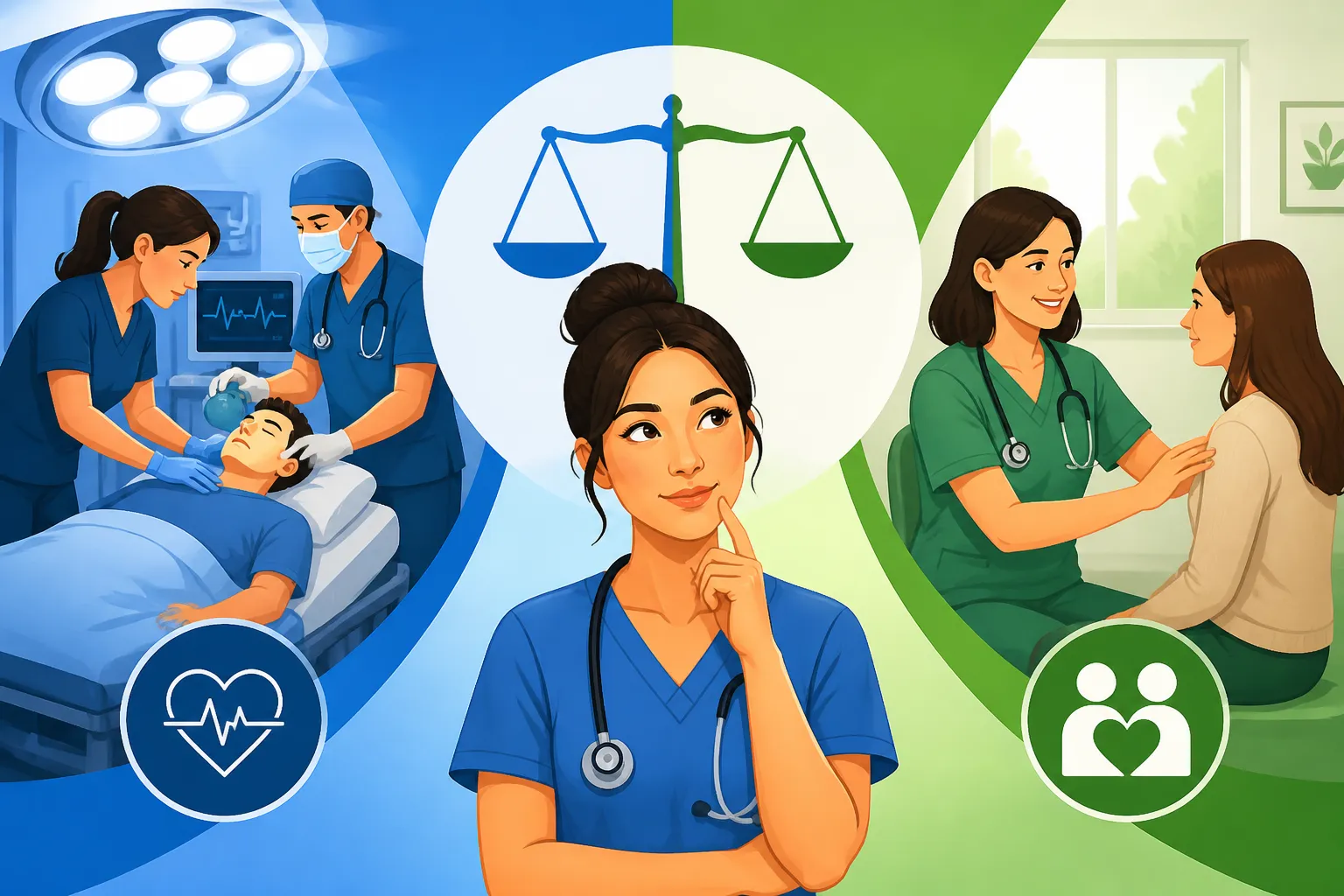
Acute Care vs Primary Care NP
Deciding on your next step in nursing, especially when considering the leap to a Nurse Practitioner role, can feel like standing at a fork in the road, with each path leading to vastly different patient experiences and professional challenges. Many nurses wrestle with the choice between becoming an Acute Care Nurse Practitioner (ACNP) or a Primary Care Nurse Practitioner (PCNP), wondering which aligns best with their passion and skills. This guide aims to demystify these distinct yet equally vital advanced practice nursing roles, helping you confidently navigate your career options.
Defining the Terrain: Acute Care Versus Primary Care
The fundamental difference between acute care and primary care lies in the patient population they serve and the nature of the health conditions they address. While both roles require a profound understanding of health, disease, and patient management, their focus areas diverge significantly. Understanding this core distinction is the first step in deciding which path is right for you.
The Landscape of Primary Care Nursing
A Primary Care Nurse Practitioner, often a Family Nurse Practitioner (FNP), Adult-Gerontology Primary Care Nurse Practitioner (AGPCNP), or Pediatric Nurse Practitioner (PNP), serves as the patient's first point of contact in the healthcare system. Their world is one of long-term relationships, preventative care, and the ongoing management of chronic conditions. Think of a PCNP as a healthcare partner who walks with patients through the many stages of their lives, focusing on wellness and early intervention.
In a primary care setting, you’d typically find yourself in a family medicine clinic, a community health center, a pediatrician's office, or even an urgent care clinic that handles non-emergent issues. Your patient panel would include individuals across the lifespan, from newborns to the elderly, or a specific age group depending on your specialization. The conditions you manage are broad: everything from routine physicals, immunizations, and wellness checks to managing diabetes, hypertension, asthma, and addressing common illnesses like colds, flu, and minor injuries. The emphasis is heavily on health promotion and disease prevention, ensuring patients stay healthy and avoid acute exacerbations of chronic illnesses. Building rapport and trust with your patients over many years is a cornerstone of primary care, allowing for truly holistic and individualized care plans.
Stepping into Acute Care Environments
In contrast, an Acute Care Nurse Practitioner (ACNP), most commonly an Adult-Gerontology Acute Care Nurse Practitioner (AGACNP) or a Neonatal Nurse Practitioner (NNP), operates in settings where patients are experiencing critical, complex, or sudden onset illnesses and injuries. This is the realm of hospitals, intensive care units (ICUs), emergency departments (EDs), trauma centers, and specialized inpatient units like cardiology or neurology. The pace is often rapid, and the situations can be high-stakes, requiring quick critical thinking and decisive action.
ACNPs focus on stabilizing acutely ill patients, managing life-threatening conditions, and working within multidisciplinary teams to facilitate recovery or prepare for necessary interventions. Their patients often have complex medical histories, multiple comorbidities, or are recovering from surgery. The care provided is generally episodic and short-term, with the goal of moving the patient from an unstable state to a more stable one, often back to the care of a primary care provider or a long-term care facility. An ACNP might be managing ventilators, interpreting advanced diagnostic tests, performing invasive procedures, and adjusting complex medication regimens. While a primary care NP builds long-term relationships, an acute care NP builds intense, short-term relationships focused on immediate crisis resolution and stabilization.
Educational Journey: Tailoring Your MSN or DNP
The path to becoming a Nurse Practitioner, whether in primary or acute care, typically involves pursuing either a Master of Science in Nursing (MSN) or a Doctor of Nursing Practice (DNP) degree. However, the curriculum, clinical requirements, and even the mindset instilled in these programs are specifically tailored to prepare you for the distinct demands of each role. It’s not just about earning a degree; it’s about specialized training. You can learn more about specific program structures by exploring resources like Online MSN Programs: Complete Guide.
Academic Paths for Primary Care Nurse Practitioners
If your heart is set on primary care, your MSN or DNP program will deeply immerse you in health promotion, disease prevention, and the management of common chronic conditions across diverse patient populations. Core coursework typically includes advanced health assessment, advanced pharmacology, and advanced pathophysiology, but these are often applied through a lens of longitudinal care and patient education. You'll delve into topics like evidence-based practice for common ailments, behavioral health screening, women's health issues, and pediatric development, depending on your chosen specialization.
For example, a program for a How to Become a Family Nurse Practitioner will cover pediatrics, adult care, and geriatrics, preparing you to treat patients of all ages. Clinical hours, a crucial component of any NP program, will generally be spent in outpatient clinics, family practices, and community health settings. You’ll be managing a panel of patients, performing routine check-ups, diagnosing common illnesses, and developing long-term treatment plans. These programs emphasize the development of strong diagnostic reasoning skills for less acute presentations and the ability to educate and empower patients for self-management. Certification for primary care NPs is typically through the American Nurses Credentialing Center (ANCC) or the American Academy of Nurse Practitioners Certification Board (AANP).
Rigorous Training for Acute Care Nurse Practitioners
The academic path for an Acute Care Nurse Practitioner is designed to equip you with the skills to manage the most critically ill and complex patients. While you'll still cover advanced health assessment, pharmacology, and pathophysiology, the focus shifts to acute presentations, rapid changes in patient status, and invasive interventions. Expect coursework that dives deep into advanced cardiac life support (ACLS), ventilator management, interpreting complex diagnostic imaging (like CT scans and MRIs), and managing polypharmacy in unstable patients.
Programs for an How to Become a Adult-Gerontology Acute Care NP, for instance, prepare you for the intensity of hospital-based care. Clinical rotations are typically completed in settings such as intensive care units, emergency departments, trauma units, and specialized inpatient wards. Here, you'll gain hands-on experience with procedures like arterial line insertion, central line placement, intubation assistance, and advanced wound care. The training emphasizes quick assessment, immediate decision-making, and close collaboration with medical residents, intensivists, and other specialists. For success in these roles, strong critical thinking and the ability to thrive under pressure are paramount. As with primary care, certification is primarily through the ANCC or AANP, but with a specific acute care exam. Many students find resources like Uworld invaluable for preparing for these rigorous certification exams, providing comprehensive question banks and detailed explanations to solidify their knowledge.
Beyond the Classroom: Day-to-Day Realities and Responsibilities
Once you've completed your education and passed your certification exams, the daily life of an NP will vary dramatically depending on whether you're in primary or acute care. These differences aren't just about the patient's condition; they encompass the work environment, the team dynamics, and the specific tasks that fill your day.
The Role and Reach of a Primary Care NP
As a Primary Care NP, your days are typically filled with scheduled appointments, focusing on continuity of care. You might start your morning seeing a toddler for a well-child check and immunizations, followed by an adult patient with newly diagnosed type 2 diabetes requiring education on diet and medication management. Later, you could be managing an elderly patient's multiple chronic conditions, adjusting their blood pressure medication, and screening for depression. The patient relationships you cultivate are often long-lasting, built on trust and a comprehensive understanding of their health journey, family history, and lifestyle factors.
A significant portion of a PCNP's day is dedicated to patient education and counseling, empowering individuals to take an active role in their health. This includes discussing preventative screenings, healthy lifestyle choices, medication adherence, and managing mild to moderate mental health concerns. While you'll diagnose and treat a wide range of common illnesses, you'll also know when to refer patients to specialists for more complex or acute issues, acting as a crucial gatekeeper and coordinator of care. The schedule is often more predictable, typically Monday through Friday business hours, though some clinics offer extended hours or weekend appointments. You're a constant resource for your patients, helping them navigate the healthcare system and maintain their well-being.
Dynamic Demands of an Acute Care NP
Life as an Acute Care NP is often less predictable and far more fast-paced. Your day might begin with rounds on your assigned patients in the ICU, collaborating with physicians and other team members to assess progress, adjust treatment plans, and order necessary tests. You could then be called to the emergency department to evaluate a patient experiencing sudden cardiac symptoms, requiring rapid assessment, interpretation of EKGs, and initiation of emergency protocols. Throughout the day, you'll be performing intricate procedures, such as placing central lines or assisting with intubations, and managing advanced life support interventions.
ACNPs are critical members of the interdisciplinary team, often communicating complex medical information to patients and their families during highly stressful times. The focus is on rapid assessment, stabilization, and managing acute phases of illness or injury. While primary care emphasizes prevention, acute care emphasizes intervention. The work environment is highly dynamic, requiring constant vigilance, resilience, and the ability to make high-stakes decisions under pressure. Shift work, including nights, weekends, and holidays, is common in many acute care settings, reflecting the 24/7 nature of critical patient care. Programs like those that provide MSN Clinical Hours Requirements for acute care are specifically designed to immerse students in these demanding environments, ensuring they are well-prepared for the realities of the role.
Long-Term Vision: Career Trajectories and Compensation
Beyond the day-to-day, the long-term career outlook, earning potential, and overall professional satisfaction also vary between primary and acute care NP roles. Both are highly in-demand fields with excellent job security, but the specific opportunities and compensation structures can differ. Exploring a comprehensive Nurse Practitioner Salary Guide can provide a broader understanding of earning potential across various specialties.
Career Growth and Earning Potential in Primary Care
The demand for Primary Care Nurse Practitioners is exceptionally high and continues to grow, driven by an aging population, an increasing prevalence of chronic diseases, and a shortage of primary care physicians, especially in rural and underserved areas. This strong demand translates into excellent job security and a wide array of practice opportunities, from private clinics to large healthcare systems and even telehealth services.
In terms of salary, Primary Care NPs generally earn competitive wages. According to recent data, Family Nurse Practitioners often see average salaries in the range of $115,000 to $125,000 annually, varying significantly by location, experience, and employer. While perhaps not always among the Highest-Paying Nurse Practitioner Specialties, the consistent demand and more predictable work-life balance (often with fewer night shifts or weekends compared to acute care) are significant drawcards for many. Career advancement can involve taking on leadership roles within clinics, precepting new NP students, or specializing further within primary care (e.g., in geriatric care or women's health). Many primary care NPs find immense professional satisfaction in building enduring relationships with patients and positively impacting community health over the long term.
Opportunities and Compensation in Acute Care
Acute Care Nurse Practitioners also enjoy robust job growth, particularly within hospital systems, emergency departments, and specialty critical care units. As hospitals seek to optimize patient care and improve outcomes, the role of the ACNP in managing complex inpatient cases is becoming increasingly vital. These roles are often integral to large medical teams, including intensivists, hospitalists, and surgeons.
Salaries for Acute Care NPs can sometimes be slightly higher than those in primary care, reflecting the intensity, complexity, and often irregular hours associated with critical care. Average salaries for Adult-Gerontology Acute Care NPs can range from $120,000 to $135,000 annually, again, with substantial variation based on factors like geographic location, years of experience, and specific facility. For those who thrive in high-pressure environments and enjoy the challenge of managing complex, rapidly changing patient conditions, the acute care setting offers immense professional fulfillment. Career progression might involve becoming a lead NP in a critical care unit, specializing in a particular subfield like cardiac ICU, or even moving into administrative roles that oversee acute care services. Continuous learning and staying updated on the latest medical advancements are crucial for both roles, but especially in the ever-evolving landscape of acute care. Many ACNPs preparing for their certification exams rely on review courses and practice questions from trusted providers like Uworld to ensure they are at the top of their game.
Key Differences Between Acute Care and Primary Care NP
To help you visualize the distinctions, here's a table summarizing the key differences between Acute Care Nurse Practitioners and Primary Care Nurse Practitioners:
| Feature | Primary Care Nurse Practitioner (PCNP) | Acute Care Nurse Practitioner (ACNP) |
|---|---|---|
| Primary Focus | Health promotion, disease prevention, chronic disease management | Management of acute, critical, and complex illness/injury |
| Patient Population | Stable patients across lifespan or specific age groups (e.g., FNP, PNP) | Acutely ill, unstable, or complex patients (e.g., AGACNP, NNP) |
| Typical Settings | Outpatient clinics, family practices, community health centers, urgent care | Hospitals, ICUs, emergency departments, trauma centers, specialty units |
| Nature of Care | Longitudinal, preventative, long-term relationships | Episodic, emergent, short-term stabilization, critical intervention |
| Common Conditions | Diabetes, hypertension, asthma, routine physicals, wellness checks | Sepsis, cardiac arrest, respiratory failure, trauma, post-op complications |
| Key Skills | Holistic assessment, patient education, chronic disease management | Rapid assessment, critical thinking, advanced procedures, crisis management |
| Work Schedule | Often regular daytime hours, M-F | Often shift work, nights, weekends, holidays |
| Educational Focus | Broad health, wellness, common conditions, prevention | Advanced diagnostics, complex disease, invasive procedures, acute crisis |
| Certification Body | ANCC or AANP (e.g., FNP-C, AGPCNP-BC, PNP-PC) | ANCC or AANP (e.g., AGACNP-BC, NNP-BC) |
Making Your Informed Choice
Choosing between an Acute Care and Primary Care NP path is a deeply personal decision that should be based on your professional aspirations, personality, and preferred work environment. There's no single "better" option; only the one that aligns best with you.
Consider the following questions as you reflect:
- Do you thrive on long-term patient relationships and the satisfaction of guiding individuals toward better health over many years, or are you energized by the fast-paced, high-stakes environment of critical care?
- Are you passionate about disease prevention and health education, or are you drawn to the challenge of managing complex, life-threatening conditions?
- Do you prefer a predictable schedule that allows for a consistent work-life balance, or are you comfortable with shift work and the inherent unpredictability of acute care?
- What kind of clinical training excites you more: the breadth of primary care settings or the intensive, specialized environment of a hospital's critical care unit?
- Think about your existing nursing experience. If you’ve spent years in an ICU, the transition to an Accelerated MSN Programs focusing on acute care might feel more natural. Conversely, if community health has been your passion, primary care could be a seamless fit.
It's also worth investigating Nurse Practitioner Specializations Explained in more detail, as this guide has primarily focused on the broad categories. Diving deeper into options like psychiatric mental health or women's health can broaden your perspective even further. Whichever path you choose, becoming a Nurse Practitioner is a commitment to advanced practice, continuous learning, and making a profound difference in patients' lives. Take your time, do your research, and trust your instincts.
Disclaimer
Please note that the information provided in this guide is intended for general informational purposes only and does not constitute professional advice. Nursing programs, requirements, and job market conditions can vary significantly by institution, location, and evolve over time. Always consult with academic advisors, professional organizations, and official university resources for the most accurate and up-to-date information regarding your specific career path and educational pursuits.