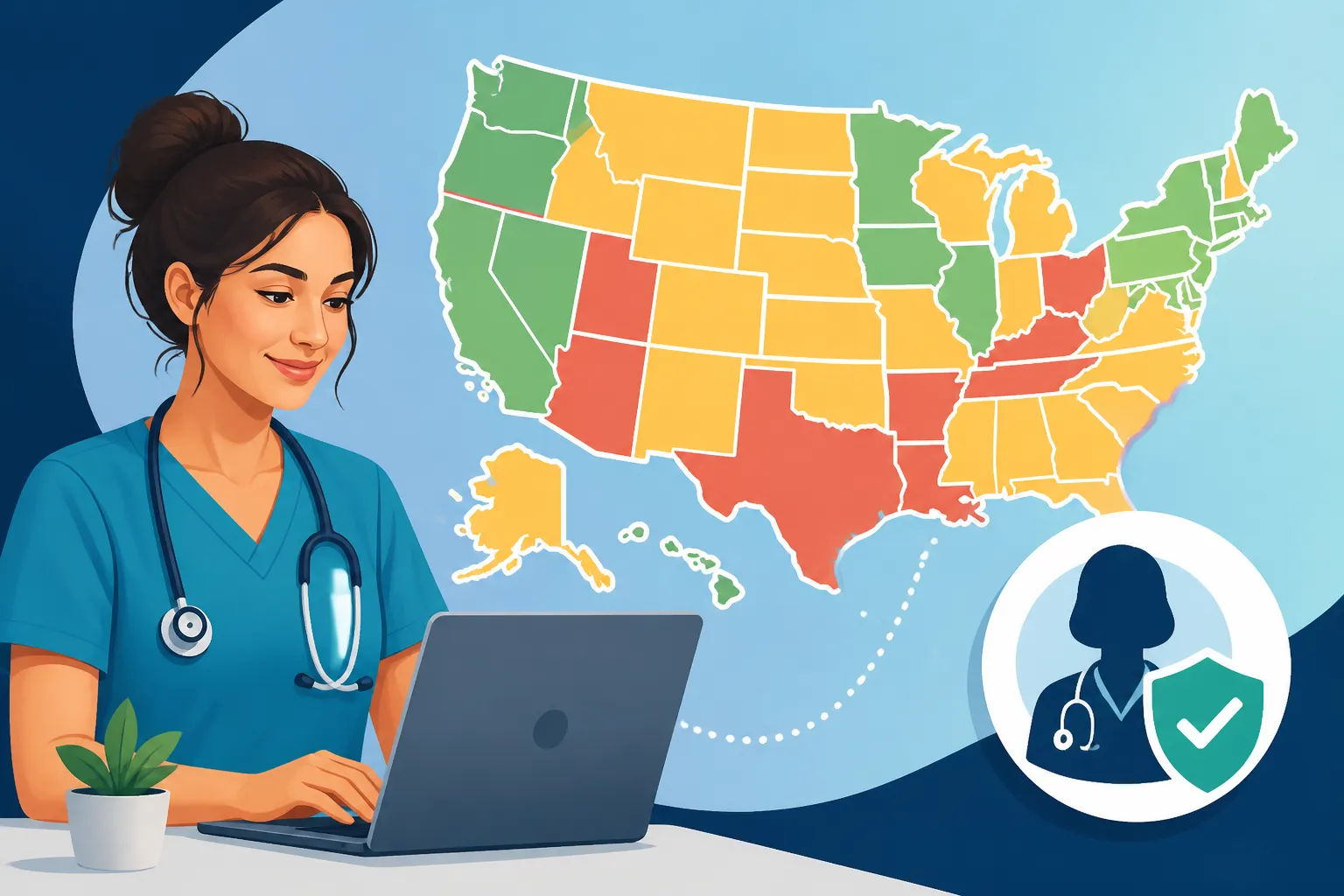
How NP Autonomy Varies by State
Navigating the world of nurse practitioner (NP) practice can feel like sifting through a maze of different rules and regulations, especially when you're trying to figure out where you can truly practice to the full extent of your education and training. Many aspiring and current NPs feel frustrated by the seemingly arbitrary differences in what they're allowed to do from one state line to the next. This guide aims to demystify how NP autonomy varies by state, helping you understand the different practice models and what they mean for your career and patient care.
Understanding Nurse Practitioner Autonomy in Practice
For many registered nurses who choose to advance their careers and become nurse practitioners, the dream is to provide comprehensive, high-quality care to patients, often with a greater degree of independence. However, the reality on the ground can be starkly different depending on which state you choose to practice in. NP autonomy refers to the legal authority granted to nurse practitioners to practice independently, without mandatory supervision or collaboration agreements with physicians. It encompasses the ability to diagnose, treat, prescribe medications, and manage patient care within their scope of practice.
The concept of autonomy isn't just about professional pride; it directly impacts patient access to care, especially in underserved rural and urban areas. When NPs are limited in their practice, it can create unnecessary barriers for patients seeking essential healthcare services. This patchwork of regulations across the U.S. is a constant source of discussion and advocacy within the nursing community. For those considering the advanced path, exploring an online MSN program to become an NP, understanding these distinctions is paramount.
What is Full Practice Authority?
Full Practice Authority (FPA) is the gold standard for nurse practitioners. In states with FPA, NPs are authorized to evaluate patients, diagnose, order and interpret diagnostic tests, and initiate and manage treatments, including prescribing medications and controlled substances, without the direct supervision or collaborative agreement of a physician. This is exactly what it sounds like – practicing independently based on their advanced education and national certification.
Think about it this way: In an FPA state, an NP running a rural health clinic can see a patient, assess their symptoms, order an X-ray, diagnose pneumonia, prescribe antibiotics, and create a follow-up plan, all without needing a physician to co-sign orders or be physically present. This model recognizes NPs as independent healthcare providers fully capable of delivering primary and specialty care within their scope. It's often seen as the most efficient way to utilize the skills of highly trained NPs and is strongly advocated for by organizations like the American Association of Nurse Practitioners (AANP).
What is Reduced Practice Authority?
Reduced Practice Authority (RPA) means that state laws reduce at least one element of NP practice. This often requires a career-long or time-limited collaborative agreement with a physician for the NP to provide patient care or for the NP's prescriptive authority to be limited. This is where things start to get a little more complicated and, frankly, frustrating for many NPs.
Imagine you're an NP in an RPA state. You might be able to diagnose and treat, but you need a signed agreement with a collaborating physician to prescribe certain medications, or perhaps all medications. Or, you might need a physician to periodically review a percentage of your charts. This can slow down patient care, add administrative burdens, and sometimes even make it harder for NPs to find jobs, as not all physicians are willing or able to enter into these agreements. It essentially places a bureaucratic hurdle between the NP and their patient, even when the NP is perfectly competent to handle the situation on their own.
What is Restricted Practice Authority?
Restricted Practice Authority (RPA) imposes the most significant limitations on NP practice. In these states, NPs are required to be supervised, delegated, or team-managed by another healthcare provider (usually a physician) throughout their entire career in order to provide patient care. This model does not allow for independent practice at all, no matter how much experience an NP gains.
For an NP in a Restricted Practice state, every aspect of their practice, from diagnosis to treatment plans and prescribing, might need to be reviewed or co-signed by a physician. This can feel incredibly limiting, especially after completing extensive education and training to become a nurse practitioner. It can also create an environment where NPs are seen more as physician extenders than as autonomous providers, which can hinder their ability to fully address healthcare needs, particularly in areas where physician availability is already scarce. It's a structure that can lead to significant bottlenecks in patient care and limits the professional growth and impact of NPs.
The Three Tiers of NP Practice Authority: A Closer Look
The differences between Full, Reduced, and Restricted Practice Authority aren't just subtle legal nuances; they profoundly shape the daily work life of a nurse practitioner and, by extension, the healthcare landscape for patients. Understanding these distinctions is critical for anyone considering this rewarding but complex career path. For example, if you're looking into becoming a Family Nurse Practitioner (FNP), knowing your state's regulations will directly impact the types of settings you can work in and the independence you'll have.
The variability often stems from a combination of legislative history, lobbying efforts by various medical professional groups, and differing opinions on the optimal model for healthcare delivery. This means that an NP licensed in a Full Practice state like Oregon might have a completely different professional experience than an NP in a Restricted Practice state such as Florida, even if both graduated from top-tier programs.
State-by-State Breakdown: A Look at the Landscape
The map of NP practice authority across the United States is constantly evolving, with states periodically reviewing and updating their regulations. However, for a long time, the breakdown has seen certain regions leaning towards full autonomy while others maintain more restrictive models.
As of early 2024, approximately half of the U.S. states and territories grant Full Practice Authority to NPs. These include states like Arizona, Colorado, Maine, Maryland, Massachusetts, Nevada, New Hampshire, New Mexico, New York, North Dakota, Oregon, Vermont, Washington, and Wyoming, among others. In these states, NPs can generally open their own clinics, manage their own patient panels, and prescribe without physician oversight after licensure. Many NPs are drawn to these states because of the professional freedom and the ability to serve communities directly.
Reduced Practice states are where things get a bit more ambiguous. Examples might include California, Georgia, Illinois, and Pennsylvania. In these states, while NPs have a broad scope, specific aspects like prescriptive authority or the ability to practice independently for a certain period might require a collaborative agreement. This means an NP graduating in California will need to secure a supervising physician to practice, a requirement that can sometimes be challenging and time-consuming, particularly for new graduates.
Then we have the Restricted Practice states, often found in the Southeast. Think Texas, Florida, and North Carolina, where NPs face significant mandates for physician supervision, delegation, or team management to deliver care. These states often have the most vocal opposition to increased NP autonomy, citing patient safety concerns—concerns that professional nursing organizations consistently refute with evidence of high-quality NP care. This is a critical piece of information for anyone asking, "Is an MSN worth it?" if their ultimate goal is highly autonomous practice.
Impact on Patient Access and Care Quality
The implications of these varying levels of autonomy extend far beyond just the NP's professional satisfaction; they directly affect patient access to care and, arguably, care quality. In states with Full Practice Authority, NPs can more readily establish practices in underserved areas, fill gaps in primary care, and respond to community health needs without the administrative hurdles of securing a collaborating physician. This is particularly vital in rural areas where physician shortages are acute. When NPs can practice independently, it expands the healthcare workforce and improves the geographic distribution of providers.
Conversely, in states with Reduced or Restricted Practice Authority, the requirement for physician supervision can create bottlenecks. For instance, if a physician is unwilling or unable to sign off on an NP's prescriptions or practice, that NP may be unable to deliver care, even if there's a desperate need in the community. This can exacerbate existing healthcare disparities, especially for vulnerable populations who might have limited options for medical providers. Research consistently shows that patient outcomes in FPA states are comparable to, or even better than, those in states with more restrictive laws, indicating that NP autonomy does not compromise patient safety. The American Association of Nurse Practitioners (AANP) regularly publishes data supporting the safety and effectiveness of NP-provided care across all practice environments.
Factors Influencing State-Level NP Autonomy
The landscape of NP autonomy isn't static; it's a dynamic battleground of legislative action, professional advocacy, and sometimes, political inertia. Many factors contribute to why one state embraces full practice authority while another clings to restrictive models. Understanding these underlying currents can help paint a clearer picture of the challenges and opportunities for advancing NP roles.
One of the primary drivers is often the legislative history of a state's medical and nursing boards. Older laws, drafted before the widespread advent of the modern NP role, often placed physicians as the gatekeepers of all medical practice. Changing these laws requires significant effort and overcoming deeply entrenched traditions. Another major factor is the influence of professional organizations. While nursing organizations fiercely advocate for full practice authority, physician groups sometimes lobby to maintain supervisory requirements, citing concerns about patient safety or scope overlap, despite extensive evidence supporting NP competency.
The Role of Professional Organizations and Advocacy
Professional organizations play an absolutely vital role in shaping NP autonomy. Groups like the American Association of Nurse Practitioners (AANP) and state nursing associations are at the forefront of legislative efforts, advocating tirelessly for Full Practice Authority. They provide data, share success stories from FPA states, and educate policymakers on the value and capabilities of NPs.
These organizations often highlight the economic benefits and improved patient access that come with expanding NP practice. They track legislation, mobilize their members for grassroots advocacy, and work directly with lawmakers. For an NP looking to stay informed or get involved, joining such an organization is crucial. They offer resources, updates on current legislation, and platforms for collective action, which is often the only way to move the needle on these complex issues. Staying connected through professional groups is essential, and many nurses also rely on trusted educational platforms like Uworld to keep their clinical knowledge sharp and stay current with best practices that inform these advocacy efforts.
The Push for Uniformity: Why It Matters
The varied landscape of NP practice authority creates significant challenges, not just for individual NPs but for the entire healthcare system. This is why there's a strong push for greater uniformity across states, ideally towards a nationwide standard of Full Practice Authority.
For NPs, uniformity would mean greater mobility. An NP trained in one state could more easily move to another without having to navigate a completely different set of regulations or potentially face a reduction in their scope of practice. This flexibility would be a huge boon for nurses who want to relocate for family, job opportunities, or to pursue specific areas of practice. It would also alleviate the confusion many NPs face when exploring how NP autonomy varies by state, simplifying career planning.
For patients, uniformity would streamline access to care. It would allow healthcare organizations to deploy NPs more effectively to where they're needed most, without bureaucratic state-specific restrictions. During national crises, like a pandemic, consistent practice laws would enable NPs to respond more rapidly and effectively across state lines. The current fragmented system is inefficient and often detrimental to public health, underscoring why many believe a national standard for NP practice is long overdue. This kind of consistency could also help clarify aspects like NP Prescriptive Authority by State, ensuring a more predictable professional environment.
Navigating Practice Authority as an NP
As a nurse practitioner, or someone aspiring to become one, the varying levels of practice authority are not just abstract legal concepts; they are practical considerations that will profoundly influence your career trajectory, daily responsibilities, and even your job search. It's crucial to approach this aspect of your profession with intentionality, much like you would meticulously prepare for your certification exams with a reputable tool like Uworld. Your choice of where to live and practice can dramatically alter the professional opportunities available to you.
The first step, even before you dive deep into how to become a nurse practitioner, is to understand these differences. Many new graduates are eager to jump into their roles, but if they haven't considered the state's practice laws, they might find themselves in a position that doesn't align with their professional goals or the full extent of their education. This isn't just about finding any job; it's about finding the right job in the right environment.
Researching Your Target State's Regulations
Before you even think about applying for licensure in a particular state, you need to do your homework. The official board of nursing website for each state is your primary source for the most accurate and up-to-date information regarding NP practice authority. Don't rely solely on word-of-mouth or outdated articles. Laws can change, and what was true last year might be different this year.
Beyond the Board of Nursing, reputable professional organizations like the AANP often provide comprehensive maps and summaries of NP Full Practice Authority States and the specific regulations for each state. Pay close attention to details about prescriptive authority, the need for collaborative agreements (and their duration), and any specific requirements for starting your own practice. For instance, some states might require a period of supervised practice before granting full autonomy, even in FPA states. Understanding these nuances can help you avoid unwelcome surprises down the line. You'll also want to look into topics like NP Scope of Practice by State to get a full picture.
Considering the Implications for Your Career Path
The level of NP autonomy in your chosen state has direct implications for your long-term career path. If your goal is to open your own independent clinic, perhaps in an underserved rural area, then a Full Practice Authority state is almost certainly where you need to be. Conversely, if you thrive in a highly collaborative, team-based environment within a large hospital system, a Reduced or even Restricted Practice state might still offer fulfilling opportunities, as long as you understand and accept the supervisory requirements.
For those considering advanced roles or perhaps even a DNP, the foundational practice environment matters. While an MSN vs DNP: Which to Choose might seem like a purely academic question, your ability to leverage that higher degree for greater autonomy and leadership will be profoundly affected by state laws. An NP aiming for maximum independence and flexibility might find themselves actively avoiding Restricted Practice states, even if other factors (like family or cost of living) are appealing. This strategic thinking extends to where you pursue your education, as some Online MSN Programs: Complete Guide might offer specific state-focused guidance, or at least encourage you to be aware of the implications. It’s also crucial for understanding your potential earnings, as a Nurse Practitioner Salary Guide might show differences based on practice authority, not just specialty.
The Shifting Sands of Nurse Practitioner (NP) Autonomy: Understanding State-Specific Variations
It's a common frustration among nurse practitioners (NPs) and those aspiring to join the advanced practice nursing ranks: why can an NP in one state independently diagnose, treat, and prescribe, while an equally qualified NP just across a state line requires physician supervision for almost every action? This variability in NP autonomy across the United States isn't just an administrative headache; it directly impacts healthcare access, efficiency, and the professional growth of highly skilled nurses. If you’re considering becoming a nurse practitioner, understanding these state-level differences is absolutely crucial for your career planning and ultimate job satisfaction.
Defining NP Autonomy: What Does It Really Mean?
At its core, NP autonomy refers to the legal authority granted to nurse practitioners to practice independently, often without the requirement for physician oversight or collaborative agreements. This umbrella term covers several key aspects of an NP's practice:
- Diagnosis and Treatment: The ability to assess, diagnose, and create comprehensive treatment plans for patients within their scope of practice.
- Prescriptive Authority: The power to prescribe medications, including controlled substances, without physician co-signature or review.
- Ordering and Interpreting Diagnostic Tests: The right to order labs, imaging (like X-rays or MRIs), and other diagnostic tests, and to interpret their results to guide patient care.
- Referral Authority: The ability to refer patients to specialists or other healthcare providers as needed.
When NPs have greater autonomy, they can more efficiently deliver care, especially in areas with physician shortages. It allows them to fully utilize their extensive education and clinical training, much of which is built on rigorous academic programs and supervised clinical hours, often aided by comprehensive study tools like Uworld to ensure competency.
The Landscape of Practice Authority: Three Main Models
To simplify the complex web of state regulations, most discussions categorize NP practice authority into three distinct models, as defined by the American Association of Nurse Practitioners (AANP): Full Practice, Reduced Practice, and Restricted Practice.
Full Practice Authority
In states with Full Practice Authority (FPA), NPs are granted the authority to evaluate patients, diagnose, order and interpret diagnostic tests, and initiate and manage treatments—including prescribing medications and controlled substances—all without the need for physician oversight or collaborative agreements. This model empowers NPs to practice to the full extent of their education and national certification.
Consider an NP in Colorado, a state with FPA. They can open their own clinic in a rural community lacking primary care providers, manage a diverse patient panel, and provide comprehensive care from wellness visits to chronic disease management, just as a physician would, within their specialty scope. They don't need a physician to sign off on their prescriptions or charts. This maximizes efficiency and allows NPs to be agile in meeting healthcare demands. It's often the desired model for those completing their advanced degrees and looking for maximum professional independence.
Reduced Practice Authority
Reduced Practice Authority (RPA) indicates that state laws reduce at least one element of NP practice. Typically, this means NPs require a career-long or time-limited collaborative agreement with a physician to provide patient care or to exercise their full prescriptive authority.
For example, in a state like Georgia, an NP might be able to diagnose and treat, but they might need a collaborating physician to periodically review a certain percentage of their charts or to co-sign prescriptions for specific types of medications. This adds an administrative layer and can sometimes complicate the process of an NP establishing their own practice or finding employment, as they need to secure a physician willing to enter into such an agreement. This often means delays in patient care and additional costs, without necessarily enhancing patient safety.
Restricted Practice Authority
Restricted Practice Authority (RPA) imposes the most significant limitations on NP practice. In these states, NPs are legally required to be supervised, delegated, or team-managed by another healthcare provider (almost always a physician) throughout their entire career in order to provide patient care. They cannot practice independently under any circumstances.
Imagine an NP in Texas, a Restricted Practice state. While incredibly well-educated and clinically experienced, this NP would need a physician to sign off on many of their actions, from initial diagnoses to treatment plans and all prescriptions. This level of restriction can feel incredibly stifling for NPs who have completed rigorous MSN Clinical Hours Requirements and passed national certification exams. It limits their ability to respond quickly to patient needs and can lead to significant bottlenecks, particularly in areas where physician availability is low. This environment can make it difficult for an NP to fully leverage their advanced education and expertise.
Why These Differences Exist: A Look at the Contributing Factors
The disparities in NP autonomy across states are rarely accidental. They are the result of a complex interplay of historical, political, and professional factors:
Legislative History and Outdated Laws
Many states' practice laws date back decades, predating the modern NP role. These laws were often written at a time when physicians were virtually the sole independent providers of medical care. Updating these statutes is a slow, arduous process that requires legislative action, which can be difficult to achieve even with strong advocacy. The legal frameworks in many states simply haven't caught up to the evolution of nursing education and practice.
The Influence of Professional Organizations and Lobbying
Both nursing and medical professional organizations actively lobby state legislatures on issues of practice authority. Groups like the AANP and state nursing associations are powerful advocates for full NP practice authority, presenting evidence of NPs' competency, patient safety records, and contributions to healthcare access. Conversely, some medical associations, such as state medical boards, often advocate for maintaining physician supervision, citing concerns about scope of practice or patient safety, even though numerous studies have shown that NPs provide care that is equivalent in quality and safety to that provided by physicians. The ongoing debate often boils down to turf protection versus patient access.
Addressing Healthcare Needs, Especially in Rural Areas
Interestingly, one of the most compelling arguments for increasing NP autonomy is the glaring need for healthcare providers in rural and underserved areas. States facing critical shortages of primary care physicians are often more open to granting NPs full practice authority as a practical solution to improve patient access. In areas where an NP might be the only healthcare provider for miles, restrictive laws can literally prevent communities from receiving essential care. This is why you often see FPA states correlating with areas that have significant rural populations, though not exclusively.
The Push for Uniformity: Why It Matters to Patients and Providers
The current fragmented system where NP Autonomy Varies by State creates inefficiencies and inequities. There's a strong, ongoing movement within the nursing profession to achieve greater uniformity, ideally national Full Practice Authority.
Enhanced Patient Access and Continuity of Care
For patients, greater uniformity in NP practice laws would mean more consistent access to care, regardless of where they live. In a world where people frequently move, having consistent healthcare access provided by NPs is critical. Imagine a patient who relies on an NP for their chronic condition care moving from a Full Practice state to a Restricted Practice state; their care could be disrupted or complicated by new supervisory requirements. Uniformity helps ensure continuity and reduces barriers, especially for vulnerable populations and in areas struggling with provider shortages. When NPs can freely practice, it improves the overall availability of healthcare services, meaning patients don't have to wait as long for appointments or travel as far to see a provider.
Increased Professional Mobility for NPs
From the NP's perspective, national uniformity would offer significant professional mobility. An NP trained in New York, a Full Practice state, could seamlessly move to Florida (a Restricted Practice state) or California (a Reduced Practice state) without facing a reduction in their ability to practice or needing to re-establish complex collaborative agreements. This flexibility would allow NPs to pursue job opportunities or relocate for personal reasons without their advanced degree suddenly becoming less utilized. This freedom of movement is not just about convenience; it allows the healthcare system to better deploy skilled NPs where they are most needed, addressing critical shortages across the country. It also makes the career path clearer for individuals considering Nurse Practitioner Specializations Explained, as they know their advanced training will be fully recognized everywhere.
Streamlined Operations for Healthcare Systems
For large healthcare systems and national organizations, the patchwork of state laws is an administrative nightmare. Recruiting NPs, especially for multi-state systems, becomes incredibly complex when considering varying prescriptive authority and supervision requirements. Uniformity would simplify credentialing, licensing, and operational protocols, allowing healthcare systems to function more efficiently and effectively deploy their NP workforce. This translates to reduced administrative costs and more resources directly focused on patient care.
Navigating Your Career in a Diverse Regulatory Environment
Given this complex and ever-changing landscape, how do you, as a current or aspiring NP, navigate your career effectively? The key is to be informed, strategic, and proactive. The investment in an advanced degree, like those from Accredited Online RN to BSN Programs as a foundational step, or an MSN to become an NP, is significant, and you want to ensure you can maximize its potential.
Strategic State Selection: Researching Your Target State's Regulations
Before you even complete your How Long to Become a Nurse Practitioner journey, one of the most critical decisions you'll make is where to practice. This decision should involve thorough research into your target state's specific NP practice regulations.
Start with the official state Board of Nursing website. This is the most authoritative source for current laws and regulations. Look for details on:
- Initial licensure requirements: Are there any specific periods of supervision required for new graduates?
- Prescriptive authority: What are the rules for prescribing controlled substances? Are there specific formulary restrictions?
- Collaborative agreements: Is a collaborative agreement with a physician required, and if so, for how long, and what are its parameters?
- Independent practice: Can NPs open their own clinics or bill independently?
Supplement this with information from state NP organizations or the AANP, which often provide easy-to-understand summaries and maps. These resources are often updated frequently and can save you a lot of time sifting through legal jargon. For example, if you're interested in pursuing specific roles, knowing the details of NP Prescriptive Authority by State is paramount. Don't be afraid to reach out to experienced NPs in your target state for their firsthand insights; their practical experience can be invaluable.
Considering the Implications for Your Career Path and Professional Growth
Your chosen state's practice authority will profoundly shape your daily work life and long-term career trajectory.
- For Aspiring NPs: If your ultimate goal is to open an independent practice or work in an autonomous role, prioritize states with Full Practice Authority. If family or personal reasons tie you to a Reduced or Restricted Practice state, be realistic about the supervisory requirements and how they might impact your desired practice model. This might influence your choice of How to Choose an NP Specialty, as some specialties might be more impacted by restrictions than others.
- For Current NPs: If you're considering relocating, understand that moving to a more restrictive state could mean a significant change in your professional autonomy. This might involve new collaborative agreements, limitations on prescriptive authority, or a fundamental shift in how you practice. On the flip side, moving to an FPA state could unlock new opportunities for leadership and independent practice that were previously unavailable.
- Professional Development and Advocacy: Regardless of where you practice, staying engaged with professional organizations is key. These groups are constantly working to advance NP autonomy. Your voice and support, even if it's just staying informed, contribute to the larger effort. Furthermore, continuous learning, often facilitated by educational tools like Uworld, isn't just about clinical knowledge; it's about staying current on legislative changes and best practices that inform advocacy efforts.
| State Type | NP Practice Characteristics | Examples of States (as of early 2024, general guidance) |
|---|---|---|
| Full Practice | Can practice independently without physician supervision for diagnosis, treatment, and prescribing. | Arizona, Colorado, Maine, Maryland, Massachusetts, Nevada, New Hampshire, New Mexico, New York, North Dakota, Oregon, Vermont, Washington, Wyoming |
| Reduced Practice | Requires a collaborative agreement with a physician for at least one element of NP practice (e.g., prescriptive authority, independent practice for a period). | California, Georgia, Illinois, Ohio, Pennsylvania, Virginia |
| Restricted Practice | Requires career-long physician supervision, delegation, or team management for NPs to provide patient care. | Alabama, Florida, Kansas, Michigan, Missouri, North Carolina, South Carolina, Texas |
Note: State laws are subject to change. Always verify current regulations with the respective state Board of Nursing or a reputable professional organization like the American Association of Nurse Practitioners (AANP).
Disclaimer
The information provided in this guide is intended for general informational purposes only and does not constitute legal or professional advice. Nurse practitioner practice laws and regulations are complex and vary significantly by state, and they are subject to change. Always consult the official Board of Nursing and relevant professional organizations in your specific state or jurisdiction for the most accurate and up-to-date information regarding NP autonomy and practice requirements. Relying solely on the information presented here without independent verification is not recommended.