How to Move from ICU to CRNA
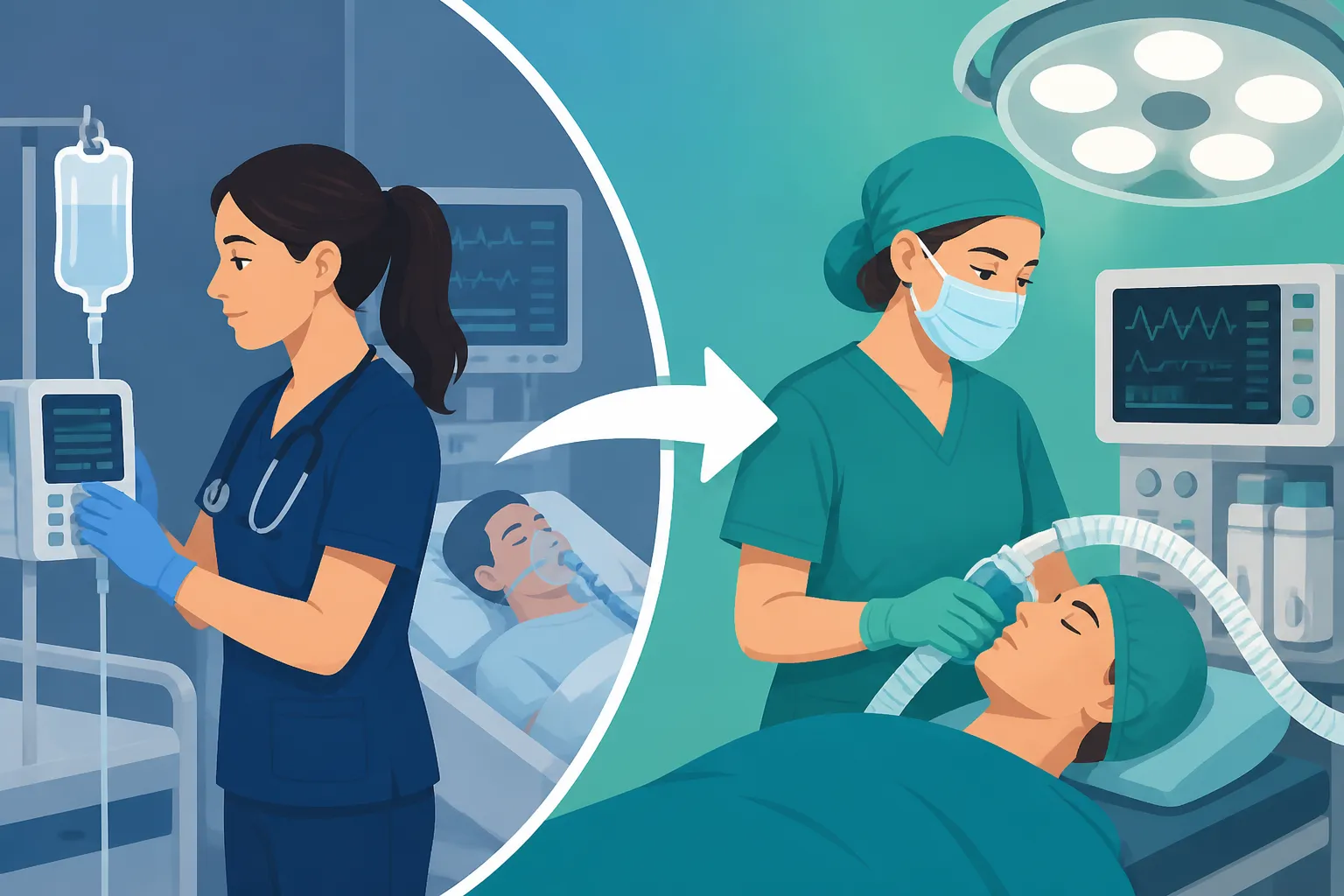
It's completely understandable to feel like you've hit a ceiling in the Intensive Care Unit (ICU) and are yearning for a new challenge, a deeper level of autonomy, and greater impact on patient care. Many experienced ICU nurses reach a point where they consider the leap to becoming a Certified Registered Nurse Anesthetist (CRNA). This guide is designed to walk you through the essential steps, expected challenges, and immense rewards of transitioning from the fast-paced, high-stakes world of ICU nursing to the specialized field of nurse anesthesia.
The Foundation: Why ICU Experience is Invaluable for CRNA School
As an ICU nurse, you’re already operating at a very high level, constantly making critical decisions and managing complex patients. This isn't just a job; it's an intensive training ground that directly prepares you for the rigorous demands of nurse anesthesia. CRNA programs don't just prefer critical care experience; they require it because it builds an unparalleled foundation.
Deep Clinical Acumen
Think about it: in the ICU, you're regularly managing patients on the brink, often with multi-system organ failure, severe sepsis, or major trauma. You've seen the human body react to extreme stress and powerful medications in real-time. This isn't theoretical knowledge from a textbook; it's lived experience. You understand the nuances of fluid shifts, the insidious progression of shock, and the delicate balance of electrolyte disturbances. You know how to interpret subtle changes in a patient's rhythm strip, how to correlate blood gas results with clinical presentation, and how to anticipate complications before they become full-blown crises. These aren't just skills; they're a deep clinical intuition that comes from countless hours at the bedside, making you a prime candidate for the high-stakes environment of anesthesia. You're already a master of the "what if" scenarios, constantly problem-solving and adapting.
Technical Proficiency
Your daily life in the ICU is a masterclass in advanced procedural skills. You're probably proficient in managing complex airways, whether it’s assisting with intubation, troubleshooting ventilators, or suctioning a tracheostomy. You're adept at titrating potent vasopressors like norepinephrine and vasopressin to maintain hemodynamics, often while simultaneously managing multiple other drips. Think about patients on cardiac assist devices such as intra-aortic balloon pumps (IABP) or even extracorporeal membrane oxygenation (ECMO) – you're managing these intricate machines, understanding their physiological impact, and making adjustments based on real-time data. Inserting and managing central lines, arterial lines, and even pulmonary artery catheters are routine for you. This hands-on expertise with advanced technology and critical interventions translates directly into the procedural and monitoring skills required for anesthesia delivery.
Stress Management and Resilience
The ICU is an environment of constant pressure, unexpected emergencies, and emotionally taxing situations. You've developed an incredible ability to remain calm and focused when the alarms are blaring, and seconds count. Juggling multiple critically ill patients, coordinating with various specialties, and communicating effectively with anxious families are all part of your routine. This resilience and ability to perform under extreme stress are not just desirable traits for CRNA school; they are absolutely essential. Anesthesia often involves quick decisions in rapidly changing environments, and your experience in the ICU means you're already conditioned to thrive in such circumstances. You understand the profound responsibility of holding a patient's life in your hands and have learned how to manage that weight with professionalism and precision.
Charting Your Course: Essential Steps to Transition from ICU to CRNA Program
Making the jump from an RN in the ICU to a CRNA requires strategic planning and dedication. It's not just about wanting to do it; it's about meticulously preparing your application and academic profile.
Meeting Admission Requirements
The first hurdle is ensuring you meet the baseline academic and experiential requirements. Most CRNA programs are doctoral-level (Doctor of Nursing Practice, DNP, or Doctor of Nurse Anesthesia Practice, DNAP), though a few Master of Science in Nursing (MSN) programs still exist. This means you’ll typically need a Bachelor of Science in Nursing (BSN) as a minimum. If you currently hold an Associate Degree in Nursing (ADN), your path will first involve completing an Online RN to BSN Programs: Complete Guide or an RN to MSN bridge program. A strong academic record is crucial, with most programs requiring a minimum GPA of 3.0-3.5 in your undergraduate nursing coursework and prerequisite science courses.
Speaking of prerequisites, you'll need to demonstrate proficiency in core sciences like anatomy, physiology, chemistry (often organic or biochemistry), microbiology, and statistics. Some programs might even require advanced pharmacology or physics. It's smart to check the specific requirements of your target schools early, as some of these courses might need to be taken or retaken if your previous grades weren't strong enough or if too much time has passed. While the GRE (Graduate Record Examinations) used to be a standard requirement, more and more programs are waiving it, especially for applicants with strong GPAs and extensive experience. Always confirm with individual programs. For a comprehensive overview, check out this guide on CRNA Program Requirements Explained.
Gaining Specific Critical Care Experience
While any ICU experience is valuable, some types are more highly regarded by CRNA programs due to their direct relevance to anesthesia. Surgical ICUs (SICU), Cardiothoracic ICUs (CTICU), Neuro ICUs, and Trauma ICUs often expose nurses to patients with complex hemodynamic instability, advanced airway management needs, and a wide array of vasoactive medications and critical interventions. While Medical ICUs (MICU) are still excellent, demonstrating exposure to high-acuity surgical or trauma patients can be a significant advantage. The general recommendation is a minimum of 1-2 years of full-time, direct critical care experience, but many successful applicants have 3-5 years or more. The more extensive and high-acuity your experience, the stronger your application.
Beyond just the setting, consider certifications. Earning your Critical Care Registered Nurse (CCRN) certification is almost universally expected and will significantly bolster your application. It demonstrates a validated mastery of critical care nursing principles and commitment to your specialty. If you’re looking to boost your critical care resume, you might find valuable insights in our guide on How to Become a Critical Care Nurse.
Enhancing Your Application
Once you meet the basic criteria, it's about making your application shine. Strong letters of recommendation are paramount. Seek out recommendations from your ICU manager, a physician you work closely with, and ideally, a CRNA or anesthesiologist you've shadowed. These individuals can speak to your clinical skills, work ethic, critical thinking, and suitability for the intense demands of anesthesia school.
Your personal statement is your chance to tell your story – why you want to be a CRNA, what experiences have led you to this decision, and how your ICU background uniquely prepares you. Be authentic, highlight specific patient scenarios, and articulate your passion for the profession.
Shadowing CRNAs is another powerful way to demonstrate your understanding of the role and commitment to the profession. It provides invaluable insight into the day-to-day realities of anesthesia practice and allows you to confirm that this is truly the path for you. Many programs look for this experience.
Finally, consider advanced certifications like Advanced Cardiac Life Support (ACLS) and Pediatric Advanced Life Support (PALS), which are often prerequisites or highly recommended. For any standardized tests you might take, or even for preparing for didactic coursework, resources like Uworld can be incredibly helpful. Their comprehensive question banks and detailed explanations are designed to build a strong foundational knowledge, whether you're brushing up on pharmacology or physiology.
Life in a CRNA Program: What to Expect
Let's be real: CRNA school is tough. It's often described as one of the most rigorous graduate programs in nursing, and for good reason. It’s an immersive, intense, and incredibly rewarding journey.
Rigorous Academics and Clinical Rotations
CRNA programs demand an extraordinary level of dedication. The didactic portion is incredibly heavy on advanced science, including graduate-level pharmacology, physiology, pathophysiology, anatomy, and the principles of anesthesia. You'll delve deeply into how different anesthetic agents affect various organ systems, mastering complex concepts that require significant study time. Many students find themselves spending 40-60 hours a week just on academics and study.
The clinical rotations are where your ICU experience truly comes into play. You'll spend thousands of hours in the operating room (OR), labor and delivery, outpatient surgery centers, and other settings, learning to administer various types of anesthesia under the direct supervision of certified nurse anesthetists and anesthesiologists. This hands-on training is where theory meets practice. You'll learn to manage airways, place lines, formulate anesthesia plans, induce and emerge patients from anesthesia, and manage post-operative pain. The schedule is demanding, often involving early mornings, late nights, and sometimes weekend call, mirroring the life of a working anesthesia provider. If you're wondering about the time commitment, our article on How Long CRNA School Takes provides a detailed breakdown.
Balancing Demands and Maintaining Well-being
Given the intensity, balancing CRNA school with personal life can feel like an impossible feat. Many students find it necessary to significantly reduce or completely cease working during the program, especially in the later clinical years. This often means financial sacrifices and a period of intense focus where social life takes a backseat. It's not uncommon for students to live far from family or relocate for clinical sites.
However, success is achievable with strong organizational skills, effective study habits, and a robust support system. Lean on your classmates, who are going through the same challenges. Develop stress-coping mechanisms, whether it's exercise, meditation, or simply scheduling protected downtime. Remember why you started this journey and visualize the end goal. This phase is temporary, and the rewards are profound.
The National Certification Exam (NCE)
After successfully completing your demanding academic and clinical coursework, the final hurdle to becoming a practicing CRNA is passing the National Certification Examination (NCE). This is a comprehensive, adaptive exam that tests your knowledge across all areas of nurse anesthesia practice. It’s designed to ensure you possess the necessary knowledge and skills to provide safe and effective anesthesia care.
Preparing for the NCE is a significant undertaking in itself, often starting months before graduation. Many students utilize review courses, study groups, and extensive question banks. This is another area where a reputable resource like Uworld can be invaluable. Their NCE question bank, with its detailed rationales and performance tracking, helps students identify their strengths and weaknesses, simulating the actual exam experience and boosting confidence. Passing the NCE is the final step in earning the CRNA credential, officially marking your transition from an ICU nurse to a highly skilled anesthesia provider. For more details on the full path, explore How to Become a Nurse Anesthetist.
The CRNA Role: Impact and Future Outlook
Becoming a CRNA isn't just a career change; it's a transformation that puts you at the forefront of patient care, with enhanced autonomy and significant professional growth.
Scope of Practice and Autonomy
As a CRNA, you are a highly specialized advanced practice registered nurse (APRN) who is qualified to deliver anesthesia care to patients in every type of healthcare setting, for every type of surgery or procedure. This includes administering general anesthesia, regional anesthesia (like epidurals and spinal blocks), and local anesthesia, as well as managing acute and chronic pain. You'll be responsible for pre-anesthetic assessment, intraoperative management, and post-anesthetic care.
The level of autonomy for CRNAs varies by state. In some states, CRNAs practice independently, leading the anesthesia care team without requiring supervision from a physician. In others, they work collaboratively with anesthesiologists or other physicians. Regardless of the specific practice model, CRNAs hold significant responsibility and decision-making authority, leveraging their critical care background to ensure patient safety and optimal outcomes throughout the perioperative period. It’s a specialty that truly allows you to utilize your clinical acumen to its fullest extent. Nursing has so many avenues for specialization, and CRNA is definitely one of the most impactful, as highlighted in our guide to Nursing Specializations Explained.
Career Satisfaction and Earning Potential
The career satisfaction for CRNAs is often incredibly high. You get to apply your advanced knowledge and skills daily, directly impacting patient comfort and safety during vulnerable moments. The intellectual challenge, the technical precision, and the ability to work in a variety of clinical settings contribute to a deeply fulfilling career.
From a financial perspective, becoming a CRNA represents a substantial leap in earning potential. Certified Registered Nurse Anesthetists consistently rank among the highest-paid nursing professionals, and indeed, among the highest-paid professions in healthcare overall. The national average salary for CRNAs is significantly higher than that of a registered nurse, reflecting the advanced education, specialized skills, and immense responsibility of the role. This strong financial outlook, combined with high job demand and excellent job security, makes the rigorous journey to becoming a CRNA a sound investment in your future. To understand the financial benefits more clearly, you can read our detailed article on CRNA Salary Explained or explore general high-earning roles in Highest-Paying Nursing Careers. For those weighing different advanced practice roles, comparing options like a CRNA against other specialized NPs can be found in Highest-Paying Nurse Practitioner Specialties. Many CRNA programs are now structured as DNP programs, and understanding the nuances between an MSN and DNP can also be helpful for your long-term career planning, as discussed in MSN vs DNP: Which to Choose.
ICU RN vs. CRNA: A Quick Comparison
Here's a snapshot to illustrate the transition:
| Feature | ICU Registered Nurse (RN) | Certified Registered Nurse Anesthetist (CRNA) |
|---|---|---|
| Education | ADN or BSN | DNP or MSN (post-BSN) in Nurse Anesthesia |
| Experience | Minimum 1-2 years critical care (required for CRNA program) | Extensive didactic and clinical training in anesthesia post-BSN/ICU experience |
| Primary Role | Managing critically ill patients, administering medications, monitoring vital signs, intervening in emergencies. | Planning and administering anesthesia, monitoring patient's physiological status during surgery/procedures. |
| Focus | Holistic patient management in critical illness | Anesthesia management and patient safety during surgical/procedural events |
| Autonomy | High degree of autonomy within RN scope of practice; collaborative decision-making with medical team. | High degree of autonomy in anesthesia delivery; can practice independently in many states. |
| Key Skills | Critical thinking, advanced assessment, medication titration, ventilator management, swift emergency response. | Advanced pharmacology, airway management, regional anesthesia techniques, physiological monitoring, crisis management. |
| Average Salary | Varies significantly by location and experience, but generally lower than CRNA. | Significantly higher than RNs, among the highest-paid nursing roles. |
| Certification | NCLEX-RN required; CCRN is common/recommended specialty certification. | NCLEX-RN, program completion, and National Certification Examination (NCE) required. |
Disclaimer
The information provided in this guide is for general informational purposes only and does not constitute professional advice. Nursing program requirements, costs, and career outlooks can vary significantly by institution, location, and individual circumstances. Always consult with academic advisors, program admissions departments, and official regulatory bodies for the most accurate and up-to-date information.