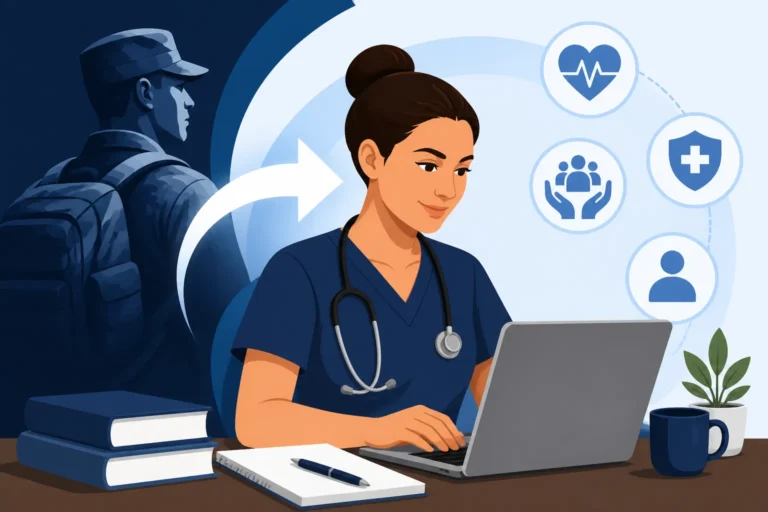
Accelerated BSN for Psychology Majors
It's incredibly common to find yourself with a psychology degree, perhaps having loved the subject but realizing that the direct career paths aren't quite what you envisioned. Maybe you’re feeling a little stuck, looking for a way to apply your deep understanding of human behavior in a hands-on, impactful career. If you're a psychology major considering a leap into nursing, an Accelerated BSN (ABSN) program could be your perfect bridge. This guide will walk you through exactly how your psychology background is an asset, what to expect, and how to navigate this exciting transition.
Why an Accelerated BSN Makes Sense for Psychology Majors
Making a career pivot can feel daunting, especially if you've already dedicated years to one field of study. But for psychology majors, transitioning to nursing through an ABSN isn't just feasible; it's a remarkably logical and advantageous move. You're not starting from scratch; you're building upon an already solid foundation.
Leveraging Your Psychology Background in Nursing
Think about all those psychology courses you aced – developmental psychology, abnormal psychology, cognitive psychology, social psychology. These aren't just abstract theories; they're direct insights into the human condition that are invaluable in nursing. As a psychology major, you've spent years honing skills that are utterly foundational to excellent patient care.
For instance, your understanding of human behavior and mental health is a huge advantage. You're better equipped to assess a patient's emotional state, recognize signs of distress, or identify underlying psychological factors influencing their physical health. When a patient is anxious about a procedure or struggling with a new diagnosis, your ability to employ therapeutic communication techniques, a core skill for any psychology graduate, can make all the difference. You know how to listen actively, show empathy, and build rapport – skills that are taught in nursing but come almost instinctively to someone with your background. Furthermore, critical thinking, a cornerstone of any psychology curriculum, is absolutely essential in nursing for problem-solving, clinical decision-making, and adapting to rapidly changing patient conditions. This deep dive into the human mind helps you understand not just what a patient is experiencing physically, but how they are processing it mentally and emotionally.
The Appeal of a Faster Path to a Nursing Career
One of the biggest frustrations for career changers is the thought of going back to school for another four years. That's where the beauty of an Accelerated BSN program truly shines. An ABSN is specifically designed for individuals who already hold a bachelor's degree in a non-nursing field, allowing them to earn their Bachelor of Science in Nursing (BSN) in a significantly shorter timeframe, often as little as 12 to 18 months. This is a far cry from a traditional four-year nursing program.
The intensive nature of an ABSN means you're diving deep into nursing theory and clinical practice without the general education requirements that you've likely already fulfilled with your psychology degree. It’s an efficient, focused pathway that respects your prior academic achievements. This accelerated format means you can transition into a fulfilling nursing career much quicker, allowing you to start making a tangible difference in patients' lives sooner rather than later. For someone who has spent years studying the intricacies of the mind and is now eager to apply that knowledge in a direct care setting, the rapid pace and clear objectives of an ABSN can be incredibly motivating and a fantastic way to jumpstart a rewarding second career. If you're looking for a comprehensive overview of these programs, our guide on Accelerated BSN Programs Explained is an excellent resource.
Essential Prerequisites and Admission Requirements
While your psychology degree gives you a unique edge, ABSN programs do have specific academic requirements that ensure all students, regardless of their prior major, have the necessary scientific foundation for nursing. Don't worry, many psychology majors find they've already completed a good portion of these.
Common Science and General Education Prerequisites
The typical science prerequisites for an Accelerated BSN program usually include a series of courses critical for understanding the human body and disease processes. You'll almost certainly need Anatomy and Physiology I & II, Microbiology, and Chemistry. Some programs might also require Statistics, which many psychology programs already incorporate, and Nutrition. It’s important to remember that these science courses often come with minimum grade requirements, sometimes a B or higher, given their foundational importance.
When it comes to general education, this is where your psychology degree really starts to pay off. Most ABSN programs require a certain number of humanities, social sciences, and general elective credits. Your entire psychology curriculum typically covers these areas extensively. For example, your Introduction to Psychology, Developmental Psychology, or Abnormal Psychology courses will likely satisfy many social science requirements. This means fewer courses you'll need to complete before applying, streamlining your path significantly. Be sure to check the specific Accelerated BSN Prerequisites Explained for each program you’re interested in, as they can vary.
GPA, Application Process, and What Programs Look For
Admission to ABSN programs can be quite competitive, particularly because of their compressed timeline and high demand. A strong GPA is crucial, often with a particular focus on your science prerequisites. While some programs might accept a cumulative GPA around 2.75 or 3.0, competitive programs often look for a 3.2 or higher, especially in those core science courses. If your science GPA isn't quite there yet, taking a few prerequisite courses at a local community college to boost it can be a smart strategy.
The application itself involves submitting official transcripts from all institutions attended, a compelling personal statement, and often letters of recommendation. This is your chance to shine and connect your psychology background to your nursing aspirations. In your personal statement, articulate clearly why you want to be a nurse and how your psychology degree has uniquely prepared you for this role. Share specific examples of how your understanding of human behavior, communication skills, or empathetic approach will make you an exceptional nurse. Admissions committees are looking for dedicated, mature students who understand the rigor of the program and can articulate a clear purpose. Demonstrating self-awareness and a deep commitment to patient care, perhaps by highlighting volunteer experiences in healthcare settings, can also significantly strengthen your application. For those interested in the timeline, exploring the Accelerated BSN Application Timeline can provide valuable insights.
What to Expect in an Accelerated BSN Program
Let’s be real: an Accelerated BSN program is no walk in the park. It's intense, demanding, and moves at a breakneck pace. But for those with the drive and the right preparation, it’s an incredibly rewarding journey.
The Rigorous Curriculum and Fast Pace
Imagine fitting two to three years of nursing coursework into just 12 to 18 months. That’s the reality of an ABSN. The curriculum is comprehensive, covering all the essential nursing competencies, from foundational nursing skills to complex medical-surgical care, pediatrics, obstetrics, and mental health nursing. You'll delve into pharmacology, pathophysiology, critical care, community health, and leadership. Lectures, labs, and simulations are packed into every week, leaving little downtime.
For psychology majors, a significant advantage comes in courses like mental health nursing. Your existing knowledge base in areas such as psychiatric disorders, therapeutic communication, and crisis intervention will likely give you a head start, allowing you to deepen your understanding rather than build it from the ground up. However, even with this advantage, the sheer volume of new medical information – anatomy, physiology, microbiology, pharmacology – will be challenging. Effective time management, strong study habits, and a willingness to immerse yourself fully in the material are not just recommended, they are absolutely crucial for success. Many students find that supplementary study tools and question banks, like those offered by Uworld, become an indispensable part of their daily routine to keep up with the fast-paced content and prepare for exams. If you're wondering How Hard Is an Accelerated BSN, prepare for a challenge, but also for immense growth.
Clinical Experiences and Practical Application
Alongside your didactic coursework, a significant portion of your ABSN program will be dedicated to clinical experiences. These are hands-on rotations in various healthcare settings, including hospitals, clinics, community health centers, and specialty units. You'll have the opportunity to apply theoretical knowledge to real patient care situations under the supervision of experienced clinical instructors. This is where you'll develop crucial skills like medication administration, wound care, patient assessment, electronic health record documentation, and interprofessional communication.
For psychology majors, these clinical rotations offer a unique opportunity to integrate your understanding of the human experience. When you’re caring for a patient, you’re not just addressing their physical ailments; you're also interacting with their fears, anxieties, family dynamics, and coping mechanisms. Your background helps you see the whole person, not just the disease. For example, in a medical-surgical unit, you might encounter a patient struggling with chronic pain who also has a history of depression. Your psychology background will empower you to approach their care with a more holistic perspective, understanding the interplay between their physical discomfort and their mental well-being. Furthermore, simulation labs provide a safe environment to practice critical skills and decision-making before entering real patient scenarios. Preparing for the NCLEX, the licensing exam, starts on day one of your ABSN program, and resources like Uworld are often recommended by faculty and highly utilized by students to solidify their knowledge and test-taking strategies. For a deeper dive into the practical aspects, read our article on Accelerated BSN Clinical Requirements.
Post-Graduation: Opportunities for Psychology-Minded Nurses
Earning your BSN through an accelerated program is just the beginning. The diverse landscape of nursing offers myriad opportunities, and your psychology background will continue to be a distinct advantage, opening doors to specific specializations and future career growth.
In-Demand Nursing Specialties for Psychology Graduates
With your BSN in hand, you’ll be ready to sit for the NCLEX and become a licensed Registered Nurse (RN). The beauty of nursing is its vast array of specialties. For those with a psychology background, certain areas might feel like a natural fit, allowing you to truly leverage your unique insights.
Psychiatric Mental Health Nursing is perhaps the most obvious and direct alignment. As a psychiatric nurse, you’ll work with individuals and families across the lifespan who are experiencing mental health challenges, substance use disorders, or emotional distress. Your deep understanding of psychological theories, abnormal behavior, and therapeutic communication will be invaluable in assessing, planning, and implementing care. This path can even lead to becoming a Psychiatric Mental Health Nurse Practitioner (PMHNP), a highly sought-after role that offers greater autonomy. Other excellent fits include Hospice and Palliative Care, where empathy and understanding emotional distress are paramount; Pediatric Nursing, where understanding child development and family dynamics is key; and Community Health Nursing, which often involves addressing social determinants of health and providing support in diverse community settings. Even in seemingly general areas like medical-surgical nursing, your ability to provide compassionate care and communicate effectively with patients and their families will set you apart. Understanding patient perspectives, managing anxiety related to illness, and supporting behavioral changes for better health outcomes are all areas where your psychology major provides a significant edge.
Career Advancement and Further Education
The BSN is often considered the entry point into professional nursing, but it's also a powerful launching pad for continued career advancement and higher education. Many nurses, after gaining experience, choose to pursue a Master of Science in Nursing (MSN) or a Doctor of Nursing Practice (DNP) degree. For those who completed an ABSN from a psychology background, this path is particularly streamlined. If you enjoyed your psychology studies and want to deepen your impact, pursuing an Accelerated BSN to MSN Path could be your next step.
For example, if you discovered a passion for mental health nursing during your ABSN, an MSN as a Psychiatric Mental Health Nurse Practitioner (PMHNP) would allow you to diagnose, treat, and prescribe medication for mental health conditions, providing comprehensive care. Your undergraduate psychology knowledge would be an exceptional foundation for these advanced studies, making complex concepts more accessible. Similarly, an MSN in Nursing Education would allow you to teach the next generation of nurses, drawing upon your understanding of learning theories and human behavior. Other advanced roles, such as Nurse Administrators or Nurse Informaticists, also benefit greatly from the analytical and communication skills honed during a psychology degree and further developed in an ABSN. The healthcare landscape is constantly evolving, and a BSN, especially when paired with a strong foundational degree like psychology, positions you perfectly for leadership and innovation. For those interested in advanced practice, learning How to Choose an NP Specialty is a critical step.
Here's a quick look at common prerequisites for an ABSN, highlighting where your psychology degree likely provides a head start:
| Prerequisite Category | Common Courses Required | Psychology Major Advantage |
|---|---|---|
| Natural Sciences | Anatomy & Physiology I & II (with lab), Microbiology (with lab), Chemistry (with lab) | Likely need to complete these or ensure recent completion. |
| Math | Statistics, College Algebra | Statistics often completed within a psychology curriculum. |
| Social Sciences | Introduction to Psychology, Sociology, Developmental Psychology | Typically fully covered by your psychology degree. |
| Humanities | English Composition, Ethics, Public Speaking | Many psychology degrees include these; often fulfilled. |
| Electives | General electives | Your additional psychology courses often count here. |
Disclaimer
Please remember that this article is intended for informational purposes only and does not constitute professional advice. Nursing program requirements, curriculum, and career opportunities can vary significantly by institution and location. Always consult with academic advisors, program directors, and official college resources to get the most accurate and up-to-date information for your specific situation.