Accelerated BSN Job Prospects After Graduation
Embarking on an Accelerated BSN (ABSN) program is a whirlwind, isn't it? You've powered through a rigorous curriculum, often sacrificing sleep and social life, all with the finish line of becoming a registered nurse in sight. But as graduation looms, a common worry starts to creep in: will all this hard work actually pay off with a good job? It's a completely valid concern, and this guide is here to shed light on the real-world job prospects for ABSN graduates, offering reassurance and practical advice to help you launch your nursing career.
What an Accelerated BSN Really Means for Your Career
Let's be honest, the idea of getting a full Bachelor of Science in Nursing degree in a fraction of the time sounds almost too good to be true. But it's very real, and it prepares you for nursing in a unique way. Many students pursuing an ABSN program already hold a bachelor's degree in another field, bringing a diverse range of skills and life experiences to their nursing education. This isn't just a quick credential; it's a comprehensive educational journey compressed into an intensive format.
The Intense Nature of ABSN Programs
If you’ve been through or are considering an ABSN, you know it's not for the faint of heart. These programs are designed to immerse you deeply into nursing science and clinical practice in a short timeframe, typically 11 to 18 months. This rapid pace means you're absorbing a tremendous amount of information and hands-on experience in a compressed period, from complex pathophysiology to intricate pharmacology, all while mastering essential patient care skills. It’s like drinking from a firehose, and it requires incredible discipline, time management, and resilience. For a deeper dive into what these programs entail, explore our comprehensive guide on Accelerated BSN Programs Explained.
The intensity often translates into highly motivated, focused, and adaptable graduates. You've proven you can handle pressure, learn quickly, and manage multiple demands simultaneously—qualities highly valued in any healthcare setting. This rigorous preparation isn't just about passing tests; it’s about forging a robust foundation for competent and compassionate nursing practice. You're not just learning; you're training to think critically under pressure, which is a hallmark of an effective nurse.
Dispelling Myths About ABSN Graduates
There's sometimes an unspoken fear among ABSN students that employers might view their accelerated degree as "less than" a traditional four-year BSN. Let's tackle that myth head-on: it's simply not true. Employers, especially in today's healthcare landscape, understand and value the ABSN. They know that these programs attract mature, dedicated individuals who often bring prior professional experience and a strong academic background to the table. In fact, many hospitals actively recruit ABSN graduates.
What truly matters to employers is your licensure, your clinical competencies, and your preparedness for the NCLEX. A strong academic record, successful completion of demanding clinical rotations, and a passing score on the NCLEX-RN demonstrate your readiness to practice. Your degree title, whether traditional or accelerated, still reads "Bachelor of Science in Nursing." The key is your BSN, not the path you took to get it. When you're thinking about your next steps, remember that your accelerated path is often seen as a testament to your drive and capabilities. Many nurses find that the skills they developed to Survive an Accelerated BSN are precisely what make them stand out in the job market.
Immediate Job Prospects and Entry-Level Roles for ABSN Graduates
The good news is that the nursing profession continues to be in high demand across the United States. A BSN, regardless of whether it's accelerated or traditional, is increasingly becoming the preferred, if not required, entry-level credential in many healthcare settings. This means that as an ABSN graduate, you're stepping into a job market that's actively looking for your skills.
Common Entry-Level Positions
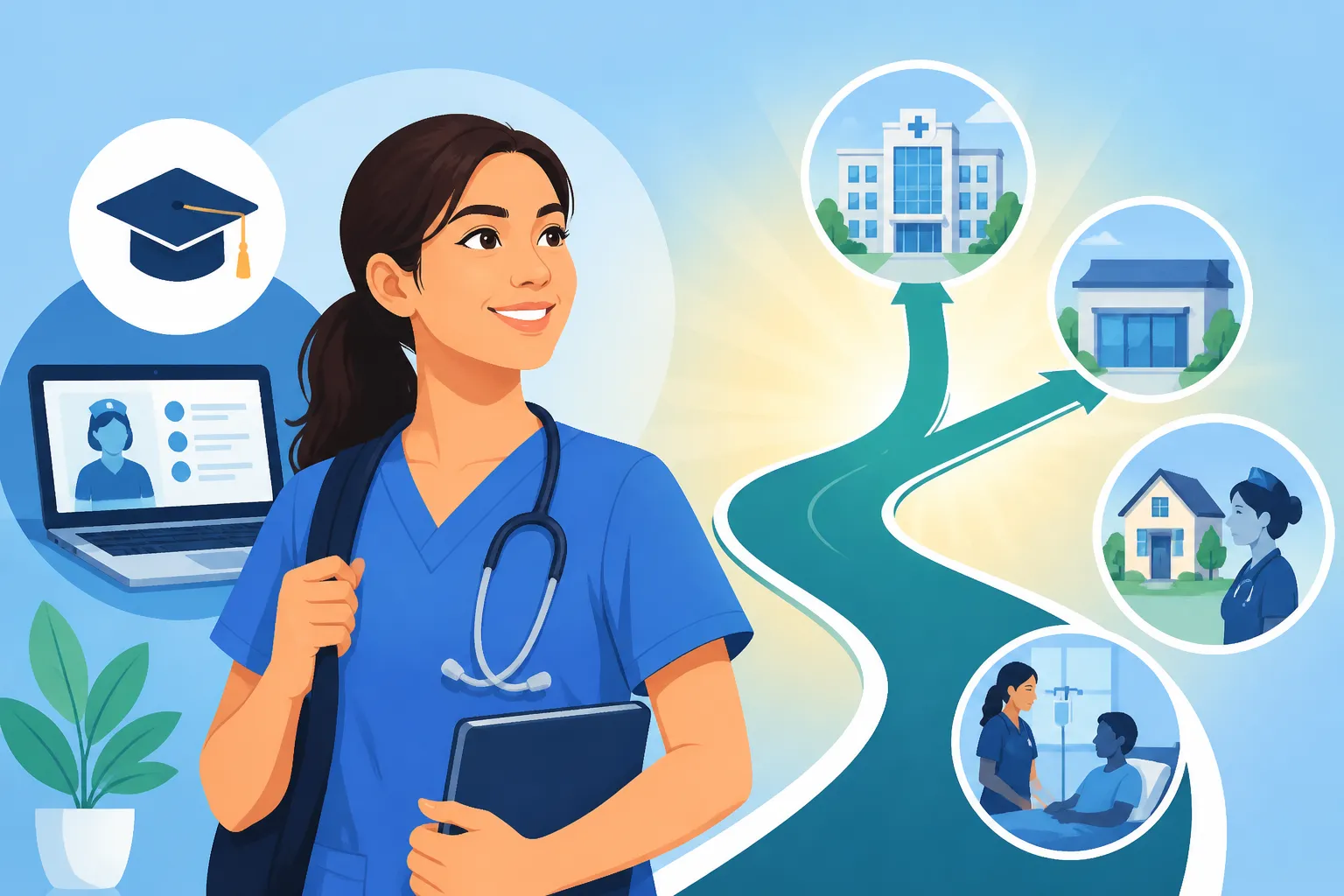
Upon graduation and successful NCLEX-RN licensure, ABSN graduates are eligible for the same entry-level registered nurse (RN) positions as traditional BSN graduates. This includes a wide array of roles in diverse healthcare environments.
Here are some of the most common starting points for new BSN nurses:
- Medical-Surgical Units: Often called the "bread and butter" of nursing, these units provide experience with a wide variety of patient conditions, post-operative care, and chronic illnesses. It’s a fantastic place to solidify fundamental nursing skills, patient assessment, medication administration, and interdisciplinary collaboration. Many new grads find their footing here before specializing.
- Telemetry Units: These units focus on cardiac monitoring, caring for patients with various heart conditions. It's a slightly more specialized area than med-surg, offering exposure to rhythm interpretation and acute cardiac care.
- Emergency Departments (ED): For those who thrive in fast-paced, high-stress environments, the ED can be an exhilarating start. You’ll see a broad spectrum of acute conditions, from minor injuries to life-threatening emergencies, demanding quick critical thinking and adaptability.
- Intensive Care Units (ICU): While some ICUs prefer nurses with prior experience, many progressive hospitals offer new graduate residency programs specifically designed to onboard and train new BSNs in critical care. These roles are intensely focused on complex monitoring, advanced life support, and managing critically ill patients.
- Long-Term Care and Rehabilitation Facilities: These settings offer a different pace, focusing on patient recovery, chronic disease management, and assisting patients to regain independence. It can be a rewarding area for nurses who enjoy building longer-term relationships with patients and their families.
- Community Health and Public Health: Opportunities in clinics, health departments, and school nursing exist, though some may prefer nurses with a bit more experience in specific areas. These roles often involve preventative care, health education, and population-level health initiatives.
Navigating the Job Search as a New ABSN Grad
The job search can feel daunting after such an intense program, but you're well-equipped. Start by updating your resume to highlight your ABSN degree, your clinical hours, and any relevant experiences from your prior degree or career. Tailor your cover letter for each application, emphasizing your quick learning ability and dedication that an ABSN demonstrates.
Many healthcare systems offer new graduate residency programs, which are specifically designed to transition new RNs into practice. These programs provide structured orientation, mentorship, and ongoing education, easing the leap from student to practicing nurse. Applying to these programs is often a smart strategy. Don't underestimate the power of networking! Connect with your clinical instructors, preceptors, and classmates. They often have insights into job openings or can provide valuable recommendations. Attending career fairs hosted by your ABSN program is also a fantastic way to meet recruiters directly.
Remember, your clinical rotations were essentially extended job interviews. If you excelled and built good rapport with staff in a particular unit, inquire about opportunities there. Additionally, preparing thoroughly for the NCLEX-RN is paramount. Many ABSN students rely on robust study materials and practice questions, often from platforms like Uworld, to feel confident going into the exam. Passing the NCLEX is your golden ticket, so invest your time wisely. For more details on what’s expected, check out Accelerated BSN NCLEX Pass Rates.
Regional Job Market Variations
It's important to remember that nursing job prospects can vary significantly based on geographic location. Larger metropolitan areas, especially those with numerous hospitals and healthcare systems, often have a more robust job market for new graduate nurses. States like California, Texas, and Florida, for instance, are known for their high demand for nurses and tend to offer a wide range of opportunities.
However, don't dismiss opportunities in rural or underserved areas. These regions often have critical nursing shortages and may offer incentives, such as sign-on bonuses or tuition reimbursement, to attract new nurses. Researching the job market in your desired location before you start applying is a smart move. Websites like the Bureau of Labor Statistics and state boards of nursing can provide valuable insights into demand and salary expectations in different regions. Your program advisors often have a pulse on local job markets and can be an invaluable resource.
Here's a quick overview of common entry-level roles:
| Nursing Role | Typical Setting(s) | Patient Focus | Common Skills Utilized | Growth Potential (Entry to Advanced) |
|---|---|---|---|---|
| Medical-Surgical RN | Hospitals (general floors) | Diverse adult patients, post-op, chronic illness | Assessment, medication, wound care, patient education | High, foundation for specialization |
| Telemetry RN | Hospitals (cardiac units) | Cardiac patients, rhythm monitoring | EKG interpretation, cardiac assessment, medication | Moderate, often leads to ICU |
| Emergency Room (ER) RN | Hospitals (Emergency Department) | Acute injuries, illnesses, critical care | Rapid assessment, triage, trauma care, stabilization | High, fast-paced, many certifications |
| Intensive Care Unit (ICU) RN | Hospitals (Critical Care Unit) | Critically ill patients, complex medical needs | Advanced monitoring, vent management, critical thinking | Very High, specialized, advanced degrees |
| Rehabilitation RN | Rehabilitation hospitals, long-term care facilities | Recovery from injury/illness, chronic conditions | Patient education, physical therapy support, ADLs | Moderate, focus on patient progress |
| Public Health RN | Health departments, community clinics, schools | Population health, preventative care | Health promotion, education, screening, vaccine administration | Moderate, often requires experience |
Long-Term Career Growth and Advancement with an ABSN
One of the most compelling reasons to earn a BSN, accelerated or otherwise, is the incredible foundation it provides for long-term career growth. Nursing is a profession with a ladder that extends far beyond the bedside, and your ABSN is your solid first rung.
Specialization Opportunities
Once you gain some experience as an RN, typically one to two years, a world of specialization opens up. Your BSN prepares you for roles in various fields, allowing you to find your niche and passion. Do you love working with tiny babies? Neonatal Intensive Care Unit (NICU) nursing might be for you. Are you fascinated by the operating room environment? Becoming an Operating Room Nurse could be your calling. The beauty of nursing is its vastness.
Common areas of specialization include:
- Critical Care: ICU, Cardiac Care Unit (CCU), Trauma ICU
- Emergency Medicine: ER, Flight Nursing, Transport Nursing
- Pediatrics: General Peds, Pediatric ICU (PICU), Neonatal ICU (NICU)
- Oncology: Cancer treatment and supportive care
- Labor & Delivery: Caring for mothers and newborns
- Psychiatric/Mental Health: Inpatient, outpatient, crisis intervention
- Perioperative/Operating Room: Pre-op, intra-op, post-op care
- Community Health: School nursing, home health, public health
Each of these specialties often comes with its own set of certifications, offering opportunities for professional development and often a boost in salary. For ideas on where to go next, you can explore our guide on Highest-Paying Nursing Specialties. Your ABSN provides the robust academic background needed to excel in these specialized areas and pursue further certifications.
Pathways to Advanced Practice Nursing
If your long-term goal is to take on more autonomy and advanced responsibilities, your BSN is the essential prerequisite for pursuing a Master of Science in Nursing (MSN) or a Doctor of Nursing Practice (DNP). These advanced degrees pave the way to becoming an Advanced Practice Registered Nurse (APRN), such as a Nurse Practitioner (NP), Certified Nurse Midwife (CNM), Certified Registered Nurse Anesthetist (CRNA), or Clinical Nurse Specialist (CNS).
Many ABSN graduates find themselves drawn to these roles, leveraging their prior academic experience and the efficiency of their accelerated path to continue their education. For example, an ABSN graduate might work for a few years, then pursue an Accelerated BSN to MSN Path to become a Family Nurse Practitioner (FNP). This allows them to diagnose and treat patients, prescribe medications, and often manage their own caseloads, significantly expanding their scope of practice and earning potential. The journey from RN to NP can be incredibly rewarding, offering a deeper impact on patient care.
Leadership and Education Roles
Beyond direct patient care, a BSN opens doors to leadership and educational positions within healthcare. As an experienced BSN-prepared nurse, you might move into roles like:
- Charge Nurse: Overseeing a shift, managing patient flow, and supporting staff on a particular unit.
- Nurse Manager/Director: Managing a nursing unit or department, handling budgets, staffing, and strategic planning.
- Clinical Nurse Educator: Training new nurses, providing ongoing staff development, and ensuring evidence-based practices are followed.
- Nursing Informatics Specialist: Bridging the gap between clinical practice and technology, optimizing electronic health records and other systems.
- Quality Improvement Coordinator: Focusing on improving patient outcomes and safety within a healthcare organization.
These roles often require a few years of clinical experience, but your BSN is the foundational degree. The critical thinking, leadership, and communication skills honed during your intense ABSN program are highly applicable and advantageous in these administrative and educational capacities. For some, the transition from bedside to a more strategic role is a natural evolution, allowing them to influence care on a broader scale.
Maximizing Your Employability: Tips for ABSN Graduates
You've worked incredibly hard to earn your ABSN. Now it's time to make sure that effort translates into a fulfilling career. The job market is robust for BSN-prepared nurses, but taking proactive steps can set you apart and help you land the perfect role.
Sharpening Your Interview Skills
A well-crafted resume gets your foot in the door, but a stellar interview performance secures the job offer. As an ABSN graduate, you might face questions about your ability to handle a fast-paced environment or how you manage stress. Be prepared to articulate how the intensity of your ABSN program has uniquely prepared you for these challenges.
Practice common nursing interview questions, especially behavioral questions that ask you to describe how you've handled situations in the past (e.g., "Tell me about a time you made a mistake and how you handled it"). Use the STAR method (Situation, Task, Action, Result) to structure your answers. Highlight specific clinical experiences where you demonstrated critical thinking, teamwork, or patient advocacy. Show enthusiasm for the specialty or unit you're interviewing for and ask thoughtful questions about mentorship, orientation, and professional development opportunities. Remember, confidence in your abilities, forged through your demanding ABSN program, will shine through.
Leveraging Clinical Experiences and Networking
Your clinical rotations are gold mines of experience and networking opportunities. Don't just see them as requirements; view them as opportunities to learn, demonstrate your skills, and build relationships. Make a point to connect with your preceptors and staff nurses. Ask questions, show initiative, and express your interest in their specialty. Many job offers stem from positive impressions made during clinicals.
Furthermore, maintain connections with your ABSN cohort. These individuals are your future colleagues and a valuable professional network. They can share job leads, interview tips, and provide emotional support. Joining professional nursing organizations, even as a student, can also broaden your network and keep you informed about industry trends and job openings. The more connections you make, the wider your net for job opportunities becomes. Remember, even during the rigorous schedule of your program, making these connections can really pay off. For details on your hands-on learning, refer to Accelerated BSN Clinical Requirements.
Continuing Education and Certifications
While your ABSN is a powerful credential, the learning doesn't stop after graduation. Nursing is a dynamic field, and continuous learning is key to staying current and advancing your career. After gaining some experience, pursuing specialty certifications (like CCRN for critical care or CEN for emergency nursing) can significantly boost your marketability and often your salary.
Many hospitals offer tuition reimbursement for advanced degrees or professional development courses, so inquire about these benefits early in your career. Even staying updated with online modules, workshops, and conferences demonstrates a commitment to excellence. Regular review of your nursing knowledge, perhaps by utilizing resources like Uworld's question banks for practice, can help maintain your clinical acumen and prepare you for future specialty exams. Demonstrating this commitment to ongoing learning will make you a more attractive candidate and a more effective nurse throughout your career. To understand more about the full requirements of your degree, consider reading Accelerated BSN Requirements.
Disclaimer
The information provided in this article is intended for general informational purposes only and does not constitute professional advice. While we strive to provide accurate and up-to-date information, nursing career paths, salaries, and job prospects can vary based on numerous factors including location, experience, employer, and economic conditions. Prospective students and nurses should always consult with academic advisors, career counselors, and official institutional resources for personalized guidance.