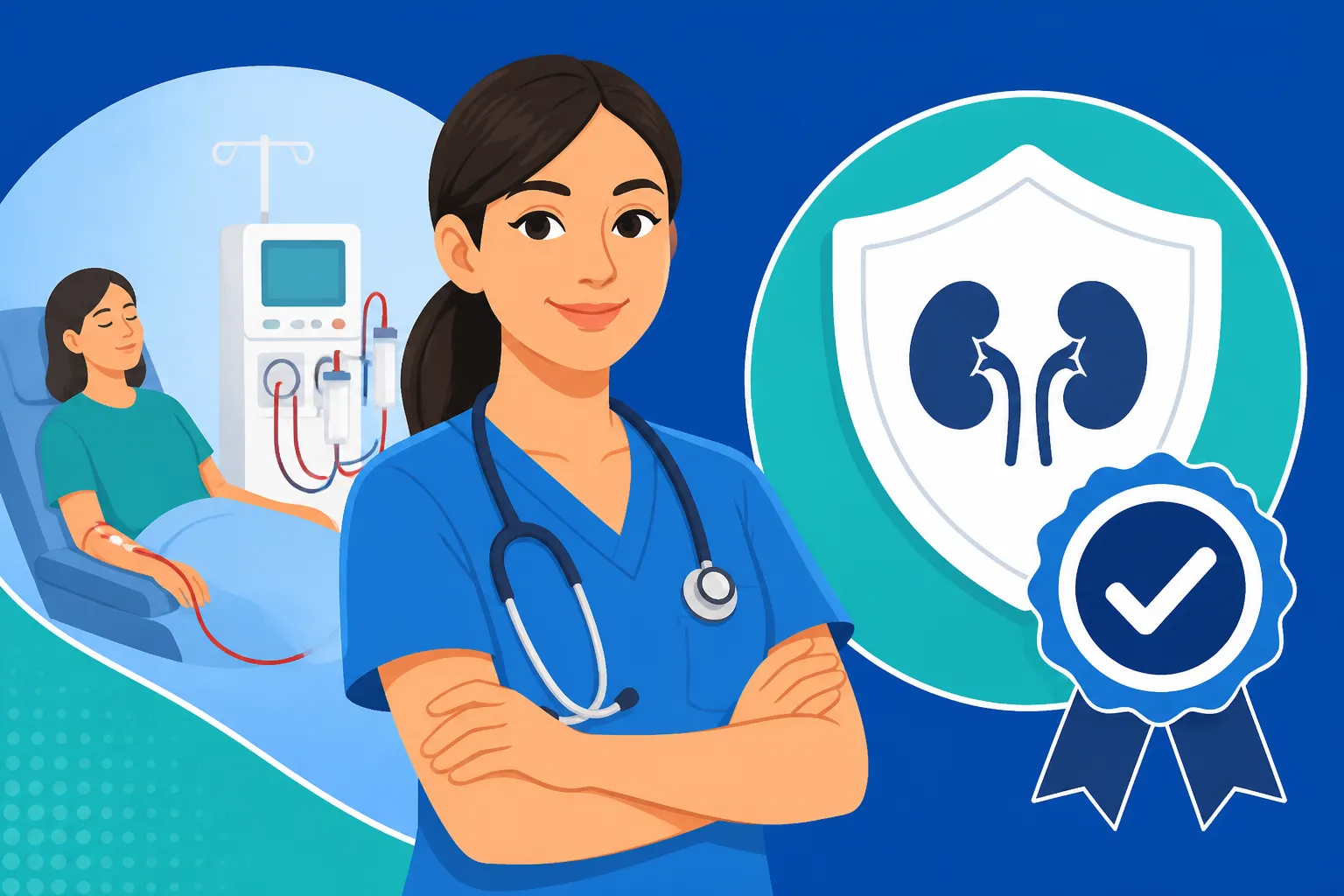
Dialysis Nurse Certification and Requirements
It can feel overwhelming when you’re an experienced registered nurse, looking to specialize, but aren't quite sure where to begin with the dizzying array of certifications and requirements. Many nurses, especially those drawn to the critical, life-sustaining work of dialysis, find themselves asking: "What exactly do I need to do to become a certified dialysis nurse?" This guide is here to break down the educational background, clinical experience, and specific certifications necessary to embark on a fulfilling career as a dialysis nurse.
Understanding the World of Dialysis Nursing
Dialysis nursing is a unique and incredibly vital specialty within the broader field of nursing. It’s where technology meets compassionate care, providing life-sustaining treatment for patients whose kidneys are no longer functioning adequately. If you’re considering this path, you're looking at a career that is both challenging and profoundly rewarding.
The Vital Role of Dialysis Nurses
Dialysis nurses are the frontline caregivers for patients undergoing dialysis treatments, whether it's hemodialysis, peritoneal dialysis, or continuous renal replacement therapy (CRRT) in acute care settings. This role goes far beyond simply operating machines. You're monitoring patients during treatments, assessing their vital signs, administering medications, managing potential complications like hypotension or cramping, and providing crucial education to both patients and their families. Imagine a patient, perhaps someone who has been living with kidney disease for years, coming in for their thrice-weekly hemodialysis. As their nurse, you're not just a technician; you're a trusted healthcare partner, someone who understands their physical and emotional struggles. You're explaining diet restrictions, discussing fluid intake, and often, just listening. The complexity of care required means you're constantly honing your critical thinking skills and your ability to react quickly to changes in a patient's condition.
Growing Demand and Career Outlook for Dialysis Nurses
The demand for skilled dialysis nurses continues to grow steadily. With an aging population and rising rates of chronic conditions like diabetes and hypertension—which are leading causes of kidney disease—the need for renal care is only increasing. This means that pursuing a career in dialysis nursing offers excellent job security and a wide range of opportunities. You might find yourself working in outpatient clinics, acute care hospitals, long-term care facilities, or even providing home dialysis training. Hospitals and specialized centers, especially those with advanced nephrology departments, are consistently looking for certified professionals. For many nurses, the structured hours often associated with outpatient dialysis clinics can offer a more predictable schedule compared to other specialties, which can be a huge benefit for work-life balance. This specialty is a fantastic option for nurses looking for a stable and impactful career path, allowing them to truly make a difference in patients' lives. If you're pondering How to Choose a Nursing Specialty, this field offers a clear path with high demand.
Foundational Requirements to Become a Dialysis Nurse
Before you can even think about specific dialysis certifications, there are several foundational steps you need to take in your nursing journey. These are the non-negotiables that set the stage for any specialized nursing role.
Educational Background and Licensure
First and foremost, you must be a Registered Nurse (RN). This means you've completed either an Associate's Degree in Nursing (ADN) or a Bachelor of Science in Nursing (BSN) program and successfully passed the NCLEX-RN examination. While an ADN can get your foot in the door, many employers, especially larger hospital systems and Magnet-recognized facilities, increasingly prefer or even require a BSN. A BSN program provides a more comprehensive education, covering areas like community health, leadership, research, and advanced critical thinking, which are invaluable in complex specialties like dialysis. If you have an ADN, pursuing an Online RN to BSN Programs: Complete Guide can be a smart move to enhance your career prospects and fulfill potential employer preferences. Remember, your RN license is the absolute baseline; without it, you cannot practice as a professional nurse in any capacity, let alone specialize. You'll also need to ensure your license is active and in good standing with your state's Board of Nursing.
Gaining Relevant Clinical Experience
Once you're a licensed RN, the next crucial step is to gain hands-on clinical experience, specifically in a nephrology or dialysis setting. Most certification bodies and employers will require a certain number of hours or years of experience working directly with dialysis patients. This isn't just a formality; it's essential preparation. Dialysis care involves highly specialized equipment, complex physiological assessments, and rapid response to acute changes. You'll need to become proficient in managing dialysis machines, understanding vascular access points (fistulas, grafts, catheters), monitoring fluid balance, and administering specific medications. Many new RNs interested in dialysis start in medical-surgical units, telemetry, or even critical care to build a strong general nursing foundation before transitioning into a dedicated dialysis unit. This initial experience allows you to develop the acute assessment skills and the confidence needed to handle the unique challenges of renal patients. Typically, one to two years of full-time experience in a dialysis setting is a common prerequisite for certification.
Maintaining Your State Licensure
Beyond your initial RN licensure, it’s critical to understand that becoming a dialysis nurse means you are continuously responsible for maintaining your active nursing license. This isn't a "one and done" situation. Every state's Board of Nursing has specific requirements for license renewal, which usually involve completing a certain number of continuing education (CE) hours within a defined period (e.g., every two years). Staying current with these requirements is non-negotiable, as an expired or inactive license will prevent you from practicing and from maintaining any specialty certifications. Many of the continuing education courses you take to renew your RN license can also count towards maintaining your dialysis nurse certification, so it's often a synergistic process. Always check with your state's Board of Nursing website for the most accurate and up-to-date information on renewal cycles and CE requirements. This ongoing commitment to professional development ensures that you remain competent and knowledgeable in an ever-evolving healthcare landscape.
Key Dialysis Nurse Certifications
Once you have your RN license and have accumulated the necessary experience, you’re ready to consider formal certification. These certifications demonstrate a specialized level of knowledge and expertise in nephrology nursing and can significantly boost your career prospects.
Overview of Main Certifications for Dialysis Nurses
There are a couple of prominent certification bodies that offer recognized credentials for dialysis nurses. The two most widely respected are the Board of Nephrology Examiners Technology (BONENT) and the Nephrology Nursing Certification Commission (NNCC).
-
BONENT Certifications: BONENT offers several certifications, most notably the Certified Hemodialysis Nurse (CHN) and Certified Peritoneal Dialysis Nurse (CPDN). They also offer certifications for technicians, which speaks to their comprehensive approach to renal care. The CHN is designed for RNs who specialize in hemodialysis and focuses on the skills and knowledge required for this specific modality. Similarly, the CPDN is for RNs focused on peritoneal dialysis. These certifications are well-recognized in the industry and demonstrate a commitment to excellence in these specialized areas.
-
NNCC Certifications: The NNCC provides a range of certifications, including the Certified Nephrology Nurse (CNN), Certified Dialysis Nurse (CDN), and several others for advanced practice and pediatric nephrology. The CNN is often considered the gold standard for experienced nephrology nurses, encompassing a broad understanding of kidney disease and all modalities of treatment. The CDN is specifically tailored for registered nurses providing direct patient care in a dialysis setting, focusing on clinical competency and best practices in various dialysis treatments. Choosing between BONENT and NNCC often comes down to specific employer preferences or the exact focus of your practice within nephrology. Both are highly reputable and signal a high level of expertise. You can also explore Nursing Certifications by Specialty to see how these fit into the broader nursing landscape.
Eligibility Criteria for Certification Exams
To sit for these rigorous certification exams, you'll need to meet specific criteria set by each organization. These often include a combination of education, licensure, and direct clinical experience.
-
BONENT CHN/CPDN Eligibility: For the Certified Hemodialysis Nurse (CHN) or Certified Peritoneal Dialysis Nurse (CPDN) through BONENT, you'll typically need to be a currently licensed Registered Nurse (RN). Beyond that, you'll generally need at least one year of full-time or 2,000 hours of part-time experience in nephrology nursing within the last two years. This experience must be in the specific modality for which you are seeking certification (e.g., hemodialysis experience for CHN). BONENT also accepts a certain amount of experience from licensed practical/vocational nurses (LPN/LVN) with additional educational requirements, but for RNs, it's primarily about the hands-on practice.
-
NNCC CNN/CDN Eligibility: For the Certified Dialysis Nurse (CDN) through NNCC, you're usually required to be a currently licensed RN, hold a minimum of a diploma or associate's degree in nursing, and have at least 1,500 hours of experience in dialysis nursing within the two years prior to applying for the exam. For the more advanced Certified Nephrology Nurse (CNN), the requirements are often a bit stricter, typically requiring a Bachelor of Science in Nursing (BSN) or higher, and 3,000 hours of experience in nephrology nursing within the past three years, with at least 1,500 hours in the last two years. As you can see, the BSN becomes more important for higher-level certifications, emphasizing why many nurses consider pursuing a RN to BSN Completion Timeline to advance their careers. It's crucial to review the most current eligibility guidelines directly on the BONENT or NNCC websites, as they can sometimes be updated.
The Certification Process
Once you meet the eligibility criteria, the process typically involves submitting an application, paying an exam fee, scheduling your exam, and then, hopefully, passing!
-
Application and Scheduling: You'll submit an application to the chosen certification body (BONENT or NNCC), providing documentation of your RN license and clinical experience. Once your application is approved, you'll receive an Authorization to Test (ATT) which allows you to schedule your exam at a designated testing center. Both organizations use professional testing services, like Pearson VUE or Prometric, which have locations across the country, making it convenient to find a testing site near you.
-
The Exam Day: Certification exams are generally computer-based and consist of multiple-choice questions designed to test your knowledge across various domains of nephrology nursing, including anatomy and physiology of the renal system, dialysis principles, patient care management, complications, pharmacology, and patient education. These are comprehensive exams that require significant preparation. You can expect a few hours to complete the test, so make sure you're well-rested and prepared for a marathon of critical thinking.
-
Renewal and Continuing Education: Certification isn't a one-time achievement; it requires ongoing commitment. Typically, dialysis nurse certifications are valid for a certain period, usually two or three years, after which you'll need to renew them. Renewal almost always involves completing a specific number of continuing education (CE) hours relevant to nephrology nursing, and sometimes requires a practice hour component as well. These CE requirements ensure that you stay current with the latest advancements, best practices, and research in the field. Many professional nursing organizations offer excellent CE opportunities, and even online platforms can provide approved courses. This commitment to lifelong learning is a hallmark of highly skilled and dedicated nurses. Obtaining Nursing Certifications That Boost Pay often depends on maintaining these credentials diligently.
Preparing for and Maintaining Your Certification
Earning a dialysis nurse certification is a significant accomplishment, but it requires diligent preparation and ongoing commitment to maintain. Knowing how to study effectively and stay current is key to your long-term success in this specialized field.
Study Strategies and Resources
Passing a certification exam like the CDN or CNN is no small feat. It requires focused study and a deep understanding of nephrology nursing principles.
-
Review Core Concepts: Start by reviewing the core concepts of renal physiology, common kidney diseases, various dialysis modalities (hemodialysis, peritoneal dialysis, CRRT), vascular access management, fluid and electrolyte balance, nutrition for renal patients, and relevant pharmacology. Don't underestimate the foundational knowledge – it’s the bedrock of everything else.
-
Utilize Study Guides and Practice Tests: Both BONENT and NNCC often provide content outlines or blueprints for their exams, which are invaluable for guiding your study. Many professional nursing organizations, like the American Nephrology Nurses Association (ANNA), offer comprehensive review courses, study guides, and practice questions specifically designed for these certifications. Investing in a good review book or an online question bank can make a huge difference. For example, platforms like Uworld offer extensive question banks that simulate exam conditions and provide detailed rationales for answers, which can be incredibly helpful for identifying your weak areas and solidifying your knowledge. Regularly testing yourself with practice questions under timed conditions can significantly improve your readiness and reduce exam-day anxiety.
-
Form Study Groups: Sometimes, studying with peers who are also preparing for the exam can be incredibly beneficial. You can discuss complex topics, quiz each other, and share insights. Different perspectives can help clarify challenging concepts and make the learning process more engaging. Remember, this isn't just about memorization; it's about applying critical thinking to clinical scenarios.
Continuing Education and Certification Renewal
Your journey doesn't end once you pass the exam; maintaining your certification is just as important. Continuous learning is essential in a dynamic field like healthcare.
-
Stay Up-to-Date: Healthcare is constantly evolving, with new research, guidelines, and technologies emerging regularly. As a certified dialysis nurse, it's your professional responsibility to stay current. Read professional journals like the Nephrology Nursing Journal, attend webinars, and participate in conferences. Many of these activities will also count towards your required continuing education (CE) hours for renewal. This continuous engagement ensures you're providing the best possible care to your patients and maintaining your expert status.
-
Meet Renewal Requirements: Each certification (CHN, CPDN, CDN, CNN) has specific renewal requirements. This almost always includes a certain number of continuing education hours in nephrology nursing. For instance, the NNCC’s CDN requires 60 CE hours within the 3-year certification period, with at least 30 of those hours directly related to nephrology nursing practice. BONENT has similar, often slightly different, requirements, so always check your specific certification's guidelines. Some certifications might also require documented practice hours in the specialty during your renewal cycle.
-
Plan Ahead: Don't wait until the last minute to accumulate your CE hours. Integrate continuing education into your regular professional development plan. Many employers offer tuition reimbursement or support for CE activities, so be sure to explore those options. Your professional growth directly benefits your patients and your career trajectory, potentially opening doors to advanced roles or even pursuing further education like an RN to BSN to MSN Bridge Explained. Renewing your certification not only keeps your credentials current but also reinforces your commitment to specialized nursing care.
Table of Common Dialysis Nurse Certifications
| Certification Acronym | Full Name | Administering Body | Typical Minimum Education | Typical Clinical Experience Requirement | Renewal Cycle |
|---|---|---|---|---|---|
| CDN | Certified Dialysis Nurse | Nephrology Nursing Certification Commission (NNCC) | ADN/Diploma | 1,500 hours in dialysis nursing within 2 years | 3 years |
| CNN | Certified Nephrology Nurse | Nephrology Nursing Certification Commission (NNCC) | BSN or higher | 3,000 hours in nephrology nursing within 3 years | 5 years |
| CHN | Certified Hemodialysis Nurse | Board of Nephrology Examiners Technology (BONENT) | RN License | 2,000 hours in hemodialysis nursing within 2 years | 3 years |
| CPDN | Certified Peritoneal Dialysis Nurse | Board of Nephrology Examiners Technology (BONENT) | RN License | 2,000 hours in peritoneal dialysis nursing within 2 years | 3 years |
Disclaimer
The information provided in this guide is intended for general informational purposes only and does not constitute professional advice. While we strive to offer accurate and up-to-date content, nursing requirements, certification eligibility, and program details can change frequently. Always verify specific requirements, deadlines, and program information directly with the respective certification boards, educational institutions, and state boards of nursing.