How to Move from Floor Nursing to Informatics
Let's be honest, the daily grind of floor nursing can be a lot. The physical demands, the emotional toll, the constant pressure—it's no wonder so many amazing nurses find themselves dreaming of a different path, one where their nursing knowledge can still shine, but maybe without the aching feet or the midnight emergencies. If you've been wondering if there's a way to leverage your invaluable clinical experience in a less physically taxing, yet equally impactful, role, then you're in the right place. This guide is all about helping you understand how to move from the intense world of floor nursing into the fascinating and increasingly vital field of nursing informatics.
Understanding Nursing Informatics: A Different Kind of Care
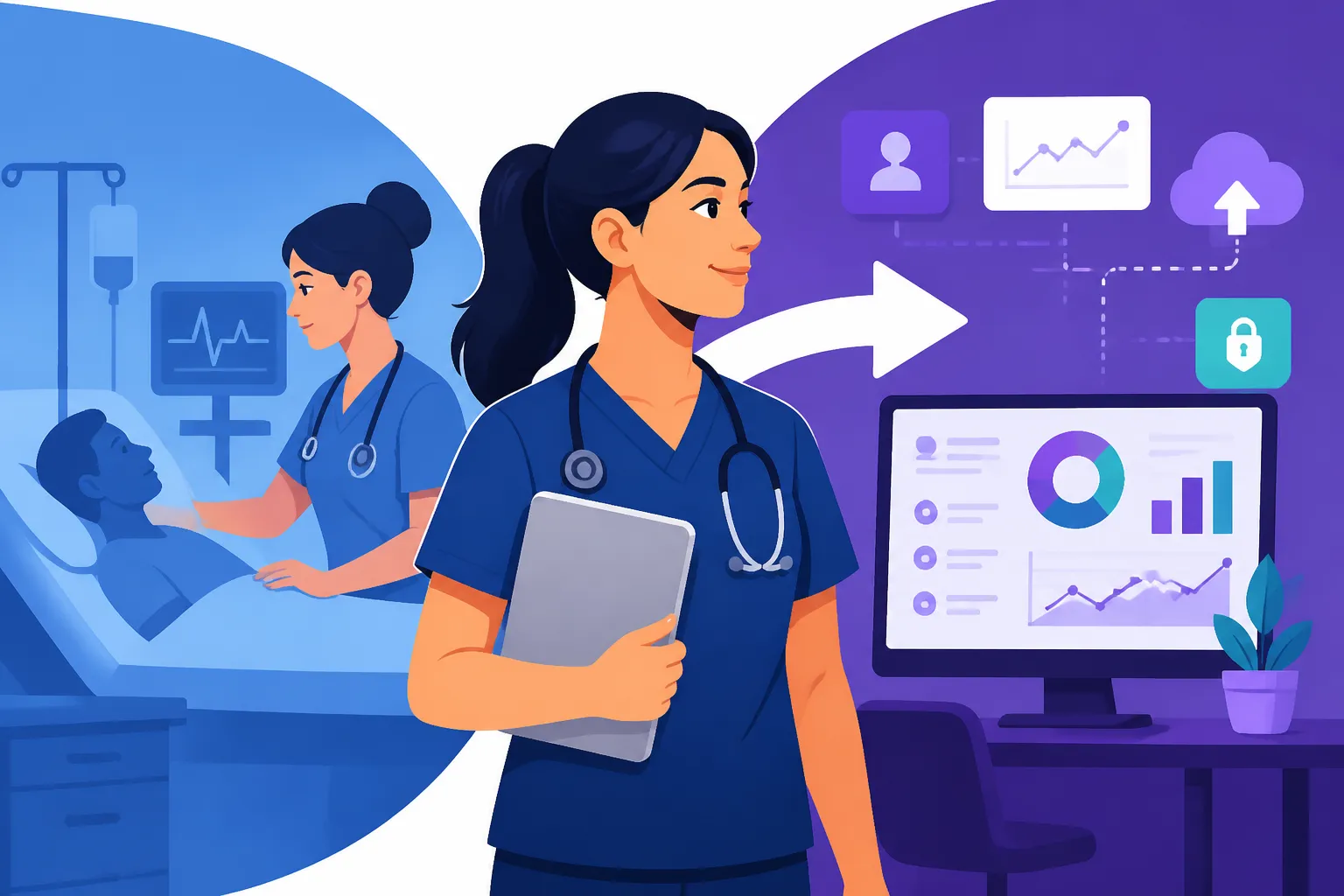
Transitioning from direct patient care to nursing informatics might seem like a huge leap, but it's more of a natural progression for many nurses. It's about shifting your focus from individual patient care moments to improving healthcare systems as a whole, still with the ultimate goal of better patient outcomes.
What Exactly is a Nurse Informaticist?
At its core, a nurse informaticist is a bridge-builder. They're the professionals who connect the dots between clinical practice, information technology, and patient data to optimize how healthcare is delivered. Imagine a nurse who uses their deep understanding of the patient experience and clinical workflows to design more user-friendly electronic health records (EHRs), implement new technologies, or analyze data trends to prevent errors and improve efficiency. That's a nurse informaticist in action.
Their day-to-day work is far removed from the bedside. Instead of administering medications or performing assessments, they might be:
- Designing and implementing EHR systems: Working with software developers to ensure systems like Epic or Cerner are intuitive for nurses, doctors, and other clinicians.
- Training staff: Educating nurses and other healthcare providers on how to effectively use new technologies and systems, ensuring smooth adoption.
- Analyzing data: Sifting through vast amounts of patient data to identify trends, pinpoint areas for improvement, and measure the impact of new interventions or technologies. This could involve looking at everything from medication errors to patient readmission rates.
- Developing policies and procedures: Creating guidelines for the safe and effective use of health information technology.
- Troubleshooting technology issues: Acting as a liaison between IT departments and clinical staff, translating technical jargon into practical solutions for clinical problems.
- Leading projects: Managing the rollout of new technological initiatives, from concept to completion, ensuring they align with clinical needs and organizational goals.
Essentially, they're problem-solvers who use their nursing lens to make healthcare technology work better for everyone involved. They ensure that technology supports, rather than hinders, the delivery of high-quality, compassionate care.
Why Nurses Transition to Informatics
The reasons nurses gravitate towards informatics are as varied as the nurses themselves, but some common themes emerge. Many seasoned floor nurses, after years of physically and emotionally demanding work, begin to seek roles that offer a different kind of challenge and a better work-life balance.
One of the biggest drivers is burnout. The relentless pace, high patient ratios, and emotional intensity of bedside nursing can be unsustainable for a long career. Informatics offers an escape from these pressures while still allowing nurses to feel like they are contributing meaningfully to patient care, just on a grander scale. They often find the work intellectually stimulating, focusing on systemic issues rather than individual crises.
Another significant draw is the opportunity for impact. As a floor nurse, you impact the lives of your direct patients. As a nurse informaticist, you can influence the care of thousands, if not millions, of patients by improving the systems and technologies that underpin healthcare delivery. Imagine streamlining a medication administration process in an EHR that prevents errors across an entire hospital system. That's a profound impact.
There's also the appeal of less physical demand. For nurses dealing with chronic back pain, joint issues, or simply the wear and tear of years on their feet, a role that primarily involves desk work is incredibly appealing. It allows them to extend their careers in healthcare in a sustainable way.
Finally, the increasing demand for these roles is a huge factor. With healthcare becoming more digitized and complex, the need for nurses who can bridge the gap between clinical practice and technology is exploding. Hospitals, clinics, and technology vendors are all actively seeking skilled nurse informaticists to optimize their operations and improve patient safety. This means good job security and competitive salaries, which is certainly a compelling reason to consider a switch. This is a specialization that is constantly evolving and growing. To learn more about other nursing career paths, you might find our guide on Nursing Specializations Explained helpful.
Essential Skills and Education for Nursing Informatics
Making the jump to nursing informatics isn't just about changing roles; it's about evolving your skillset and potentially pursuing further education. The good news is that much of what makes a great floor nurse translates directly, and often powerfully, into informatics.
Key Skills You'll Need to Cultivate
While you might not be performing physical assessments, your nursing brain is your most valuable asset in informatics. Here are some key skills that are paramount:
- Technology Proficiency: This might seem obvious, but it goes beyond just knowing how to chart in an EHR. It means being comfortable learning new software, understanding basic database concepts, and perhaps even dabbling in data visualization tools. You don't need to be a programmer, but a strong aptitude for technology and a willingness to learn is crucial. If your current hospital uses a system like Epic or Cerner, dive deep into its functionalities beyond your immediate charting needs. Volunteer for super-user roles or special projects related to system upgrades.
- Analytical and Critical Thinking: Floor nurses are masters of critical thinking, constantly assessing patient situations and problem-solving under pressure. In informatics, this skill shifts to analyzing data, identifying patterns, evaluating system effectiveness, and anticipating potential workflow issues. You'll be asking "why" a lot and looking for data-driven answers.
- Communication Skills: You'll be communicating with a wide range of stakeholders – from IT specialists and hospital administrators to frontline nurses and physicians. Being able to translate complex technical information into understandable clinical terms, and vice-versa, is essential. Strong verbal and written communication, including presentation skills, are a must.
- Project Management: Implementing new systems or improving existing ones often involves managing projects. This means understanding timelines, resource allocation, stakeholder management, and problem resolution. Even informal project involvement in your current role can be a stepping stone.
- Problem-Solving: Just as you solve patient problems at the bedside, you'll be solving system and workflow problems in informatics. This involves identifying root causes, brainstorming solutions, testing them, and evaluating their effectiveness.
Many of these skills are already inherent in your nursing practice, you just need to consciously articulate and refine them for a technology-focused context.
Educational Pathways to Nursing Informatics
While some roles might accept a Bachelor of Science in Nursing (BSN) with significant experience, most nurse informaticist positions, especially those with leadership potential, require a Master of Science in Nursing (MSN) with a specialization in informatics.
- Bachelor of Science in Nursing (BSN): This is the foundational degree. If you're an Associate Degree in Nursing (ADN) prepared nurse, pursuing an Online RN to BSN Programs: Complete Guide is often the first step to broaden your career horizons and prepare for graduate studies. The BSN curriculum provides a stronger theoretical and research basis, which is important for understanding the principles behind health information systems.
- Master of Science in Nursing (MSN) in Nursing Informatics: This is the most direct and common pathway. These programs specifically educate nurses on the principles of information science, computer science, and nursing science. They delve into topics like data analytics, system design, project management, health information policy, and cybersecurity. Many reputable universities offer fantastic Online MSN Programs: Complete Guide with an informatics track, which can be ideal for working nurses balancing their current job with their studies. These programs often take 1.5 to 3 years to complete, depending on whether you study full-time or part-time. Exploring specific programs like the MSN Nursing Informatics Track will give you a clearer picture of the curriculum.
- Post-Master's Certificate in Nursing Informatics: If you already hold an MSN in another specialty, a post-master's certificate can be a more efficient route. These programs focus specifically on the informatics competencies you need without requiring another full master's degree.
- Doctor of Nursing Practice (DNP) with Informatics Focus: For those aspiring to advanced leadership, research, or academic roles within informatics, a DNP can provide even deeper expertise. While not usually required for entry-level informatics roles, it's a path for significant career advancement.
When choosing a program, it's important to consider factors like accreditation, curriculum, faculty expertise, and flexibility, especially if you plan on pursuing an online nursing degree. Make sure to check MSN Admission Requirements early in your planning.
Navigating the Transition: From Bedside to Data
Making the actual switch from the bedside to informatics requires strategic planning, self-education, and proactive networking. It's not always an overnight change, but it's entirely achievable with dedication.
Leveraging Your Current Nursing Experience
Don't ever underestimate the power of your floor nursing experience. It's not just a prerequisite; it's your superpower in informatics. No amount of technical training can replace the deep, intimate understanding of clinical workflows, patient needs, and the realities of healthcare delivery that you've gained on the unit.
Here’s how your bedside experience is invaluable:
- Understanding End-User Needs: You are the end-user. You know firsthand what works and what doesn't in an EHR, what documentation is truly necessary, and where technology can create friction or streamline processes. This perspective is priceless for designing effective systems.
- Clinical Workflow Expertise: You understand the patient journey, from admission to discharge, and all the steps in between. This allows you to design systems that align with efficient, safe clinical practice rather than imposing awkward, impractical technological solutions.
- Problem Identification: You've seen the gaps, the inefficiencies, and the workarounds. Your ability to identify these "pain points" on the floor is exactly what an informaticist needs to improve systems.
- Documentation Savvy: You know the nuances of charting, the regulatory requirements, and the importance of clear, concise documentation for patient safety and billing. This knowledge is critical for designing compliant and effective EHR templates.
Start thinking about specific instances where you identified a problem related to technology or workflow on your unit, and how you either solved it or wished it could be solved. These are your real-world informatics projects, even if you didn't call them that at the time.
Practical Steps to Make the Switch
Once you've decided to pursue informatics, here are concrete steps you can take:
- Self-Education and Skill Building: Start learning independently. There are many free or low-cost resources online for understanding data analytics basics, project management principles, or specific EHR functionalities. LinkedIn Learning, Coursera, and edX offer courses. Read books and articles on nursing informatics. Familiarize yourself with common healthcare IT terminology.
- Volunteer for Tech-Related Projects at Work: Does your unit or hospital have a super-user program for EHR updates? Are they rolling out a new medication scanning system? Volunteer! This gets you exposure, hands-on experience, and demonstrates initiative. It also shows you’re interested in health IT.
- Network, Network, Network: Connect with nurse informaticists in your organization or region. LinkedIn is a powerful tool for this. Reach out for informational interviews – ask about their day-to-day, their career path, and advice they have. Attending local nursing informatics chapter meetings or conferences can also open doors. Knowing how to choose the right program, especially if it's online, is also key; consider reading our guide on How to Choose an Online MSN Program.
- Tailor Your Resume: Start updating your resume to highlight any tech-related responsibilities, projects, or achievements, even if they were minor. Focus on problem-solving, process improvement, data use, and training. For example, instead of just "charted in EHR," write "Utilized Epic EHR system for comprehensive patient documentation, actively identifying and reporting workflow inefficiencies to unit leadership."
- Seek Mentorship: A mentor in the field can provide invaluable guidance, introduce you to contacts, and help you navigate the nuances of the transition.
- Consider an Internship or Entry-Level Role: Some larger healthcare systems offer informatics internships or entry-level "clinical analyst" positions that can serve as a stepping stone while you pursue further education.
By being proactive in these areas, you'll not only gain valuable experience and knowledge but also build a compelling narrative for your transition into nursing informatics.
Certification, Job Search, and Career Growth in Informatics
Once you've gained the necessary education and experience, the next steps involve solidifying your credentials and strategically seeking out opportunities in the dynamic field of nursing informatics.
Earning Your Informatics Certification
While not always a strict requirement for every informatics role, obtaining a certification significantly enhances your credibility and demonstrates a specialized knowledge base. The most recognized credential for nurse informaticists in the United States is the Informatics Nurse Board Certification (RN-BC), offered by the American Nurses Credentialing Center (ANCC).
To be eligible for the ANCC Informatics Nurse Board Certification, you typically need:
- A current, active RN license.
- A bachelor's or higher degree in nursing.
- At least two years of full-time RN experience.
- A minimum of 2,000 hours of nursing informatics practice in the last three years, OR a minimum of 1,000 hours of nursing informatics practice in the last three years and at least 30 contact hours of continuing education in informatics within the last three years, OR completion of a graduate program in nursing informatics.
Preparing for this certification exam is crucial. It covers a broad range of topics including systems lifecycle, human factors, workflow and process, information structures, and regulatory issues. Many nurses find study materials and practice questions to be incredibly helpful. Resources like Uworld are renowned for their comprehensive question banks and detailed rationales, which can be just as beneficial for preparing for certification exams as they are for the NCLEX. Investing in a good study guide and practicing regularly with resources like Uworld can make a significant difference in your exam readiness.
Crafting Your Informatics Resume and Acing Interviews
Your resume needs to tell a compelling story about your transition. It's not just a list of your past floor nursing jobs; it's about how those experiences have prepared you for an informatics role.
- Highlight transferable skills: Emphasize your critical thinking, problem-solving, communication, training, and project involvement.
- Quantify achievements: Instead of saying "improved documentation," state "streamlined medication reconciliation process, reducing charting time by 15% and decreasing medication errors by 5% over six months." Even if it was an informal project, quantify the impact.
- Showcase tech proficiency: List any EHR systems you're proficient in (Epic, Cerner, Meditech), data analysis tools, or any software you've used for scheduling, quality improvement, or training.
- Include your education and certification prominently: Your MSN in informatics and your ANCC certification should be front and center.
For interviews, be ready to discuss:
- Real-world scenarios: How would you approach a specific EHR implementation problem? Describe a time you used data to solve a clinical issue.
- Your passion for informatics: Why this shift? What specifically interests you about the role?
- Communication strategies: How do you bridge the gap between clinical staff and IT?
- Understanding of current trends: Be aware of topics like interoperability, telehealth, and artificial intelligence in healthcare.
Showcase your enthusiasm for technology and your deep respect for clinical practice, demonstrating how you see them working together to improve healthcare.
Exploring Job Opportunities and Career Trajectories
The field of nursing informatics offers a diverse range of roles, each with its unique focus. Understanding these can help you target your job search effectively.
Common job titles include:
- Informatics Nurse Specialist: Often involved in the implementation, optimization, and maintenance of health information systems.
- Clinical Informaticist: Similar to an Informatics Nurse Specialist, but sometimes with a stronger emphasis on clinical workflow analysis and optimization.
- EHR Specialist/Analyst: Focuses specifically on the electronic health record system, including configuration, training, and support.
- Project Manager (Health IT): Leads projects related to technology implementation, often leveraging their clinical background to ensure successful adoption.
- Clinical Instructor/Educator: Trains healthcare staff on new systems or updates.
- Data Analyst: For those with a strong quantitative bent, analyzing healthcare data to drive decision-making.
These roles can be found in a variety of settings:
- Hospitals and Healthcare Systems: The most common employers, ranging from large academic medical centers in major cities like New York City or Los Angeles, to smaller community hospitals in places like Boise, Idaho.
- EHR Vendors: Companies like Epic Systems, Cerner, or Meditech often hire nurse informaticists to help design, test, and implement their software for clients.
- Consulting Firms: Firms specializing in healthcare IT often hire informaticists for project-based work, helping various organizations optimize their systems.
- Government Agencies: Public health departments or federal agencies may employ informaticists for broader public health initiatives and data analysis.
- Academia: Teaching and research roles for those with advanced degrees.
The career growth potential in nursing informatics is significant. As healthcare technology continues to evolve, so does the demand for skilled professionals who can navigate this complex landscape. With experience, you can move into leadership roles such as Chief Nursing Informatics Officer (CNIO) or even Chief Information Officer (CIO), influencing strategic decisions at the highest levels of a healthcare organization. To get a sense of the financial benefits of this career path, you can explore our article on Nursing Informatics Salary and for broader career prospects, check out Nursing Job Outlook and Demand. The path from floor nursing to informatics is a testament to the versatility and ongoing evolution of the nursing profession, offering a fulfilling and impactful career for those ready to make the shift.
Comparing Floor Nursing and Nursing Informatics
To give you a clearer picture, here's a quick comparison of some key aspects between traditional floor nursing and nursing informatics.
| Feature | Floor Nursing | Nursing Informatics |
|---|---|---|
| Primary Focus | Direct patient care, individual health outcomes | Healthcare systems, technology, data, population health |
| Work Environment | Hospital units, clinics, patient rooms | Office, remote, conference rooms, data centers |
| Physical Demands | High (on feet, lifting, moving) | Low (primarily desk-based) |
| Emotional Demands | High (patient crises, end-of-life care) | Moderate (project deadlines, stakeholder management) |
| Daily Tasks | Assessments, medication, procedures, charting | System design, data analysis, training, project management |
| Impact Level | Individual patient/family | Organizational, regional, or national healthcare systems |
| Required Education | ADN or BSN for RN license | BSN, typically MSN in Nursing Informatics |
| Key Skills | Clinical judgment, empathy, critical thinking | Tech proficiency, analytical thinking, communication, project management |
| Work-Life Balance | Often challenging (shifts, weekends, holidays) | Generally better (regular hours, often remote options) |
Disclaimer
Please remember that the information provided in this guide is intended for general informational purposes only and does not constitute professional career, educational, or financial advice. While we strive to provide accurate and up-to-date information, individual situations and requirements can vary. Always consult with academic advisors, career counselors, and financial experts for personalized guidance regarding your specific circumstances and goals. Program availability, requirements, and job market conditions are subject to change.