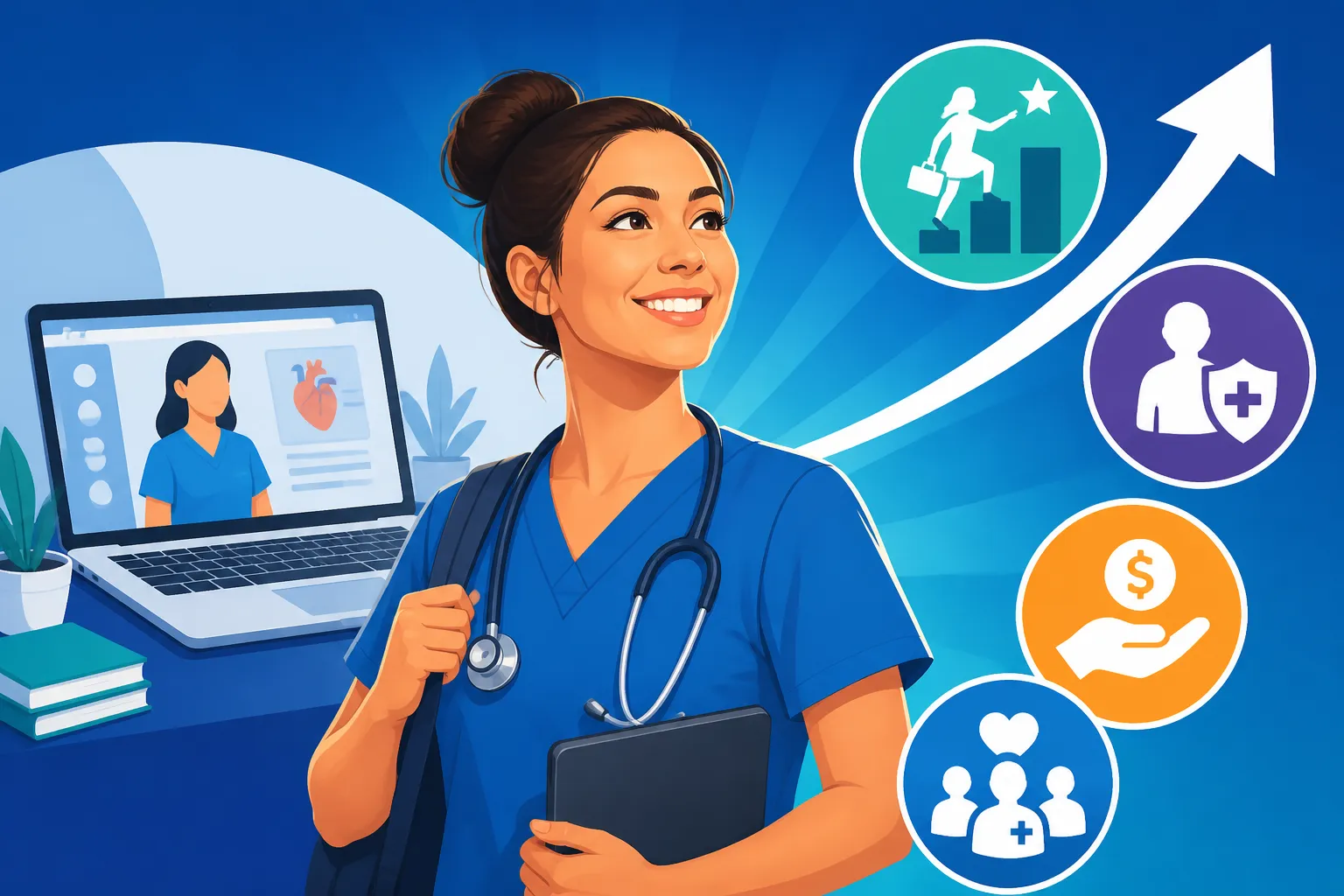
Career Benefits of Earning a BSN
Let's be real, you've been busting your tail as an RN, providing incredible care, but maybe you've hit a bit of a ceiling. You see colleagues moving into different roles, taking on more responsibility, or even just getting better shifts, and you wonder how to get there. It often feels like you need something more to truly advance in your nursing career, and that's where earning your Bachelor of Science in Nursing (BSN) comes into play. This guide is all about exploring the tangible career benefits a BSN can unlock for you, helping you understand why so many nurses are taking this important step.
Enhanced Career Opportunities and Advancement
One of the most compelling reasons to pursue a BSN is the sheer number of doors it opens in terms of your career. While your Associate's Degree in Nursing (ADN) or diploma laid a fantastic foundation, a BSN signals a broader, more comprehensive understanding of nursing practice, healthcare systems, and patient care philosophies. It’s like having a universal key to a whole new wing of career possibilities.
Access to Diverse Roles and Settings
With an ADN, you're primarily geared for direct patient care in acute settings, which is incredibly vital work. But a BSN expands your readiness for a wider array of clinical environments and specialized roles. Hospitals, particularly those aiming for or holding Magnet designation, increasingly prefer and often require BSN-prepared nurses, not just for entry-level positions but for almost any role beyond basic bedside care.
Imagine being able to transition from the fast pace of the emergency room to the meticulous environment of surgical services, or even into a more preventative role in community health. Many specialty areas, such as case management, public health, or school nursing, often list a BSN as a prerequisite. It's not just about what you can do, but where you can do it, and a BSN provides that flexibility. For instance, if you're looking to work at a prestigious academic medical center in a large metropolitan area, a BSN is almost certainly going to be a requirement to even get your foot in the door. It makes you a more competitive candidate in an ever-evolving job market.
The curriculum for a BSN goes beyond the technical skills learned in an ADN program, diving deeper into areas like community health, leadership, research, and critical thinking. This broader knowledge base prepares you to adapt to various healthcare settings, from large university hospitals to specialized outpatient clinics or even home health agencies. For instance, if you're interested in working with specific patient populations outside of a traditional hospital floor, a BSN often provides the necessary foundational coursework. This opens up roles where you might coordinate care across multiple agencies, focusing on public health initiatives, or providing specialized care in a more autonomous setting. It truly allows you to diversify your experience and find a niche that aligns with your passions.
Pathways to Leadership and Management
If you've ever found yourself wishing you could influence change on a broader scale or lead a team of dedicated nurses, a BSN is your essential stepping stone. Many hospitals and healthcare organizations mandate a BSN for nurses seeking leadership roles, even at the charge nurse level, and certainly for positions like nurse manager, supervisor, or clinical educator. They recognize that BSN programs incorporate crucial coursework in leadership, management principles, ethics, and healthcare policy that ADN programs typically don't cover in as much depth.
Consider a scenario where a new policy needs to be implemented on your unit. A BSN-prepared nurse is more likely to understand the evidence base behind the policy, how to effectively communicate it to their team, and how to assess its impact on patient care and staff workflow. This kind of holistic understanding is precisely what employers look for in leaders. You're not just executing tasks; you're thinking strategically and systemically. For those looking to move beyond direct patient care into roles that shape the future of nursing, a BSN is simply non-negotiable.
These leadership roles aren't just about supervising; they involve problem-solving, team development, resource management, and advocating for both patients and staff. A BSN curriculum often includes courses focused on organizational behavior, quality improvement, and nursing informatics, all of which are vital skills for modern healthcare leaders. Imagine taking on a role as a unit manager or a clinical nurse specialist, where you're responsible for mentoring new nurses, optimizing patient flow, or even contributing to hospital-wide initiatives. These are positions that not only offer greater responsibility but also significant professional satisfaction as you help shape the next generation of nursing and improve healthcare delivery.
Stepping Stone to Advanced Degrees
Perhaps your ultimate goal is to become a Nurse Practitioner, a Nurse Educator, or even pursue a Doctor of Nursing Practice (DNP). A BSN is almost universally the required undergraduate degree for admission into Master of Science in Nursing (MSN) and DNP programs. Without it, you'd likely need to complete a bridge program (like an RN to MSN) which can sometimes be longer or more complex than simply moving from a BSN to an MSN.
Think of your BSN as building a strong, sturdy bridge to your advanced education aspirations. It ensures you have the comprehensive theoretical knowledge, critical thinking abilities, and research literacy necessary to succeed in graduate-level coursework. If you're serious about pursuing a specialized advanced practice role like a Family Nurse Practitioner (FNP) or a Psychiatric Mental Health Nurse Practitioner (PMHNP), earning your RN to BSN as a Path to MSN is a logical and efficient progression. Many nurses realize later in their careers that they want to specialize or move into academia, and having that BSN already checked off makes the transition much smoother.
The BSN curriculum provides the academic rigor and foundational knowledge that directly prepares you for the challenges of graduate studies. Courses in research, statistics, and advanced health assessment during your BSN program are invaluable for the intensive coursework and clinical rotations required in MSN or DNP programs. This strong academic base means you’re not playing catch-up when you enter an advanced program. It also helps you develop the academic discipline needed to tackle complex subjects, conduct literature reviews, and engage in evidence-based practice at a higher level, all of which are essential for successful completion of graduate nursing degrees.
Increased Earning Potential and Job Security
Let's talk about the practical side of things: your paycheck and how stable your career feels. It's no secret that the healthcare landscape is constantly shifting, but one thing remains consistent – the value placed on higher education in nursing. Earning a BSN can significantly impact both your wallet and your peace of mind regarding future employment.
Higher Salaries for BSN-Prepared Nurses
It's a common misconception that all registered nurses make the same salary, regardless of their degree. While experience certainly plays a huge role, studies consistently show that BSN-prepared nurses earn higher salaries on average compared to their ADN-prepared counterparts. This difference can be substantial over the course of a career. For example, the American Association of Colleges of Nursing (AACN) and other labor statistics often highlight a noticeable pay gap.
Why the difference? Employers understand that BSN nurses bring a broader skill set, including enhanced critical thinking, leadership potential, and a deeper understanding of complex patient needs and healthcare systems. They are seen as more valuable assets, often justifying a higher starting salary or faster salary progression. This means that while there's an upfront investment in time and money for your BSN, the RN to BSN Return on Investment is typically very positive, often recouping costs relatively quickly through increased earnings. If you're wondering, "How Much More BSN Nurses Earn," the answer is often enough to make a real difference in your financial planning and quality of life.
Consider a scenario where an ADN-prepared nurse and a BSN-prepared nurse with similar years of experience apply for the same position. The BSN nurse often has a competitive edge, which can translate into a higher offer, even for a similar role. This salary advantage extends beyond entry-level, as BSN nurses are typically prioritized for promotions and advanced roles that come with even greater compensation. In some regions or specialized units, the difference can be several thousands of dollars annually, which really adds up over time. This makes the investment in an online RN to BSN program not just an academic pursuit but a smart financial decision for your future.
Employer Preference and Magnet Hospital Requirements
The push for BSN-prepared nurses isn't just a trend; it's a fundamental shift in healthcare. The Institute of Medicine (now the National Academy of Medicine) recommended in 2010 that 80% of the nursing workforce hold a BSN by 2020. While that specific target wasn't fully met nationwide, the sentiment and push persist. As a result, many healthcare systems, especially larger ones and academic medical centers, now prioritize BSN-prepared nurses in their hiring practices.
If you're eyeing a position at a prestigious institution or a hospital with a strong reputation for nursing excellence, a BSN can be a non-negotiable requirement. This is particularly true for Magnet-designated hospitals, which are recognized for nursing excellence and high-quality patient care. Attaining Magnet Status and the BSN Requirement go hand-in-hand, as these facilities strive for the highest standards, and they view a BSN as integral to achieving those standards. If you're applying to a facility that attracts top talent and offers excellent benefits, having your BSN instantly makes you a more competitive applicant. This preference isn't just about prestige; it's rooted in evidence that BSN-prepared nurses contribute to better patient outcomes.
In competitive job markets, an ADN may limit your options to smaller clinics or less specialized roles. A BSN, however, positions you for consideration across a broader spectrum of healthcare organizations, including those that offer more advanced technology, complex patient cases, and richer professional development opportunities. For instance, in areas like Southern California or the Northeast, where the nursing job market can be highly competitive, a BSN often serves as a baseline qualification for many desirable positions. Knowing that employers are actively seeking BSN-prepared nurses provides a significant sense of security in your career trajectory.
Better Job Security and Flexibility
In an uncertain economic climate, job security is more valuable than ever. While nurses, in general, enjoy strong job security due to high demand, BSN-prepared nurses often have an added layer of protection and greater flexibility in their careers. When healthcare organizations face staffing decisions, nurses with higher education are typically seen as more adaptable and valuable, making them less likely to be impacted by workforce reductions.
Furthermore, the broader education you receive in a BSN program prepares you for a wider range of roles, meaning you're not confined to one specific type of nursing job. If the demand shifts in one area, you'll have the foundational knowledge to transition to another. This flexibility is incredibly empowering. Imagine needing to move to a new city; having a BSN makes you a desirable candidate in virtually any major healthcare market across the country. This isn't just about finding a job, but finding the right job that aligns with your evolving career goals and personal life.
The advanced critical thinking and leadership skills gained through a BSN make you a more versatile employee, capable of handling diverse challenges. For example, if a hospital decides to implement a new electronic health record system, BSN-prepared nurses often have an easier time adapting due to their broader technological literacy and understanding of system-level thinking, which can be part of their curriculum. This adaptability extends to changes in patient care models or new clinical guidelines. This means you're not just securing a job for today, but future-proofing your career against inevitable changes in the healthcare industry.
| Feature | ADN-Prepared Nurse | BSN-Prepared Nurse |
|---|---|---|
| Education Focus | Clinical skills, direct patient care | Comprehensive, critical thinking, leadership, public health |
| Career Entry | Staff nurse, acute care, long-term care | Staff nurse, wider specialty access, leadership track |
| Salary Potential | Entry-level to moderate | Generally higher average, greater earning growth |
| Job Market | Competitive for top hospitals, some limitations | Preferred by many hospitals, Magnet facility eligible |
| Advancement | Often requires BSN for leadership/specialization | Direct path to leadership, advanced practice roles |
| Further Education | May require bridge programs for MSN/DNP | Direct entry to MSN/DNP programs |
| Patient Outcomes | Excellent direct care | Associated with improved patient outcomes and safety |
Improved Patient Outcomes and Professional Development
Beyond the personal career benefits, earning your BSN has a profound impact on the quality of care you can provide and your continuous growth as a professional. The additional education is designed to make you a more effective, knowledgeable, and well-rounded nurse, ultimately benefiting the patients you serve.
Evidence-Based Practice and Critical Thinking Skills
A core component of BSN education is a deep dive into evidence-based practice (EBP) and advanced critical thinking. While ADN programs introduce these concepts, BSN curricula emphasize how to critically evaluate research, integrate the best available evidence into clinical decision-making, and participate in quality improvement initiatives. This isn't just academic exercise; it directly translates to safer and more effective patient care.
When you're faced with a complex patient situation, your BSN education empowers you to look beyond standard protocols. You're trained to question, analyze, and synthesize information from multiple sources – including the latest research, patient preferences, and clinical expertise – to arrive at the most optimal care plan. This can mean the difference between a routine recovery and a complication, or even life and death in critical situations. Hospitals increasingly value nurses who can apply EBP, recognizing that it leads to better outcomes, reduced errors, and more efficient use of resources. This is particularly crucial in today's rapidly evolving medical landscape where new treatments and technologies emerge constantly.
A BSN equips you with the tools to understand the why behind medical decisions, not just the how. This deeper understanding allows you to anticipate potential issues, intervene proactively, and advocate more effectively for your patients. For example, if a patient is experiencing an unusual symptom, a BSN-prepared nurse might be more inclined to delve into current research to understand its implications, rather than simply following a generalized protocol. This proactive, research-driven approach is a hallmark of professional nursing and is often fostered through BSN-level coursework.
Holistic Patient Care and Complex Case Management
BSN programs also place a significant emphasis on providing holistic care, recognizing that a patient is more than just their diagnosis. You learn to consider the psychological, social, cultural, and spiritual aspects of health, not just the physical. This comprehensive approach allows you to connect with patients on a deeper level, understand their unique needs and concerns, and develop care plans that are truly patient-centered.
Furthermore, BSN curricula prepare you to manage more complex cases, often involving multiple comorbidities, intricate treatment regimens, and transitions between care settings. You'll gain skills in care coordination, patient education, and interdisciplinary collaboration, all of which are essential for navigating today's intricate healthcare system. This means you're better prepared to manage patients who might be discharged with complicated wound care needs, or those with chronic conditions requiring extensive self-management education. You become a crucial navigator for patients and their families, ensuring continuity and quality of care across the healthcare continuum.
Imagine working with a patient who has a chronic illness and also struggles with food insecurity. An ADN might focus on medication management and basic education, but a BSN-prepared nurse would be more likely to assess for social determinants of health, connect the patient with community resources, and advocate for a more integrated care plan. This holistic perspective truly elevates the quality of care provided, demonstrating a deep commitment to the patient's overall well-being. This expanded knowledge is precisely Why Hospitals Prefer BSN Nurses for managing their most vulnerable and complex patient populations.
Lifelong Learning and Professional Growth
The nursing profession demands continuous learning and adaptation. A BSN instills a strong foundation for lifelong professional development. The research, critical thinking, and leadership components of the BSN curriculum don't just teach you facts; they teach you how to learn and how to lead. This mindset is invaluable as you encounter new technologies, evolving best practices, and changing healthcare policies throughout your career.
You'll be better equipped to pursue specialty certifications, engage in continuing education, and even contribute to nursing research. Many professional nursing organizations offer specialized certifications that can further boost your expertise and career prospects, and your BSN provides the ideal academic groundwork for these. For instance, if you decide to become certified in critical care, your BSN coursework on advanced pathophysiology and evidence-based practice would be a strong asset. Platforms like Uworld, known for their comprehensive NCLEX prep, also offer resources for continuing education and specialty exam preparation, aligning perfectly with the BSN-fostered drive for ongoing learning.
A BSN not only opens doors to more advanced roles and higher pay but also fundamentally changes the way you approach nursing. It cultivates a professional identity rooted in inquiry, advocacy, and continuous improvement. This commitment to growth is what truly sets BSN-prepared nurses apart, enabling them to not only excel in their current roles but to actively shape the future of healthcare. It's a commitment that benefits you, your patients, and the entire profession. Think of it as investing in your "future self" as a nurse, ensuring you remain at the forefront of patient care and innovation.
Disclaimer
Please remember that the information provided in this guide is for general informational purposes only and does not constitute professional advice. Nursing career paths, salaries, and educational requirements can vary significantly based on location, experience, specific employer, and individual circumstances. Always verify information with official sources, academic advisors, and professional nursing organizations.