Do You Need a DNP to Be an NP
Navigating the world of advanced practice nursing can feel like trying to solve a complex puzzle, especially when you're trying to figure out which degree you truly need to become a Nurse Practitioner. Many aspiring NPs find themselves scratching their heads, wondering if the Doctor of Nursing Practice (DNP) is now a mandatory requirement, or if a Master of Science in Nursing (MSN) still holds its ground. This guide is here to clear up that confusion, explore the current educational landscape, and help you understand what's really needed to embark on your journey as a Nurse Practitioner.
The Evolving Landscape of Nurse Practitioner Education
It's completely understandable why so many nurses feel confused about the DNP versus MSN debate. The conversation around the Doctor of Nursing Practice becoming the entry-level degree for Nurse Practitioners has been ongoing for years, creating a sense of urgency and uncertainty for those planning their advanced education. Historically, the Master of Science in Nursing (MSN) has been the gold standard, equipping nurses with the knowledge and skills to provide advanced patient care in various specialties. However, the American Association of Colleges of Nursing (AACN) has long advocated for the DNP as the preferred entry-level degree for all advanced practice registered nurses (APRNs), including Nurse Practitioners, by 2015. While this recommendation wasn't universally mandated, it certainly shifted the academic tides and influenced program development across the country.
This push for the DNP stems from the increasing complexity of healthcare, the need for nurses to lead evidence-based practice initiatives, and to participate in policy development. The DNP is designed to prepare nurses for the highest level of clinical nursing practice, focusing on translation of research into practice, systems leadership, and health policy. While the DNP does not replace the PhD in nursing research, it emphasizes practice-focused doctoral education. This has led many institutions to transition their MSN-NP programs to DNP-NP programs, or to offer both pathways. For a deeper dive into the choices, you might find our article on MSN vs DNP: Which to Choose particularly enlightening.
Understanding the AACN's Recommendation
The American Association of Colleges of Nursing (AACN) is a national voice for academic nursing, and their recommendations carry significant weight within the nursing education community. Their position statement from 2004, which advocated for the DNP as the entry-level degree for all APRNs by 2015, was a response to the evolving healthcare environment. The idea was to standardize advanced nursing practice education at the doctoral level, similar to other healthcare professions like pharmacy (PharmD), physical therapy (DPT), and audiology (AuD). The goal was to enhance the quality of patient care, strengthen the leadership role of APRNs, and ensure that nurses were prepared to address complex health challenges with a broader, systems-level perspective.
It's important to remember that the AACN is an accrediting body and an advocate, not a regulatory agency. Their recommendation is exactly that—a recommendation—and not a legal mandate that all states and certifying boards immediately adopted. This is why you still see a variety of programs and requirements today. While many top nursing schools, particularly those aligned with major university health systems, have indeed transitioned to DNP-only entry for their NP programs, many others continue to offer the MSN as a viable and respected pathway to NP licensure. The landscape is a patchwork, and understanding the nuances is key to making an informed decision.
State-Specific Licensure Requirements
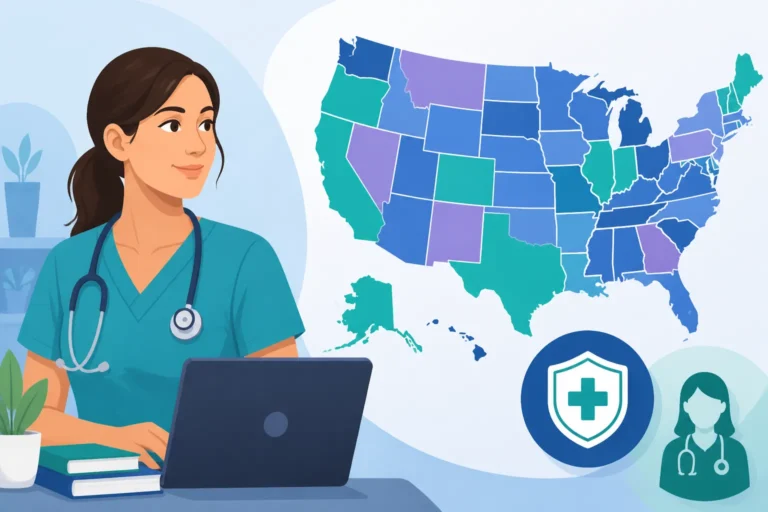
This is where the rubber meets the road. While academic institutions and professional organizations can advocate for higher educational standards, it is ultimately each state's board of nursing that dictates the licensure requirements for Nurse Practitioners. As of now, in the vast majority of U.S. states, a Master of Science in Nursing (MSN) from an accredited program is still the minimum educational requirement to become a licensed Nurse Practitioner. This means that if you graduate from an accredited MSN-NP program, pass your national certification exam, and meet all other state-specific requirements, you can become a practicing Nurse Practitioner.
However, it's crucial to stay updated on your specific state's regulations, as these can change. Some states might be moving towards DNP preference or requirement in the future, or they might offer different levels of practice authority based on the degree earned. For example, some states might be exploring legislative changes that could grant full practice authority more readily to DNP-prepared NPs. Always check with your state's Board of Nursing and the relevant national certification boards (like the American Nurses Credentialing Center (ANCC) or the American Association of Nurse Practitioners (AANP)) to ensure you meet the most current educational requirements for licensure and certification in your chosen specialty. Our article on How to Become a Nurse Practitioner provides a general overview, but state-specific details are paramount.
The Master of Science in Nursing MSN for NP Practice
For many years, the Master of Science in Nursing (MSN) has been the traditional and widely accepted pathway to becoming a Nurse Practitioner. It remains a robust and comprehensive degree that prepares nurses for advanced practice roles. An MSN program typically builds upon a Bachelor of Science in Nursing (BSN), offering specialized coursework and clinical experiences in a chosen NP specialty, such as Family Nurse Practitioner (FNP), Pediatric Nurse Practitioner (PNP), or Adult-Gerontology Acute Care Nurse Practitioner (AGACNP). These programs are designed to develop advanced assessment, diagnosis, treatment, and prescriptive authority skills. If you're looking into specific fields, you might also be interested in what various Nurse Practitioner Specializations Explained entail.
The curriculum for an MSN-NP program is rigorous, combining didactic instruction with extensive clinical hours. Students learn about advanced pathophysiology, pharmacology, health assessment, diagnostic reasoning, and evidence-based practice. They also complete hundreds of supervised clinical hours in various settings, gaining hands-on experience in managing patient care. Many nurses find the flexibility of Online MSN Programs: Complete Guide appealing, allowing them to continue working while pursuing their advanced degree. The length of these programs can vary, but generally, a full-time MSN program takes about two to three years to complete.
Core Components of an MSN-NP Program
An MSN-NP program is much more than just a collection of advanced nursing courses; it's a carefully structured curriculum designed to transform an experienced registered nurse into an autonomous, competent advanced practice provider. The core components are universally focused on preparing you for the multifaceted role of an NP.
- Advanced Pathophysiology: This coursework takes your understanding of disease processes far beyond what you learned in your undergraduate nursing program. You'll delve deep into the cellular and systemic mechanisms of disease, understanding how different conditions manifest, progress, and impact the body. This in-depth knowledge is crucial for accurate diagnostic reasoning and effective treatment planning. Without a solid grasp of pathophysiology, making sound clinical judgments would be incredibly challenging.
- Advanced Pharmacology: As a Nurse Practitioner, you'll have prescriptive authority, which is a significant responsibility. Advanced pharmacology courses focus on the pharmacokinetics and pharmacodynamics of a wide range of medications, including how drugs interact with the body, their effects, side effects, and appropriate dosages for different patient populations. You'll also learn about common medication classes, controlled substances, and legal aspects of prescribing. This is where you learn to truly understand why you're prescribing a certain medication and how it will impact your patient, rather than just memorizing a list.
- Advanced Health Assessment: While you're already proficient in basic health assessment as an RN, an NP program refines these skills to an expert level. This involves not just physical assessment but also advanced history-taking, critical thinking to identify subtle signs and symptoms, and the ability to differentiate between normal and abnormal findings with precision. You'll learn to use advanced diagnostic tools and techniques, preparing you to perform comprehensive assessments across the lifespan, which is foundational to the NP role.
- Clinical Practicum Hours: Perhaps the most vital component, clinical hours are where you apply all your theoretical knowledge in real-world settings under the guidance of experienced preceptors. The number of required clinical hours can vary significantly by program and specialty, but generally ranges from 500 to over 1,000 hours. This direct patient care experience is indispensable for developing clinical competency, diagnostic skills, and patient management strategies. It’s also where you learn the art of patient communication and interprofessional collaboration. Many prospective students worry about MSN Clinical Hours Requirements and how to secure placements, which is a valid concern.
- Evidence-Based Practice and Research: MSN programs emphasize the importance of using the latest research and best practices to inform clinical decisions. You'll learn how to critically appraise research studies, synthesize evidence, and integrate it into your practice to improve patient outcomes. This often culminates in a capstone project or a scholarly paper demonstrating your ability to translate research into practical application.
These components collectively ensure that MSN graduates are well-prepared to sit for their national certification exams and practice as competent Nurse Practitioners, making the MSN a viable option for those pursuing this career path.
MSN as a Valid Pathway to Certification and Licensure
Despite the ongoing discussions about the DNP, an MSN degree from an accredited institution remains a fully valid and accepted pathway to becoming a certified and licensed Nurse Practitioner in most states. When you successfully complete an MSN-NP program, you become eligible to sit for the national certification exam specific to your chosen population focus (e.g., FNP, AGACNP, PMHNP). Organizations like the American Nurses Credentialing Center (ANCC) and the American Association of Nurse Practitioners (AANP) offer these certification exams. Many students rely on reputable study resources like Uworld to prepare for these crucial certification exams, often citing its comprehensive question bank and detailed rationales as key to their success.
Once you pass your certification exam, you can then apply for licensure with your state's Board of Nursing. Provided you meet all other requirements (such as background checks, clean licensure history as an RN, etc.), you will be granted licensure as a Nurse Practitioner. It’s crucial to understand that your prescriptive authority and scope of practice are determined by state laws and regulations, not solely by your degree. So, an MSN-prepared NP typically holds the same legal scope of practice as a DNP-prepared NP in most jurisdictions, though advocacy for DNP-prepared NPs to have full practice authority is ongoing in some areas. Our guide on How Long to Become a Nurse Practitioner outlines the typical timeline for both MSN and DNP paths.
Understanding the Doctor of Nursing Practice DNP for Nurse Practitioners
The Doctor of Nursing Practice (DNP) is a practice-focused doctorate designed to prepare advanced practice registered nurses (APRNs), including Nurse Practitioners, for the highest level of clinical nursing practice. Unlike the PhD, which is a research-focused doctorate, the DNP emphasizes clinical leadership, evidence-based practice translation, quality improvement, and systems thinking. It aims to bridge the gap between research and practice, ensuring that the latest scientific evidence is implemented at the bedside and within healthcare systems. For those considering this advanced degree, our detailed guide on Online MSN Requirements Explained also touches upon DNP requirements.
DNP programs typically build upon either a BSN (BSN-to-DNP) or an MSN (MSN-to-DNP). BSN-to-DNP programs integrate the MSN-level content directly into the doctoral curriculum, allowing nurses to progress from their bachelor's degree directly to a DNP. These programs are often more extensive, lasting 3-4 years full-time. MSN-to-DNP programs, on the other hand, are designed for nurses who already hold an MSN and are looking to advance their education further, typically taking 1-2 years. Regardless of the entry point, DNP programs delve deeper into areas like healthcare policy, organizational leadership, informatics, and advanced data analysis, preparing graduates to influence healthcare at a broader level.
Key Focus Areas of a DNP Program
DNP programs are truly designed to create leaders in nursing practice, focusing on skills that go beyond direct patient care. They are about impacting healthcare systems and outcomes on a grander scale.
- Translational Research and Evidence-Based Practice (EBP): While MSN programs introduce EBP, DNP programs take it to the next level. You're not just consuming research; you're learning to critically appraise it, synthesize findings, and translate that evidence into clinical practice. This means identifying a problem in a healthcare setting, finding relevant research, designing and implementing an intervention based on that evidence, and then evaluating its effectiveness. The DNP prepares you to lead quality improvement initiatives and ensure that patient care is always grounded in the best available science.
- Healthcare Policy and Advocacy: DNP-prepared nurses are expected to be advocates for patients, communities, and the nursing profession. DNP curricula include coursework on health policy analysis, healthcare economics, and the political process. This prepares graduates to influence policy decisions at local, state, and national levels, addressing healthcare disparities and promoting health equity. Imagine being able to sit at the table where crucial decisions are made, using your clinical insights to shape the future of healthcare.
- Systems Leadership and Interprofessional Collaboration: A significant focus of the DNP is on preparing leaders who can navigate complex healthcare systems. This includes developing skills in project management, team leadership, organizational behavior, and effective communication across various healthcare disciplines. DNP graduates are often found in roles where they lead multidisciplinary teams, manage quality improvement projects, or develop new models of care delivery. This ability to work effectively with other professionals, from physicians to social workers, is vital in today's integrated healthcare environments.
- Quality Improvement and Patient Safety: DNP programs heavily emphasize the science of quality improvement. You'll learn frameworks and methodologies to identify areas for improvement in patient care, implement changes, and measure their impact. This could involve reducing hospital-acquired infections, improving medication safety, or streamlining patient flow. The goal is to continuously enhance the safety, effectiveness, and efficiency of healthcare services, ultimately leading to better patient outcomes.
These advanced areas of study position DNP graduates not just as expert clinicians but as change agents within the healthcare system, equipped to address the complex challenges of modern medicine.
Advantages of Earning a DNP
While an MSN is currently sufficient for NP licensure, pursuing a DNP can offer several distinct advantages, both professionally and personally.
- Enhanced Clinical Competencies and Leadership Skills: The DNP curriculum is designed to push your understanding and capabilities to the highest level. You'll gain a deeper understanding of complex health issues, develop advanced diagnostic and treatment strategies, and hone your ability to lead clinical initiatives. This translates into increased confidence in your practice and the ability to take on more challenging cases or leadership roles within your clinical setting. For those pursuing leadership tracks, knowing the MSN Nursing Leadership Track can be a stepping stone.
- Increased Career Opportunities and Advancement: Many healthcare organizations, particularly large academic medical centers and Magnet®-designated hospitals, are increasingly valuing and even preferring DNP-prepared APRNs for certain roles. Earning a DNP can open doors to positions in clinical leadership, healthcare administration, policy development, and faculty roles in nursing education. It positions you as an expert and a leader, making you a more attractive candidate for roles that require significant influence over practice and policy. It's not uncommon to see a BSN to MSN Salary Increase, and further advanced degrees often lead to even higher earning potential.
- Influence on Healthcare Policy and Systems: DNP graduates are uniquely prepared to lead initiatives that impact patient populations and healthcare systems. Their education in health policy, economics, and organizational leadership equips them to advocate for policy changes, design new care models, and implement evidence-based interventions that improve the overall quality and safety of healthcare delivery. If your passion extends beyond direct patient care to shaping the future of healthcare, a DNP provides the tools and knowledge to make that impact.
- Future-Proofing Your Career: Although the DNP is not universally mandated for NP practice yet, the trend towards doctoral-level education for APRNs is undeniable. Earning a DNP now can "future-proof" your career, ensuring you meet any potential future educational requirements without needing to go back to school again. It places you at the forefront of the profession, ready for whatever changes the healthcare landscape might bring. This consideration often ties into the broader discussion of Is an MSN Worth It for long-term career planning.
For nurses committed to advancing their practice and making a significant impact on healthcare, the DNP offers a compelling pathway.
Deciding Between an MSN and a DNP
The decision between pursuing an MSN or a DNP to become a Nurse Practitioner is a highly personal one, with valid reasons for choosing either path. There's no single "right" answer, as it depends heavily on your individual career aspirations, your financial situation, and how much time you're willing and able to commit to your education. Both degrees prepare you for certification and licensure as a Nurse Practitioner, but they offer different depths of knowledge and open different doors for future career trajectory.
Consider what truly motivates you. Are you primarily focused on becoming an excellent direct care provider, deeply engaged in patient assessment, diagnosis, and treatment? An MSN might be exactly what you need. Or are you driven to influence healthcare at a systemic level, leading change, developing policy, and translating research into widespread practice? In that case, the DNP could be your ideal path. It’s a significant investment of time, energy, and money, so it warrants careful reflection.
Your Current Career Goals and Aspirations
Your career goals should be the primary driver in your decision-making process. If your main objective is to become a competent, certified, and licensed Nurse Practitioner and immediately begin providing direct patient care, an MSN program will absolutely get you there. Many fantastic NPs practice daily with an MSN, making significant contributions to patient health. You can specialize in areas like Family, Pediatrics, Adult-Gero, or Women's Health with an MSN, and your scope of practice will generally be the same as a DNP-prepared NP in most states.
However, if you envision yourself in roles that extend beyond direct patient care – such as leading quality improvement initiatives in a hospital system, influencing health policy at a state level, or pursuing a career in nursing education as a program director or dean – then a DNP is likely the more appropriate choice. The DNP curriculum is specifically designed to develop the skills needed for these advanced leadership, systems, and policy-focused roles. For nurses who have an RN to MSN Programs Explained pathway in mind, the decision point often comes after gaining some initial advanced practice experience.
Time and Financial Investment Considerations
Let's be real: advanced nursing education is a serious commitment. Both MSN and DNP programs require significant investments of time and money, and it’s crucial to assess your capacity for both.
- Time Commitment: An MSN-NP program typically takes 2-3 years of full-time study, or 3-5 years part-time. A BSN-to-DNP program, which combines master's and doctoral content, can take 3-4 years full-time. An MSN-to-DNP program, for those who already hold an MSN, typically takes 1-2 years. If you're working full-time, which many nurses are, fitting in a demanding graduate program requires exceptional time management and dedication. Our guide on How Many Years from RN to NP outlines these different timelines.
- Financial Investment: Graduate education isn't cheap. DNP programs generally have higher tuition costs than MSN programs, simply because they involve more credits and a longer duration. While the financial aid landscape for nursing students is robust, with options like MSN Financial Aid and Scholarships available, taking on more student loan debt is a factor to consider. You'll need to weigh the potential for increased salary or career advancement against the additional cost of a DNP. Researching specific program costs at institutions like Drexel University or the University of Texas Arlington, which offer both MSN and DNP options, can give you a clear picture of the financial difference. For example, some programs might offer per-credit tuition in the range of $500-$1,000 or more, and a DNP can easily add 30-50 more credits on top of an MSN.
It's also worth considering the opportunity cost. The longer you're in school, the longer you might be earning a lower RN salary compared to an NP salary. Factor in the lost earning potential during your extended study period when making your decision.
Employer Preferences and Future Trends
While state boards of nursing typically still recognize the MSN for NP licensure, employer preferences are sometimes a different story. In some competitive job markets, or at academic medical centers and hospitals striving for Magnet® recognition, a DNP may give you an edge. Magnet® hospitals, for instance, are known for their commitment to nursing excellence and often encourage or prefer higher levels of education for their nursing staff, including advanced practice nurses. Some employers might even offer tuition reimbursement or incentives for DNP-prepared NPs.
It's also wise to keep an eye on future trends. The AACN's recommendation for the DNP as the entry-level for APRNs is a strong indicator of the direction the profession is headed. While it hasn't become a universal mandate, the momentum towards doctoral preparation for advanced practice is undeniable. Choosing a DNP now could position you ahead of the curve, making you more adaptable to future changes in professional standards or licensure requirements. However, it's also important not to overstate this; an MSN is still a highly respected and fully qualified degree for NP practice across the country.
Ultimately, the best approach is to research specific programs you're interested in, talk to practicing Nurse Practitioners with both MSN and DNP degrees, and consider what aligns best with your personal and professional vision for your nursing career. Regardless of your choice, tools like Uworld can be invaluable for preparing for the NCLEX or your NP certification exam, providing rigorous practice questions and detailed explanations to help cement your knowledge.
Comparing MSN and DNP Pathways for Nurse Practitioners
Choosing between an MSN and a DNP is a significant decision for any aspiring Nurse Practitioner. While both paths lead to NP licensure, understanding their differences in curriculum, focus, and career implications is crucial. This table provides a concise comparison to help you visualize the distinctions.
| Feature | Master of Science in Nursing (MSN) | Doctor of Nursing Practice (DNP) |
|---|---|---|
| Primary Goal | Prepare for advanced clinical practice as an NP | Prepare for advanced clinical practice AND systems-level leadership, policy, and EBP implementation |
| Current Licensure Req. | Minimum requirement for NP licensure in most US states | Not currently required for NP licensure in most US states, but highly recommended by AACN |
| Curriculum Focus | Advanced assessment, pharmacology, pathophysiology, diagnostic reasoning, direct patient care | All MSN content + advanced leadership, health policy, informatics, quality improvement, translational research, population health |
| Program Length (FT) | 2-3 years (post-BSN) | 3-4 years (BSN-to-DNP), 1-2 years (MSN-to-DNP) |
| Clinical Hours | Typically 500-1000+ hours (program and specialty dependent) | Typically 1000+ post-baccalaureate hours, integrating MSN clinicals |
| Terminal Degree? | No, it's a master's-level professional degree | Yes, it's a practice-focused doctoral degree |
| Career Opportunities | Direct patient care NP roles in various settings, some entry-level leadership | Direct patient care NP roles, clinical leadership, administration, health policy, executive roles, academia, consulting |
| Research Emphasis | Utilization of evidence-based practice, capstone project | Generation and translation of evidence into practice, DNP project |
| Cost | Generally lower total tuition | Generally higher total tuition due to longer program length |
| Preparation for Exams | Prepares for national NP certification exams | Prepares for national NP certification exams |
This comparison highlights that while an MSN provides the essential foundation for NP practice, the DNP extends that foundation with a broader, more impactful reach into leadership and systems change. Both are valuable, but your choice should align with your ultimate professional vision.
Disclaimer
The information provided in this article is intended for general informational purposes only and does not constitute professional advice. Nursing education requirements, licensure regulations, and career opportunities can vary significantly by state, institution, and specialty. Always consult with academic advisors, state boards of nursing, and relevant professional organizations for the most accurate and up-to-date information pertaining to your specific situation.