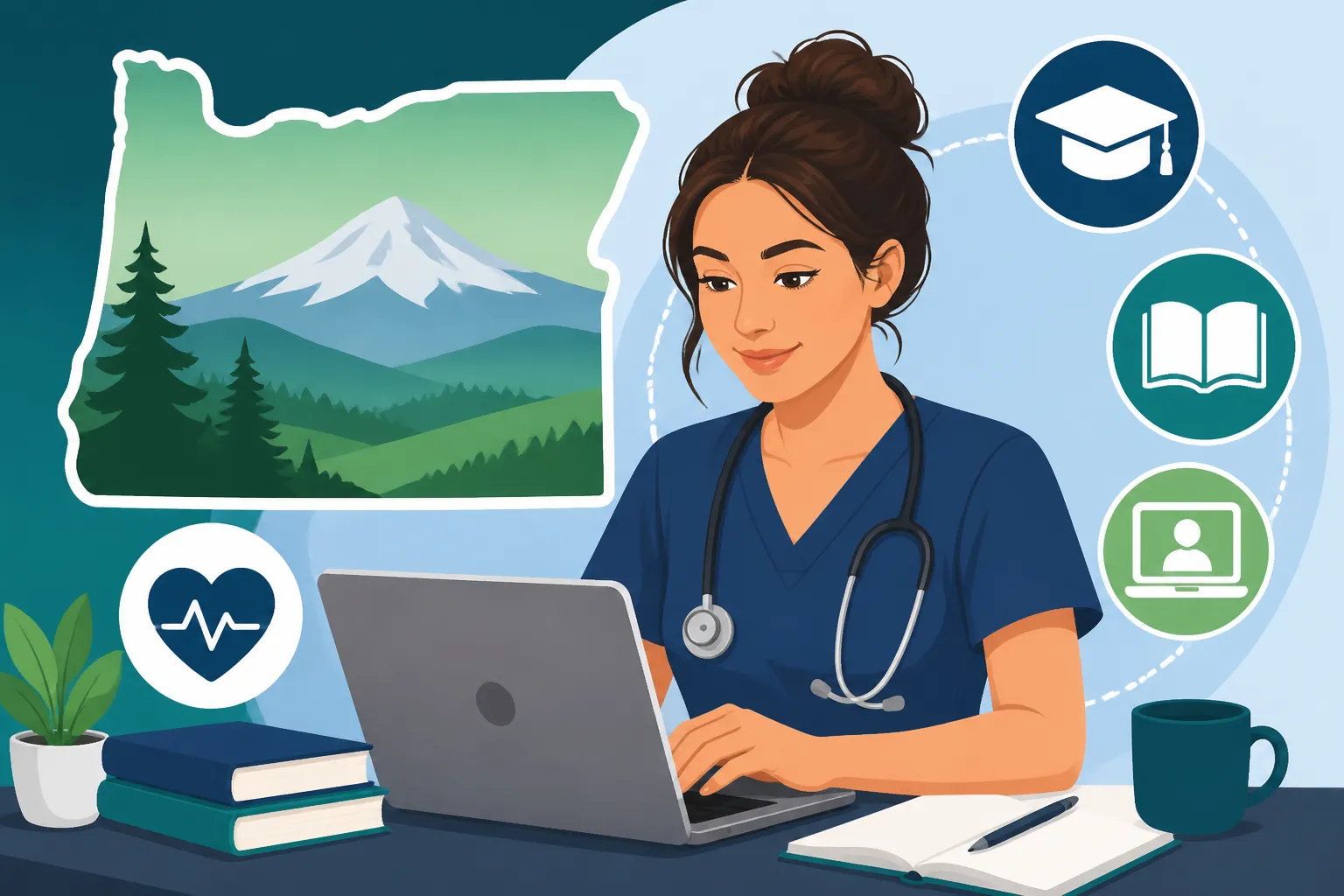
Best Online RN to BSN Programs in Oregon
It's a familiar story for so many dedicated nurses in Oregon: you're passionate about patient care, working hard, and constantly learning on the job, but that little voice in your head keeps reminding you about the career advantages of a Bachelor of Science in Nursing (BSN). The thought of going back to school while juggling shifts, family, and life in general can feel completely overwhelming. This guide is here to cut through the noise and highlight the best online RN to BSN programs available to nurses right here in Oregon, offering the flexibility you need to advance your career without putting your life on hold.
Why an Online RN to BSN is a Game-Changer for Oregon Nurses
For Registered Nurses (RNs) across Oregon, pursuing an online RN to BSN isn't just about checking a box; it's a strategic move that can significantly impact your professional trajectory and the quality of care you provide. The healthcare landscape is evolving rapidly, and a BSN often serves as the gateway to new opportunities and enhanced practice.
The Growing Demand for BSN-Prepared Nurses in Oregon
Oregon, like many states, is seeing an increasing preference for BSN-prepared nurses, especially in acute care settings. Major healthcare systems, from the bustling halls of Oregon Health & Science University (OHSU) in Portland to the community hospitals scattered throughout Bend, Eugene, or Medford, are often prioritizing or even requiring BSN degrees for new hires and promotional opportunities. This isn't just an arbitrary preference; research consistently shows that a higher proportion of BSN-educated nurses correlates with improved patient outcomes, lower mortality rates, and reduced readmission rates.
Earning your BSN equips you with a deeper understanding of evidence-based practice, leadership, community health, and critical thinking – all skills that are vital in today's complex healthcare environment. Furthermore, hospitals striving for or maintaining Magnet Status and the BSN Requirement often emphasize a highly educated nursing workforce, creating an internal push for current RNs to complete their BSN. This trend means that while your ADN or diploma has served you well, a BSN is increasingly becoming the standard, not just an advantage. For nurses looking to move into roles like charge nurse, nurse manager, or specialized units, a BSN is frequently a prerequisite, making it a crucial step for long-term career growth. You might be asking yourself, Is an RN to BSN Worth It? For many, the answer is a resounding yes, especially when considering the long-term benefits and job security.
Flexibility and Accessibility: The Online Advantage
Let's be real: as a working nurse, your schedule is probably anything but predictable. Between day shifts, night shifts, weekends, and unexpected overtime, carving out time for traditional in-person classes can feel impossible. This is precisely where online RN to BSN programs shine. They offer unparalleled flexibility, allowing you to complete coursework on your own time, often asynchronously. This means you can study when it works for you—whether it's during your kids' nap time, on your days off, or in those quiet hours after a night shift.
The beauty of online learning for Oregon nurses is that you can pursue a degree from a top university without relocating or commuting long distances. Imagine living in a rural area like Eastern Oregon and being able to earn a degree from a prestigious Portland-based institution without ever stepping foot on campus for classes. This accessibility removes significant barriers, making higher education a realistic goal for even the busiest nurses. Many programs are designed specifically for working professionals, offering manageable course loads and diverse start dates throughout the year. The flexibility of these programs allows you to continue gaining invaluable bedside experience while simultaneously expanding your theoretical knowledge, demonstrating how you can truly How to Balance Work and RN to BSN.
What to Look for in an Online RN to BSN Program in Oregon
Choosing the right online RN to BSN program can feel like navigating a maze. With so many options, how do you know which one is the best fit for your unique circumstances and career aspirations? Focusing on a few key criteria will help you narrow down your choices and ensure you invest your time and money wisely.
Accreditation: Your Non-Negotiable Standard
First and foremost, never compromise on accreditation. An accredited program ensures that your degree is recognized by employers, licensing boards, and graduate schools. In nursing, the two primary accrediting bodies for baccalaureate and graduate nursing programs are the Commission on Collegiate Nursing Education (CCNE) and the Accreditation Commission for Education in Nursing (ACEN). Both are highly respected, but it’s crucial that any program you consider holds one of these accreditations. Without it, your degree might not be accepted for future certifications, advanced practice programs, or even certain job applications.
Always check a program's accreditation status before applying. You can usually find this information prominently displayed on the nursing school's website. If it's not immediately obvious, don't hesitate to contact their admissions office. Choosing an Accredited Online RN to BSN Programs is not just a recommendation; it's a requirement for a legitimate and valuable nursing education. It directly impacts your ability to pursue higher degrees, like an MSN, and ensures that your hard-earned BSN will be recognized wherever your career takes you. For a deeper dive, you can explore the nuances of CCNE vs ACEN Accreditation Explained.
Program Structure and Flexibility
Beyond accreditation, consider the practical aspects of how the program is structured. Online programs aren't all created equal when it comes to flexibility.
- Asynchronous vs. Synchronous: Most online RN to BSN programs are asynchronous, meaning you can access course materials and complete assignments on your own schedule within a given timeframe (e.g., weekly deadlines). Some might include occasional synchronous sessions (live online meetings), but these are usually infrequent and recorded for those who can't attend. Asynchronous is generally preferred by working nurses for maximum flexibility.
- Part-time vs. Full-time: Do you want to power through quickly, or take your time? Many programs offer both part-time and full-time enrollment options. A part-time schedule might take longer but is often more manageable alongside a busy work schedule. For example, some nurses aim for 1-Year RN to BSN Programs while others prefer a more leisurely pace.
- Multiple Start Dates: Does the program offer rolling admissions or multiple start dates throughout the year (e.g., fall, spring, summer)? This can be a huge benefit if you miss an application deadline or need to defer enrollment.
- Competency-Based Learning: Some programs, like Western Governors University (WGU) which serves Oregon students, utilize a competency-based model. This allows you to advance through courses as soon as you demonstrate mastery of the material, potentially accelerating your completion time if you're a self-motivated learner with strong prior knowledge.
Understanding these structural elements will help you find a program that truly fits into your life rather than forcing you to completely overhaul your routine. This is crucial for successfully completing your Online RN to BSN Programs: Complete Guide.
Clinical and Practicum Requirements
The phrase "clinical requirements" can send shivers down an RN's spine, especially if you're hoping for a fully online experience. The good news is that most online RN to BSN programs do not require traditional, hands-on patient care clinical hours like your initial ADN or diploma program did. You already have that experience and your active RN license proves it.
Instead, online RN to BSN programs typically focus on "practicum" or "experiential learning" components. These are often project-based, community-focused, or leadership-oriented experiences that you can complete in your local area, often at your current workplace or another approved facility. For instance, you might develop a health promotion project for a local community center, conduct a quality improvement initiative at your hospital, or shadow a nursing leader. The goal is to apply theoretical knowledge to real-world nursing challenges outside of direct bedside care.
Programs are usually very good at helping students find and arrange these practicum experiences, often through partnerships with healthcare organizations or by allowing you to utilize your existing professional network. Always confirm the exact nature of these requirements with prospective schools. Look for programs that explicitly state they have No-Clinical RN to BSN Programs or clearly outline how practicum experiences are managed for working nurses, ensuring minimal disruption to your professional life. Understanding RN to BSN Clinical Hours Explained is key before committing to a program.
Top Online RN to BSN Programs in Oregon and Nearby Options
Oregon nurses have excellent choices for online RN to BSN programs, both within the state and from reputable national institutions that cater to distance learners. Let's explore some of the most prominent options.
University-Based Programs in Oregon
Focusing on local institutions first provides the benefit of potentially more localized networking opportunities and a curriculum tailored to Oregon's specific healthcare landscape.
- Oregon Health & Science University (OHSU): A leader in healthcare education in Oregon, OHSU offers a highly respected 100% online RN to BSN program. Their curriculum is known for its rigor and focus on evidence-based practice, leadership, and population health. As a state university, OHSU is generally a strong choice for those seeking a reputable public institution. The program typically takes 18-24 months for part-time students but can be completed faster if taking a heavier course load. OHSU’s program emphasizes critical thinking and prepares nurses for advanced roles within the diverse OHSU health system and beyond.
- Linfield University: Located in McMinnville, Linfield University's online RN to BSN program is specifically designed for working RNs. It's known for its flexible format and supportive faculty. Linfield offers multiple start dates throughout the year, allowing for easy entry. The program's coursework can be completed completely online, with practicum experiences typically arranged in the student's local community. Many nurses appreciate Linfield's emphasis on a personalized learning experience and strong alumni network within the state. The program can often be completed in as little as 12 months for full-time students.
- Bushnell University: Formerly Northwest Christian University, Bushnell University in Eugene offers an online RN to BSN program focused on holistic patient care and leadership development. Their program is designed with working nurses in mind, offering a convenient online format. Students typically complete the program in about 16 months, although accelerated options may be available. Bushnell emphasizes a values-based education, preparing nurses to serve diverse communities with compassion and competence.
These Oregon-based programs offer strong academic credentials and a connection to the state's healthcare system. When considering How to Choose an RN to BSN Program, local ties can sometimes offer an added layer of advantage.
Reputable Online Programs Serving Oregon Students
Beyond Oregon's borders, several highly regarded online institutions offer RN to BSN programs that are popular among nurses nationwide, including those in Oregon. These often provide additional flexibility or unique learning models.
- Western Governors University (WGU): WGU is a fully online, competency-based university that has become incredibly popular for working adults, including nurses. Their RN to BSN program allows students to accelerate their studies by demonstrating mastery of subjects rather than adhering to a strict semester schedule. This can be a huge advantage if you’re self-motivated and can dedicate significant time to your studies. Many Oregon nurses choose WGU for its affordability and fast-track potential. You can read more in-depth reviews like the WGU RN to BSN Program Review.
- University of Arizona Global Campus: While not Oregon-based, this institution (formerly Ashford University) offers an online RN to BSN program that attracts students from across the country, including Oregon. It’s known for its flexible course schedules and accessible faculty, catering to adult learners who need to balance education with existing commitments.
- Capella University: Another popular choice for online nursing education, Capella University offers a competency-based online RN to BSN program with multiple enrollment options. They focus on practical skills and career readiness, making it a good fit for nurses looking to immediately apply their new knowledge. Capella's programs are often praised for their robust online learning platforms and support services.
When comparing these options, consider factors like per-credit cost, program length, and the specific learning model. Here's a quick comparison table to help you visualize some key differences:
| Program Name | Accreditation | Estimated Cost Per Credit (Range) | Program Length (Full-time) | Notable Features |
|---|---|---|---|---|
| OHSU | CCNE | $350 – $450 | 18-24 months | Strong local reputation, research focus, public university |
| Linfield University | CCNE | $500 – $650 | 12-18 months | Multiple start dates, personalized support, private |
| Bushnell University | CCNE | $400 – $550 | 16-24 months | Values-based education, leadership focus, private |
| WGU (National) | CCNE | Flat-rate tuition per 6-month term | As fast as 6 months | Competency-based, self-paced, highly affordable |
| Capella University (National) | CCNE | $350 – $475 | As fast as 12 months | Competency-based options, multiple learning formats |
Note: Costs are estimated and can vary significantly based on residency, fees, and program changes. Always check the most current tuition rates directly with the institution.
Regardless of whether you choose an Oregon-based or national program, ensure it aligns with your career goals and provides the support you need to succeed. And remember, while these programs provide the academic foundation, resources like Uworld are fantastic for strengthening your clinical reasoning and preparing for future certifications beyond your BSN.
Navigating the Application and Financial Aid Process
The thought of applying to college again might bring back memories of high school essays and SATs, but applying for an online RN to BSN program as a working professional is a different ballgame. The process is streamlined, and resources are available to help you fund your education.
Admission Requirements and Transfer Credits
Most online RN to BSN programs have similar core admission requirements, generally including:
- An active, unencumbered Registered Nurse (RN) license.
- An Associate's Degree in Nursing (ADN) or a nursing diploma from an accredited program.
- A minimum GPA, often around 2.5 on a 4.0 scale, though some programs may have a higher requirement or offer RN to BSN Programs with No GPA Requirement if other criteria are strong.
- Official transcripts from all previously attended colleges and universities.
- Completion of prerequisite courses, which typically include subjects like anatomy, physiology, microbiology, chemistry, statistics, and English composition. Many ADN programs already cover these, making the transition smoother. You can find detailed breakdowns of RN to BSN Prerequisites Explained.
One of the biggest advantages for ADN-prepared nurses is the transferability of credits. Your ADN coursework often provides a significant chunk of the general education and lower-division nursing credits needed for a BSN. Programs are usually very clear on How Much of an ADN Transfers to BSN and How Many Credits for an RN to BSN you'll need to complete. Many schools grant block transfer credit for your RN license itself, recognizing your professional experience as academic credit, effectively shortening your overall program length. This means your previous efforts are honored, reducing both the time and cost of your BSN. Always work closely with an admissions counselor to get a personalized transfer credit evaluation.
Funding Your Online RN to BSN in Oregon
Investing in your education is an investment in your future, but it doesn't have to break the bank. Several avenues exist to help How Much Does an RN to BSN Cost become more manageable.
- Federal Financial Aid: As an accredited program, most online RN to BSN programs qualify for federal student aid, including Pell Grants (for undergraduate students with financial need) and federal student loans. The first step is to complete the Free Application for Federal Student Aid (FAFSA). This form determines your eligibility for various types of aid.
- Scholarships and Grants: Many organizations, both national and local to Oregon, offer scholarships specifically for nursing students or RNs returning to school. Look for opportunities from:
- Professional nursing organizations (e.g., Oregon Nurses Association, American Nurses Association).
- Hospitals and healthcare systems in Oregon (many offer internal scholarships or tuition reimbursement programs).
- Community foundations and local charities.
- The schools themselves often have institutional scholarships.
You can explore a wealth of options through RN to BSN Scholarships.
- Employer Tuition Assistance: This is a huge benefit for many working nurses. A large number of hospitals and healthcare systems in Oregon offer tuition reimbursement or assistance programs for employees pursuing higher education, especially BSNs. This is often part of their commitment to professional development and meeting Magnet Recognition Program standards. Be sure to check with your human resources department about How to Get Your Employer to Pay for BSN or RN to BSN Tuition Reimbursement policies. These programs often require you to remain employed for a certain period after graduation, but it's a fantastic way to significantly reduce your out-of-pocket costs.
- Private Loans: If federal aid and scholarships aren't enough, private student loans are an option, but always explore federal options first, as they often have more favorable terms.
Taking the time to research and apply for financial aid can significantly lighten the financial burden, making your BSN degree a more accessible reality. This also helps demonstrate the RN to BSN Cost Breakdown by Credit and how careful planning can make a big difference.
Making the Most of Your Online RN to BSN Journey
Starting an online RN to BSN program is a significant commitment, but with the right strategies and mindset, you can not only succeed but truly thrive. It’s about more than just earning a degree; it’s about refining your skills, expanding your knowledge, and preparing for the next chapter of your nursing career.
Study Strategies for Online Success
Online learning demands a different kind of discipline than traditional classroom settings. Here are some tips to help you excel:
- Create a Dedicated Study Space: Designate a specific area in your home in Oregon that is quiet, free from distractions, and comfortable for studying. This helps signal to your brain (and your family!) that it's time to focus.
- Develop a Consistent Schedule: While online learning is flexible, consistency is key. Block out specific times each week for coursework, just as you would for an in-person class. Treat these study blocks as non-negotiable appointments. Consider using a planner or digital calendar to map out your assignments and deadlines.
- Be Proactive and Self-Directed: You're largely responsible for your own learning in an online environment. Don't wait until the last minute to engage with materials or reach out for help. If you're struggling with a concept, use the resources available (online forums, instructor office hours, study groups, supplemental materials).
- Utilize Technology to Your Advantage: Online programs often use robust learning management systems (LMS) like Canvas or Blackboard. Familiarize yourself with all their features. Use digital note-taking tools, citation managers, and online collaboration platforms.
- Connect with Peers and Faculty: Even though it's online, you're not alone. Participate actively in discussion forums, reach out to classmates, and attend virtual office hours. Building a support network can be invaluable. Many programs facilitate virtual study groups or peer-mentoring.
- Practice Self-Care: Studying while working as a nurse can be incredibly demanding. Remember to prioritize your physical and mental well-being. Take breaks, get enough sleep, eat healthy, and engage in activities that help you de-stress. Burnout is real, and it’s important to manage it effectively.
As you progress through your online RN to BSN, you'll delve into topics like nursing research, leadership, community health, and health policy. Resources such as Uworld, while primarily known for NCLEX preparation, can also be invaluable for reinforcing core nursing concepts and critical thinking skills as you study for your BSN courses and prepare for future professional certifications.
Career Advancement Post-BSN
Earning your RN to BSN is more than just an academic achievement; it's a career accelerator. With your BSN in hand, you’ll unlock a wider array of opportunities and potential for increased earning power in Oregon.
- Expanded Job Opportunities: Many hospitals, particularly those with Magnet status or larger academic medical centers, increasingly require a BSN for certain positions. With a BSN, you become eligible for roles that may have been out of reach, such as specialized unit positions, charge nurse, or roles in areas like case management, public health, or school nursing. For example, hospitals like OHSU or Providence St. Vincent Medical Center often give preference to BSN-prepared nurses. You'll gain access to more Jobs You Can Get with a BSN.
- Increased Earning Potential: While salaries vary by location and specialty, a BSN often leads to a higher starting salary and greater long-term earning potential compared to an ADN. Data consistently shows that Does a BSN Increase Your Salary? Yes, it generally does. This is your RN to BSN Return on Investment in action.
- Leadership and Management Roles: The BSN curriculum includes courses in leadership, management, and healthcare systems. This foundational knowledge is essential for nurses aspiring to move into leadership roles, whether as a unit manager, supervisor, or director of nursing.
- Preparation for Advanced Degrees: Your BSN serves as the essential stepping stone for pursuing graduate-level nursing education. If your ultimate goal is to become a Nurse Practitioner (NP), Nurse Educator, or pursue other advanced practice roles, an MSN or DNP will be required. An RN to BSN program provides the academic rigor and critical thinking skills necessary for success in these demanding programs. It’s a direct pathway for RN to BSN as a Path to MSN and other advanced nursing degrees. The What You Learn in an RN to BSN Program will specifically prepare you for the intellectual demands of graduate studies.
Your journey to an online RN to BSN in Oregon is a testament to your dedication to your profession and your patients. By choosing the right program and committing to your studies, you'll not only enhance your own career but also contribute to a higher standard of nursing care across the state.
Disclaimer
Please note that the information provided in this guide is for general informational purposes only and does not constitute professional advice. Program details, costs, accreditation status, and admission requirements can change rapidly. Always verify all information directly with the educational institutions mentioned and consult with an academic advisor before making any enrollment decisions.