Nursing Specialties That Don’t Require a Degree Change
It's a common feeling, isn't it? You've poured your heart and soul into becoming a registered nurse, worked on the front lines, and now you're feeling a pull toward something different, a new challenge, or maybe just a change of pace. But the thought of going back to school for another several years, piling on more student loan debt, and navigating new degree requirements can feel utterly overwhelming. Many nurses mistakenly believe that a significant career shift always means another degree, which just isn't true for many fulfilling specializations within our field. This comprehensive guide will illuminate the many exciting nursing specialties you can pursue without needing to earn an entirely new degree, focusing instead on experience, certifications, and a passion for learning.
Understanding the Landscape of Nursing Specialties
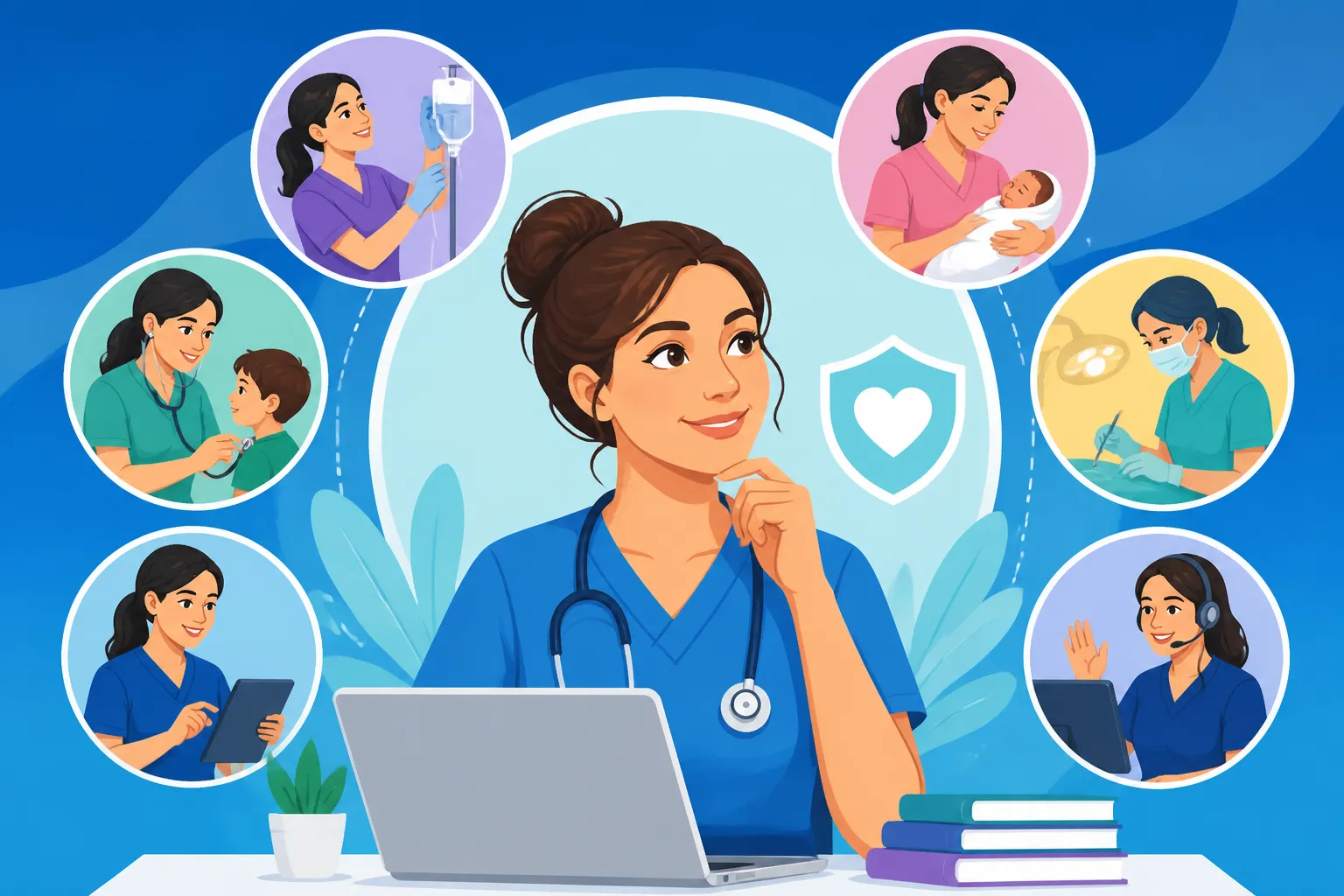
Nursing is an incredibly diverse profession, offering a vast array of roles and environments beyond what most people imagine. From the fast-paced intensity of the emergency room to the quiet, compassionate care of hospice, nurses are everywhere, making a profound difference. But what exactly defines a "specialty" in nursing, and why do so many nurses feel the need to explore them?
What Defines a Nursing Specialty?
At its core, a nursing specialty is a focused area of practice where a nurse develops deep expertise and specialized skills. It often involves working with a particular patient population (like pediatrics or geriatrics), a specific disease process (like oncology or cardiology), a unique care setting (like the operating room or community health), or a distinct type of intervention (like critical care or wound care). What’s important to understand is that not all specializations demand a master's or doctoral degree. Many are built upon the foundational knowledge and license of a Registered Nurse (RN), enhanced by targeted continuing education, hands-on experience, and often, professional certifications. These certifications demonstrate a commitment to excellence and a mastery of specific knowledge within that niche.
Consider the difference between a general medical-surgical nurse and a critical care nurse. Both are RNs. However, the critical care nurse has dedicated their practice to managing acutely ill patients, has likely undergone specialized training in advanced hemodynamics, ventilator management, and complex medication titrations, and might hold a Critical Care Nurse Certification (CCRN). This distinction doesn't always necessitate an additional academic degree beyond their initial RN licensure.
Why Nurses Seek Specialization Without a Degree Change
There are countless reasons why a nurse might look to specialize without pursuing a new degree. For many, it's about finding a better fit for their personality and interests. The high-stress, unpredictable nature of emergency nursing might appeal to one nurse, while another might thrive in the structured, meticulous environment of the operating room. Others seek a change to improve their work-life balance, pursue higher earning potential, or escape burnout from a particularly demanding unit.
Let's say you've been working on a busy medical-surgical floor for several years. You're great at it, but you're starting to feel the emotional toll, or perhaps you've discovered a deep interest in cardiac rhythm interpretation. Instead of thinking you need to go back for an MSN, you might explore moving to a telemetry unit, taking specialized EKG courses, and pursuing a Cardiac Vascular Nurse certification. This path allows you to leverage your existing RN degree and experience, building upon it rather than starting over academically. This approach offers a way to reshape your career without the time and financial commitment of a new degree, making it a highly attractive option for experienced nurses. For those looking to delve deeper into these motivations, exploring How to Choose a Nursing Specialty can provide valuable insights.
Bedside Specialties You Can Transition Into Without a New Degree
Many of the most popular and impactful nursing specialties involve direct patient care at the bedside and are perfectly accessible to RNs without requiring a new degree. These roles build upon your fundamental nursing skills but require specific knowledge and a targeted skillset for a particular patient population or environment.
Critical Care and Intensive Care Units
Working in an Intensive Care Unit (ICU) or Critical Care Unit (CCU) is often seen as the pinnacle of bedside nursing for those who thrive on high-acuity care. Nurses in these units manage patients with life-threatening conditions, requiring advanced physiological monitoring, complex medication administration, and the ability to react swiftly to rapidly changing patient states.
To transition into critical care, you typically need some foundational experience as an RN, often in a general medical-surgical setting first, though some hospitals do offer new grad residencies directly into critical care. The real "specialization" comes through on-the-job training, preceptorships, and specific educational modules covering topics like advanced cardiac life support (ACLS), ventilator management, continuous renal replacement therapy (CRRT), and intracranial pressure monitoring. Many critical care nurses pursue the CCRN certification, offered by the American Association of Critical-Care Nurses (AACN), which validates their expertise. This certification, not an additional degree, is often the benchmark for professional recognition in this challenging field. If you're wondering How to Become a Critical Care Nurse, it typically starts with this kind of focused training and certification.
Emergency Department Nursing
Emergency Room (ER) nursing is another dynamic specialty that appeals to nurses who excel in fast-paced, unpredictable environments. ER nurses are the first line of defense for patients presenting with a wide range of acute illnesses and injuries, from minor lacerations to life-threatening traumas or cardiac events. You need sharp assessment skills, the ability to prioritize quickly, and a calm demeanor under pressure.
Transitioning to the ER usually involves gaining some initial RN experience, then seeking out positions in emergency departments that offer robust orientation programs. Essential certifications like Advanced Cardiac Life Support (ACLS), Pediatric Advanced Life Support (PALS), and Trauma Nursing Core Course (TNCC) are standard and typically completed as part of employment or through employer-sponsored training. The Certified Emergency Nurse (CEN) credential, offered by the Board of Certification for Emergency Nursing (BCEN), is a highly respected certification for ER nurses. This specialization emphasizes rapid assessment, intervention, and stabilization, all skills honed through experience and targeted training rather than a formal degree program. More details can be found in a guide like Emergency Nurse: Role, Salary, and How to Start.
Labor and Delivery Nursing
For nurses drawn to the miracle of childbirth and women's health, Labor and Delivery (L&D) offers a profoundly rewarding specialty. L&D nurses provide care for pregnant patients during labor, delivery, and immediate postpartum, as well as for their newborns. They monitor fetal heart tones, assist with pain management, support patients through contractions, and assist physicians during delivery.
Entry into L&D usually begins with an RN license and often some general medical-surgical experience. Hospitals then provide extensive unit-specific training and preceptorships to develop the specialized skills needed, such as interpreting fetal monitoring strips, managing obstetric emergencies, and providing comprehensive postpartum and newborn care. Certification options like the Inpatient Obstetric Nursing (RNC-OB) credential are available through the National Certification Corporation (NCC) and demonstrate advanced clinical knowledge in this area. While some L&D nurses might later pursue a Women's Health Nurse Practitioner (WHNP) or Certified Nurse Midwife (CNM) degree, the initial specialization within L&D is squarely within the realm of an experienced RN.
Non-Bedside and Indirect Care Specialties Accessible to RNs
Not every nurse is meant for the constant hustle and direct physical demands of bedside care, and that's perfectly okay! There are numerous fulfilling non-bedside and indirect care specialties that leverage your nursing knowledge and critical thinking skills without requiring a new degree. These roles often offer more predictable hours and a different kind of patient interaction.
Case Management Nursing
Case managers play a crucial role in coordinating patient care, especially for those with complex medical needs or chronic conditions. They act as navigators, connecting patients with resources, ensuring continuity of care across different settings (hospital, home, skilled nursing facility), and advocating for patient needs. This role focuses heavily on communication, assessment of needs, planning, and implementation.
To become a case management nurse, you typically need several years of clinical experience as an RN, demonstrating a strong understanding of various disease processes, healthcare systems, and patient needs. Many organizations prefer or require a Certified Case Manager (CCM) credential, which is a post-basic certification demonstrating expertise in the field. This credential focuses on the knowledge and skills required for effective case management and can be obtained with a valid RN license and specific work experience. Case management is an excellent example of a specialty where your existing nursing degree is your foundation, and your experience and targeted certification build your new career path.
Nursing Informatics
For nurses with a keen interest in technology, data, and improving healthcare systems, nursing informatics is an exploding field. These specialists bridge the gap between clinical practice and information technology, designing, implementing, and optimizing electronic health records (EHRs) and other healthcare information systems to enhance patient care, safety, and efficiency. They analyze data, train staff, and ensure technology aligns with clinical workflows.
While some advanced informatics roles might lean towards a Master's degree in Nursing Informatics, many entry-level and mid-level positions are accessible to experienced RNs who have a natural aptitude for technology and data. Gaining experience with various EHR systems, participating in system upgrades at your current facility, or even taking online courses in data analytics or health information technology can pave the way. The ANCC offers a Nursing Informatics Certification (RN-BC), which recognizes the knowledge and experience of registered nurses specializing in informatics, again, without needing a new degree. This is a perfect example of a career where leveraging your existing knowledge and adding targeted, practical skills can open up a whole new world.
Public Health Nursing
Public health nurses focus on preventing illness and promoting health within communities rather than caring for individual patients in acute settings. They work with diverse populations, identifying health risks, educating the public on preventative measures, managing disease outbreaks, and advocating for policies that improve community health outcomes. Their "patient" is often an entire community or a specific population group.
An RN with a foundational degree (ADN or BSN) is well-prepared for many public health nursing roles. Experience in various clinical settings can be beneficial, as it provides a broad understanding of health issues. Public health departments, school districts, and community clinics often hire RNs directly into these roles, providing on-the-job training in epidemiology, health education, and community assessment. While a BSN is often preferred for more leadership-oriented public health roles, many entry-level positions are open to ADN-prepared RNs. Certification in Public Health (CPH) is available, though it's often pursued by those with master's degrees in public health, but specific state public health associations might offer their own certifications. This specialty requires a passion for community well-being and a shift in perspective from individual to population-level care.
| Specialty | Common Setting | Key Skills | Typical Experience Required | Common Certifications (No New Degree) |
|---|---|---|---|---|
| Critical Care Nurse | ICU, CCU, Trauma | Advanced assessment, ventilator management, hemodynamic monitoring, rapid response | 1-2 years med-surg or acute care | CCRN (AACN) |
| Emergency Nurse | ER, Urgent Care | Rapid assessment, trauma care, prioritization, crisis intervention | 1-2 years med-surg or acute care | CEN (BCEN), ACLS, PALS, TNCC |
| Labor & Delivery Nurse | Hospital L&D unit | Fetal monitoring, obstetric emergency management, patient support during labor | 1 year med-surg or maternal-child | RNC-OB (NCC) |
| Case Management Nurse | Hospital, clinic, home health, insurance | Care coordination, resource navigation, advocacy, discharge planning | 2-5 years clinical experience | CCM (CCMC) |
| Nursing Informatics | Hospital, corporate healthcare, software companies | EHR optimization, data analysis, staff training, system design | 2-5 years clinical experience, tech aptitude | RN-BC (ANCC) |
| Public Health Nurse | Health departments, schools, community clinics | Community assessment, health education, disease surveillance, policy advocacy | Entry-level for ADN/BSN, varies by role | CPH (NBPHE – often master's), state-specific |
| Operating Room (OR) Nurse | Hospital OR, outpatient surgery | Sterile technique, patient advocacy, surgical assistance | New grad residency or 1-2 years med-surg | CNOR (CCI) |
| Telemetry Nurse | Hospital telemetry unit | EKG interpretation, cardiac rhythm analysis, medication titration for cardiac patients | 1 year med-surg | PCCN (AACN) |
The Role of Certifications and Experience
It's clear that while a new degree isn't always necessary for specialization, targeted certifications and robust clinical experience are paramount. These two elements are often the pillars upon which a successful transition into a new nursing specialty is built.
Validating Expertise Through Certifications
Professional certifications are like badges of honor in nursing. They are voluntary credentials that go beyond your basic RN license, signifying that you have met specific criteria and possess advanced knowledge and skills in a particular area of practice. These certifications are typically awarded by national certifying bodies (like the AACN, BCEN, ANCC, or NCC) after you pass a rigorous examination.
For example, if you're an RN aspiring to work in pediatric critical care, earning the CCRN certification, perhaps with a sub-specialty in pediatrics, demonstrates to potential employers and colleagues that you have a comprehensive understanding of the complex needs of critically ill children. This doesn't mean you need a Pediatric Nurse Practitioner degree; it means you've deepened your knowledge as a bedside RN. Many hospitals and healthcare systems actually incentivize their nurses to obtain relevant certifications, sometimes offering pay differentials or tuition reimbursement for exam fees. This investment shows they value certified nurses who bring a higher level of validated expertise to patient care. For a deeper dive into the world of certifications, you might want to read Nursing Certifications by Specialty or How to Get a a Nursing Certification.
When preparing for these certification exams, just like with the NCLEX, structured study resources can be incredibly helpful. Many nurses find platforms like Uworld invaluable for their comprehensive question banks and detailed rationales, which can be adapted to studying for various specialty exams even if not directly offered.
The Irreplaceable Value of Clinical Experience
Beyond certifications, hands-on clinical experience is the bedrock of specialization. You can read all the textbooks in the world, but nothing compares to the real-life scenarios, critical thinking, and patient interactions that shape an expert nurse. Many specialties require a minimum amount of experience in a relevant field before you can even sit for a certification exam, let alone be considered for a specialized role.
Think about an oncology nurse. While specific oncology certifications exist, a nurse typically needs to work on an oncology unit for at least a year or two to truly understand the nuances of chemotherapy administration, symptom management, patient education, and the emotional support required for cancer patients and their families. This experience allows you to develop clinical judgment, problem-solving skills, and the confidence to handle specific challenges within that specialty. Sometimes, starting in a general medical-surgical role that frequently cares for a particular patient population (e.g., cardiac patients on a general floor) can serve as a stepping stone to a more specialized unit (e.g., a dedicated cardiac telemetry unit or CCU). It's about accumulating relevant hours and actively seeking out learning opportunities within your current role.
Strategies for Making a Seamless Transition
Deciding to pursue a new nursing specialty without a degree change is an exciting step, but it requires a thoughtful and strategic approach. It's not just about wanting a change; it's about planning for one.
Gaining Relevant Experience and Skills
The first step in transitioning to a new specialty is often to identify the foundational experience and skills required for that area. If you're currently a medical-surgical nurse interested in the operating room, your current experience won't directly translate, but your general nursing assessment skills, time management, and ability to work in a team are still valuable. You would then seek out an OR residency program or an entry-level OR position. Many hospitals offer "new to specialty" training programs that are specifically designed for experienced RNs looking to transition into a high-demand area like critical care, emergency, or perioperative nursing.
Actively seek opportunities to cross-train, shadow nurses in your desired specialty, or volunteer for committees that expose you to the relevant patient population or technology. For instance, if you're interested in wound care, offer to be the unit's wound care champion, attend relevant in-services, and meticulously document and learn from every wound care intervention you perform. This proactive approach demonstrates initiative and builds your resume for that specific niche.
Leveraging Professional Development and Networking
Professional development isn't just about CEUs; it's about actively engaging with your chosen field. Join professional organizations related to your desired specialty, such as the Emergency Nurses Association (ENA) or the American Association of Critical-Care Nurses (AACN). These organizations offer educational resources, conferences, and networking opportunities that can be invaluable. Networking with nurses already in your target specialty can provide insider tips, mentorship, and even lead to job opportunities.
For example, attending a local chapter meeting for the American Association of Neuroscience Nurses (AANN) could connect you with experienced neuroscience nurses who can guide you on the best path to becoming a specialized neuro nurse without needing to go back for a separate degree. They might tell you about specific hospital units known for their strong neuro training programs or suggest particular certifications like the Stroke Certified Registered Nurse (SCRN). Building these relationships can open doors that simply applying online might not.
Crafting a Targeted Resume and Interviewing Effectively
When applying for a specialized nursing role, your resume needs to highlight any relevant experience, even if it's indirect. If you've managed patients with cardiac issues on a general floor, emphasize those skills if you're applying for a telemetry position. Detail any certifications, advanced training (like ACLS or PALS), and continuing education that aligns with the new specialty.
During interviews, be prepared to articulate why you want to transition into this specific specialty. Talk about your passion, what you've done to prepare, and how your existing skills are transferable. For instance, an ER manager will want to hear about your ability to multitask, make quick decisions, and remain calm under pressure, even if your experience comes from a busy medical-surgical unit. Be honest about what you don't know but emphasize your eagerness to learn and grow within their specialized environment. This proactive and well-prepared approach is key to showing you’re serious about making the switch. For more guidance on career trajectories, checking out Nursing Specialty Career Paths could be beneficial.
Common Misconceptions About Changing Nursing Specialties
The path to specialization can sometimes feel shrouded in mystery, leading to several common misconceptions that might deter nurses from pursuing their ideal role. Let's clear up some of these myths.
"I Need a Master's Degree to Be a 'Specialist' Nurse."
This is perhaps the biggest and most pervasive myth. While it's true that advanced practice nursing roles like Nurse Practitioners (NPs), Certified Registered Nurse Anesthetists (CRNAs), and Clinical Nurse Specialists (CNSs) do require master's or doctoral degrees, the vast majority of what are considered "specialty" nurses do not. You can be an expert in your field—a highly skilled Critical Care Nurse, an invaluable Operating Room Nurse, or a seasoned Oncology Nurse—all with your foundational RN license (ADN or BSN) and the appropriate experience and certifications.
The confusion often arises because the term "specialist" is used broadly. A "specialist RN" is someone who has honed their skills in a particular area, whereas an "Advanced Practice Registered Nurse (APRN)" is a licensed independent practitioner with an advanced degree. These are distinct roles with different scopes of practice. You absolutely can specialize and become an expert without going back to school for an MSN or DNP.
"Changing Specialties Means Starting Over from Scratch."
This simply isn't true. While you might need to learn new protocols, equipment, or disease processes, your core nursing skills are highly transferable. The foundational principles of patient assessment, critical thinking, communication, advocacy, and patient education remain constant across all specialties. Your experience in one area, even if seemingly unrelated, has undoubtedly sharpened these universal nursing competencies.
For example, a nurse moving from pediatrics to adult cardiac care isn't starting over from square one. They bring excellent patient communication skills, the ability to build rapport, and a strong understanding of pharmacology, even if they need to learn more about adult cardiovascular anatomy and specific cardiac medications. Healthcare employers recognize the value of an experienced RN, even if their experience is in a different setting. What you learn is additive, not a complete wipe and restart.
"It's Too Late for Me to Change My Specialty."
Many nurses, especially those who have been in the profession for a decade or more, feel stuck or believe they're too old to learn new tricks. This couldn't be further from the truth. Nursing is a lifelong learning profession, and experienced nurses bring a wealth of wisdom, maturity, and perspective that is highly valued. Hospitals are often eager to recruit seasoned RNs into specialized training programs because they tend to have better retention rates and adapt well to the demands of new specialties.
Age is not a barrier to specialization. Your years of experience might even give you an advantage in terms of professionalism, emotional intelligence, and general clinical acumen. Many nurses successfully transition into entirely new specialties well into their 40s, 50s, and even 60s. The desire to learn and adapt is far more important than the number of years on your license. If you’re curious about how nurses successfully switch, How to Switch Nursing Specialties offers more insights.
Evaluating Your Options and Finding the Right Fit
With so many pathways available, how do you decide which nursing specialty is right for you? It's a personal journey that requires self-reflection, research, and often, a little bit of trial and error.
Self-Assessment: What Truly Motivates You?
Before you start researching job descriptions, take some time for introspection. Ask yourself key questions:
- What kind of patient interaction do you thrive on? Do you enjoy long-term relationships (e.g., hospice, home health) or brief, intense encounters (e.g., ER, PACU)?
- What pace of work energizes you? Do you prefer high-adrenaline situations or a more predictable, methodical environment?
- What types of clinical challenges intrigue you? Are you fascinated by technology and complex machinery (e.g., ICU, interventional radiology) or by psychological support and education (e.g., psychiatric nursing, diabetes education)?
- What are your non-negotiables regarding work-life balance? Are you willing to work nights and weekends, or are traditional 9-to-5 roles more appealing?
- Are there any patient populations or disease processes that you feel a particular connection to? For example, a personal experience with cancer might draw you to oncology.
Your answers to these questions will help you narrow down the vast field of nursing. For example, if you love working with children and appreciate a lighter, more preventative approach, Pediatric Nurse: Role, Salary, and How to Start might be a good read.
Researching Potential Specialties
Once you have a clearer idea of your preferences, it's time to dive into research.
- Explore Job Descriptions: Look at job postings for various specialties. What skills, experiences, and certifications are consistently listed? This will give you a practical idea of what’s expected.
- Talk to Nurses in Those Fields: This is invaluable. Ask about their typical day, the biggest challenges, the most rewarding aspects, and what they wish they had known before starting.
- Shadow Opportunities: If possible, arrange to shadow a nurse in a specialty that interests you. A few hours on the unit can give you a much clearer picture than any amount of reading.
- Consider the Impact on Salary and Career Growth: While the focus here is not on a degree change, specialization often leads to higher earning potential and more career advancement opportunities. Understanding the Nursing Degrees and Salaries Explained or How to Increase Your Nursing Salary for specific roles can help inform your decision.
Piloting Your Interests: Cross-Training and Continuing Education
You don't have to quit your current job tomorrow to explore a new specialty. Many healthcare systems encourage internal mobility and offer cross-training opportunities. Ask your manager if you can shadow on a different unit for a shift or two. Look for online courses or local workshops that offer an introduction to a specialty.
For instance, if you're curious about cardiac nursing, take an advanced EKG course. If you enjoy it, that's a good sign. If you find it tedious, you've learned something valuable without committing to a full career change. These smaller "pilots" allow you to test the waters and gain valuable insights into what truly fits your professional aspirations and personal well-being. This methodical approach will help ensure your transition is not only successful but also leads you to a more fulfilling chapter in your nursing career.
Disclaimer
The information provided in this guide is intended for general informational purposes only and does not constitute professional medical, legal, or educational advice. Nursing regulations, job requirements, and program availability can vary significantly by state and institution. Always verify specific requirements with educational institutions, licensing boards, and potential employers. While we strive to provide accurate and up-to-date information, the landscape of nursing education and practice is subject to change.