Best Nursing Specialties for New Grads
Stepping out of nursing school with your shiny new license in hand is an incredibly exciting, yet often overwhelming, moment. You’ve just spent years mastering the fundamentals of patient care, acing your exams, and perhaps even acing the NCLEX with the help of comprehensive study tools like Uworld. Now, as you look at all the different paths nursing offers, the question hits: which specialty is the right one for a brand-new nurse like me? It's a huge decision that can feel incredibly high-stakes, but I'm here to tell you that it's okay to feel a bit lost. This guide is all about helping you navigate the exciting world of nursing specialties, highlighting the best options for new graduates, and giving you the confidence to choose a path that truly fits your burgeoning skills and passions.
The Big Decision: Why Choosing a Specialty as a New Grad is Tough
As a new graduate, you're juggling so much – the thrill of starting your career, the anxiety of performing in a real-world setting, and the sheer volume of information you still need to learn. Deciding on a specialty right off the bat can feel like another mountain to climb. You might have had a rotation or two that you loved, or perhaps one that you absolutely couldn't stand. But those brief experiences don't always paint the full picture of what day-to-day life in a specialty truly entails.
The Paradox of Choice in Nursing
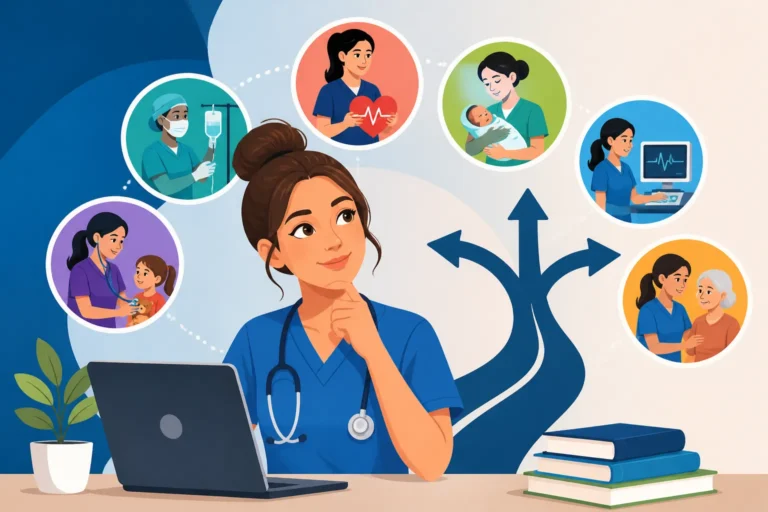
One of the biggest frustrations for new grads is the sheer number of options available. There are so many different kinds of nurses, from those working in high-intensity critical care units to those in community health or school settings. Each one requires a unique skill set, offers different patient populations, and comes with its own set of challenges and rewards. How can you possibly know which one is the "best fit" when you haven't even really started working yet? It's like being asked to pick your favorite ice cream flavor when you've only ever tasted vanilla.
This overwhelming choice often leads to analysis paralysis. You hear stories from veteran nurses about how much they love their specialty, or perhaps how much they regret starting in a particular area. Social media is rife with comparisons, and it's easy to fall into the trap of thinking there's one perfect path. The reality is, what’s perfect for one nurse might be completely wrong for another, and your journey is just beginning.
Dispelling the Myth of the "Permanent First Job"
Many new nurses feel immense pressure to pick the "perfect" first job, believing it will define their entire career. Let me tell you, that's simply not true! Your first nursing job is a learning experience, a stepping stone. It's where you'll consolidate your foundational skills, build confidence, and truly understand what aspects of nursing you enjoy and what you don't. Think of it as dating – you might not marry the first person you go out with, and that's totally fine!
It's common for nurses to switch specialties multiple times throughout their careers. The skills you learn in one area are often transferable, and the experience you gain is invaluable, no matter where you start. So, while it feels monumental now, remember that this isn't a life sentence. This guide aims to help you make an informed first step, but always keep in mind that the door to other opportunities will always be open. You can absolutely How to Switch Nursing Specialties later if your first choice doesn't quite click.
Foundational Specialties: Where Many New Grads Start
Many healthcare facilities offer dedicated new graduate residency programs designed to support new nurses transitioning from academia to practice. These programs often place new grads in areas that provide a broad clinical foundation. These specialties are fantastic for building core nursing skills, critical thinking, and time management in a structured environment.
Medical-Surgical Nursing: The Backbone of Hospitals
Medical-surgical (Med-Surg) nursing is often called the "bread and butter" of hospital nursing, and for good reason. It’s where you'll find a huge variety of patients, often with multiple co-morbidities, recovering from surgery, managing chronic illnesses, or dealing with acute exacerbations. This environment is an incredible learning ground because you're exposed to a wide range of conditions and treatments.
As a Med-Surg nurse, you’ll become an expert in managing complex medication regimens, performing wound care, monitoring vital signs, assessing subtle changes in patient condition, and collaborating with a multidisciplinary team. The pace can be demanding, and you'll learn to prioritize care for multiple patients simultaneously. While it might not always be the glamorous specialty you envisioned, the skills you develop here are universally applicable. Many nurses who start in Med-Surg find that it gives them a rock-solid foundation that prepares them for almost any other specialty they might pursue down the line. It really teaches you to think on your feet and manage a diverse patient load.
Telemetry (Cardiac Step-Down) Nursing: Mastering Cardiac Care
Telemetry units, sometimes called cardiac step-down units, are another excellent starting point for new grads, especially if you have an interest in cardiology. Patients on these units often require continuous cardiac monitoring due to conditions like arrhythmias, heart failure, or post-cardiac procedure recovery. You'll learn to interpret EKGs, administer cardiac medications, manage IV drips, and recognize subtle signs of cardiac distress.
This specialty offers a focused area of expertise that is crucial in almost all healthcare settings. Understanding the cardiovascular system and being proficient in cardiac monitoring are highly valued skills. While still fast-paced, telemetry often allows for a slightly lower patient-to-nurse ratio than general Med-Surg, potentially offering a more manageable learning curve in a specialized area. Many nurses find the structured nature of telemetry, focusing heavily on a specific body system, to be very rewarding. It's a fantastic stepping stone if you envision yourself eventually moving into more acute cardiac care, like a Cardiac ICU.
High-Demand, Entry-Level Specialties for the Bold
If you're someone who thrives in a fast-paced environment, loves critical thinking, and isn't afraid of a steep learning curve, several high-demand specialties actively seek and train new graduates. These roles are intense but incredibly rewarding and can set you on a path to advanced practice.
Emergency Room (ER) Nursing: Organized Chaos
The Emergency Room is often portrayed as chaotic, and while it certainly has its moments, it's also one of the most dynamic and exciting places to work. ER nurses are true jacks-of-all-trades, seeing everything from minor cuts and colds to massive trauma and cardiac arrests. You never know what's coming through those doors, which means every shift is different. New grads in the ER learn rapid assessment, stabilization techniques, wound management, and basic and advanced life support skills.
Many hospitals have robust ER residency programs specifically designed to transition new nurses into this high-pressure environment. You'll learn to think quickly, prioritize effectively, and maintain your composure in stressful situations. The ability to switch gears instantly and care for a wide variety of patient acuity levels is paramount. It’s a specialty that builds incredible resilience and versatility. If you're looking for a role where quick decision-making and adaptability are key, and you crave the challenge of the unknown, becoming an Emergency Nurse: Role, Salary, and How to Start might be your calling.
Intensive Care Unit (ICU) and Critical Care Nursing: Mastering Complexity
For those who want to dive deep into complex patient care, the Intensive Care Unit (ICU) or other critical care areas (like Surgical ICU, Medical ICU, Neuro ICU) offer unparalleled learning opportunities. ICU nurses care for the most critically ill patients, often on ventilators, receiving continuous IV drips, and requiring constant monitoring and intervention. This is where you'll truly master advanced assessment, hemodynamic monitoring, ventilator management, and medication titration.
New grad ICU programs are typically extensive and highly supportive, acknowledging the immense amount of knowledge and skill required. You'll learn to advocate for patients who cannot speak for themselves, communicate effectively with families during highly stressful times, and collaborate closely with intensivists and other specialists. While the learning curve is notoriously steep, the satisfaction of helping critically ill patients recover is immense. This specialty develops an advanced level of critical thinking that is highly sought after across all areas of nursing. If you're passionate about becoming a Critical Care Nurse: Role, Salary, and How to Start, prepare for a challenging but deeply rewarding journey.
Labor and Delivery (L&D) Nursing: Joy and High Stakes
Labor and Delivery nursing is a specialty unlike any other, focusing on one of the most profound moments in a family's life: childbirth. L&D nurses provide care for women throughout their labor, during delivery, and immediately postpartum. You'll monitor fetal heart tones, assess labor progression, administer pain management, assist with C-sections, and respond to emergencies for both mother and baby.
This specialty requires a unique blend of emotional intelligence, clinical skill, and the ability to act quickly under pressure. While much of L&D is joyous, it can also involve high-stakes emergencies where seconds count. New grads in L&D programs receive specialized training in fetal monitoring, obstetrical emergencies, and neonatal resuscitation. If you have a passion for women's health and a desire to support families through a transformative experience, and you can handle the emotional swings from profound joy to intense concern, then Labor and Delivery nursing could be an incredibly fulfilling career path.
Specialties with Clear Career Ladders and Focused Care
Some specialties offer new graduates a focused patient population and clear pathways for advanced education and specialized certifications, allowing you to become a true expert in a specific area.
Pediatric Nursing: Caring for Our Youngest Patients
If you have a heart for children and families, pediatric nursing is an incredibly rewarding field. Pediatric nurses care for infants, children, and adolescents, from wellness visits to managing chronic illnesses and acute injuries. This specialty requires a unique approach to patient care, as children are not just small adults; their physiology, communication styles, and psychological needs are distinct.
New grads entering pediatrics will learn age-appropriate assessment techniques, medication dosages, and communication strategies for both children and their parents. You might work in a general pediatric unit, a pediatric ICU, an oncology unit, or even an outpatient clinic. The learning curve involves understanding developmental stages, managing the emotional aspects of caring for sick children, and providing family-centered care. Many hospitals offer robust new grad pediatric residency programs. If you're eager to specialize in caring for our youngest and most vulnerable population, embarking on a journey to become a Pediatric Nurse: Role, Salary, and How to Start could be a wonderful fit, with many opportunities for growth into advanced pediatric practice.
Oncology Nursing: Compassionate Cancer Care
Oncology nursing is a deeply profound and impactful specialty dedicated to caring for patients with cancer. These nurses provide comprehensive care, from diagnosis through treatment (chemotherapy, radiation, surgery), symptom management, and often end-of-life care. Oncology nurses administer complex medications, manage side effects, educate patients and families, and provide immense emotional support.
This field requires strong clinical skills, a deep understanding of various cancer types and treatments, and an incredible capacity for empathy and resilience. While emotionally challenging, oncology nursing is also incredibly rewarding, allowing you to build lasting relationships with patients and their families during one of the most difficult times in their lives. Many new graduate programs include specific training in chemotherapy administration and supportive care. If you are called to provide holistic, compassionate care and make a tangible difference in the lives of those battling cancer, then becoming an Oncology Nurse: Role, Salary, and How to Start offers a rich and meaningful career path with ample opportunities for advanced certifications like the OCN (Oncology Certified Nurse).
Non-Bedside and Niche Options for New Grads
While many new graduates begin their careers at the bedside, it's not the only option. There are roles that offer different environments and paces, though they might be less common for immediate entry. However, with a bit of proactive searching, these can be viable paths.
Outpatient Clinic Nursing: Building Patient Relationships
Outpatient clinic nursing, sometimes referred to as ambulatory care, involves caring for patients in non-hospital settings like doctor's offices, specialty clinics (e.g., dermatology, orthopedics, cardiology), or urgent care centers. These roles often involve patient education, medication administration, wound care, assisting with minor procedures, and managing patient flow.
For a new grad, clinic nursing can offer a more predictable schedule, typically Monday through Friday with no nights or weekends, which is a huge draw for many. While the pace can still be brisk, it's generally less acute than hospital-based care. You get to build longer-term relationships with patients, focusing on health promotion, chronic disease management, and preventative care. Some clinics, especially larger health systems, do have new graduate programs, though they may be less common than hospital residencies. This path allows you to hone your assessment and communication skills in a different, often more relationship-focused, environment.
Public Health and School Nursing: Community Impact
If your passion lies in preventative care, health education, and improving the well-being of entire communities rather than individual patients in a hospital bed, then public health or school nursing might appeal to you. Public health nurses work to identify and address health disparities, track disease outbreaks, provide immunizations, and educate the public on health and wellness. School nurses are on the front lines of student health, managing acute illnesses and injuries, administering medications, developing care plans for students with chronic conditions, and promoting a healthy school environment.
These roles often come with regular weekday hours and holidays off, making them attractive for work-life balance. For new graduates, these positions might require a bit more self-direction and critical thinking as you're often working independently or with a smaller team outside the traditional hospital structure. While some public health departments or school districts might hire new grads, gaining some initial bedside experience is often beneficial for developing a strong clinical foundation before transitioning into these community-focused roles. These specialties offer a chance to make a broad impact on community health.
Factors to Consider When Choosing Your First Specialty
Deciding on your first nursing specialty isn't just about what sounds interesting; it's also about what truly aligns with your personal and professional goals. Thinking through these factors can help narrow down your options and ensure you choose a path where you can thrive.
Work-Life Balance and Schedule Preferences
Let's be real, nursing is a demanding profession. The hours can be long, and the shifts can be brutal. When you're a new grad, you're already adjusting to a whole new level of responsibility, and adding a chaotic schedule on top of that can be tough. Some specialties inherently offer more predictable schedules than others. For example, clinic or school nursing often provides Monday-Friday, daytime hours. Hospital-based specialties, however, almost always involve rotating shifts, nights, weekends, and holidays.
Consider what kind of schedule works best for your life outside of work. Do you need predictability for family commitments or personal appointments? Or are you a night owl who thrives on the flexibility of working three 12-hour shifts a week, even if they're overnight? There's no right or wrong answer, but being honest with yourself about your ideal Best Nurse Specialties for Work-Life Balance is crucial for long-term job satisfaction and preventing burnout.
Patient Interaction and Autonomy Level
Think about the kind of patient interaction that energizes you. Do you prefer intense, short-term interactions with critically ill patients where rapid intervention is key, like in the ER or ICU? Or do you thrive on building longer-term relationships with patients and families, providing ongoing education and support, as you might in oncology or a primary care clinic? Some specialties offer more autonomy earlier in your career, while others involve a more hierarchical team structure.
As a new grad, you'll always be supported by experienced nurses and physicians, but the degree to which you can make independent clinical judgments might vary. If you love a challenge and want to quickly develop sharp assessment skills and the confidence to intervene, high-acuity areas are great. If you prefer a slower pace that allows for deeper patient teaching and care coordination, then a clinic or even a sub-acute rehab setting might be more your speed. Different specialties also require different levels of emotional engagement, so consider what you're prepared to bring to the table every day.
Pace of Work and Learning Style
Every nursing specialty has its own rhythm and pace. Some, like the ER or ICU, are high-octane, requiring constant vigilance and quick decision-making. Others, like hospice or some outpatient settings, might have a more contemplative and steady pace, allowing for deeper patient engagement over time. Reflect on what kind of environment you learn best in. Do you thrive under pressure and enjoy being thrown into the deep end, quickly picking up new skills through exposure to diverse cases? Or do you prefer a more structured, methodical learning environment where you can master one set of skills before moving to the next?
The learning curve for new grads is significant in any specialty, but it's often steepest in critical care areas. However, these environments also offer the most rapid skill development and exposure to a wide array of pathologies. Consider your personality – are you adaptable and quick to react, or do you prefer to meticulously plan and execute? Understanding your natural inclination can help you choose a specialty where your learning style is best supported.
| Specialty | Typical Pace | Patient Acuity | Common Skills Developed | Work-Life Balance Potential | NCLEX Prep Relevance (Uworld) |
|---|---|---|---|---|---|
| Medical-Surgical | Moderate to Fast | Moderate | Foundational skills, prioritization, diverse assessments | Moderate | High (broad knowledge base) |
| Telemetry | Moderate to Fast | Moderate to High | EKG interpretation, cardiac meds, close monitoring | Moderate | High (cardiac focus) |
| Emergency Room (ER) | Very Fast, Unpredictable | Varies (low to critical) | Rapid assessment, trauma, crisis intervention, multi-system care | Challenging | High (critical thinking) |
| Intensive Care (ICU) | Fast, Intense | High, Critical | Ventilator, drips, hemodynamic monitoring, advanced assessment | Challenging | High (complex physiology) |
| Labor & Delivery | Variable, High-stakes | Moderate to High | Fetal monitoring, obstetric emergencies, maternal care | Moderate | Moderate (specialized) |
| Pediatrics | Variable | Varies | Age-specific care, family communication, developmental assessment | Moderate | High (foundational, safety) |
| Oncology | Moderate | Moderate to High | Chemo administration, symptom management, emotional support | Moderate | High (medication, ethics) |
| Outpatient Clinic | Steady to Fast | Low to Moderate | Patient education, chronic disease, health promotion, procedures | Good (daytime hours) | Moderate (assessment, health) |
Preparing for Your First Specialty Role
Once you’ve got an idea of a few specialties that spark your interest, it’s time to get down to the nitty-gritty of preparing yourself to land that first role and thrive in it. This phase is all about leveraging your education and proactively seeking opportunities.
Leveraging Your Education and Clinical Experience
Your nursing program, even though it feels like a blur sometimes, gave you an incredible foundation. Think back to your clinical rotations. Which units did you genuinely look forward to? Which patient populations did you connect with most? Those brief glimpses into different specialties are valuable clues. If you had a particular affinity for critical care during your final practicum, that’s a strong indicator.
Don't underestimate the power of your academic performance either. If you excelled in your pharmacology courses, that might point you towards specialties with complex medication management. If you loved your community health projects, then public health might be a natural fit. While specific clinical experience might be limited as a new grad, highlight any preceptorships, capstone projects, or even volunteer work that demonstrates your interest and nascent skills in a particular area. Remember how much effort you put into studying for your NCLEX, perhaps utilizing resources like Uworld – that dedication to mastering foundational knowledge is what makes you a strong candidate, regardless of specialty.
Networking and Informational Interviews
One of the best ways to get real-world insight into a specialty is to talk to nurses who are already working in it. Reach out to nurses you met during clinicals, faculty members, or even alumni from your school. Ask them about their experiences, what a typical day looks like, what they love and what they find challenging about their roles. An informational interview isn't about asking for a job directly; it's about gathering information and making connections.
These conversations can provide invaluable perspective that you won't find in a job description. For example, a nurse in a busy ER might tell you that while the pace is intense, the camaraderie among the staff is unmatched, which might be exactly what you're looking for. Or a hospice nurse might describe the profound emotional rewards of their work. Building a network also often leads to hearing about job openings before they're widely advertised, or getting a foot in the door for a shadow experience.
Certifications and Continuing Education
While you won't be expected to have advanced certifications as a new grad, obtaining basic life support (BLS) and potentially advanced cardiovascular life support (ACLS) certifications can make you a more attractive candidate, especially for higher-acuity specialties like the ER or ICU. PALS (Pediatric Advanced Life Support) is also a strong asset for pediatric roles. These courses demonstrate initiative and a commitment to patient safety and skill development.
Look into what certifications are relevant to the specialties you're considering. Even if you don't get them right away, understanding the professional development pathway for a specialty shows foresight. Many hospitals offer these courses during new grad orientation, but having them in advance can give you an edge. Continual learning, even beyond what you did to pass the NCLEX using tools like Uworld, is a hallmark of a great nurse. Always be curious and eager to expand your knowledge base. Getting a head start on Nursing Certifications That Boost Pay can even be a smart long-term strategy.
Making the Leap: Switching Specialties Later On
It's completely normal to feel a bit of pressure when choosing your first nursing job. You want to make the "right" decision. But here's a secret: there's no such thing as a "wrong" decision when it comes to your first specialty. Every experience in nursing is valuable, and the skills you gain are surprisingly transferable.
The Value of Cross-Training and Experience
Let's say you start in Medical-Surgical nursing, which is an excellent choice for a strong foundation. After a year or two, you realize you have a real passion for cardiac care and want to work in the ICU. The foundational skills you developed on a Med-Surg floor – time management, medication administration, physical assessment, patient education – are all highly applicable to the ICU. You'll simply be applying them to a higher-acuity patient population with more specialized interventions.
Many hospitals encourage cross-training or offer internal transfer opportunities for experienced nurses. Your Med-Surg experience might make you an ideal candidate for a telemetry unit, or even a critical care residency program designed for internal applicants. Don't think of your first job as a permanent commitment, but rather as the first chapter in a long and evolving story. Every unit you work on adds a new layer to your expertise. Understanding RN to BSN Completion Timeline can also show how continuous education supports specialty changes.
Recognizing When It's Time for a Change
How do you know if your first specialty isn't the right fit? It might manifest as persistent feelings of dread before shifts, a lack of interest in the patient population, or simply feeling emotionally drained without the corresponding sense of fulfillment. Maybe the pace is too slow or too fast, or the type of patient interaction doesn't align with what you truly enjoy. It’s important to give your first role a fair shot, typically at least a year, to truly understand the rhythm and responsibilities. The initial learning curve is steep everywhere, and it's easy to mistake new-grad stress for a dislike of the specialty.
However, if after a reasonable amount of time, you're still consistently unhappy or find yourself dreaming about other areas, it's okay to start exploring. Look for opportunities to shadow other units, talk to nurses in different specialties, and update your resume. The beauty of nursing is its versatility – there's always another path to explore, another patient population to serve, and another set of skills to master. Your career is a marathon, not a sprint, and your growth as a nurse is continuous.
Disclaimer
The information provided in this article is intended for general informational and educational purposes only, and should not be considered as professional medical or career advice. While we strive to provide accurate and up-to-date content, nursing practice and career paths are subject to change based on individual circumstances, educational requirements, state regulations, and institutional policies. Always consult with academic advisors, career counselors, and official nursing board resources for personalized guidance regarding your nursing education and career decisions.