Best Nursing Specialties for New Parents
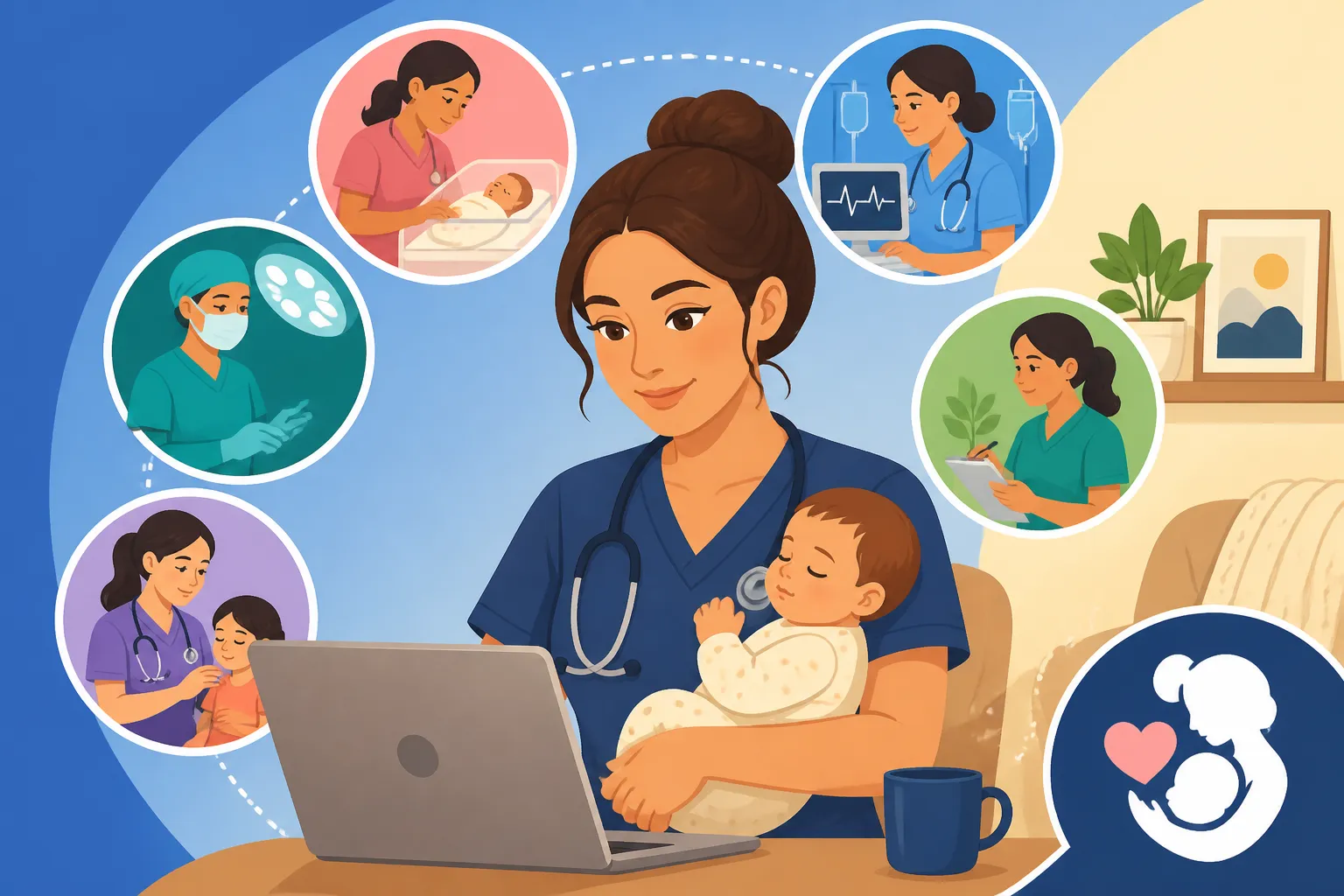
Becoming a new parent is an incredible journey, but it also throws a huge curveball into your professional life, especially if you're a nurse. The thought of returning to demanding shifts, unpredictable schedules, and the sheer physical and emotional drain of many nursing roles can feel overwhelming when you're also navigating sleepless nights, diaper changes, and endless baby snuggles. This guide is here to explore various nursing specialties that often offer a better balance for new parents, allowing you to continue your fulfilling career without sacrificing precious family time.
Understanding the Unique Challenges of Nursing as a New Parent
Let's be real, nursing is tough. It's physically demanding, emotionally draining, and often comes with schedules that feel like they're designed to disrupt any semblance of a routine. When you add a new baby into the mix, these challenges are amplified tenfold. Many new parents find themselves constantly juggling, feeling like they're not quite succeeding at work or at home, leading to burnout and profound stress.
The Demands of Traditional Bedside Nursing
Think about your typical hospital floor nurse role. You're on your feet for 12+ hours, responding to emergencies, lifting patients, dealing with complex medical situations, and charting endlessly. Now, imagine doing all that after only getting a few hours of broken sleep. The physical exhaustion is immense, but the mental load is even heavier. You're constantly making critical decisions, managing multiple patients, and navigating high-stress environments. For a new parent, who might already be struggling with "baby brain" or simply the mental fog of sleep deprivation, this level of intense focus can feel almost impossible to sustain safely and effectively. The emotional toll of caring for critically ill patients, dealing with loss, or witnessing suffering can also be harder to shake off when you go home to a vulnerable infant, often leaving you with little emotional reserve for your family.
Balancing Work Schedules and Family Life
One of the biggest pain points for new parents in nursing is the schedule. Many hospital roles involve 12-hour shifts, often rotating days, nights, and weekends. This kind of unpredictable schedule can wreak havoc on family life. Childcare becomes a logistical nightmare – finding someone who can cover nights and weekends, or needing multiple childcare providers, is expensive and stressful. You might miss out on important milestones, school events, or simply consistent family dinners. The lack of routine can also make it harder for your child to adjust, and for you to find time for self-care, which is crucial for preventing burnout. Imagine trying to pump breast milk on a busy unit or rushing out the door after a night shift, only to realize you've been up for 24 hours straight and now need to care for a toddler. It’s a reality many new nurse parents face, and it's completely understandable why you'd want a change.
Key Factors to Consider When Choosing a Nursing Specialty as a New Parent
When you're a new parent looking at a career shift within nursing, it's not just about what sounds interesting or pays well anymore. Your priorities shift dramatically. You start looking for roles that align with your new family reality, offering stability and predictability where before you might have thrived on the hustle and bustle. Thinking about How to Choose a Nursing Specialty is a really personal journey, especially now.
Schedule Flexibility and Predictability
This is often the number one factor for new parents. Forget the rotating shifts and mandatory overtime. What you're likely craving is a consistent schedule – something that allows you to plan childcare, attend school plays, and simply know when you'll be home. This might mean seeking out roles with traditional 9-to-5, Monday-to-Friday hours, or even opportunities for part-time work or compressed workweeks. Predictable shifts help reduce stress, save money on last-minute childcare, and allow you to fully participate in family life. For example, knowing you'll be off every weekend means you can reliably plan family outings and create those cherished memories. This is where roles offering Nursing Specialties with Regular Hours truly shine.
Lower Physical and Emotional Strain
Being a nurse is inherently stressful, but some specialties carry a higher burden than others. As a new parent, your physical and emotional reserves are already stretched thin. You need a role that minimizes heavy lifting, constant on-your-feet demands, and emotionally taxing situations, if possible. This doesn't mean avoiding patient care entirely, but perhaps shifting to roles where interactions are less acute, more planned, or focused on health education and prevention rather than crisis intervention. Reducing the daily grind of high-acuity bedside care can free up valuable mental and physical energy that you desperately need for your family and your own well-being. Look for Best Nurse Specialties for Low Stress that allow you to engage your nursing skills in a more sustainable way.
Opportunities for Remote or Hybrid Work
The dream for many new parents is working from home, or at least having a hybrid option. The ability to work from your living room, avoiding commutes and having the flexibility to be present for small moments (like your child waking from a nap or a mid-day snack break), is invaluable. While direct patient care often requires a physical presence, many nursing specialties have evolved to offer remote options. Telehealth, case management, and informatics are prime examples. Even if it’s not 100% remote, a hybrid model where you're in the office a few days a week and home for the rest can offer significant relief and improve work-life integration. Exploring Remote and Work-from-Home Nursing Specialties can open up a world of possibilities.
Top Nursing Specialties for New Parents Seeking Better Work-Life Balance
So, what are these magical specialties that actually make life as a new nurse parent manageable? There are quite a few, and they leverage your valuable nursing skills in different ways. Moving into these roles often means Nursing Specialties That Don't Require a Degree Change, or perhaps just a certification.
Case Management Nursing
Case management is a fantastic option for nurses looking for a more predictable schedule and less hands-on patient care. As a case manager, you coordinate care for patients, ensuring they receive appropriate services, understand their treatment plans, and navigate complex healthcare systems. This often involves working with insurance companies, social services, and various healthcare providers.
- Role & Responsibilities: Case managers assess patient needs, develop care plans, coordinate appointments and resources, advocate for patients, and monitor progress. They often work with specific populations, such as chronically ill patients, those recently discharged from the hospital, or individuals with complex social needs. You might be making phone calls, conducting assessments, and educating patients and their families.
- Work Environment & Schedule: Many case management roles are office-based, offering traditional Monday-to-Friday, 8-hour shifts with no weekends or holidays. Some even offer hybrid or fully remote options, allowing you to work from home. While there can be occasional patient visits, they are usually scheduled in advance and during regular business hours. This predictability is a huge win for new parents. If you're wondering How to Become a Case Management Nurse, it often involves experience and sometimes a certification.
- Emotional & Physical Demands: The physical demands are significantly lower than bedside nursing. You’re not lifting patients or running from room to room. Emotionally, it still requires strong critical thinking and problem-solving, but the stress is often different – less immediate crisis, more long-term planning and advocacy.
Public Health Nursing
Public health nurses focus on preventing illness and promoting health within communities. This is a broad field with many different facets, but generally, it involves less direct, acute patient care and more community-level intervention.
- Role & Responsibilities: You might work for local or state health departments, schools, or community clinics. Roles can include running immunization clinics, conducting health screenings, providing health education, investigating disease outbreaks, or managing community health programs. The focus is on populations rather than individual patients.
- Work Environment & Schedule: Many public health roles offer regular daytime hours, Monday through Friday. You might work in an office setting, a clinic, or out in the community, but the schedule is typically stable. This consistency is perfect for new parents. Learn more about How to Become a Public Health Nurse to see if it's a good fit.
- Emotional & Physical Demands: Physical demands are generally low. The emotional demands often involve empathy and strong communication skills, but usually not the high-stakes, life-or-death scenarios of acute care. You're often empowering people and communities, which can be incredibly rewarding.
School Nursing
For many new parents, especially those with school-aged children, school nursing is the holy grail of work-life balance. Imagine having the same holidays and summer breaks as your kids!
- Role & Responsibilities: School nurses manage health offices, administer medications, provide first aid, care for students with chronic conditions (like diabetes or asthma), conduct health screenings, educate students and staff on health topics, and act as a liaison between families, healthcare providers, and the school.
- Work Environment & Schedule: The schedule is incredibly family-friendly: typically Monday-to-Friday, school-day hours, with weekends, evenings, and major holidays off. Plus, you get those coveted summer breaks. It's a structured environment that allows you to be fully present for your family outside of work hours. To dive deeper, check out How to Become a School Nurse.
- Emotional & Physical Demands: Physical demands are minimal. Emotionally, you're dealing with children and adolescents, which can have its own challenges, but the acute medical crises are usually managed by calling emergency services, rather than you directly providing intensive care.
Telehealth Nursing
Telehealth, or telephone/virtual nursing, exploded in popularity and offers significant flexibility, often with remote work options.
- Role & Responsibilities: Telehealth nurses provide patient care and advice remotely, typically over the phone or video calls. This can involve triaging symptoms, offering health education, managing chronic conditions, following up post-discharge, or even providing mental health support. You act as a primary point of contact for patients seeking advice or navigating care.
- Work Environment & Schedule: Many telehealth roles are fully remote, allowing you to work from home. While some roles may require evening or weekend coverage, there are often flexible shifts, including part-time options, or set schedules that you can choose. This allows for immense flexibility in balancing work with childcare needs. This is a prime example of Remote and Work-from-Home Nursing Specialties.
- Emotional & Physical Demands: Physically, you're sitting at a desk. Emotionally, you need strong assessment skills and clear communication, as you don't have the benefit of physical cues. It can be challenging to build rapport remotely, but the lack of direct physical demands and the flexibility often outweigh these factors for new parents.
Nurse Informatics
If you're tech-savvy and enjoy data and systems, nurse informatics might be a perfect fit. This specialty blends nursing science with information technology.
- Role & Responsibilities: Nurse informaticists optimize healthcare processes through information systems. They might design, implement, and maintain electronic health records (EHRs), analyze data to improve patient outcomes, train staff on new technologies, or work on clinical decision support systems.
- Work Environment & Schedule: These roles are typically office-based, offering traditional Monday-to-Friday, 8-hour shifts. Remote or hybrid options are also common, especially in larger health systems or tech companies. This predictability and often professional office environment are highly appealing to new parents. Curious about How to Become a Nurse Informaticist? It often requires a strong interest in technology and sometimes an advanced degree or certification.
- Emotional & Physical Demands: Physical demands are very low, as it's a desk job. Emotionally, it requires strong analytical and problem-solving skills, and the ability to work collaboratively. It's a shift from direct patient care, but your clinical background is invaluable in understanding the needs of end-users (other nurses and clinicians).
Nurse Educator
If you love teaching and guiding others, becoming a nurse educator could be a rewarding path with a much better work-life balance than bedside nursing.
- Role & Responsibilities: Nurse educators can work in academic settings (colleges, universities) or healthcare facilities (hospitals, clinics). In academia, you'd teach nursing students, develop curriculum, conduct research, and advise students. In a hospital setting, you might develop and deliver in-service training, onboard new staff, or educate patients and families.
- Work Environment & Schedule: Academic roles often follow a traditional academic calendar, meaning scheduled breaks and holidays, and often more flexible hours outside of direct classroom time. Hospital-based educator roles also tend to be Monday-to-Friday, daytime shifts. Many online nursing programs also employ remote nurse educators. Consider exploring the MSN Nurse Educator Track if this path sparks your interest.
- Emotional & Physical Demands: Physical demands are low. Emotionally, it requires strong communication, mentorship, and presentation skills. It can be demanding to manage student or staff learning outcomes, but it’s a different kind of stress than direct patient care, often focusing on intellectual engagement and professional development.
Here's a quick comparison of these parent-friendly specialties:
| Specialty | Typical Work Environment | Schedule Flexibility & Predictability | Physical Demands | Emotional Demands (Primary Focus) | Typical Degree/Cert |
|---|---|---|---|---|---|
| Case Management | Office, sometimes remote/hybrid | High (M-F, days, often no weekends) | Low | Problem-solving, advocacy, coordination | RN, CCMC/CMGT preferred |
| Public Health Nursing | Office, clinic, community | High (M-F, days, no weekends) | Low | Health education, community assessment, prevention | RN, BSN preferred |
| School Nursing | School health office | Very High (school hours, holidays off) | Low | Child-focused care, first aid, chronic condition mgmt | RN, BSN preferred |
| Telehealth Nursing | Remote (home office) | High (flexible shifts, some weekends) | Very Low | Remote assessment, education, critical thinking | RN, BSN preferred |
| Nurse Informatics | Office, remote/hybrid | High (M-F, days, no weekends) | Very Low | Data analysis, system design, collaboration | RN, BSN/MSN preferred |
| Nurse Educator | Academic, hospital, remote | High (academic calendar/M-F, days) | Low | Teaching, curriculum development, mentorship | MSN, PhD preferred |
Preparing for a Career Shift into a Parent-Friendly Specialty
Deciding to shift your nursing career to better suit your new family life is a smart move, but it does require some planning. It’s not just about finding a new job; it’s about strategically positioning yourself for the roles that offer that much-needed balance. You might be asking, How to Switch Nursing Specialties? Here are some actionable steps.
Gaining Relevant Experience and Certifications
Even if you're an experienced bedside nurse, some of these specialties might require you to gain new skills or formal certifications. For example, while many case management positions hire experienced RNs, earning a Certified Case Manager (CCM) credential can make you more competitive. For informatics, pursuing a certification in nursing informatics or even taking some IT-related courses can be beneficial. For nurse educator roles, an MSN is typically a requirement. Don't underestimate the value of your current nursing license and experience, but be open to learning. Many online resources, including comprehensive review platforms like Uworld, can be invaluable for preparing for certification exams or even refreshing your foundational knowledge as you transition into a different clinical focus. Uworld is renowned for its detailed explanations and practice questions, which can help solidify your understanding in any new area you're pursuing.
If your current workplace offers opportunities for committee involvement related to policy, quality improvement, or technology implementation, jump on them! These experiences can build a bridge to your desired specialty. For example, participating in an EHR implementation committee at your hospital, even as a bedside nurse, can give you valuable exposure to the world of informatics. Similarly, volunteering for health fairs or community outreach programs can offer a taste of public health nursing.
Leveraging Your Existing Nursing Skills
Remember, your core nursing skills are highly transferable. Critical thinking, assessment, communication, patient education, and advocacy are valuable in any nursing role, not just at the bedside.
- Critical Thinking: This is paramount whether you're triaging a telehealth call, developing a public health program, or troubleshooting an EHR system. Your ability to quickly analyze situations and make sound judgments will serve you well.
- Patient Education: If you're currently teaching patients about their medications or discharge instructions, you already have a foundation for roles like school nursing, public health nursing, or even as a nurse educator in a hospital setting.
- Advocacy: Your experience advocating for your patients at the bedside translates directly to case management, where you'll be a strong voice for your clients navigating complex healthcare.
- Problem-Solving: Every shift at the hospital involves problem-solving. This skill is directly applicable to informatics (troubleshooting systems), public health (addressing community health challenges), and case management (navigating patient barriers).
Highlight these transferable skills prominently on your resume and in interviews. Frame your bedside experience not just as direct care, but as a foundation for broader clinical judgment and patient interaction.
Utilizing Resources for Career Advancement
Don't go it alone! There are numerous resources available to help you make this transition.
- Professional Organizations: Joining professional organizations related to your desired specialty (e.g., American Case Management Association, American Nursing Informatics Association, National Association of School Nurses) can provide networking opportunities, continuing education, and access to job boards.
- Online Learning Platforms: Beyond specific certifications, consider online courses or webinars that focus on skills relevant to your new path. Platforms like Coursera or edX offer courses in project management, data analysis, or public health fundamentals that can bolster your resume. And again, for any foundational refreshers or new certification exam prep, Uworld remains a robust study tool that many nurses trust. Their explanations help to clarify complex topics, which is crucial when you're absorbing new information for a specialty shift.
- Mentorship: Seek out nurses already working in the specialty you're interested in. A mentor can offer invaluable advice, share insights into the day-to-day realities of the role, and potentially open doors to new opportunities.
- Networking: Attend virtual or in-person nursing career fairs, connect with recruiters, and update your LinkedIn profile to reflect your career aspirations. Let your network know you're looking for new opportunities that offer better work-life integration.
By taking these proactive steps, you can confidently navigate a career shift that allows you to thrive as both a dedicated nurse and a present parent. Balancing work and family is a marathon, not a sprint, and finding the right nursing niche can make all the difference for your well-being and happiness.
Disclaimer
Please remember that this article provides general information and recommendations. Specific job requirements, work environments, and schedules can vary significantly by employer and location. It's always best to thoroughly research specific roles and organizations to ensure they align with your personal and professional needs. The information provided should not be considered a substitute for professional career counseling or individualized advice.